Government Pavilion, C/ Padre Herrera s/n
Post Office Box 456
38200, San Cristobal de La Laguna
Santa Cruz de Tenerife - Spain
Switchboard Tel.: (+34) 922 31 90 00
Hours: Mon, 8:00 a.m. to 9:00 p.m.

This micro-credential offers practical tools for business financial management, focused on small business owners and professionals without prior training in the field. It allows users to interpret financial information, assess risks, and make more informed strategic decisions, leveraging artificial intelligence tools that facilitate calculations, analysis, and report generation without requiring technical expertise, thus optimizing time and improving the effectiveness of decision-making.
Students must be between 25 and 64 years old on the date the training begins.
A university degree will not be required to access this micro-credential, but applicants must meet the requirements for university admission (University Entrance Exam, Higher Vocational Training Technician, Higher Technician in Plastic Arts and Design, or Higher Sports Technician qualification belonging to the Spanish Education System, or equivalent qualifications, diplomas, or studies, as well as holding the European Baccalaureate or the International Baccalaureate Diploma).
There is no entrance exam, nor are the qualifications listed above required; applicants must demonstrate prior work experience in fields related to the training. Those with prior accounting knowledge will find it easier to follow the training; however, anyone interested can enroll.
Regarding the way to organize the teaching to achieve the objectives set out in the micro-credential, the organizational modality summarized below will be followed:
The microcredential will have an evaluation system (ES) based on the following evaluation tests:
Credits: 3 ECTS
Duration: 11/05/2026-27/05/2026
Teaching modality: Blended learning
Location: Computer lab of the General Foundation of the ULL.
Schedule: The in-person classroom sessions will be held on May 11, 13, 15, 18, 19 and 20 from 4:00 PM to 8:00 PM:
The cost of tuition for this Microcredential will be subsidized by the 'Plan for the development of university microcredentials', investment 6 of component 21 of the Addendum to the 'Recovery, Transformation and Resilience Plan', financed by the European Union – Next Generation EU, year 2025.
Short courses available in various formats (in-person, online, or hybrid). Ideal for learning without interrupting your professional life.
Content created and delivered by professionals and experts in the field, designed for immediate application.
Endorsed by the University of La Laguna. You will receive an official ECTS certificate, valid in the European Higher Education Area.

Full Professor at the University of La Laguna (ULL), Department of Economics, Accounting and Finance. Lecturer and researcher with extensive experience in costs and dashboards.
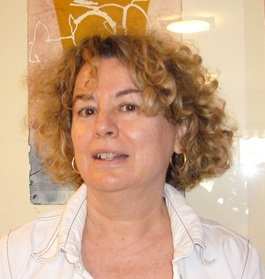
Professor of Financial Economics and Accounting at the University of La Laguna (ULL). Lecturer in financial analysis, with extensive experience in training professionals.

Full Professor of Financial Economics and Accounting at the ULL. Corporate finance lecturer with extensive experience in practical courses for professionals.
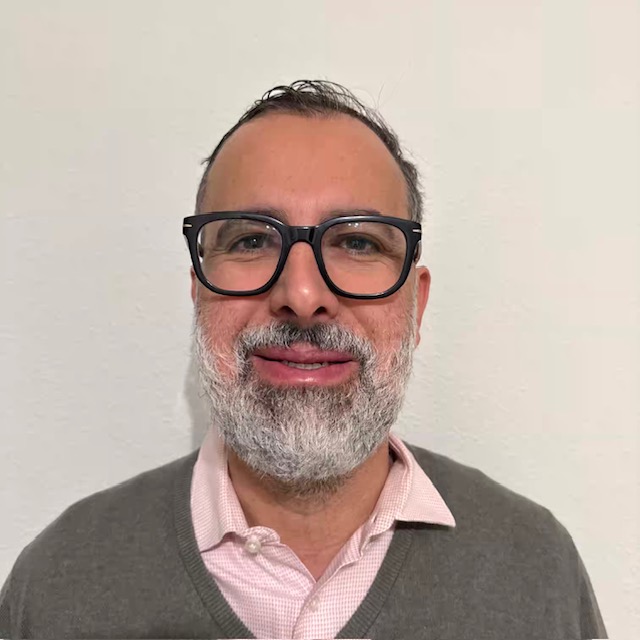
Substitute Professor in the Department of Financial Economics and Accounting at the University of La Laguna (ULL). Head of the Administrative Support Section of the Island Council of Tenerife.

In collaboration with:
Government Pavilion, C/ Padre Herrera s/n
Post Office Box 456
38200, San Cristobal de La Laguna
Santa Cruz de Tenerife - Spain
Switchboard Tel.: (+34) 922 31 90 00
Hours: Mon, 8:00 a.m. to 9:00 p.m.
