Government Pavilion, C/ Padre Herrera s/n
Post Office Box 456
38200, San Cristobal de La Laguna
Santa Cruz de Tenerife - Spain
Switchboard Tel.: (+34) 922 31 90 00
Hours: Mon, 8:00 a.m. to 9:00 p.m.

The overall objective of the micro-credential Psychosocial Processes involved in Health, Illness and Care is to train students to understand and apply the main psychosocial processes that influence health, illness and care, integrating a comprehensive, empathetic and critical approach in the practice of community pharmacy, aimed at improving the quality of care, communication and health outcomes.
General objective
The overall objective of the micro-credential Psychosocial Processes involved in Health, Illness and Care is to train students to understand and apply the main psychosocial processes that influence health, illness and care, integrating a comprehensive, empathetic and critical approach in the practice of community pharmacy, aimed at improving the quality of care, communication and health outcomes.
Specific objectives
Upon completion of the microcredential, students will be able to:
1.- Identify the psychosocial responses of people to different situations of health, illness, pain and suffering, selecting support and assistance strategies tailored to each context and life stage.
2.- Develop an empathetic, respectful and person-centered relationship with patients and families, taking into account their needs, beliefs, emotions and personal circumstances.
3. Apply effective communication strategies and skills that facilitate the expression of
concerns, expectations and motivations of patients, families and social groups in the
community pharmacy context.
4.- Analyze the processes of decision-making in health, considering the influence of identity, self-esteem, cognitive biases and social support on self-care and adherence to health recommendations.
5. Critically evaluate the behaviors that occur in the healthcare environment,
identifying the presence of stereotypes, prejudices and dynamics of discrimination, as well as their consequences in care and attention.
6. Design interventions and improvement plans aimed at preventing or addressing health problems, working cooperatively with other professionals and aligning actions with the beliefs, motivations and social context of the people served.
To access the microcredential, you will need to:
a. Hold an official Spanish university degree or another degree issued by a higher education institution belonging to another Member State of the European Higher Education Area, attached to the branch of Health Sciences or to related qualifications directly related to the health field, which qualifies for access to master's level studies in the same.
b. Holding a degree issued by an educational system outside the European Higher Education Area without a validation or declaration of equivalence. In these cases, the academic director will submit a report to the Academic Committee, which will authorize or deny admission. Under no circumstances will authorization imply validation of the foreign degree, nor its recognition for any purpose other than pursuing postgraduate studies at the ULL.
c. Hold a Technician/equivalent qualification and demonstrate a minimum of five years of work experience in the pharmaceutical sector, especially in areas related to community pharmacy, social and healthcare or public health.
d. Students must be between 25 and 64 years of age on the date the training begins.
Block 1: Identity, self-esteem, health and decision making.
– Session 1: Building our identity. The role of health in self-concept.
– Session 2: Decision-making and health. Biases that affect decision-making and
Self-care. Health and social support.
– Session 3: Impact of illness on identity. Coping styles. Support in managing health information.
Block 2: Human behavior in the face of illness and pain.
– Session 1: Relationships between healthcare professionals and patients. Relational styles. Challenges in healthcare support.
– Session 2: Understanding pain. Contextual aspects. Support in pain.
– Session 3: Therapeutic support strategies. Integration of changes and consolidation of
habits.
Block 3: Biases and prejudices in the health context.
– Session 1: Fundamental concepts: stereotypes, prejudice and discrimination. The case of the healthcare environment.
– Session 2: Manifestations of prejudice in the healthcare environment. Consequences.
– Session 3: Strategies to combat prejudice in the health context.
Block 4. Conclusions and implementation of improvements.
– Session 1: Conclusions. Building a personal work plan.
The training activities to be carried out during the delivery of the micro-credential will be:
• Theoretical classes: expository, explanatory or demonstration sessions of the contents and knowledge.
• Practical classes: sessions of practical application of the content developed in the theoretical classes, through the resolution of exercises, problems or theoretical-practical scenarios.
• Seminars, workshops, or other complementary activities (discussion forums, simulations, etc.): monographic sessions that encourage student participation. These are supervised by the course instructors.
• Work: preparation of a study, essay, work… proposed in the subject, either individually or in a group following established guidelines.
• Independent work: independent and self-regulated activity of the student based on the documentation and guidelines proposed in the subject, preparation of classes and exams, preparation of final reports, internship reports…
• Presentations, debates and defenses of works and projects: activity through which students present works, exercises, projects… based on established criteria, demonstrating sufficiency and maturity in the acquisition of the planned competencies.
• Tutoring (individual, group…): activity in which the teaching staff attends to, facilitates and guides one or more students in the training process.
• Assessment: continuous assessment tests and final exams. Tests may be in-person or virtual, and may be written, oral, or consist of practical exercises.
Regarding the way to organize the teaching to achieve the objectives set out in the micro-credential, the organizational modality summarized below will be followed:
• Lectures/expository method: presentation or explanation by the teaching staff.
• Seminars: carrying out exercises, solving problems or practical cases, others.
• Individual work: individual preparation of assignments/projects/reports, portfolio…
• Group work: group preparation of assignments, projects/reports…
• Personal study: preparing for tests, exams…
• Assessment: written tests, oral tests, practical tests…
• Tutoring: instruction period in which teachers and students interact with the aim of reviewing and discussing materials and topics presented in class.
• Exhibitions, debates and presentation of works and projects: activities supervised by the teaching staff.
• Active methodologies: cooperative learning, project-based learning, flipped classroom,
service learning, game-based learning, case studies, problem-solving…
They are aimed at making learning a participatory process and are based on the leading role of the students.
The microcredential will have an evaluation system (ES) based on the following evaluation tests:
Credits: 3 ECTS
Duration: 15/05/26 – 30/05/26
Teaching modality: Virtual
Location: Virtual campus of the University of La Laguna
The cost of tuition for this Microcredential will be subsidized by the 'Plan for the development of university microcredentials', investment 6 of component 21 of the Addendum to the 'Recovery, Transformation and Resilience Plan', financed by the European Union – Next Generation EU, year 2025.
Short courses available in various formats (in-person, online, or hybrid). Ideal for learning without interrupting your professional life.
Content created and delivered by professionals and experts in the field, designed for immediate application.
Endorsed by the University of La Laguna. You will receive an official ECTS certificate, valid in the European Higher Education Area.

Assistant Professor with a PhD in Social Psychology. Her research focuses on the study of dehumanization processes and intergroup relations, especially in early developmental and socialization contexts. Her work analyzes how children perceive and attribute humanity to different social groups, as well as the relationship between prejudice, stereotypes, and dehumanization in intergroup dynamics.
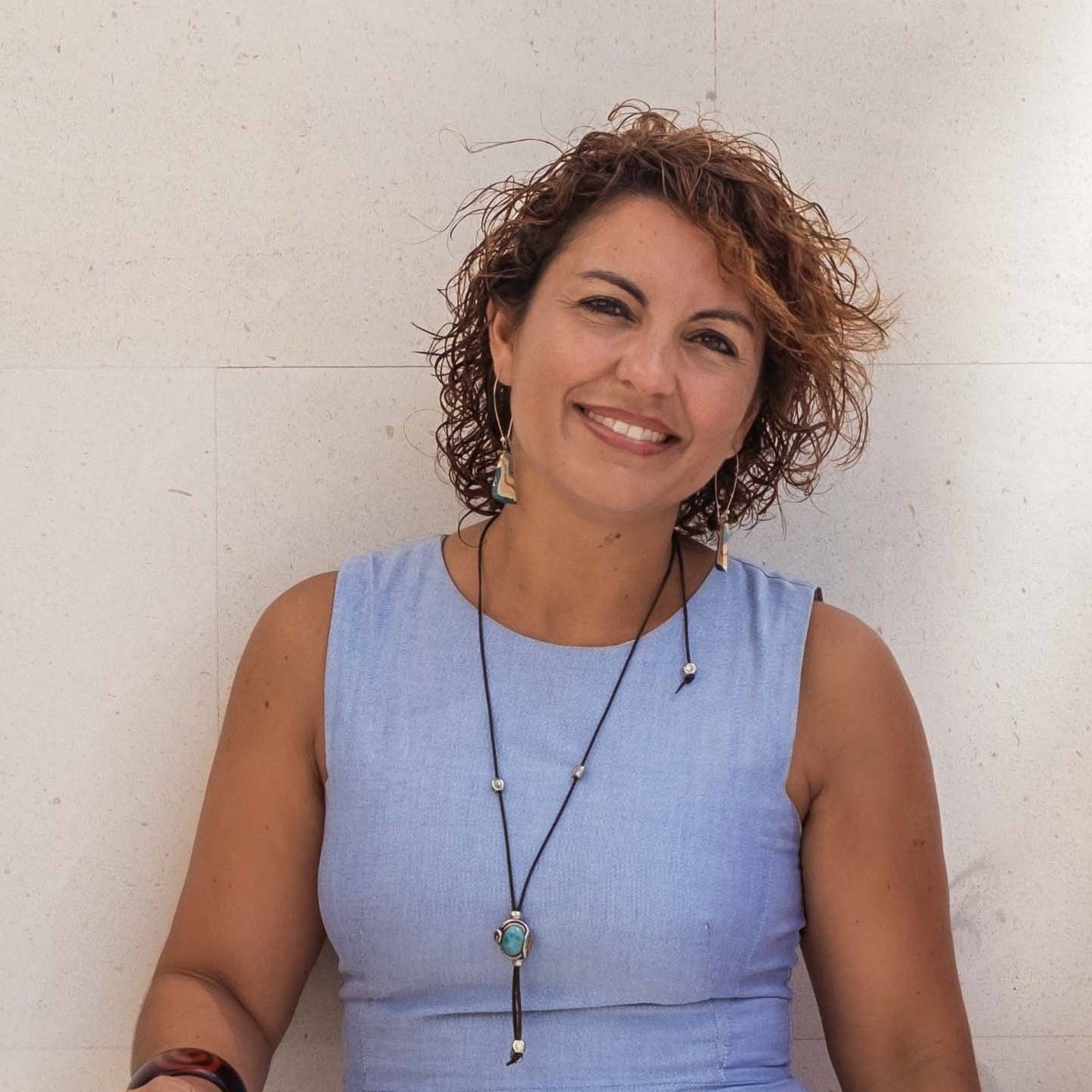
Professor of Social Psychology. Her research focuses on social cognition and intergroup relations, with a central line of inquiry dedicated to the study of dehumanization and its relationship to other psychosocial processes, such as empathy, mentalization, and attitudes toward different social groups. Her work also explores the relationship between these processes and well-being in professional contexts, especially in the healthcare sector, including variables such as burnout, job satisfaction, and decision-making in helping professions.

Government Pavilion, C/ Padre Herrera s/n
Post Office Box 456
38200, San Cristobal de La Laguna
Santa Cruz de Tenerife - Spain
Switchboard Tel.: (+34) 922 31 90 00
Hours: Mon, 8:00 a.m. to 9:00 p.m.
