The Pharmacy as a Catalyst for Community Health

The Pharmacy as a Catalyst for Community Health

Overview

The overall objective of the micro-credential "Pharmacy as a Catalyst for Community Health" is to train students to critically analyze the current model of Pharmaceutical Care and
To understand the potential of community pharmacy as a catalyst for health, integrating the principles of Community Health, Primary Care and Health Equity into professional practice, from a strategic, ethical and interdisciplinary perspective.

Goals

Upon completion of the microcredential, students will be able to:

  • To critically analyze the current challenges of Pharmaceutical Care, identifying its limitations in relation to the DSS and health inequities.
  • Understanding the role of community pharmacy in the generation and perpetuation of health inequities, reflecting on its professional and social responsibility in the context of the health system.
  • To understand the fundamental theoretical principles of Community Health and their application to Pharmaceutical Care, establishing links with the values and attributes of Primary Care.
  • Identify and evaluate the specific attributes of community pharmacies that make them a key resource for community intervention and the promotion of health equity.
  • Explore and compare new models and proposals for expanding Pharmaceutical Care, incorporating the DSS approach, intersectorality and community work.
  • Applying the Community Health Catalyst Pharmacy model to practical cases, developing the ability to learn and act in interdisciplinary clinical, social and community environments.

Access requirements

To access the microcredential, you will need to:
a. Hold an official Spanish university degree or another degree issued by a higher education institution belonging to another Member State of the European Higher Education Area, attached to the branch of Health Sciences or to related qualifications directly related to the health field, which qualifies for access to master's level studies in the same.
b. Holding a degree issued by an educational system outside the European Higher Education Area without a validation or declaration of equivalence. In these cases, the academic director will submit a report to the Academic Committee, which will authorize or deny admission. Under no circumstances will authorization imply validation of the foreign degree, nor its recognition for any purpose other than pursuing postgraduate studies at the ULL.
c. Hold a Technician/equivalent qualification and demonstrate a minimum of five years' work experience in the pharmaceutical sector, especially in areas related to community pharmacy, social and healthcare or public health.
d. Students must be between 25 and 64 years of age on the date the training begins.

Academic program

Contents

Block 1: Social and health need for Pharmaceutical Care oriented towards equity.

  • Session 1: Concept, history and application of Pharmaceutical Care.
  • Session 2: From the Consensus on Pharmaceutical Care and SPFA.
  • Session 3: Community Pharmacy and the Biomedical Model of Health.
    Block 2: New proposals and models of Pharmaceutical Care.
  • Session 1: Expanding services in the Community Pharmacy.
  • Session 2: New proposals in FC and DSS: Health Hub, Healthy Living Pharmacy and the model of
    US DSS.
  • Session 3: Innovative experiences in Community Health from the Pharmacy in Spain.
    Block 3: The Community in the Pharmacy. Towards a Pharmacy as a Catalyst for Community Health.
  • Session 1: Pharmacy Attributes for Catalyzing Community Health.
  • Session 2: Introduction to the Community Health Catalyst Pharmacy model.
  • Session 3: Critical analysis of the experience of the Catalytic Pharmacy Network.
    Block 4. Conclusions and implementation of improvements.
  • Session 1: Conclusions. Building a personal work plan.

Methodology and activities

The training activities to be carried out during the delivery of the micro-credential will be:

  • AF1: Theoretical classes: expository, explanatory or demonstration sessions of the contents and knowledge.
  • Practical classes: sessions of practical application of the content developed in the theoretical classes, through the resolution of exercises, problems or theoretical-practical scenarios.
  • Seminars, workshops, or other complementary activities (discussion forums, simulations, etc.): monographic sessions that encourage student participation. These are supervised by the course instructors.
  • Work: preparation of a study, essay, work… proposed in the subject, either individually or in a group following established guidelines.
  • Independent work: independent and self-regulated activity of the student starting from the
    Documentation and guidelines proposed in the subject, preparation of classes and exams, preparation of final reports, internship reports…
  • Exhibitions, debates and defenses of works and projects: activity through which the
    Students present work, exercises, projects… based on established criteria, demonstrating sufficiency and maturity in the acquisition of the planned competencies.
  • Tutoring (individual, group…): activity in which the teaching staff attends to, facilitates and guides one or more students in the training process.
  • Assessment: continuous assessment tests and final exams. Tests may be in person or online, and may be written, oral, or consist of practical exercises.

Regarding the way to organize the teaching to achieve the objectives set out in the micro-credential, the organizational modality summarized below will be followed:

  • Lectures/expository method: presentation or explanation by the teaching staff.
  • Seminars: completing exercises, solving problems or practical cases, others.
  • Individual work: individual preparation of assignments/projects/reports, portfolio…
  • Group work: group preparation of assignments, projects/reports…
  • Personal study: preparing for tests, exams…
  • Assessment: written tests, oral tests, practical tests…
    • Tutoring: instruction period in which teachers and students interact with the aim of reviewing and discussing materials and topics presented in class.
  • Exhibitions, debates and presentation of works and projects: activities supervised by the teaching staff.
  • Active methodologies: cooperative learning, project-based learning, flipped classroom, service learning, game-based learning, case studies, problem solving… These are aimed at making learning a participatory process and are based on student agency.

Evaluation criteria

The microcredential will have an evaluation system (ES) based on the following evaluation tests:

  • Objective tests (true/false, multiple choice, test type, fill-in-the-blank, ordering, etc.): are measurement instruments that allow the evaluation of knowledge, abilities, performance, aptitudes,
    etc. The answers are closed and objectivity is favored when correcting them.
  • Short-answer or brief tests: a type of objective test in which students
    He does not elaborate in his response, even though he should be responding to the specific information requested.
  • Case studies, exercises and problems: tests in which students must solve, in a reasoned manner, within a certain time, and according to the established criteria, the cases, exercises or problems posed by the teaching staff, with the aim of applying the knowledge acquired.
  • Attendance, participation or attitude in teaching activities, seminars, tutorials, etc.: monitoring student attendance and participation in teaching activities, carrying out activities during teaching sessions.
  • Written works, memoirs, internship reports, and projects: a document prepared on a topic or activity carried out, following the instructions established by the teaching staff.
  • Oral presentation and defense of topics, papers, etc.: oral presentation on a topic
    This will correspond to the content of the micro-credential or to the results of a task, exercise, or project, followed by a discussion with the teaching staff. It can be done individually or in a group.
  • Portfolios, journals, notebooks, or practice materials, etc.: a compilation of student work that demonstrates their progress and achievements. This compilation also serves as evidence of self-reflection.
  • Observation techniques (records, checklists, attitude scales, etc.): application of methods to describe and record the manifestations of student behavior.

General information

Credits: 3 ECTS

Duration: 11/05/26 – 22/05/26

Teaching modality: Virtual

Location: Virtual campus of the University of La Laguna

Registration fee: €69.30

Valued at: €231

Registration
More info and registration help

The cost of tuition for this Microcredential will be subsidized by the 'Plan for the development of university microcredentials', investment 6 of component 21 of the Addendum to the 'Recovery, Transformation and Resilience Plan', financed by the European Union – Next Generation EU, year 2025.

Flexibility

Short courses available in various formats (in-person, online, or hybrid). Ideal for learning without interrupting your professional life.

Employability

Content created and delivered by professionals and experts in the field, designed for immediate application.

Certification

Endorsed by the University of La Laguna. You will receive an official ECTS certificate, valid in the European Higher Education Area.

Teaching staff

Sandra Dévora Gutiérrez

Professor in the Pharmacology Department of the Faculty of Pharmacy. Her research focuses on Pharmaceutical Care and the study of medication use.
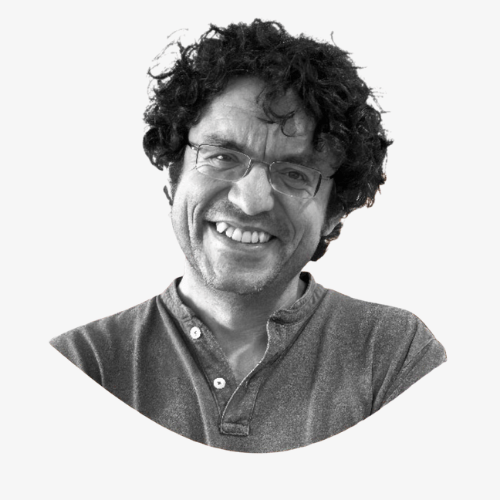
Antonio Villafaina Barroso

PhD in Pharmacy, Community Pharmacist and President of FÜNDEC.
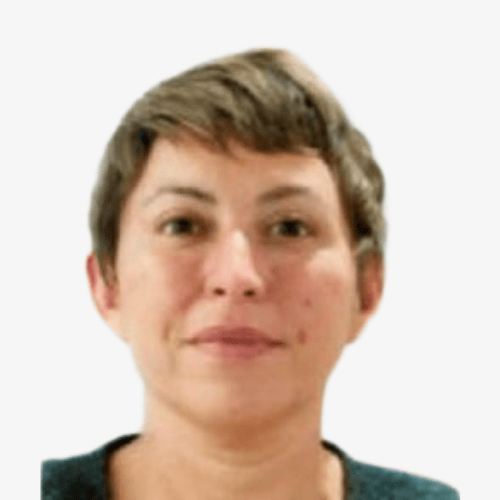
Susana Pérez García

PhD in Pharmacology from the University of Valladolid and Bachelor of Pharmacy from the University of Salamanca.

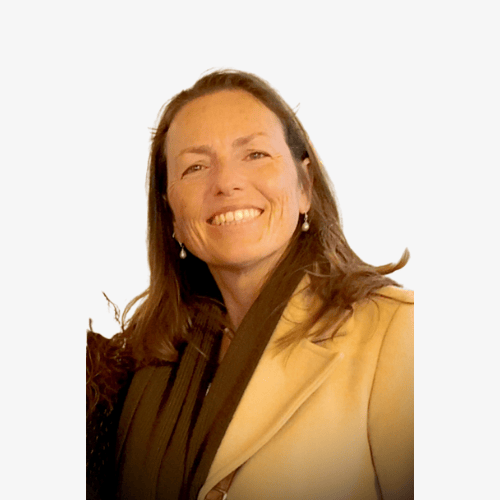
Mba Bee Nchama

Leonor Rodríguez Delgado

Licensed pharmacist with over 20 years of experience in community pharmacy, specializing in comprehensive pharmaceutical care and pharmacotherapeutic monitoring of chronic and polymedicated patients. Extensive accredited training in professional healthcare services, patient safety, pharmaceutical indications, and health prevention. I also have experience in teaching and health education, both in formal training and in outreach activities aimed at the general public and senior citizens. A professional with a strong commitment to patient care, focused on quality and patient-centered care.

Barbara Nayelis Hernandez Calero

A pharmacy graduate with a deep interest in the healthcare field, I am driven by a desire to fully understand treatments and their impact on patients' quality of life, always striving to contribute positively to their well-being whenever possible. This passion motivates me to pursue continuous training and professional development.
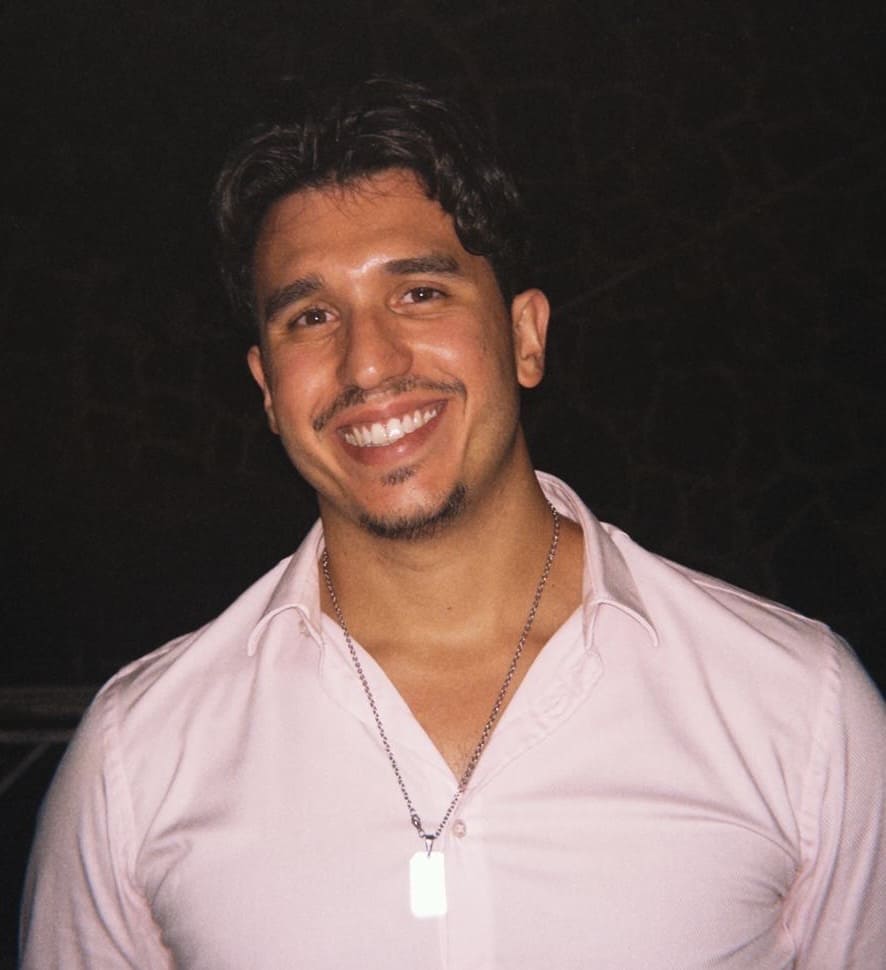
Lincoln Gerardo González González

My name is Lincoln. Born in Havana and raised in Tenerife. I am a pharmacist and nutritionist. Passionate about sports, cooking, and knowledge.
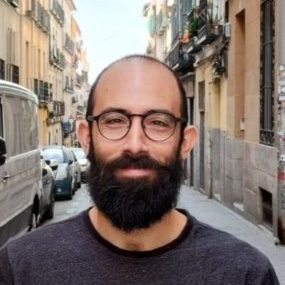
Jaime Manzano Lorenzo

A pharmacist from the Complutense University of Madrid and with a master's degree in International Humanitarian Aid from the Universities of Uppsala and Groningen. He has worked with Doctors Without Borders and has experience in pharmacovigilance and community pharmacy. He is currently responsible for global health policy at the Health as a Right Foundation.

Share this microcredential

// Common variables (we improved the encoding for email) const pageUrl = window.location.href; const pageTitle = document.title; // Sharing functions (those for social networks with window.open remain the same, but we added return false to avoid page breaks) function shareFacebook() { window.open(`https://www.facebook.com/sharer/sharer.php?u=${encodeURIComponent(pageUrl)}`, '_blank', 'width=600,height=400'); } function shareLinkedIn() { window.open(`https://www.linkedin.com/sharing/share-offsite/?url=${encodeURIComponent(pageUrl)}`, '_blank', 'width=600,height=500'); } function shareTelegram() { window.open(`https://t.me/share/url?url=${encodeURIComponent(pageUrl)}&text=${encodeURIComponent(pageTitle)}`, '_blank', 'width=600,height=400'); } function shareWhatsApp() { window.open(`https://api.whatsapp.com/send?text=${encodeURIComponent(pageTitle + ' ' + pageUrl)}`, '_blank'); } // Email share function (copy to clipboard + Gmail fallback) function shareByEmail() { const pageUrl = window.location.href; const pageTitle = document.title.trim(); // Text ready to paste into email (with line breaks) const emailText = `${pageTitle}\n${pageUrl}\n\nI'm sharing this interesting article with you.`; // We try to copy to the clipboard if (navigator.clipboard && navigator.clipboard.writeText) { navigator.clipboard.writeText(emailText).then(() => { // Success message (you can use alert, toast, or a temporary div) alert('Link copied to clipboard!\nPaste it into your email (Ctrl+V).'); }).catch(err => { console.error('Error copying:', err); fallbackToGmail(); }); } else { // If clipboard is not supported (very old browsers) fallbackToGmail(); } } function fallbackToGmail() { const pageUrl = encodeURIComponent(window.location.href); const pageTitle = encodeURIComponent(document.title); const body = encodeURIComponent(document.title + '\n' + window.location.href + '\n\nI'll share this with you:'); // Open Gmail compose window.open(`https://mail.google.com/mail/?view=cm&fs=1&su=${pageTitle}&body=${body}`, '_blank', 'width=800,height=600'); }