Fundamentals of Financial Education

Fundamentals of Financial Education

Overview

This micro-credential introduces the fundamentals of financial education, covering key concepts, basic products, and economic risks. The program trains participants to design training activities tailored to different audiences, apply accessible teaching methodologies, and facilitate participatory learning processes.

Goals

1. Develop financial education skills that allow understanding, explaining and applying fundamental concepts of financial economics.
2. Analyze financial products and services, evaluating their characteristics, risks, and opportunities
3. Design financial education training programs and activities adapted to different learning profiles
4. To train and support other trainers in financial education, promoting replicable training strategies

Access requirements

Students must be between 25 and 64 years old on the start date of the training. In addition, they must meet one of the following three requirements:

  • To hold an official Spanish university degree or another degree issued by a higher education institution belonging to another Member State of the European Higher Education Area, which qualifies for access to master's level studies in that State.
  • Holding a degree issued by an educational system outside the European Higher Education Area without a validation or declaration of equivalence. In these cases, the academic director will submit a preliminary report to the Academic Committee, which will authorize or
    Access will be denied. Under no circumstances will authorization imply the validation of the foreign degree, nor its recognition for any purpose other than pursuing postgraduate studies at the ULL.
  • Demonstrate a minimum of two years of professional experience in tasks supporting administration, accounting, financial services, entrepreneurship and business management

Academic program

Contents

  1. The Financial Education Ecosystem in Spain and the Canary Islands
  2. Didactics and Methodology applied to financial education
  3. Contents: Fundamentals of Finance

Methodology and activities

The training activities to be carried out during the delivery of the micro-credential will be:

  • Theoretical classes: expository, explanatory or demonstration sessions of the contents and knowledge.
  • Practical classes: sessions of practical application of the content developed in the theoretical classes, through the resolution of exercises, problems or theoretical-practical scenarios.
  • Independent work: independent and self-regulated activity of the student starting from the
    Documentation and guidelines proposed in the subject, preparation of classes and exams, preparation of final reports, internship reports
  • Tutoring (individual, group…): activity in which the teaching staff attends to, facilitates and guides one or more students in the training process.
  • Assessment: continuous assessment tests and final exams. Tests may be in-person or virtual, and may be written, oral, or consist of practical exercises.

Regarding the way to organize the teaching to achieve the objectives set out in the micro-credential, the organizational modality summarized below will be followed:

  • Lectures/expository method: presentation or explanation by the
    faculty.
  • Personal study: preparation for tests, exams, etc.
  • Assessment: written tests, oral tests, practical tests, …
  • Tutoring: instruction period in which teachers and students interact with the aim of reviewing and discussing materials and topics presented in class.

Evaluation criteria

The microcredential will have an evaluation system (ES) based on the following evaluation tests:

  • SE1. Objective tests (true/false, multiple choice, test type, fill-in-the-blank, ordering, etc.): These are measurement instruments that allow the evaluation of knowledge, skills, performance, aptitudes, etc. The answers are closed, and objectivity is favored when correcting them.
  • Short answer tests: a type of objective test in which students do not elaborate on their answers and must respond to the specific information requested.
  • Attendance, participation or attitude in teaching activities, seminars, tutorials, etc.: monitoring student attendance and participation in teaching activities, carrying out activities during teaching sessions.

General information

Credits: 2 ECTS

Duration: 18/05/2026 – 27/05/2026

Teaching modality: Virtual

Location: Virtual Campus of the University of La Laguna.
Clases online síncronas.
Schedule:
18/05/2026; 16:00-18:00
19/05/2026 ; 16:00-19:00
20/05/2026: 16:00-19:00
21/05/2026: 16:00-19:00
25/05/2026:16:00-19:00
26/05/2026 ; 16:00-19:00
27/05/2026: 16:00-19:00

Registration: Free

Valued at: €145

Registration
More info and registration help

The cost of tuition for this Microcredential will be subsidized by the 'Plan for the development of university microcredentials', investment 6 of component 21 of the Addendum to the 'Recovery, Transformation and Resilience Plan', financed by the European Union – Next Generation EU, year 2025.

Funded by the Ministry of Economy, Industry, Commerce and Self-Employed Workers of the Government of the Canary Islands

Flexibility

Short courses available in various formats (in-person, online, or hybrid). Ideal for learning without interrupting your professional life.

Employability

Content created and delivered by professionals and experts in the field, designed for immediate application.

Certification

Endorsed by the University of La Laguna. You will receive an official ECTS certificate, valid in the European Higher Education Area.

Teaching staff

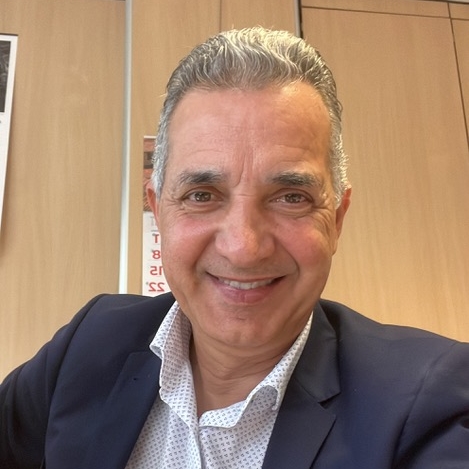
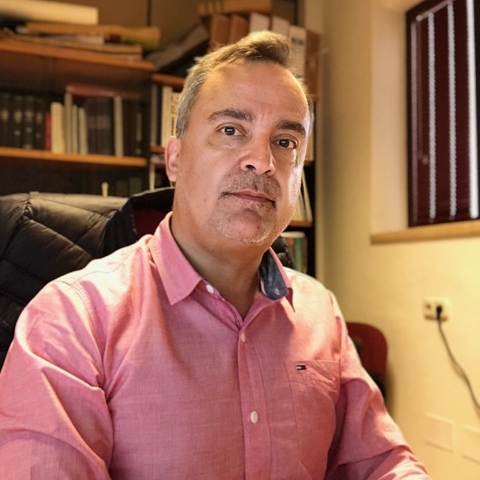
Francisco J. Calero García

Alicia Correa Rodríguez

Domingo Javier Santana Martín

Felipe Alberto Cordero Lorenzo

María Antonella Pugliese Camacho

Share this microcredential

// Common variables (we improved the encoding for email) const pageUrl = window.location.href; const pageTitle = document.title; // Sharing functions (those for social networks with window.open remain the same, but we added return false to avoid page breaks) function shareFacebook() { window.open(`https://www.facebook.com/sharer/sharer.php?u=${encodeURIComponent(pageUrl)}`, '_blank', 'width=600,height=400'); } function shareLinkedIn() { window.open(`https://www.linkedin.com/sharing/share-offsite/?url=${encodeURIComponent(pageUrl)}`, '_blank', 'width=600,height=500'); } function shareTelegram() { window.open(`https://t.me/share/url?url=${encodeURIComponent(pageUrl)}&text=${encodeURIComponent(pageTitle)}`, '_blank', 'width=600,height=400'); } function shareWhatsApp() { window.open(`https://api.whatsapp.com/send?text=${encodeURIComponent(pageTitle + ' ' + pageUrl)}`, '_blank'); } // Email share function (copy to clipboard + Gmail fallback) function shareByEmail() { const pageUrl = window.location.href; const pageTitle = document.title.trim(); // Text ready to paste into email (with line breaks) const emailText = `${pageTitle}\n${pageUrl}\n\nI'm sharing this interesting article with you.`; // We try to copy to the clipboard if (navigator.clipboard && navigator.clipboard.writeText) { navigator.clipboard.writeText(emailText).then(() => { // Success message (you can use alert, toast, or a temporary div) alert('Link copied to clipboard!\nPaste it into your email (Ctrl+V).'); }).catch(err => { console.error('Error copying:', err); fallbackToGmail(); }); } else { // If clipboard is not supported (very old browsers) fallbackToGmail(); } } function fallbackToGmail() { const pageUrl = encodeURIComponent(window.location.href); const pageTitle = encodeURIComponent(document.title); const body = encodeURIComponent(document.title + '\n' + window.location.href + '\n\nI'll share this with you:'); // Open Gmail compose window.open(`https://mail.google.com/mail/?view=cm&fs=1&su=${pageTitle}&body=${body}`, '_blank', 'width=800,height=600'); }