Government Pavilion, C/ Padre Herrera s/n
Post Office Box 456
38200, San Cristobal de La Laguna
Santa Cruz de Tenerife - Spain
Switchboard Tel.: (+34) 922 31 90 00
Hours: Mon, 8:00 a.m. to 9:00 p.m.

This micro-credential introduces students to modeling and simulation applied to transport and mobility, a key tool for analyzing and evaluating infrastructure before implementation, reducing costs and risks. Through the use of TransModeler software, participants will acquire skills to conduct traffic studies, analyze scenarios, and support decision-making in infrastructure projects and sustainable mobility policies.
Basic and intermediate level handling of the TRANSMODELER application for traffic modeling and simulation.
Students must be between 25 and 64 years old on the date the training begins.
A university degree is not required to access this micro-credential. However, students wishing to access it must meet the following access requirements:
1) Creation and management of simulation projects
2) Assignment VS Simulation
3) Results and practical applications
The training activities to be carried out during the delivery of the micro-credential will be:
Regarding the way to organize the teaching to achieve the objectives set out in the micro-credential, the organizational modality summarized below will be followed:
The microcredential will have an evaluation system (ES) based on the following assessment tests:
Credits: 2 ECTS
Duration: 28/04/26 – 07/05/26
Teaching modality: Virtual
Location: Virtual
The cost of tuition for this Microcredential will be subsidized by the 'Plan for the development of university microcredentials', investment 6 of component 21 of the Addendum to the 'Recovery, Transformation and Resilience Plan', financed by the European Union – Next Generation EU, year 2025.
Short courses available in various formats (in-person, online, or hybrid). Ideal for learning without interrupting your professional life.
Content created and delivered by professionals and experts in the field, designed for immediate application.
Endorsed by the University of La Laguna. You will receive an official ECTS certificate, valid in the European Higher Education Area.
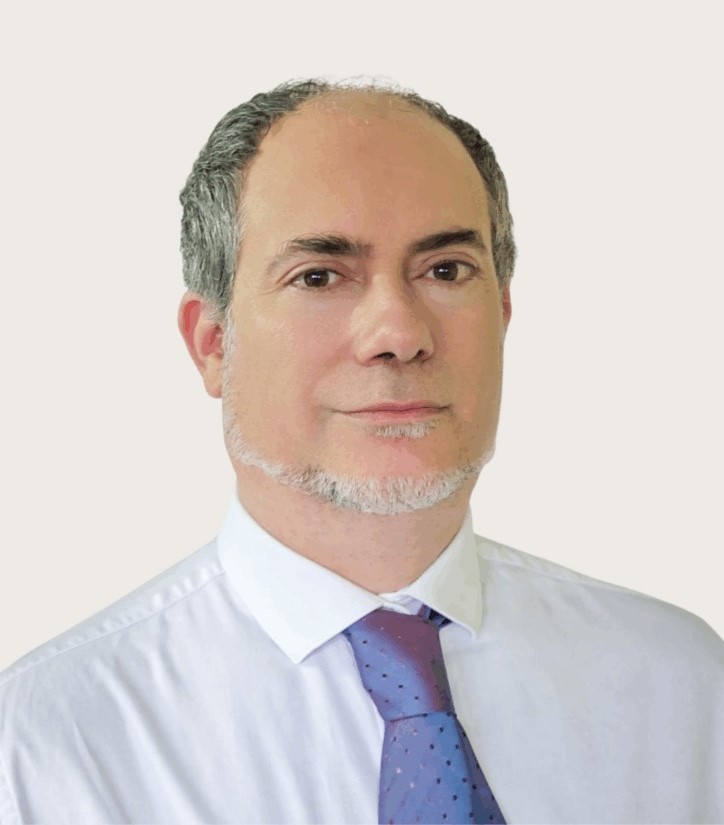
PhD in Mathematical Engineering, Statistics, and Operations Research, and Master's in Logistics, Transportation, and Road Safety. He has over 25 years of experience in the transportation consulting and engineering sector internationally. He is an official trainer for TransModeler training for public and private entities.
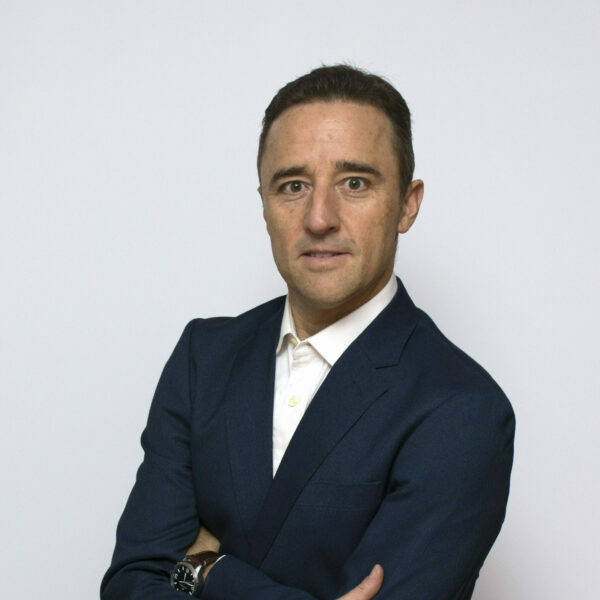
A professional with over 20 years of experience in the civil and transportation engineering sectors, and with 9 years of experience as an associate professor at the University of La Laguna (ULL). He is a regular user of TRANSMODELER for creating models and simulations in transportation projects, as well as for teaching the application to Civil Engineering students at the ULL and is responsible for the software licenses within the degree program.

Government Pavilion, C/ Padre Herrera s/n
Post Office Box 456
38200, San Cristobal de La Laguna
Santa Cruz de Tenerife - Spain
Switchboard Tel.: (+34) 922 31 90 00
Hours: Mon, 8:00 a.m. to 9:00 p.m.
