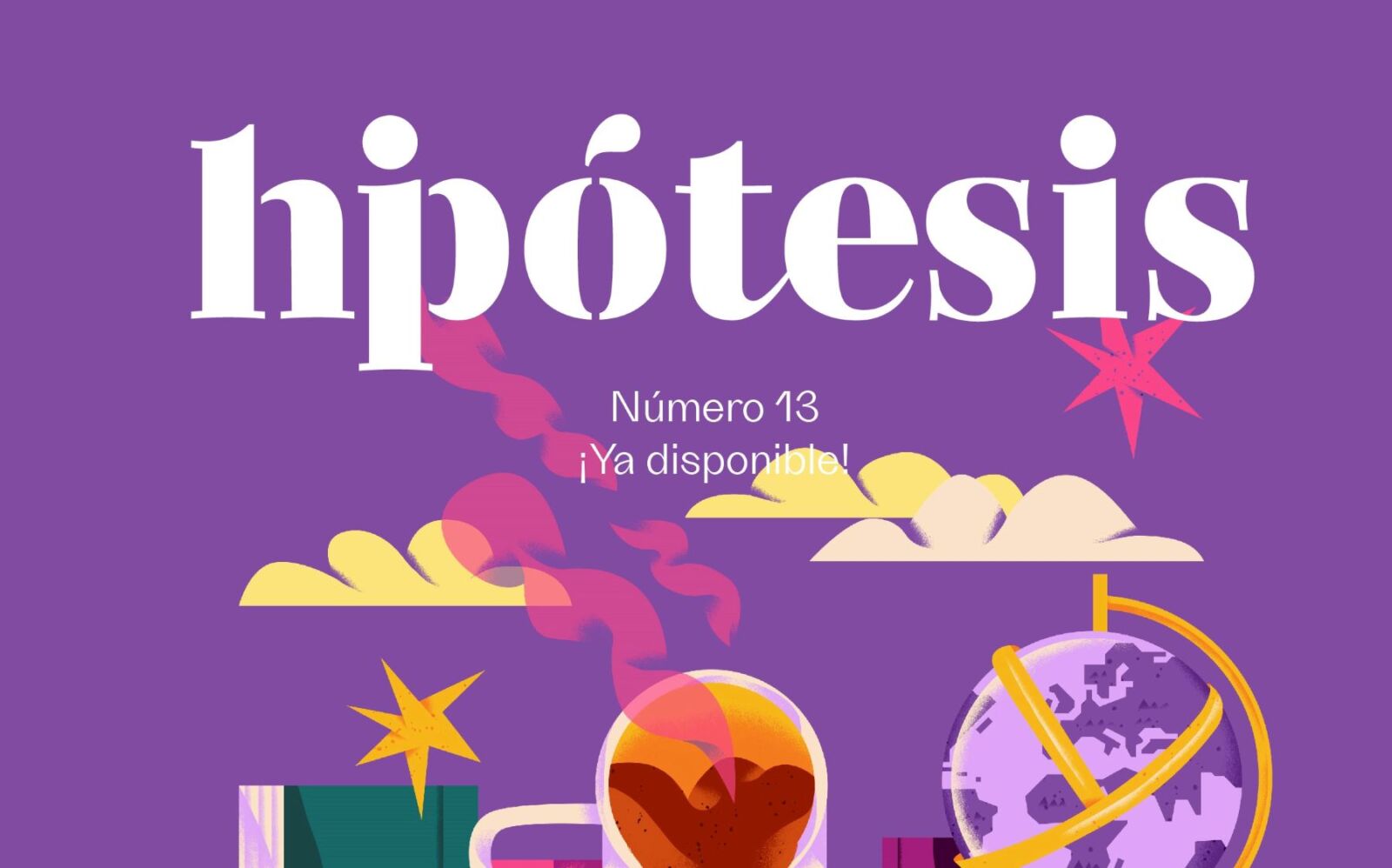
The thirteenth issue of HIPÓTESIS, the University of La Laguna's online science outreach magazine, is now available for download. This new edition features fresh articles, reports, and interviews, all available starting today, Monday, January 16. The publication, promoted by the university through its Scientific Culture and Innovation Unit (Cienci@ULL), is distributed in collaboration with the Canary Islands Agency for Research, Innovation and the Information Society (ACIISI) and the Regional Ministry of Education. The first issue of 2023 is available for free download on Google Play and the Apple Store.
In this issue of HIPÓTESIS, the contributions can be grouped into three thematic sections: biomedicine, science and the environment, and social sciences and humanities. In the section dedicated to research on our health, we find seven articles that explore the intersection of biology and medicine. Cristina Yuntas elaborates on the progress being made in the fight against malaria, which she began in her article in the previous issue, focusing this time on the vector responsible for transmitting the disease: mosquitoes.
Two articles, both written by genetics professors in collaboration with undergraduate biology students who completed their final year projects under their supervision, explore the implications of epigenetics in aging and asthma. The first article is authored by Mario Martín Almeida and Javier Pérez García, while the second is authored by Carlos de la Rosa Báez and Esther Herrera Luis.
Julio Vera González, PhD from the University of La Laguna and professor at the University of Erlangen-Nuremberg (Germany), tells us about a revolution in cancer treatment based on the combination of three distinct and seemingly disparate disciplines: genetics, immunology, and computer science. Another professor, Ricardo Borges, also from the University of La Laguna, reports on a discovery made in his laboratory that offers us the possibility of a simple and reliable method for the early diagnosis of Parkinson's disease.
Finally, in collaboration within the framework of a Final Degree Project, Adrián Conde, Bárbara Socas and Miguel Ángel Rodríguez report on the possibilities presented by nanomaterials as a means to guarantee food safety.
In the second section of articles, focused on issues related to science and the environment, this issue features three contributions. Francisco Machín and Borja Aguiar González, professors at the University of Las Palmas de Gran Canaria, report on how ocean currents influence the planet's climate. Meanwhile, Noelia Cruz from the University of La Laguna presents the concept of water footprint, an indicator to consider for ensuring the sustainability of agriculture.
Directly related to the shift towards more sustainable agriculture is the work authored by Ana M. Monzón, Nereida M. Rancel, and Milagros León, along with Juan C. Luis, which discusses how combining three species can improve yields without harming the environment. Finally, Carlos Boluda recounts how the chemical elements of the Universe were generated over eons of cosmic evolution.
The third section contains a reflection initiated within the framework of a research project on equity in education, authored by Javier Marrero, Ana Vega, Juan J. Sosa, and José D. Santos from the University of La Laguna. Meanwhile, Professor María Aránzazu Calzadilla, also from the same university, reports the results of a study analyzing the legal considerations that should be given to addressing violence against children and adolescents.
The series is completed with the regular sections of HYPOTHESIS: “The Razor’s Edge” (Larry Darrell), which continues his reflection on the origin of life; “In Ockham’s Garden”, by Guillermina O, which illustrates the absurdity of some medieval methods that well into the 21st century are still used to predict the weather; and “With Science Elsewhere” (Raquel Villar), which features a mathematician from the Canary Islands who works in Kazakhstan.
These sections are complemented by two articles by Juan José Martín. In the first, he presents the key aspects of the life and scientific work, both during his lifetime and after his death, of an illustrious Canary Islander: Blas Cabrera Felipe, colleague and friend of Einstein and one of the fathers of Spanish physics. The origin of life is present in this issue of HIPÓTESIS threefold: in addition to the philosophical and even poetic references made by Larry Darrell, there is a nod to the topic in Carlos Boluda's article. And, in a way, the reflections of Antonio Lazcano, a leading researcher in this field, round out the discussion.

 Spanish
 English
 French