For some time now, there has been a growing emphasis on the importance of ensuring that university students develop the necessary skills to navigate the transition to and entry into the workforce. “Although university education is often seen as opening a path to future employment, not everyone achieves this goal, and one of the reasons for this is the quality of the education they receive,” says Professor Pedro Álvarez of the Faculty of Education, academic director of a conference held this week on student employability at the host institution.
In fact, addressing these issues was one of the aims of the First Conference on Professional Development and Student Employability. “University education, despite the efforts made in the last decade with the development of a competency-based model, continues to prioritize academic training over professional development,” Álvarez continues. “We are seeing that when facing the socio-labor transition, mastering other general skills, such as teamwork, decision-making, initiative, and communication skills, is just as important as having knowledge of Chemistry, Law, Biology, Medicine, Pedagogy, etc.
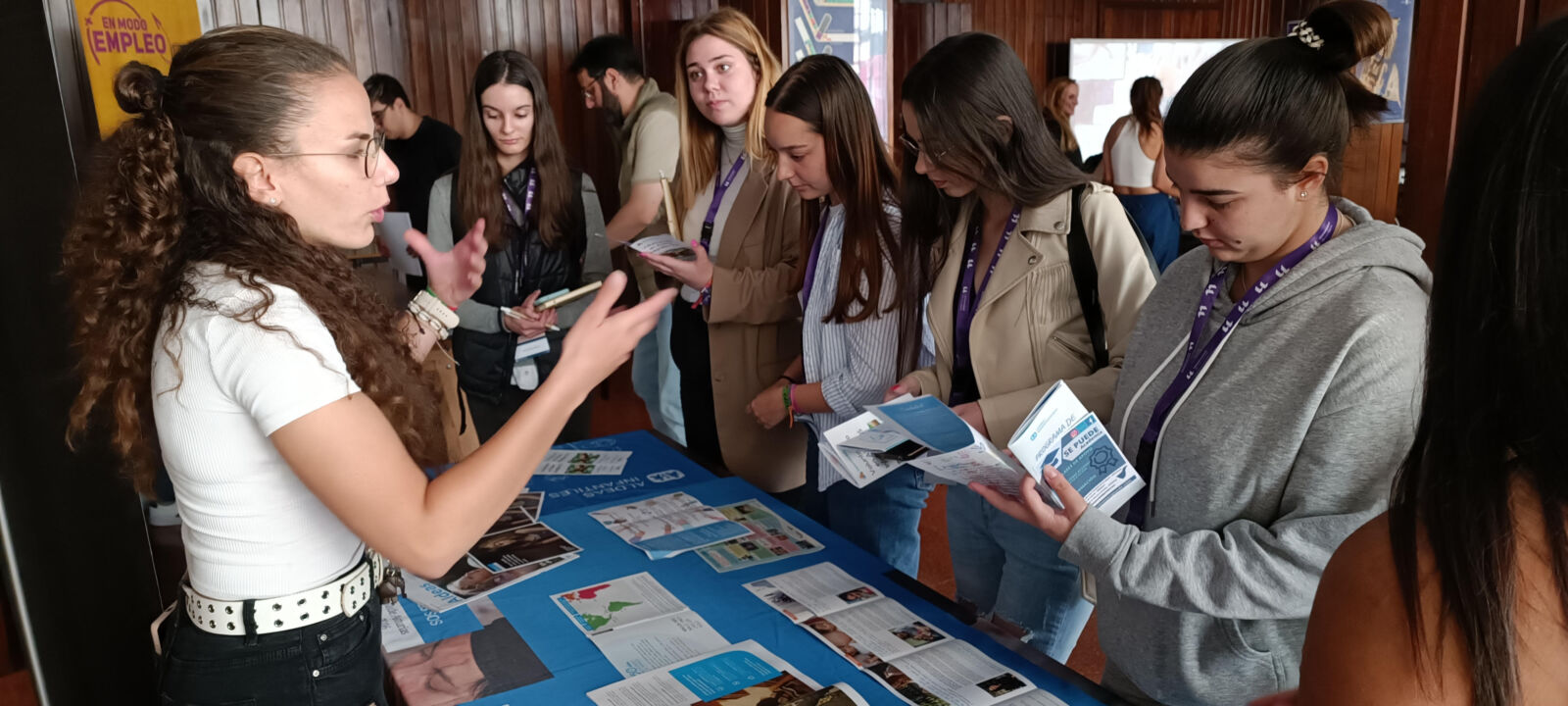
The University Guidance and Tutoring Laboratory, which focuses on the guidance and comprehensive development of university students, organized these workshops to help students improve their skills for professional development. The activities began with a talk on career options after graduation, followed by various workshops led by the General Foundation on professional skills development, and a job fair featuring seven companies where students could discuss their future careers. In the afternoon session, several talks were given on entrepreneurship and how to prepare for competitive public service exams. The final activity was a roundtable discussion with alumni of the Faculty who are now employed and who shared their professional development experiences.
“The students have recognized the importance of this other aspect of education. We need to work to bridge the gap between the academic profile of degrees and the professional profile required for integration into the workforce. And we need to improve student guidance systems so that they can successfully navigate the transition from education to employment,” explains the educator.
This is a need that many international labor organizations (ILO, CEDEFOP) have highlighted, advocating for improved relations between higher education and the labor market. “Improving the employability of our students is an objective of European education policies and a quality indicator of the education system itself. Therefore, learning about entrepreneurship and employability should be included in university curricula.”.

 Spanish
 English
 French