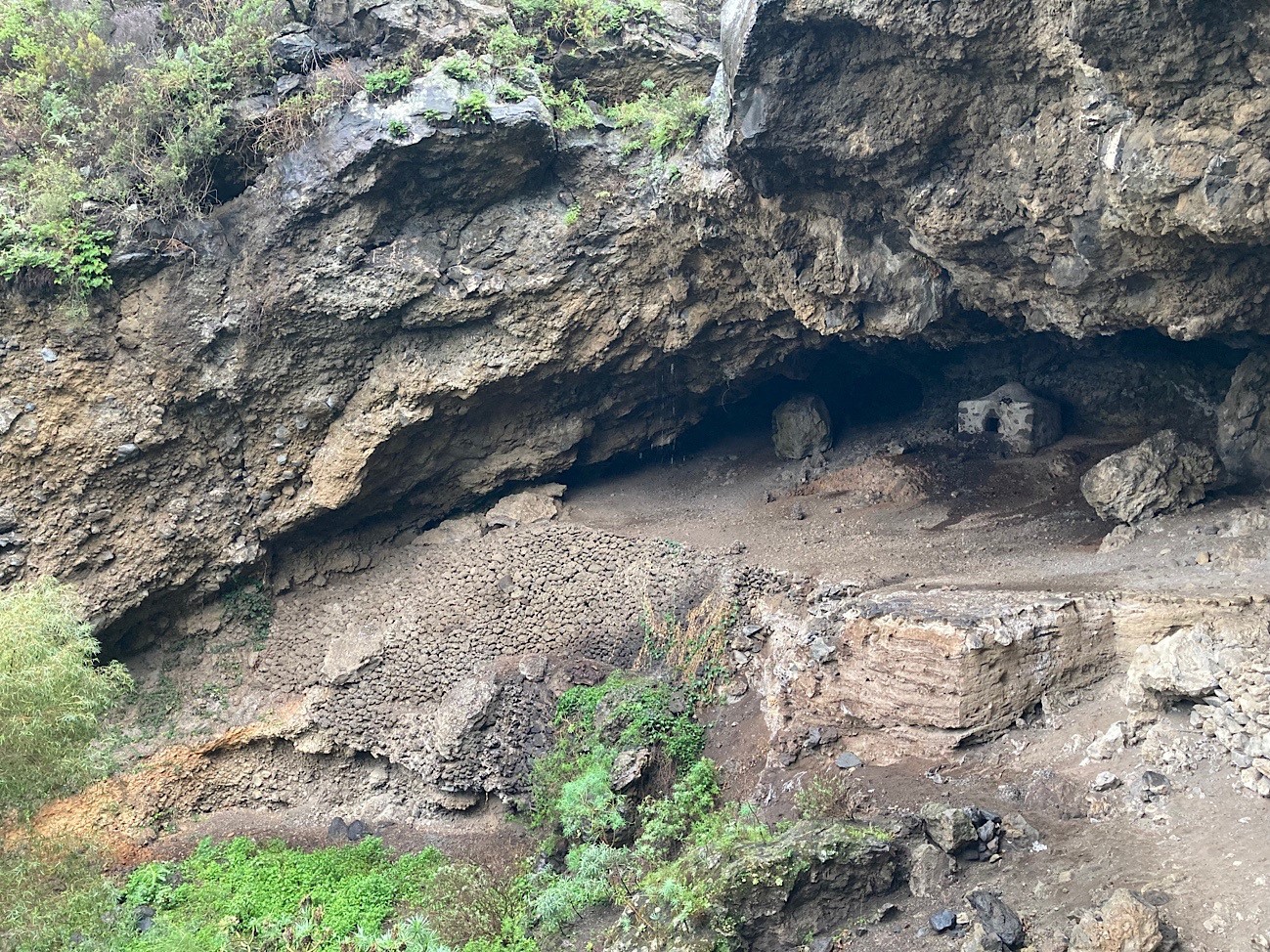
The research team from the Laboratory of Micromorphology and Archaeological Biomarkers (AMBI Lab) of Antonio González University Institute of Bio-Organism from the University of La Laguna, in collaboration with the Geoarchaeology Working Group of the University of Tübingen (Germany), has published a new article research in the journal Geoarchaeology This research focuses on one of La Palma's most emblematic aboriginal sites, the Belmaco Cave in Villa de Mazo. It has applied microscopic and molecular techniques from geoarchaeology, organic chemistry, and inorganic chemistry to reconstruct the activities carried out by the Auaritas people in the cave.
The combination of these high-resolution techniques, such as soil micromorphology, lipid biomarker analysis, and even mineralogical and elemental analyses like X-ray diffraction and fluorescence, has allowed the detection of a livestock housing deposit in the central area of the cave that was periodically burned for parasite control and reuse for at least 600 years. This type of archaeological deposit is known as fumier In the jargon of geoarchaeology, it has been documented numerous times in Neolithic and Bronze Age sites on the Iberian Peninsula. Furthermore, the use of Canary pine needles has been determined (Pinus canariensis) as fuel for carrying out said burnings, as well as a very unusual combination of minerals as a result of the various contributions of organic matter in a volcanic cave such as Belmaco.

Image of the researchers during the fieldwork carried out for this study.
Molecular and microscopic analysis has allowed researchers to better understand how the aboriginal inhabitants of La Palma used the environment and exploited forage resources, contributing to a deeper understanding of their pastoral practices, which were crucial for their survival on the island. This study has also confirmed the use of Belmaco Cave as a sheepfold since prehistoric times, likely linked to domestic occupation in the northern part of the cave, where a large quantity of archaeological material was discovered by archaeologist Luis Diego Cuscoy in the 1960s. It is probable that the aboriginal inhabitants and their livestock lived together in the cave from the 9th century AD until the arrival of European colonists in the 15th century AD.
This research has been funded by the Caja Canarias Foundation and “la Caixa”, within the framework of the project “Aboriginal paleoenvironmental contexts and their management. Some island examples” (2018PATRI19), directed by Carolina Mallol, from the Department of Geography and History. The main author of the article, Enrique Fernández-Palacios, whose thesis revolves around the study of aboriginal livestock activity in La Palma from the perspective of geoarchaeology, is currently the beneficiary of a predoctoral FPU contract granted by the Ministry of Universities (FPU19/02379).

 Spanish
 English
 French