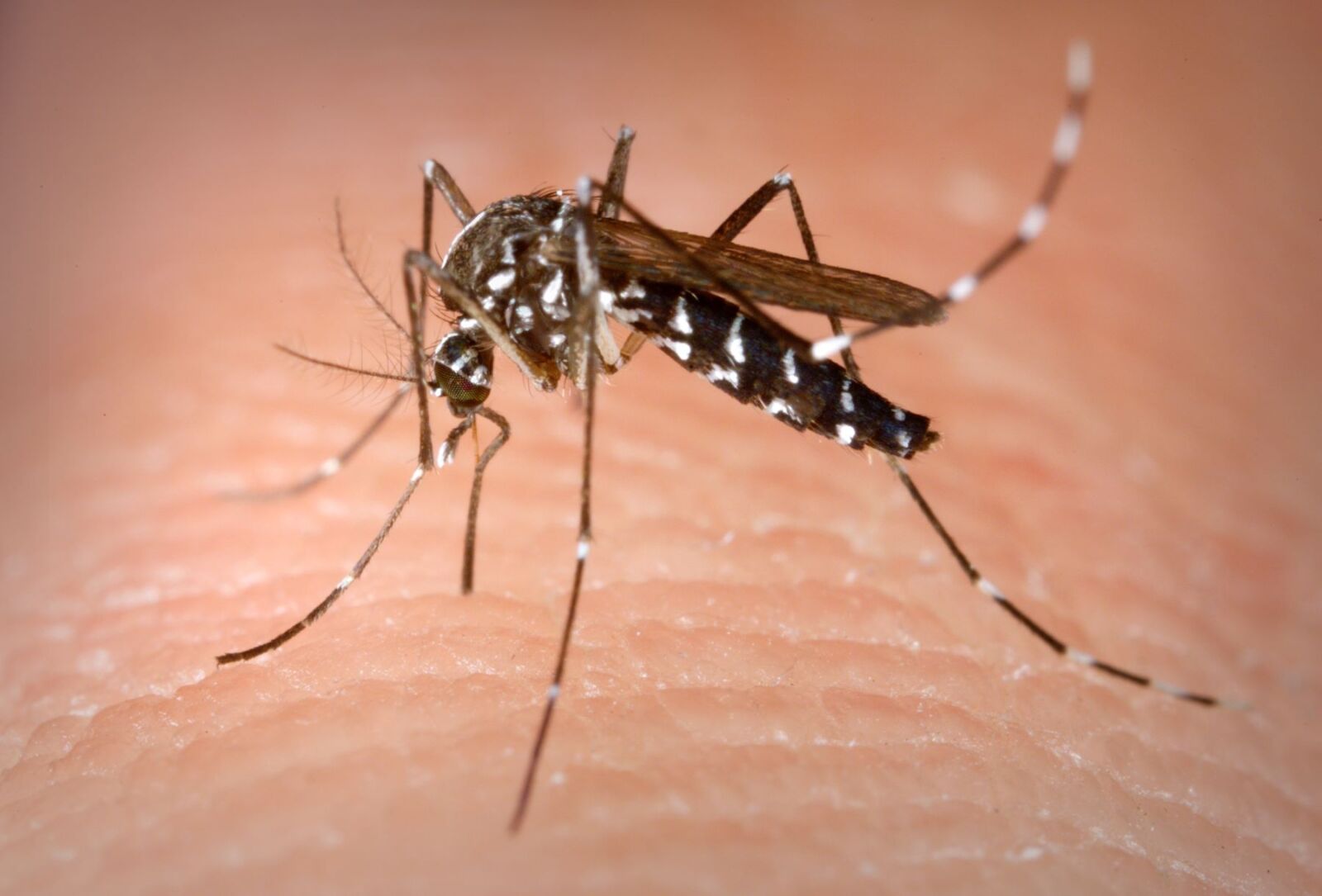
The Ministry of Health, through the General Directorate of Public Health, has activated the protocol foreseen in the Entomological Surveillance Systemgica following the detection last Friday, September 1st, of three specimens adults and a larva of mosquito of the species Aedes albopictus in one of the traps located in a greenhouse in Tacoronte.
With the immediate collaboration of the Tacoronte town council and the company that owns the greenhouse, that eveno has halted its activity to prevent the movement of workers in the area, HE has intensified surveillance, also establishing a security perimeter around the area for carrying out a situation diagnosis and locating possible breeding sites. As well as placing a greater number of traps.
The samples by the Laboratory of Medical Entomology of the University Institute of Tropical Diseases and Public Health of the Canary Islands, dependent on the University of La Laguna, They were morphologically identified as specimens belonging to the Aedes species aIbopictus. The work team has moved already to the area without observing any more specimens or breeding sites in the rest of the traps located in the nearby area, which is predominantly agricultural and has no nearby population centers.
Following these tasks, the number of traps placed in the areas near the detection point has been increased, and the sampling frequency has been raised to weekly trap checks. Today, Monday, September 4th, the Permanent Regional Committee for Coordination and Monitoring of the Vector Surveillance Plan, coordinated by the General Directorate of Public Health, met to establish and implement the actions outlined in the protocol as soon as possible.
Experience in detection Aedes
Since 2013, the Canary Islands have had an Entomological Surveillance System, coordinated by the General Directorate of Public Health in collaboration with the University Institute of Tropical Diseases and Public Health of the Canary Islands at the University of La Laguna, with the aim of detecting the possible appearance of invasive mosquitoes early. The island of Tenerife has been monitored for the detection of these types of mosquitoes since that year through the installation of 196 specific traps (total in the Canary Islands: 635 traps), 21 of which were installed in the greenhouse where these specimens were detected.
September of this year marks 18 months since the last detection of the mosquito Aedes aegypti in La Palma, which could lead to declaring the eradication of the vector in this area, as was done in May 2019 with its detection on the island of Fuerteventura. The last mosquito detection Aedes It occurred last December in a house in Santa Cruz de Tenerife, after which the search, fumigation, trapping and surveillance were carried out without detecting any specimen in the area since then.
From the beginning of this surveillance program, citizen collaboration has been considered very important to identify and eliminate potential invasive mosquitoes. Citizens can send photos of suspected mosquitoes. Aedes or images of severe inflammatory reactions from stings, if any occur, to the email account vectores.scs@gobiernodecanarias.org, indicating the geographical location where it has been found and a contact telephone number.
The Health Department emphasizes that the Surveillance System is effective in detecting even the larvae and eggs of invasive mosquitoes early on, before they cause any bites on the island's population. In this regard, all necessary information is being gathered to contain, verify, and, if necessary, eradicate the presence of this mosquito on the island. It is important to note that no bites have been reported and that the presence of the mosquito does not imply transmission of diseases such as dengue, Zika, yellow fever, or chikungunya, as these are not present in our territory, except for sporadic imported cases.
The surveillance system team has activated the bite surveillance program in the island's health centers and pharmacies, by conducting surveys by health professionals so that if people come in with compatible bites they can be easily detected.
Aedes albopictus
He Aedes albopictus It is a black mosquito with stripes, smaller than those commonly found in our region, which is more prevalent in urban environments and has adapted to breeding in small, man-made pools of water. It is a vector for the transmission of viral diseases in other geographical areas where these diseases are endemic, which is not the case in the Canary Islands.
He Aedes It usually bites during the day, not at night, and its bite causes a strong inflammatory reaction accompanied by intense itching. It moves nimbly close to the ground and does not produces No buzzing. Only the females bite, as they need to feed on blood to reproduce. They also need water (breeding sites) to complete their development. They lay their eggs in water, from which larvae emerge, transform into pupae (both aquatic), and finally become adult mosquitoes. Mosquitoes that bite humans need to breed very close to them. Therefore, the most effective measure against them is to monitor or eliminate their breeding sites.

 Spanish
 English
 French