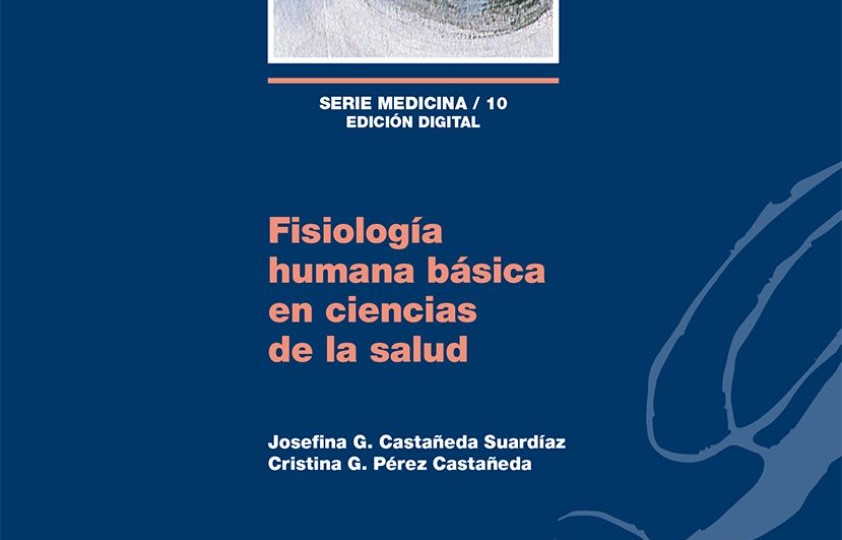

He Publications Department The University of La Laguna has just published in the Medicine series of its University Teaching Materials collection the manual “Basic Human Physiology in Health Sciences”, written by Josefina Castañeda Suardíaz, The book was written by a nurse from the Nursing Department of the academic institution and psychologist Cristina G. Pérez Castañeda. It is published on a USB drive and can be purchased for €10 at the service's offices, located in the Central Building (with a 25% discount for the university community if purchased there), or at bookstores and other usual points of sale.
The volume comprises thirteen teaching units and forty-one topics, where the most important and basic knowledge that students of Health Sciences should know within the immense field of Human Physiology is presented and summarized in a practical way.
Starting from the concept of Human Physiology and the levels of biological organization of living matter, with a study of the general biology of homeostasis and control systems, the text delves successively into the analysis of basic and specialized cellular functions, with the bioelectrical phenomena that occur in excitable cells and the transmission of intercellular information, where synapses, neurotransmitters, nerve receptors and muscle contraction constitute important chapters.
General physiology gives way to the physiology of the hematopoietic and lymphoid organs, the physiology of the cardiovascular, respiratory, and urinary systems, and the digestive and nutritional systems. The various elements and functions that occur in each of these systems are addressed. Endocrine physiology has been the subject of study in another volume of teaching material (“Endocrine Physiology in Health Sciences”).
The neurophysiology of the nervous system encompasses the study of sensation, motor activity, and balance, as well as the complex integrative functions of the central nervous system. After understanding the evolution and anatomical and functional organization of the nervous system, the neurophysiology of somatic sensation is addressed, including the origin and transmission of tactile and positional sensations, as well as pain and temperature sensation, concluding with special senses such as sight, hearing, taste, and smell.
The control of motor function at different levels involves the study of reflexes and their integration in various regions, including the brainstem, basal ganglia, and cerebellum. The course concludes with topics addressing the cerebral cortex and intellectual functions of the brain, the limbic system and hypothalamus, and the autonomic or vegetative nervous system. These sections also offer insights into the biopsychosocial relationship between certain anatomical structures and the underlying psychological and behavioral functioning.
The authors of this book, Josefina G. Castañeda Suardíaz and Cristina G. Pérez Castañeda, a physician and a psychologist, respectively, have extensive university teaching experience in the field of Nursing, and broad training and professional activity in the field of psychology, which allows for a coherent structuring and development of content in order to respond to the theoretical and practical needs to achieve the learning outcomes and acquisition of skills planned for subsequent professional development.
Although the work is especially geared towards Nursing students, its authors believe that it may also be useful in other Health Sciences degrees such as Medicine, Physiotherapy, Psychology or Pharmacy, given the comprehensive approach to many health pathologies and the interdisciplinary nature of subjects such as those addressed in the publication.

 Spanish
 English
 French