When discussing tourism in the Canary Islands, the first thing that comes to mind is its strategic importance, as it is the most significant activity within the local productive sector, a true economic engine for the region that creates thousands of jobs and indirectly stimulates other activities. However, its implications extend beyond the purely business realm, as its influence is also evident in people's behavior, customs, and culture. Therefore, it is crucial for the archipelago to maintain continuous and up-to-date knowledge about this sector, approaching it from different perspectives to truly understand its complexity.
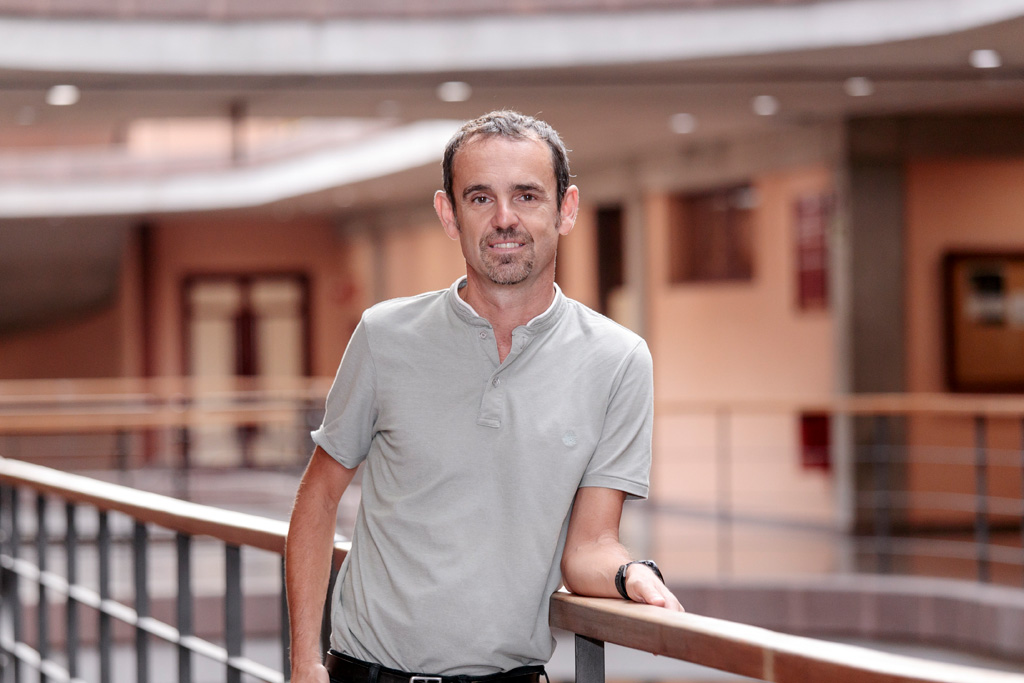
Sociology is one of the ideal disciplines for investigating an activity so intimately related to populations and their behaviors. That is precisely what Professor [Name] has dedicated himself to since defending his doctoral thesis in 2004. Manuel Santana Turégano, attached to Department of Sociology and Anthropology and that, in addition to his academic scientific production, he also has more popular publications in the general press, also on matters related to tourism and its impact on society.
This research path emerged almost by accident, as Santana began studying Architecture at the University of Las Palmas de Gran Canaria, and, after the first term, it became clear that her educational trajectory should take a different course. “I believe that one doesn't necessarily have to be certain of their vocation at eighteen; in fact, some say it's bad to have too clear ideas at that age.”.
The fact is that, upon finishing his Sociology studies, and while considering pursuing his doctoral thesis at the Autonomous University of Barcelona, the recent graduate discovered that the Canary Islands Government's call for doctoral thesis grants had one priority area focused on the labor market and another on tourism. “Where I studied, there had been a lot of research on the sociology of work, but little on tourism, so I submitted a project on the tourism labor market, which combined the two areas. And that's how it all began.”.
 Tourism, essential to understanding current Canarian society
Experts place the beginning of Sociology as a scientific discipline coinciding with the Industrial Revolution, a time of great changes at all levels that were obviously reflected in social structures and, therefore, prompted reflection on what was happening. “But in the Canary Islands, we didn't have an Industrial Revolution,” Santana points out. “We could say that the equivalent event was the development of mass tourism. So, understanding current Canarian society and its economy involves understanding how the relationship we have established with tourism has changed us.” Thus, the researcher clarifies that he hasn't been specifically interested in the “sociology of tourism”; it's simply that “you can't do sociology of the Canary Islands that doesn't have something to do with tourism.”.
Expanding on this idea, he explains that since the arrival of the Castilians in the 15th century, the Canary Islands have been understood in terms of their relationship with the outside world. For example, the successive monocultures that have characterized the regional economy are examples of external relations through the export of products. “And it also involved the movement of people, because in many sugarcane-growing areas in the 16th century, 25% of the population were slaves. And then there were the Flemish and Genoese, like the Lercaro family, who came here because they were merchants.”.
Tourism began in the 19th century, in part because when the British traded with one of their most important colonies, South Africa, ships couldn't reach the islands in a single leg of the journey. They would arrive in the Canary Islands from the United Kingdom, laden with coal. The possibility of filling the holds with bananas and tomatoes on the return voyage marked a new chapter in the islands' economic history. "And that's when some English people started coming to stay, and the rest, as they say, is history.".

Paradigm shift
Reflection from the social sciences on tourism comes at a time when some academic traditions are beginning to talk about a paradigm shift, and which currently considers tourism to be "a sub-part" of a broader social phenomenon, that of "mobilities".
Traditionally, tourism referred to the idea of “tour”"Going to a destination for a short period and returning home. "But, to cite a current example, is a digital nomad a tourist? Or the typical case of the English gentleman who has lived in the Canary Islands for twenty years and owns a restaurant here, when he travels to England, should he really be considered a Canarian tourist traveling to Great Britain despite being English? This is a very common case in the Canary Islands, where today, and especially on the island of Tenerife, approximately 211% of the population was born abroad. And if we add those born in other parts of Spain, the figure increases. People move for many reasons," and tourism must be understood within this continuum of different types of mobility.
But, apart from the dichotomy of whether it is more pertinent to talk about tourism or mobility, another factor that Santana points out in relation to the paradigm shift that is taking place in the sector is its presumed future evolution: “Perhaps I'm getting myself into a real mess, but as far as I know, in twenty or thirty years, this idea that people will be able to travel for a week 3,000 kilometers from where they live at a good price will not be possible because fuel costs will be very high.”.
This changing landscape within the discipline has led Santana to rethink his studies with a much broader perspective. In his opinion, the boundaries between Sociology and Economics often become blurred, and therefore he feels more comfortable approaching the issues he studies from the perspective of the Social Sciences. He addresses this duality in one of his latest published works, the essay “Homo economicus u homo sociologicus” (2022).
“In a market, you try to get the maximum benefit for the minimum effort, to maximize the utility function. That's microeconomics; it's taught in the first year of university. But there are other areas of social life, like family and children, where you don't behave like that. What I call homo sociologicus It would mean that we behave according to socially established patterns for the group we belong to and the situation we are in. Our mothers have probably told us at some point: 'A mother takes food from her own mouth to give to her children.' She doesn't make a calculation in the sense of 'I'm going without food today, but when I grow up, my child will take care of me.' No: she simply behaves according to a socially established pattern.‘.
Regarding the disciplinary division, Santana recalls that it originated in the 1940s at Harvard University, when one of the fathers of American Sociology, Talcott Parsons, agreed with economists on the division of labor carried out by the Social Sciences:“you take value, we take values”(You keep the value and we keep the values). This distinction has existed for forty years and remains to some extent. To put it simply, poverty, migration, and everything related to Social Work are studied by Sociology, while everything concerning the wealthy is studied by Economics.“.
However, disciplinary boundaries often become blurred, and a more comprehensive or at least complementary approach is needed, such as Economic Sociology, a field in which Santana himself has chaired the research committee of the Spanish Federation of Sociology, although he admits that, compared to what happens elsewhere, it is relatively underdeveloped in Spain.
As an example of work done in this area, he points to a sociological analysis of the drafting of European banking legislation following the financial crisis. This analysis involved interviewing stakeholders in the sector, and one of its conclusions was that the boards of directors of financial institutions should be more diverse by including more women, based on the hypothesis that, when it comes to risk-taking, male and female behavior are not exactly the same. “I’m telling you this, and I wouldn’t know whether to put it under the heading of Economics or Sociology. What does it matter? And I’m delving into what would be the core of Economics: finance.”.
Another example of the sociology of finance he contributes is his description of the "financialization" process, which reveals a shift in the social dynamics behind real estate transactions. For instance, news recently broke that home sales in the Canary Islands had reached significant levels, but, interestingly, many of these transactions were not financed with mortgages. "That doesn't mean people are rich," he explains, "but rather that investment funds are at work." Therefore, he argues that, when it comes to regulation, it's crucial to consider whether the property is owned by individuals or corporations. "A developer builds a housing development so people can have a second home for vacations. But if a fund buys it to rent it out, then the land, which is the scarcest resource we have in the Canary Islands, is being used for purposes other than its intended use.".
 Tourism sector dashboards
Another project that Santana Turégano has been responsible for is “Information system for measuring the impacts of tourism (SITURThe three-year project, in which he and other researchers addressed issues such as the most appropriate dashboards and indicators for evaluating the performance of tourism activity, formally ended in 2020. The work stemming from this project has now been integrated into the Canary Islands Tourism Observatory, The project, which involves researchers from both the University of La Laguna and the University of Las Palmas de Gran Canaria, is based on a clear premise: better data leads to better decisions. The challenge lies not only in how to obtain the data, but also in determining which data is optimal for characterizing what is being measured.
The term “dashboard” comes from the field of Business Administration and Management and refers to a management tool that monitors the activity carried out by the organization and, based on the numerical data obtained, facilitates decision-making. “But a dashboard is useless on its own; what’s important is that we, as a society, agree on where we want to go. It can help us see how things are going, but data is never neutral: it’s important that we gather information about some things and not others. Therefore, the main conclusion of that study was the need to improve governance systems.”.
Regarding the importance of which data to analyze and, based on that data, which indicators to create and use, he gives the example of the difference in the number of tourists between the two capital islands: Tenerife receives five million a year and Gran Canaria, four. So, at first glance, the difference is clearly in favor of the western island. “To put it very simply, if you convert those millions of tourists into overnight stays, it turns out that an extra 301 million tourists in favor of Tenerife when measured by total tourists can drop to 151 million overnight stays when measured by overnight stays, given that the average stay is somewhat longer in Gran Canaria. So, even though there are far fewer tourists, they can generate almost the same number of overnight stays. Let's think about what that means in other sectors: tourists who stay for a week, and who therefore travel to and from the airport once a week, generate twice the traffic of tourists who stay for two weeks and travel to the airport once every two weeks.”.
The expert continues to extrapolate from this data. “When you translate that into income, the difference between the islands narrows even further. And if we look at the percentage of the population residing in tourist municipalities who were born there, the differences are even greater. To use the data very roughly, the municipality with the most tourist accommodation in Spain is San Bartolomé de Tirajana, and 531% of its population were born there. In contrast, in municipalities like Adeje and Arona, that figure drops to approximately 301%. Does that indicate that the development of San Bartolomé has benefited its residents more than Arona's has? I wouldn't go so far as to say that, but this is an example of how data is never neutral. Comparing two important and relatively similar destinations like Tenerife and Gran Canaria, the measurement of the impacts and importance of tourism will not be the same if we use the number of tourists, overnight stays, or the income generated by those tourists as indicators.”.
The fact is that, in a territory like the Canary Islands, and especially Tenerife, where mobility planning has largely relied on secondary roads merging onto the highway, understanding travelers' journeys would be relevant, and yet it isn't being done. “Tourists arrive by plane, but they'll get to their accommodations somehow, and that's not being measured. We boast about sustainable tourism because, for example, we have hotels whose boilers are heated by solar panels. But if the tourists are then using rental cars…”
Regional indicators
Given the importance of having reliable indicators to leverage the potential of dashboards in tourism management, Santana Turégano observes that, in many cases, the most appropriate data for measuring the reality of the Canary Islands is not being used. She explains that within the International Network of Sustainable Tourism Observatories (INSTO), of which the Canary Islands Tourism Observatory is a member, a series of predefined items are used as indicators that, in many instances, are of questionable applicability to the Canary Islands. For example, seasonality, which does indeed occur in areas where establishments close at certain times of the year, is not the case in the archipelago.
“For us, it would be more interesting to measure other things, which links to what we might understand as the perverse aspects of the academic world: if I write an article with the umpteenth application of some model to measure something else, it's easier to publish it in a high-impact journal. But perhaps that's something that isn't applicable in the Canary Islands.”.
Thus, he reflects that perhaps his discipline should address local realities in the same way as other areas of knowledge, which take geographical peculiarities more into account. “In the natural sciences, being islands completely changes many variables, and perhaps that should also be considered in tourism. Monitoring the sector's sustainability involves waste and energy management, and there we have to do things differently than continental territories.”.
The sociologist also believes that general formulas copied from elsewhere are ineffective for governance, because even with the same indicators, decision-making will have to be different in the Canary Islands than elsewhere, and even within the archipelago itself, there will be differences between islands because the decision-making mechanisms are distinct. “If we want to contribute to generating better indicators to improve decision-making in the islands' tourism sector, we should start by examining the mechanisms by which decisions are made, questions such as which agents make which decisions and who is involved.”.
And within the problem of tourism governance, the expert believes that the social contract that leads to these decisions needs to be redefined, broadening the consideration of who the stakeholders should be. “I recently saw graffiti on the back of the Teatro Leal [in La Laguna] that said 'Airbnb is raising my rent.' I don't know if that's more or less important, but when it comes to policymaking in the sector, business owners certainly need to be taken into account, but are the local residents being considered? No one has ever consulted the people who live in these areas about what kind of problems tourism might be causing them.‘.
Communications Office

 Spanish
 English
 French