New findings from a team of researchers from the Department of Geography and History and the Island Ecology and Biography group at the University of La Laguna shed light on the impact of climate variations and human activities on the tropical forests of São Tomé Island, in the Gulf of Guinea, during the last 14,000 years.
It was assumed that the moderating influence of the sea had kept São Tomé's forests stable during long-term climate change, and that human colonization had had minimal impacts on the island's summit. However, recent research led by postdoctoral researcher Álvaro Castilla Beltrán, along with Lea de Nascimento y José María Fernández-Palacios, and an international team, suggests the opposite.
Through an exhaustive examination of a 14,000-year-old sediment record, collected from a volcanic crater in the montane forests of São Tomé, major transformations in these tropical landscapes resulting from climate change and human impacts are evident.
 «Our findings challenge the notion that the tropical forests of the Gulf of Guinea Islands remained stable over time, revealing a complex history of forest fires and vegetation changes. In the long term, these modifications were due to climate change, and more recently, since humans arrived on this island a few years ago, our findings suggest that colonial land use played a key role in shaping these forests, primarily through fire and introduced species,» says Castilla Beltrán.
This research, funded by the Quaternary Research Association and supported by the Margarita Salas postdoctoral fellowship (EU funds for NextGeneration), has just been published in the journal Quaternary Science Reviews.
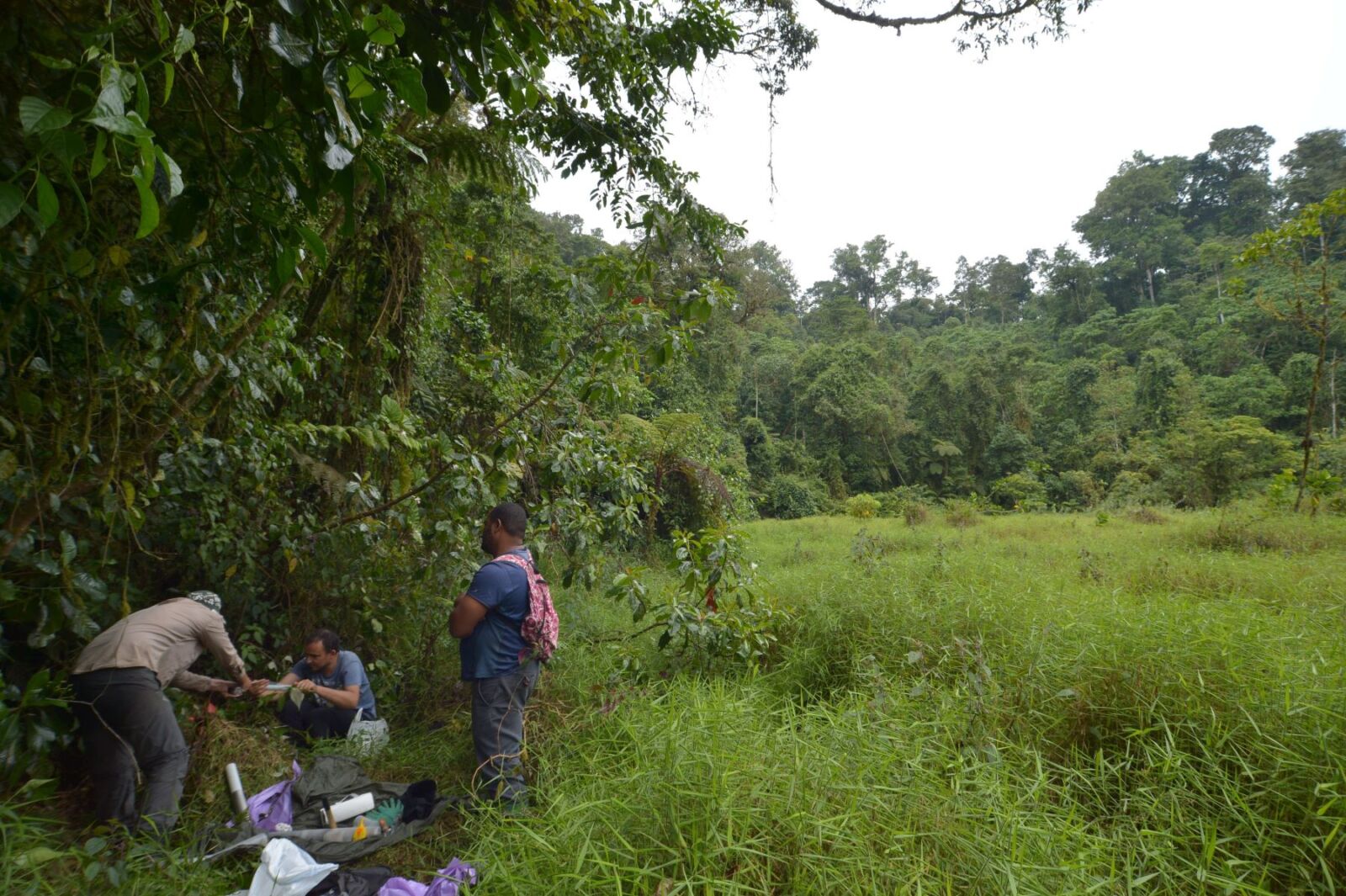
This article is the result of research efforts that began in 2017 and involved an expedition to the impressive crater containing Lagoa Amélia, located 1,400 meters above sea level. Following fieldwork, the team conducted multiple analyses in the laboratory to provide several lines of evidence of landscape changes, including pollen grains, charcoal particles, and sediment composition.
Unraveling the historical impact of global climate change and the human footprint on the threatened forests of these tropical islands presents a significant challenge, according to researchers at the University of La Laguna. Instrumental records, such as satellite data, provide only recent decades of information, and archaeological sites are difficult to locate in dense forests like those on the island of São Tomé.
Therefore, pollen grains and other microfossils from well-preserved sediment records are valuable for uncovering the environmental history of island regions where scientific studies have not yet existed, they add.
The study is the first of its kind in the Gulf of Guinea Islands, provides baseline evidence for archaeological and ecological research in the region, and establishes a historical benchmark from which to understand current human interactions with the environment in small island states such as São Tomé and Príncipe.
Scientific publication: https://doi.org/10.1016/j.quascirev.2023.108381

 Spanish
 English
 French