The University of La Laguna is part of, along with eight other academic institutions from the Netherlands, Sweden, Portugal, Germany, Poland, Czech Republic, France and Albania, STARS EU, an alliance that has been brewing since 2021 and in July 2023 achieved the status of “European University” after being favorably evaluated in the open call by the European Commission to encourage the creation of these types of higher education partnerships. It represents an endorsement of the work done so far and entails €12.4 million in funding over the next four years to help implement their teaching, research, and local development initiatives. But what exactly does this type of partnership entail, and why is it so important that we have managed to join one?
To understand this, we must look back at the interest of European institutions in supporting higher education as a tool for strengthening community ties. Following the shock of the Second World War, establishing an entity as complex as the European Union was a political achievement that, objectively, has brought a long period of (relative) stability to its member states. Universities have been a key instrument in achieving this, and more specifically, the program Erasmus+, which in its more than thirty-five years of history, has broadened the horizons of several generations of young Europeans.
To this program must be added the boost that came with the creation of European Higher Education Area, Thanks to this agreement, the university systems of member countries were at least partially harmonized to facilitate academic mobility. However, the desired internationalization of curricula has not achieved the expected depth, and, as numerous international rankings demonstrate, the global dominance of Anglo-Saxon universities remains preeminent.
Alliance logo.
European Universities
Europe, in terms of both student numbers and teaching, scientific, and administrative staff, possesses more than enough qualified human capital to achieve the leap in internationalization it has been aiming for for decades, but perhaps it has lacked a suitable institutional framework to implement it. For this reason, the European Commission launched the “European Universities” initiative in 2019, whose objective is to create alliances between at least five academic institutions from three different countries to generate joint training programs and research projects. A supranational university, so to speak, in which each of the national universities that comprise it would act as a “campus.”.
This initiative stemmed from the debate developed during previous years within the European Council, which on December 14, 2017, spoke of “strengthening strategic partnerships between higher education institutions throughout the European Union and promoting the establishment, by 2024, of around twenty 'European Universities', which would be networks of universities across the EU created from the ground up, allowing students to graduate by combining periods of study in several EU countries and contributing to the international competitiveness of European universities.‘.
The idea evolved from that 2017 declaration, expanding its objectives: currently, the European Universities initiative aims to reach not the twenty alliances initially indicated, but 60, involving around 500 academic institutions from all EU countries, as well as from candidate countries for accession.
Since 2019, the Commission has published a call for proposals approximately every year to evaluate different applications and endorse those that achieve the highest score with official recognition as a “European University.” These universities also receive funding through the Erasmus+ program, ranging from €12 million to €14 million, to launch their projects. To date, 50 of these partnerships have been approved, leaving only 10 more to be decided this year, which is expected to conclude the formation phase of these partnerships.
The ULL seeks membership
The University of La Laguna was interested in joining this initiative almost from the moment it learned of its existence. This was not only due to the obvious advantages of being able to collaborate closely with institutions in other countries, but also because, as has been learned, European institutions may open specific calls for proposals for these European universities in the future. Therefore, being left out of this select group would mean missing out on many opportunities to access potential funding. Participation was essential.
Back in 2019, the University of La Laguna made a first attempt to join an alliance promoted by the University of Las Palmas de Gran Canaria which involved several universities from the outermost regions of Europe. However, the EU assessment halted it because this concentration in a specific geographical area went against the spirit of the initiative, whose preference was to integrate centers from different regions and ensure that those from the outermost regions established connections with the mainland.
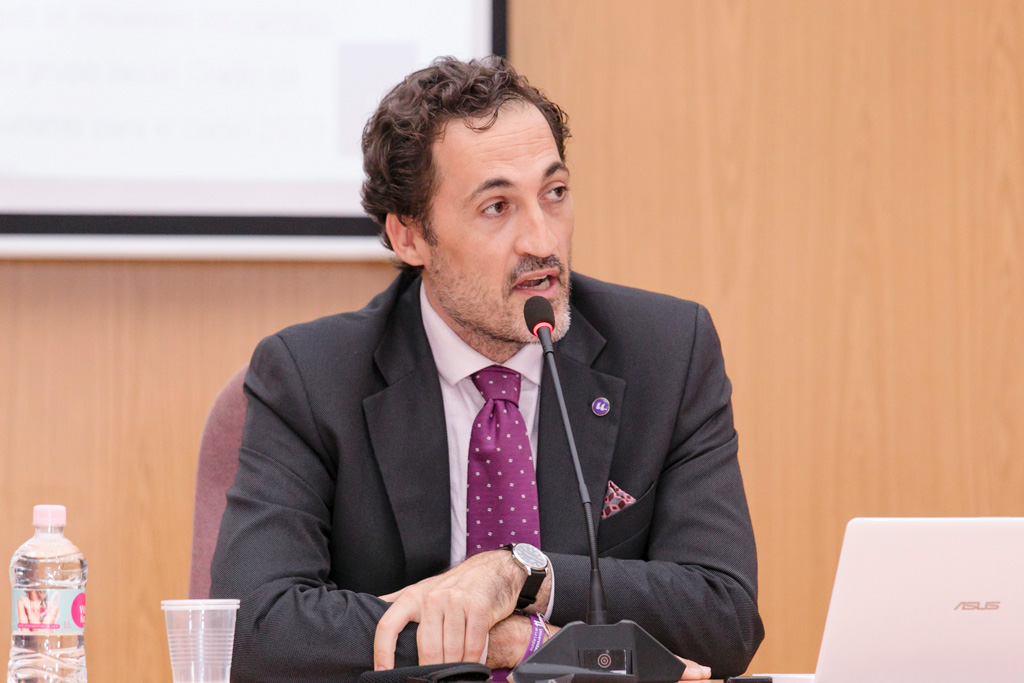
Ernesto Pereda, academic coordinator.
As the professor of Electrical Engineering explains Ernesto Pereda de Pablo, The Vice-Rector for Research and Transfer at the time, who is currently the academic coordinator of the alliance, revisited the matter in 2021 after the pause caused by the pandemic, considering the choice between joining an existing alliance or creating a new one. “Regarding the first option, we explored the possibility of joining an alliance that was very focused on aerospace engineering, a very specific field. In the end, we believed that the second option was preferable because, although creating an alliance from scratch would involve much more work, it would allow us to do so in a way that was more adapted to our style and characteristics.”.
Right at that moment, the Hanze University of Applied Sciences The Netherlands invited the Tenerife center to join the project it was launching—then called Engage, which would eventually become the current STARS EU alliance—because in the initial evaluations it had undergone, the Commission had indicated the opportunity to involve universities in southern Europe and enhance the research's reach. The point of connection between the two centers was Madelon van Oostrom, a sociologist from the Dutch institution who had earned her doctorate and taught at the University of La Laguna and was aware of the potential of the Canary Islands center in various scientific fields.
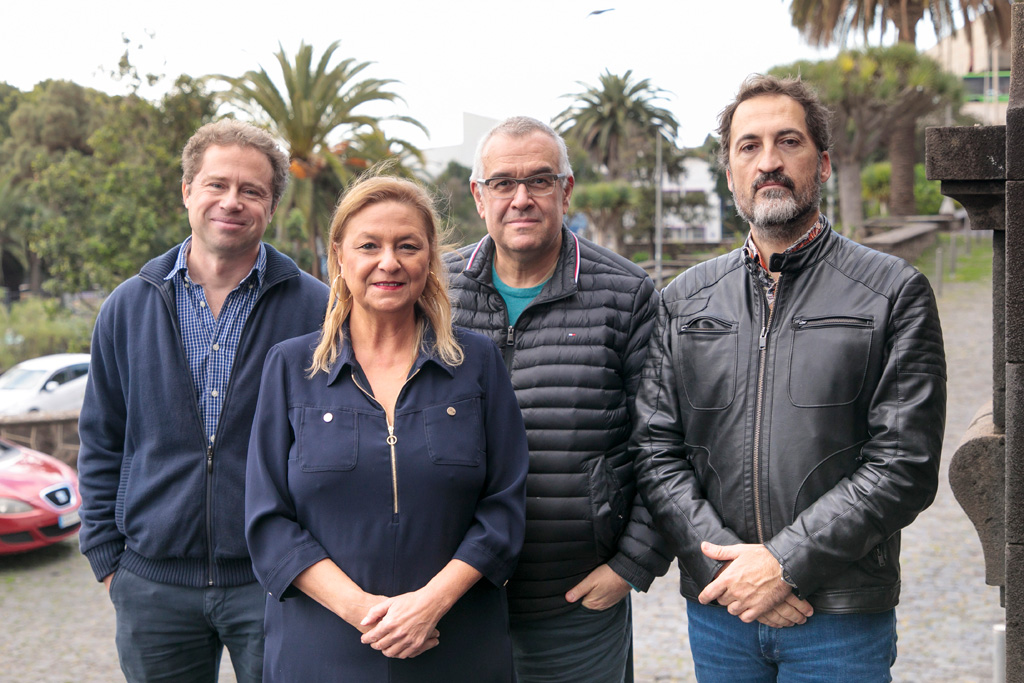
Thus, the University of La Laguna has been a member of the alliance at all levels since 2022 and, therefore, has representation in the alliance's highest governing body, its steering committee (steering committee): specifically, they are part of it José Francisco Sigut Saavedra, general coordinator of the alliance and currently director of the Secretariat for Mobility and Cooperation with Europe and North America; the tenured professor of Mathematical Analysis Rodrigo Trujillo González; and the aforementioned Ernesto Pereda.

Vice-Rector Inmaculada González.
“The strategic vision of the driving force behind this initiative and the enormous effort undertaken have been essential in ensuring that this opportunity was not missed by our university. Since then, the work carried out has been relentless, given that the STARS EU alliance is a strategic objective of the Vice-Rectorate for Internationalization and Cooperation. Much work remains to be done, but I am confident that our faculty, students, and administrative and service staff understand the importance of the alliance and will commit themselves to achieving the goals we must reach in the coming years,” says the Vice-Rector for Internationalization and Cooperation., Inmaculada González Pérez, in whose department the management of the alliance falls.
“The future of our internationalization depends largely on our ability to unleash our enormous potential, especially our human resources,” the Vice-Rector continued. “By joining forces and working together, we can make a qualitative and quantitative leap in our international presence, enabling our university to transform itself to meet the complex challenges we currently face. This necessarily entails finding shared solutions in a globalized world. Our challenge, thanks to this unique opportunity, is to be an example of the irreplaceable role of public higher education in building a world without borders.».
At this point, it is important to emphasize that the alliance itself is one thing, and the project to be developed over the next four years, once approved in the European Universities call by the Commission, is another. This project, like any international project, has a series of objectives that must be met on time to secure the associated funding. But this is only one facet of STARS EU: the alliance existed before July 2023, and in fact, some activities have already taken place before that date. official launch of the project, in November 2023.
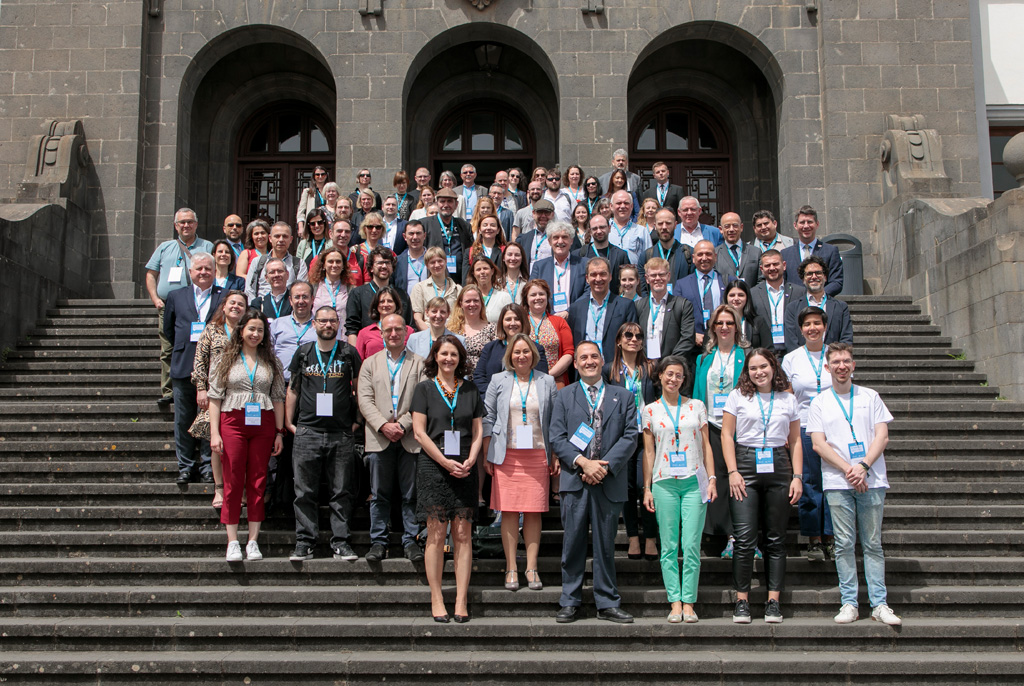
STARS EU annual conference held at ULL in 2023
To give a concrete example, in March 2023 (that is, months before achieving official recognition from the European Commission), the University of La Laguna hosted the annual conference of the alliance, an event held annually at one of the partner institutions. And in June of that same year, our institution hosted twenty-five students from seven European countries to participate in a Blended Intensive Programme (BIP) promoted by the Polytechnic Institute of Bragança. This type of course is financed through the Erasmus+ program, and consists of a short training course open to international students that is mostly taught online but, for one week, holds face-to-face activities at one of the institutions involved, in order to promote mobility.
Peripheral regions and regional development
STARS EU is an acronym derived from the expression STrategic Alliance for Regional Transition (“Strategic Alliance for Regional Transition”), which already highlights one of the distinguishing features of this group of universities: the involvement of its participants with their respective immediate environments. Thus, the actions it develops from now on will always keep in mind its capacity to improve the communities in which the institutions are located, which implies that contacts and collaboration with local stakeholders will be essential. All of this is also reflected in the motto chosen for the launch of the alliance:“Reach for the stars. Transforming regions. Empowering people”(Reach for the stars. Transform regions. Empower people.).
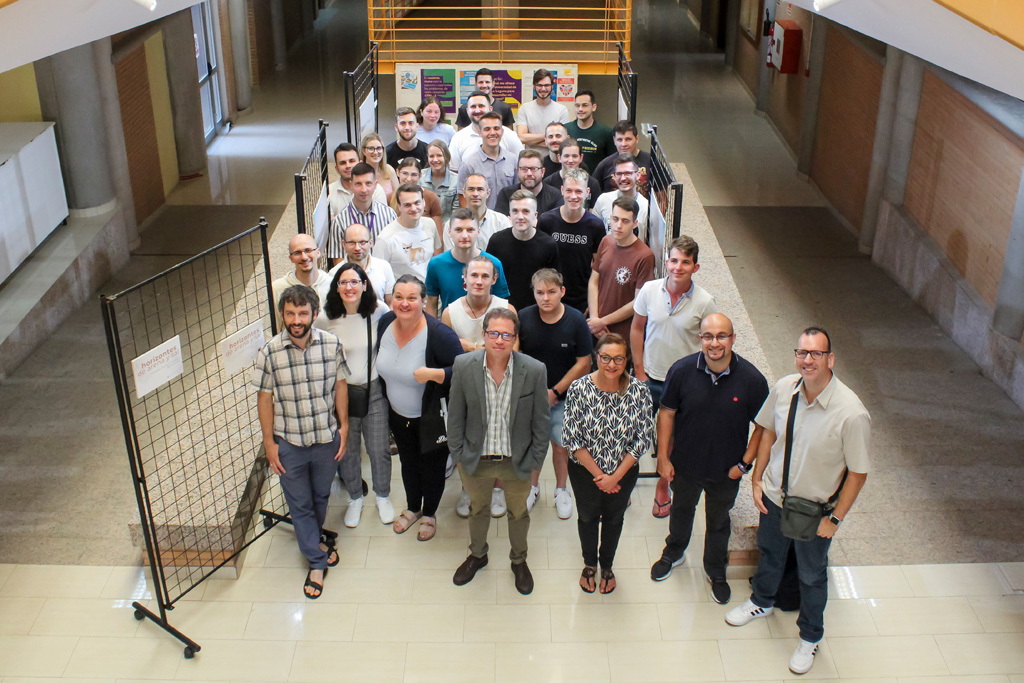
BIP held at the ULL in June 2023.
Another characteristic of the alliance is that its member universities are located in peripheral, rather than capital, regions of their respective countries. This is quite obvious in the case of the University of La Laguna; the other members are the aforementioned leader of STARS EU, Hanze University of Applied Sciences (Netherlands); Bragança Polytechnic Institute (Portugal); the Breme University of Applied Sciencesn (Germany); the University of Silesia in Opava (Czechia), the University of the West (Sweden); the Krakow University of Technology (Poland); the University of Franche-Comté (France) and the Aleksandër Moisiu University of Durrës (Albania).
During the meeting held in 2022 at the University of La Laguna, the general coordinator of STARS EU, Rima Dijkstra, from the Hanze University of Applied Sciences, summarized the main aspirations of the alliance for the coming years: to encourage networking with seminars, workshops and conferences; to design shared degrees at both the undergraduate and postgraduate levels; to promote student exchange between the different campuses; to continue with curricular work to create micro-credentials valid in the different universities; internship placements; interregional cooperation work; and to seek formulas for the sustainability of the alliance.
Alliance structure
To achieve these objectives, the relatively complex structure of the alliance has been equipped with a series of elements that allow for the coordination of tasks. To begin with, there are the Thematic Interest Groups (Thematic Interest Groups or TIGs), which are the areas on which to focus efforts, aligned with subjects that European institutions have identified as priorities. Currently, these TIGs address the circular economy, the energy transition, entrepreneurship, digital transformation, arts and creative industries, healthy aging, and living spaces. This is not a closed list, so it is possible that additional areas may be added at some point, and in fact, the possibility of incorporating a new group related to the humanities is already being studied.

Benjamin Gonzalez, leader of the TIG on Energy Transition.
Each of these TIGs has a leading university and a co-leading university, and the University of La Laguna is responsible for the one concerning the energy transition, whose head is the tenured professor of the Electrical Engineering area. Benjamin Gonzalez Diaz, who, among other matters, has been involved in the BIP that was partially taught in Tenerife. In fact, he points out that one of the TIG's objectives is to launch three of these courses for the 2024/25 academic year. He also mentions proposing Erasmus+ projects focused on teaching innovation and participating in research calls: a proposal has already been submitted within the LIFE program on energy transition focused on building consumption, in which four members of the alliance participate.
“The TIGs are structures to coordinate the efforts of a number of researchers, debate ideas, work together, obtain resources that we could not access individually and offer the regions an appropriate transfer that is helpful for the regions,” explains González, who also points out that being able to participate in the calls with the support of eight other universities gives greater strength and opens up a wide range of possibilities.
In addition to the TIGs, the other pillars of the alliance are the so-called concretion structures, erected in areas to propose and experiment with new methodological proposals and innovations in the field of studies, teaching and research that may not fit into the ordinary structures of a formal university and that, if they prove viable, could be applied to the activities organized by STARS EU.
These structures are four: the Regional Transition Accelerator, focused on regional development by testing models and structures involving not only the academic community, but also civil society organizations; the Curriculum Lab, focused on everything related to the innovation of qualifications and teaching, with special emphasis on lifelong learning and modular education through the use of microcredentials; the Knowledge Creation and Challenge Lab, which works in a multidisciplinary way to respond to social challenges with solutions adaptable to different European regions; and the Co-Creation Campus, referring to the implementation of both physical and virtual spaces that facilitate the joint work of the people integrated into the previous structures in collaboration with representatives of external interest groups.

Rodrigo Trujillo, member of the ULL in the alliance's steering committee.
Rodrigo Trujillo's work within the alliance is especially focused on these collaborative structures, which involve innovative and holistic approaches, that is, those in which several different agents participate to promote more competitive research that is tailored to the demands of social agents and teaching capable of creating new "agile, flexible and innovative" curricula both to train younger generations for the challenges of the future, and to help retrain those who are already in the midst of their professional careers.
This focus on students, research staff, and ultimately, human resources, is what Trujillo highlights as the strategic value of the European Universities initiative: “The EU has decided to orient its strategy with the only weapon that not all other global universities have: while the rest of the academic institutions compete for students, faculty, and researchers to give them prestige, the EU decides to bet on sharing these same protagonists of university life through these alliances, which meet certain quality requirements and present an ambitious and sustainable strategic plan.”.
European project
Although the alliance has been operating since 2021, with the participation of the University of La Laguna a year later, since July 2023 STARS EU is also a four-year project of the European Commission with associated funding conditional on the fulfillment of objectives which, as we said, amounts to a total of 12.4 million.
The project comprises eight work packages, each with a number of tasks. The partner institutions participate to varying degrees in all of them and lead at least one. The University of La Laguna coordinates the eighth package, focusing on communication and dissemination, and in fact, the first document to be submitted to the European authorities relates precisely to this section: the general communication plan. This plan must be submitted translated into the nine languages of the partner universities, as well as into English, with the corresponding local adaptations. The Canary Islands university is also a co-leader of the fourth package, which focuses on... Knowledge Creation and Challenge Lab.
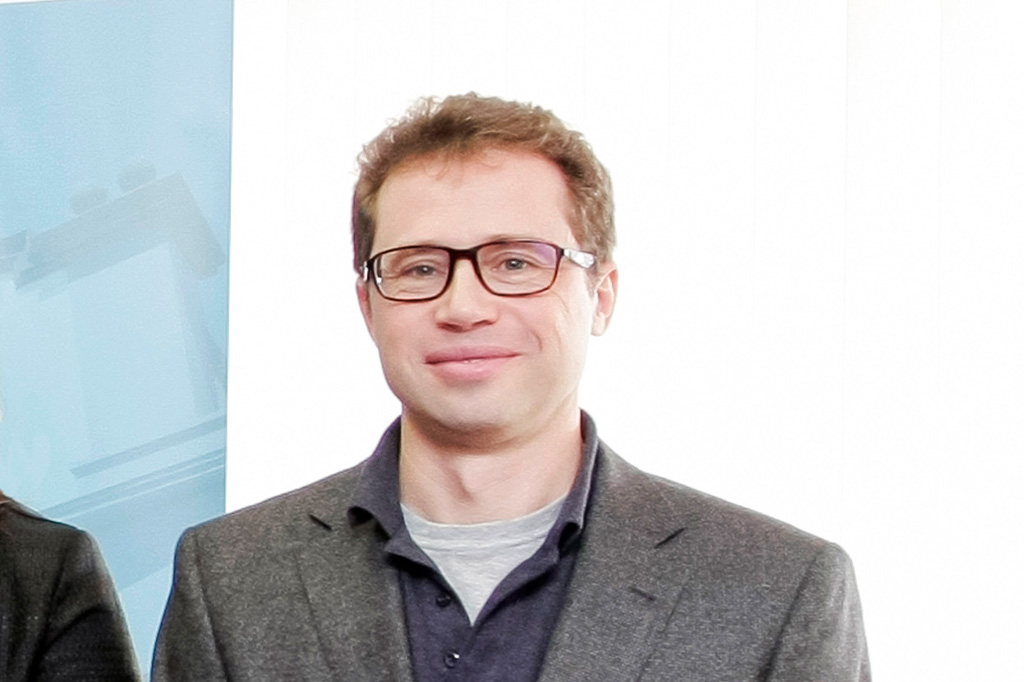
José Sigut, general coordinator of STARS EU at the ULL.
«Coordinating STARS EU at the University of La Laguna presents a significant challenge due to the very nature of the alliance, which involves nine universities with different internal organizations and working methods. Regarding the European project, it is essential to ensure that the established objectives are met and the planned tasks are completed within the specified deadlines, especially those areas where our university is a leader. This necessarily entails the involvement of faculty, students, and administrative and service staff, and this is one of the most important challenges we face: raising awareness of the alliance within the university community at all levels, so that the idea of belonging to an academic structure that extends beyond the boundaries of our campuses begins to take root and enrich us as an institution,” explains José Sigut, the alliance's general coordinator at our university.
With this European project, the STARS EU alliance gains new momentum and has four years ahead to advance its objectives. Thanks to the funding obtained, it will be possible to hire technical staff associated with the project to, for example, launch the STARS EU Office at our center. This office, already existing in most partner universities, serves to coordinate all tasks related to the initiative. The office will also coordinate with the Student Board local body that brings together initiatives from the student body, since promoting student participation is another key point of the alliance.
The University of La Laguna is now also a STARS EU institution, which represents added value for our institution, as it joins the select group of European Universities and thus has greater potential to offer education and research with a more international profile. This is a project that will require considerable effort and creativity, and the university invites all members of the university community interested in getting involved and to contact the Vice-Rectorate for Internationalization and Cooperation for more information.
Communications Office

 Spanish
 English
 French