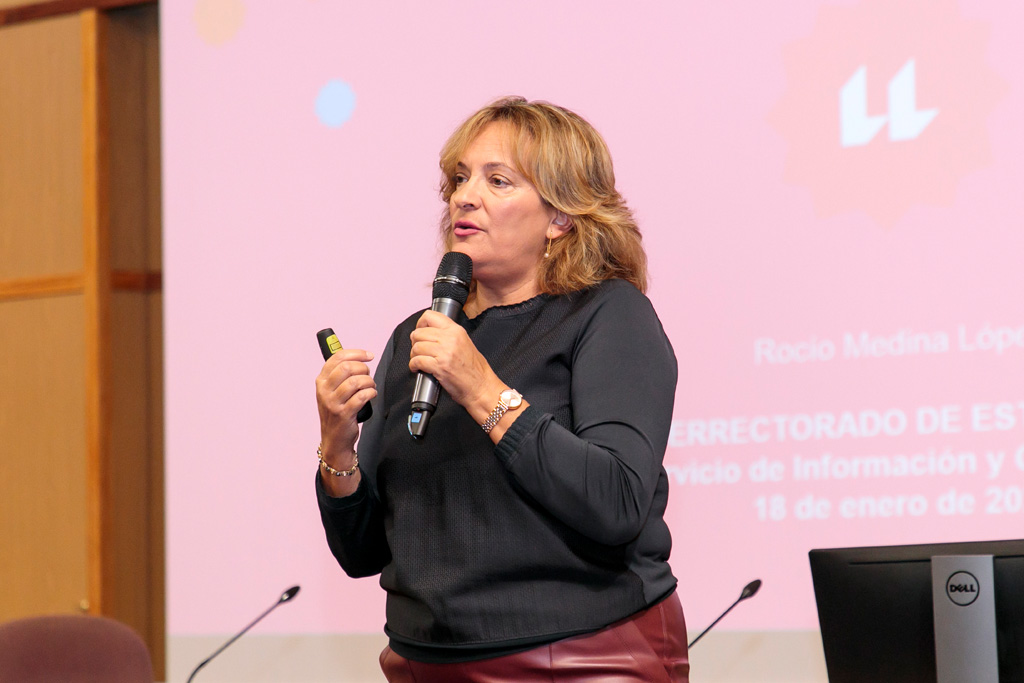
One of the most established events within the Open Days being held by the University of La Laguna these days is its meeting with families. Hundreds of parents attended the Guajara campus yesterday, January 18th, to participate in this meeting, presided over by the rector, Francisco García, to receive firsthand information about the university admissions system and to learn what the change in the educational model means for their sons and daughters, as well as the expectations surrounding it.
The rector recalled the institution's long history and its public nature, which clearly defines its commitment to serving society. "We are public employees; here, what matters is not the social or economic background of families, but the talent and performance of the students," he said. "It's a pleasure to see the campus these days filled with eager students deciding their future.".
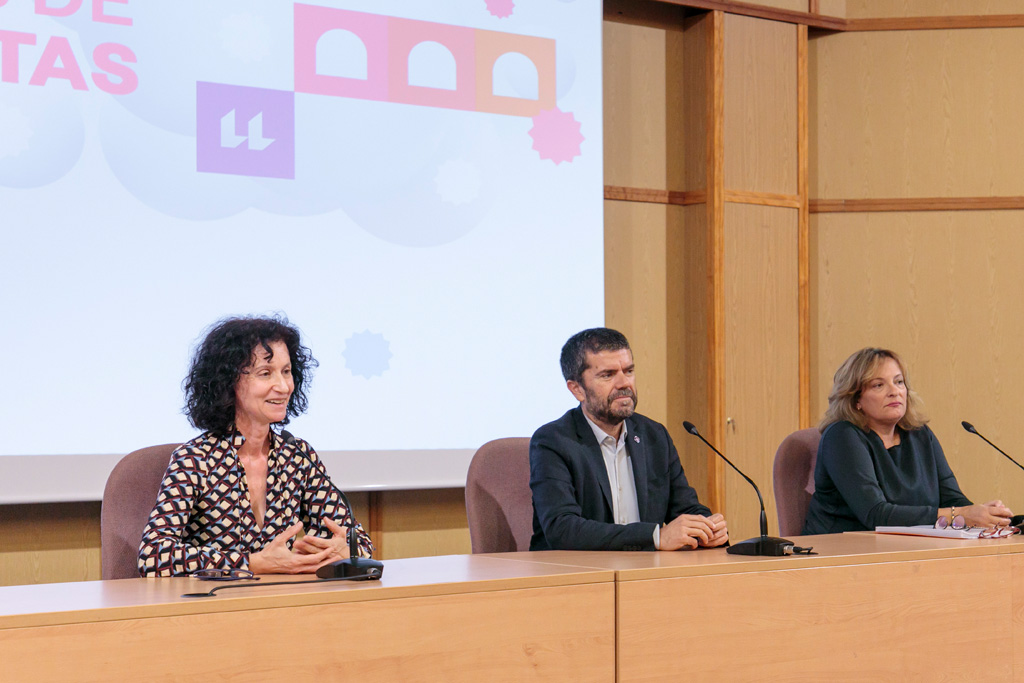
The Vice-Rector for Students, the Rector, and the SIO advisor.
Francisco García referred to the nearly fifty undergraduate degree programs offered by the academic center and the periodic verification and quality control processes they undergo, which guarantee the rigor of the degrees awarded. He also maintained that when deciding on their future, students should focus above all on their vocation, on what they enjoy, much more than on potential career paths. “I am convinced that people who clearly commit to what they want find their way,” he stated.
The Vice-Rector for Students, Rosario Hernández, addressed the families more in her capacity as a teacher. “Each year is a different journey, even though the same subject is taught, because the people change. At the beginning of the year, you see faces full of joy, others of uncertainty; they place great importance on the group, even though they don't know anyone. We see the students' evolution over the years, and how even the shy ones approach us to ask questions.” She also pointed out that near the end of their studies comes a very important subject, the external placement, “a subject that allows them to measure themselves and that they generally enjoy very much because they realize how well prepared they are.”.
Accompaniment
Both the Vice-Rector and the Legal Advisor of the Information and Guidance Service, Rocío Medina—who spoke next—asked families to support students both during their transition to higher education and throughout their time at the university. “Shared decision-making is crucial. This is possibly the first major decision they will make for themselves, so we ask for your support. This support is very important, and it's something they always mention at the graduation ceremony, where they thank their families, professors, and the university, which is immensely valuable as it is a public institution.” She also requested that they be treated as adults, responsible citizens with critical thinking skills.
Rocío Medina, for her part, affirmed that the University of La Laguna is a modern, 21st-century institution, perfectly comparable to any European university. She noted that this is the twenty-sixth edition of these events. “For us, there is nothing more motivating than welcoming our future students, which is why we need to forge alliances with you, the parents.”.
Medina began by explaining the structure of university studies, divided into undergraduate, master's, and doctoral degrees. He also elaborated on the admission requirements, not only the administrative ones but also other intangible yet crucial factors: interest in the degree program, possessing the necessary and sufficient knowledge to begin studies – “at university, success isn't about who is smartest, but who works hardest” – avoiding academic absenteeism, and personal commitment and responsibility.
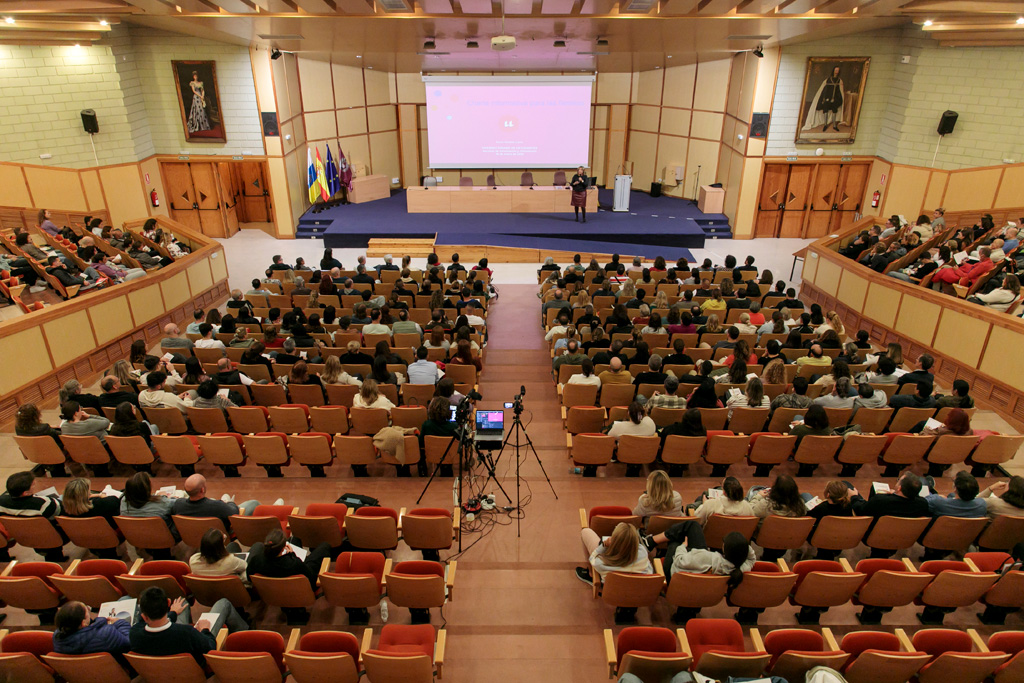 “A vocation isn’t something you wait for, it’s something you build,” she said, referring to the fact that students often become enthusiastic about their degrees as they progress through their studies. “We need university graduates with emotional intelligence, critical thinking skills, cognitive flexibility, the ability to solve complex problems, and above all, creativity,” the latter being a key element emphasized by the guidance counselor. All of these qualities can be found at public universities, she asserted.
Medina also explained the admissions process and the competitive selection process on which it is based. The limits on available places, the allocation of places by quota, the assignment of places, and waiting lists were other concepts covered by the expert. There was also time to delve into the scholarships and grants offered by the institution, the cost of tuition, and some services closely linked to students, such as meal assistance, financial aid, childcare expenses, educational support needs, travel grants, student associations, and initiatives to promote student participation.
The advisor also mentioned services available to prospective students: libraries, study rooms, a virtual university card, virtual classrooms and writing services, cafeterias and dining halls, sports, language and mobility programs, as well as the program for students with disabilities, which provides necessary resources. The session concluded with a question-and-answer period for parents about various aspects of academic life.

 Spanish
 English
 French