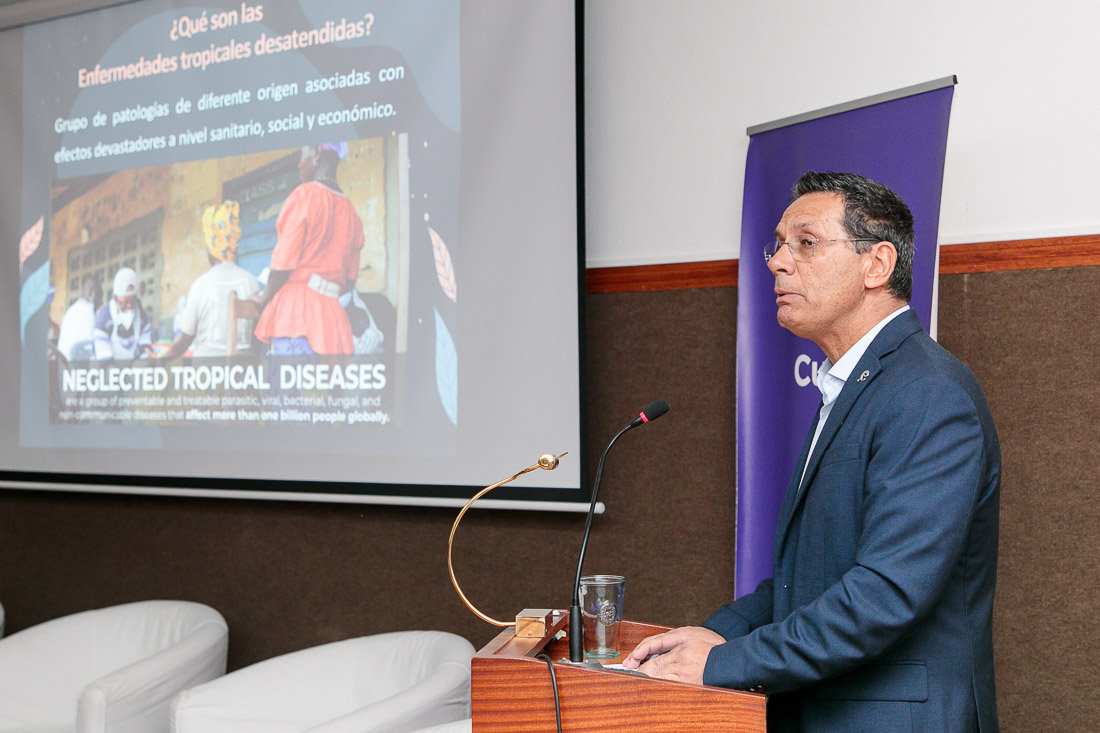
The World Health Organization designated January 30th as World Health Day in 2020. World Day for Neglected Tropical Diseases (ETD) and, for this reason, today the University of La Laguna held a meeting at the Faculty of Pharmacy a session of their ULL Debates focused on these pathologies. As the first speaker, the Professor of Parasitology at the organizing institution, explained José E. Piñero Barroso, These diseases affect more than a billion people, one-sixth of the world's population, but they haven't received the necessary attention because they occur in impoverished countries far removed from the interests of large pharmaceutical companies and researchers. Fortunately, he noted that the WHO has already drawn up an action plan that could reverse this situation.
The session was opened by the rector of the academic institution, Francisco García, who highlighted the value of the ULL Debates format as a forum for bringing together renowned academic specialists to share their rigorous knowledge on relevant social challenges. Regarding NTDs (Transient New Developments), he reflected that some of them are more prevalent than Covid-19, which caused a global pandemic that paralyzed the planet. He also praised the work of Institute of Tropical Diseases and Public Health of the Canary Islands for their commitment to improving the living conditions of people affected by these illnesses by addressing their root causes.
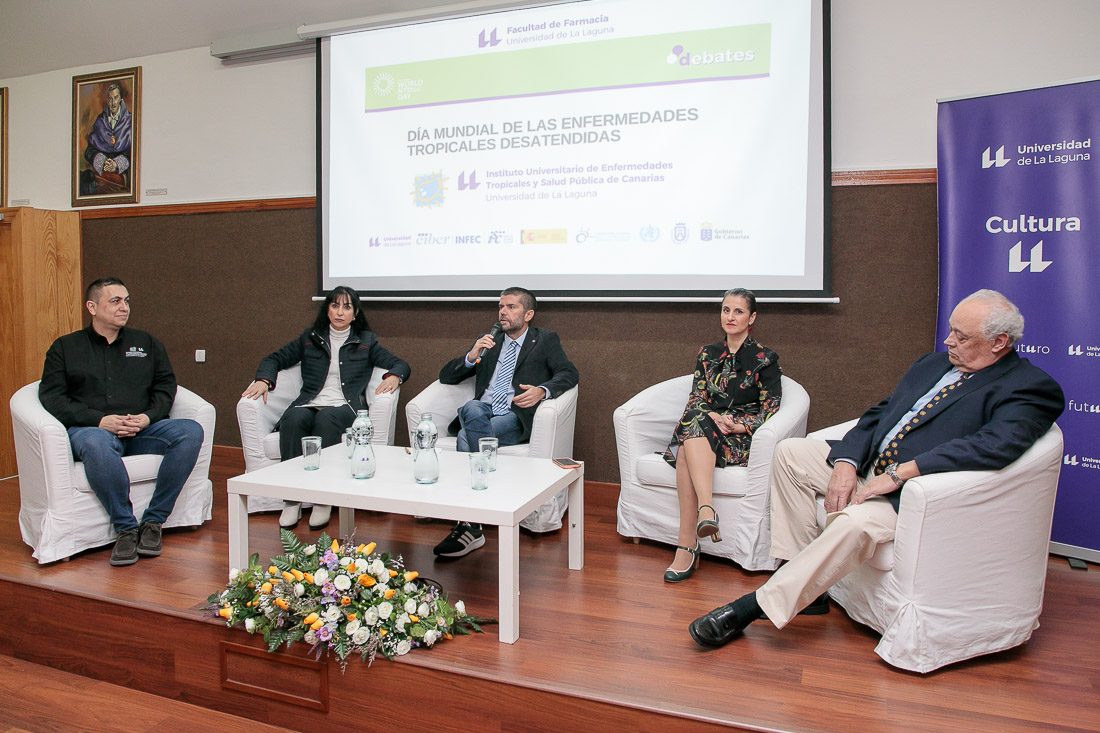
Jacob Lorenzo, Susana Abdalá, Francisco García, Isabel León and Santiago Mas-Coma.
The director of the institute, Jacob Lorenzo, one of the main organizers of this meeting, also presented figures that illustrate the magnitude of this problem, which affects millions of people and results in an average of 200,000 deaths annually. Also participating in the opening ceremony were the Dean of the Faculty of Pharmacy, Susana Abdalá; the Vice-Rector for Culture and University Extension, Isabel León; and Santiago Mas-Coma, a researcher at the University of Valencia and advisor to the WHO, who highlighted the significance of the University of La Laguna organizing an event on this day, similar to others held in Geneva, Shanghai, and at the WHO headquarters in New York.
In his presentation, José E. Piñero Barroso contextualized the problem of NTDs as a preliminary step to the subsequent interventions, which would focus on specific diseases and more concrete aspects of this problem. From a geographical perspective, these diseases were confined to the area between the two tropics, but recently, thanks to factors such as climate change and population mobility, their prevalence has also spread to subtropical areas.
In general, NTDs disproportionately affect developing countries or, more directly, poor countries (i.e., those whose population has less than two dollars a day to cover their basic needs). Therefore, these are areas where there is no capacity to control these diseases due to a lack of basic health services, adequate housing, easy access to clean water, and a proper sanitation system, among other factors that hinder efforts to reverse the situation.
Despite this, at the end of her speech she wanted to add a positive note, explaining that the WHO has designed a strategy that it intends to implement to finally try to tackle NTDs, which includes measures such as expanding preventive chemotherapy, intensifying the detection and management of cases, improving vector control (that is, of the organisms that transmit diseases), applying appropriate veterinary public health measures, and improving the supply of drinking water and sanitation and hygiene for these populations.
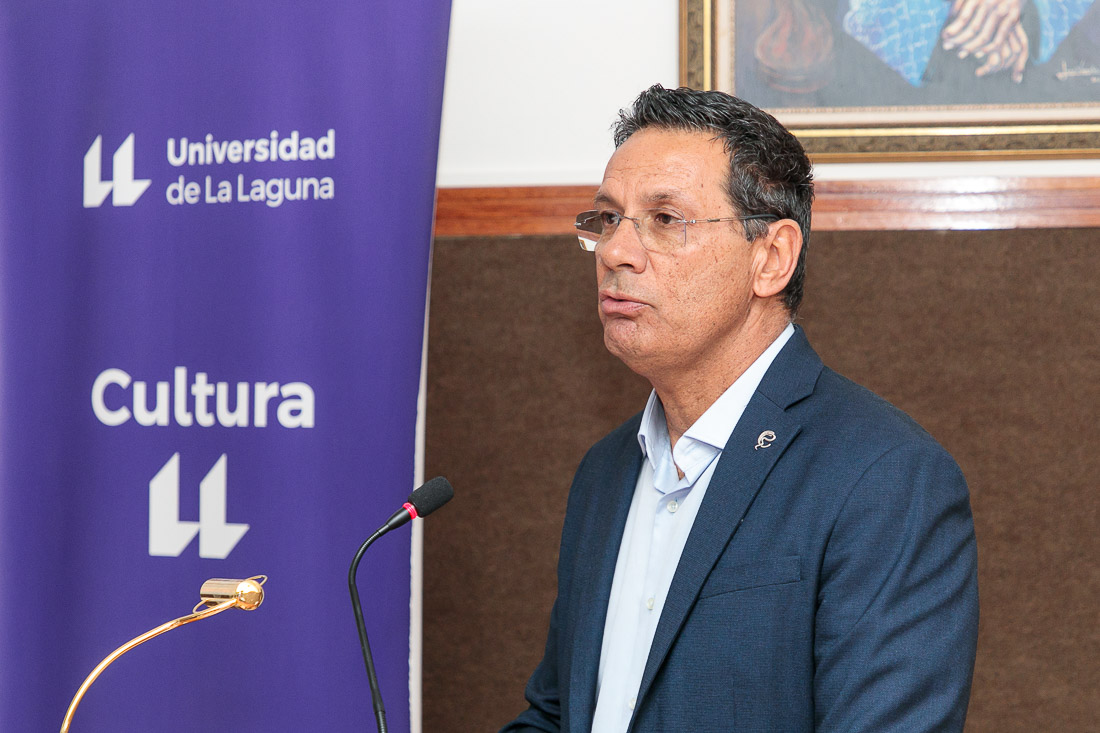
José Piñero.
Throughout her presentation, she explained that these diseases are transmitted by vectors such as mosquitoes, flies, bedbugs, and even mollusks, making it essential to control the entry of these organisms—something the Canary Islands Institute of Tropical Diseases and Public Health is collaborating on within the autonomous community. She noted that the WHO has identified a total of 21 such diseases, including leishmaniasis, leprosy, dengue fever, Chagas disease, lymphatic filariasis, and rabies, among others. Interestingly, malaria is not included in this group because, although it is a tropical and widespread disease, it is not considered a neglected disease due to sufficient research and attention being given to it.
A prime example of this situation is soil-borne parasite diseases, which affect approximately 1.5 billion people. “One of them, roundworm, is probably unfamiliar to most people in Spain, yet it affects around 750 million people annually, which is far more than the total number of people affected by Covid-19,” he explained.
These diseases, in addition to the strictly health problems they entail, involve a series of other factors: they are indicators of poverty; they affect populations that have little visibility or little capacity to lobby and exert international pressure; they cause stigma and discrimination, especially among girls and women; they have a significant impact on morbidity and mortality; they do not receive the necessary attention in research; but they can be controlled, prevented and possibly eliminated using effective and reliable solutions.

 Spanish
 English
 French