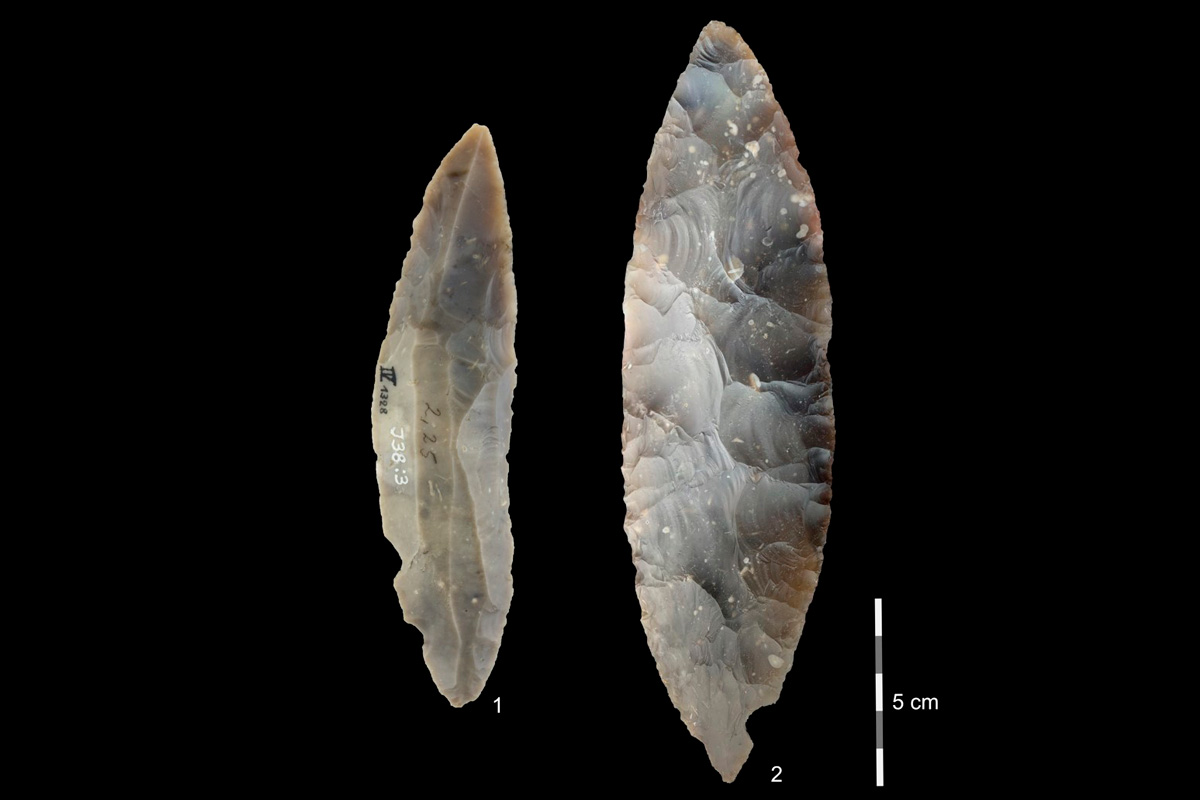
The prestigious journal Nature has just published the results from an international archaeological project that has dated a series of fossils from the Ilsenhöhle site in Ranis (Germany) to 45,000 years old. These would be the first Homo sapiens documented in northern, central, and northwestern Europe and reveal, for the first time, the creators of the Lincombian-Ranisian-Jerzmanowician (LRJ) technocomplex in Europe. The team of more than thirty researchers included members of the Laboratory of Archaeological Micromorphology and Biomarkers (AMBI Lab) from the Antonio González University Institute of Bio-Organic Sciences at the University of La Laguna.
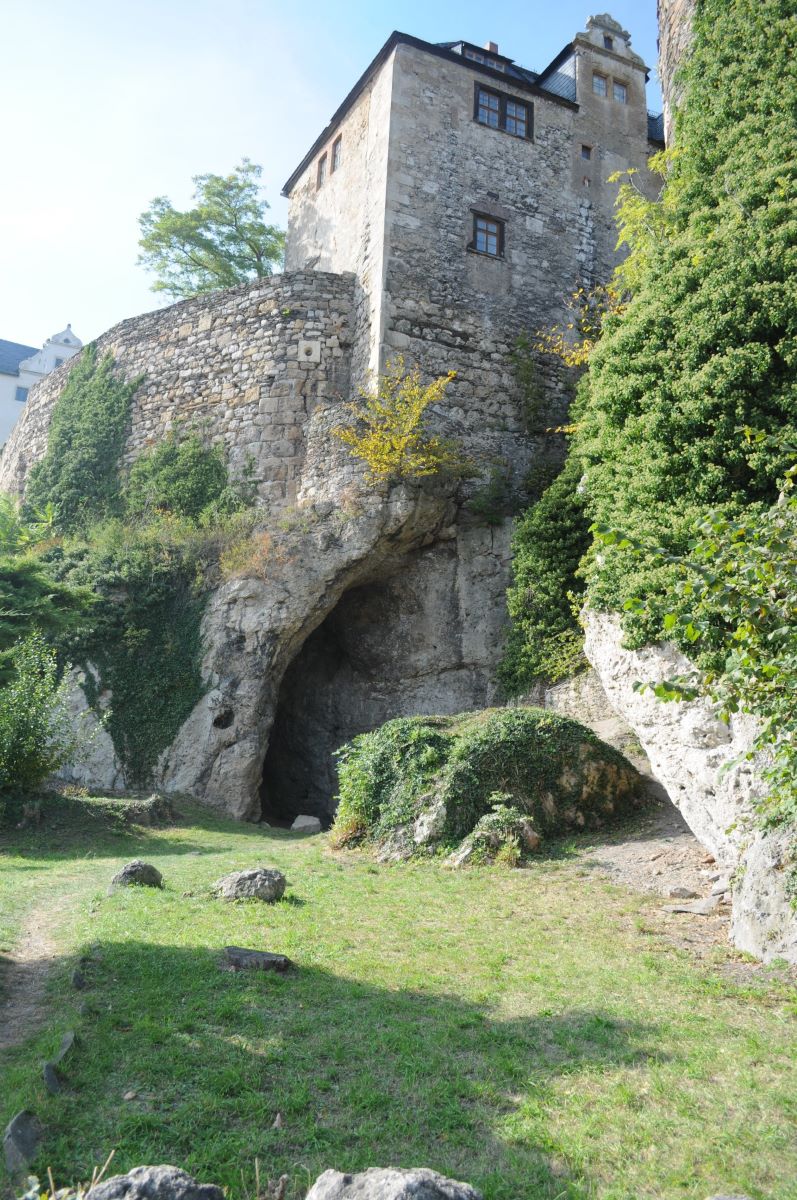
The Ilsenhöhle site under Ranis Castle. © Tim Schüler TLDA, License: CC-BY-ND 4.0.
This comprehensive study, encompassing archaeological excavations, morphological and proteomic taxonomic identification, mitochondrial DNA analysis, radiocarbon dating of newly excavated material and direct dating of human remains, zooarchaeology, and isotope analysis, marks a significant milestone in understanding the initial incursions of Homo sapiens into Europe north of the Alps during the Middle to Upper Paleolithic transition. Furthermore, it demonstrates that Homo sapiens were exposed to harsh, cold climatic conditions. Moving in small groups, they shared their environment and sites with large carnivores, such as hyenas, and crafted leaf-shaped stone tools.
The fossils found are associated with these tools, known as blade points, which form an archaeological technocomplex dating from the Middle Paleolithic, associated with Neanderthals, to the Upper Paleolithic, manufactured by Homo sapiens. The stone tools found at Ranis—one of the LRJ's type sites—are related to finds across Europe, from Moravia and eastern Poland to the British Isles, and document the arrival of Homo sapiens in northwestern Europe several thousand years before the Neanderthals disappeared from southwestern Europe.
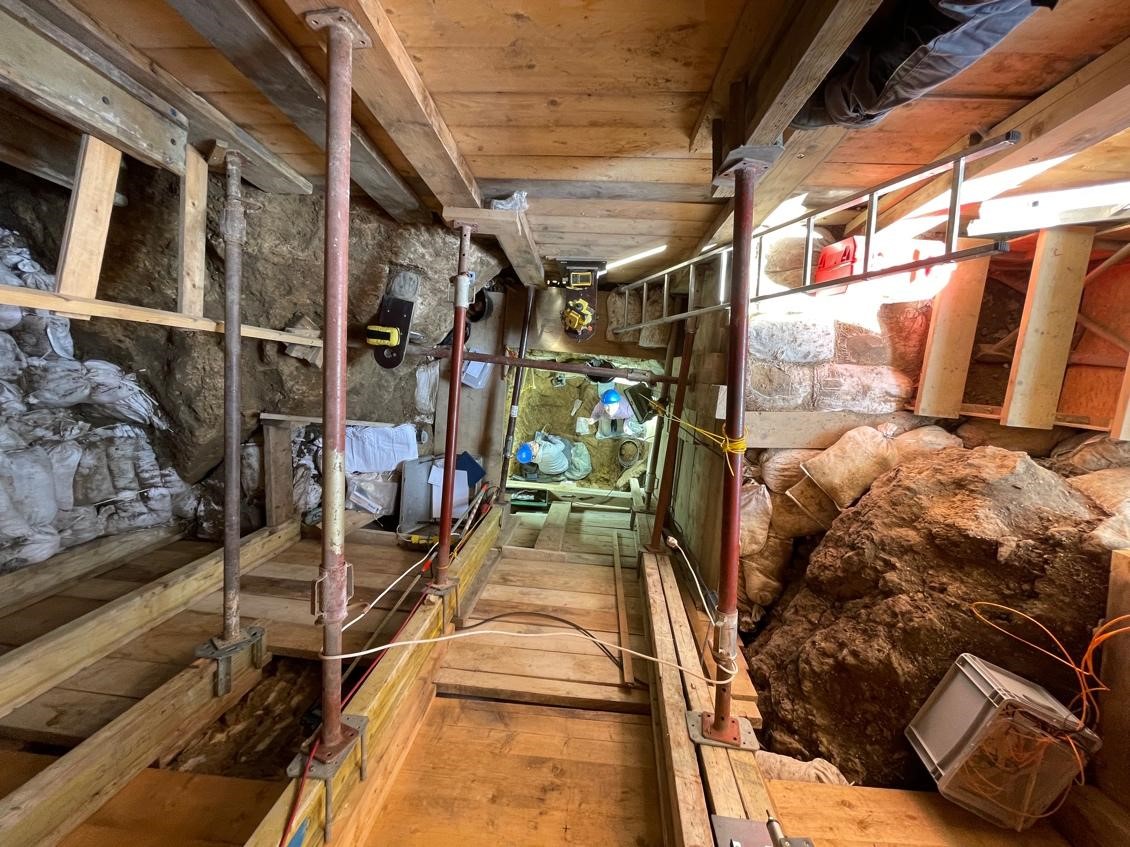
Eight-meter-deep pit in Ramis's excavation. © Marcel Weiss, License: CC-BY-ND 4.0.
An international research team led by Jean-Jacques Hublin, director emeritus of the Max Planck Institute for Evolutionary Anthropology in Leipzig (Germany); Shannon McPherron (Max Planck Institute for Evolutionary Anthropology), Tim Schüler (Thüringisches Landesamt für Denkmalpflege und Archäologie) and Marcel Weiss (Friedrich-Alexander-Universität Erlangen-Nürnberg and the Max Planck Institute for Evolutionary Anthropology) re-excavated Ranis between 2016 and 2022. Their aim was to clarify the stratigraphy and chronology and identify the creators of the LRJ. The team discovered the layers containing the LRJ at the bottom of the 8-meter-deep sequence of the site. Analysis of the collection from the previous excavation, between 1932 and 1938, completed the research.
Stable isotope analysis
Stable isotope analysis of animal teeth and bones provides insights into the climatic conditions and environments encountered by pioneering Homo sapiens groups around Ranis. The Ambi Lab at the University of La Laguna was most heavily involved in this phase of the research. The team combined data from a wide range of stable isotope ratios and demonstrated that, during the time of the Late Rite Jesuits (LRJ), a very cold continental climate and open steppe landscapes similar to those found today in Siberia and northern Scandinavia prevailed, and that conditions cooled even further during the LRJ occupation of Ranis.
“This shows that even these early groups of Homo sapiens who dispersed across Eurasia already had some capacity to adapt to such harsh climatic conditions,» says Sarah Pederzani, who until December was a researcher at the Ambi Lab and the Max Planck Institute for Evolutionary Anthropology and led the paleoclimate study of the site. “Until recently, it was thought that resilience to cold climatic conditions wouldn’t appear until several thousand years later, so this is a fascinating and surprising result. Perhaps the cold steppes with larger herds of prey animals were more attractive environments for these human groups than previously thought.”.
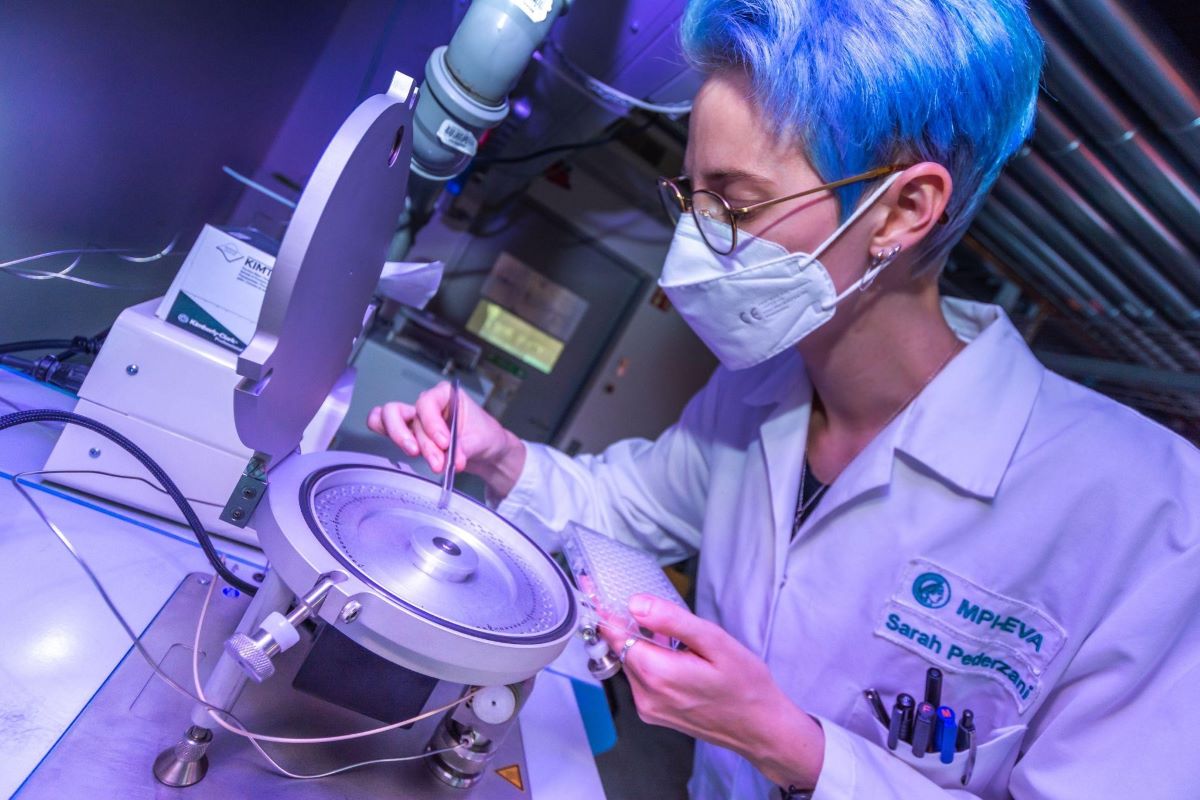
After chemical preparation and purification, small samples of animal teeth are placed in the magazine of an isotope ratio mass spectrometer to obtain the ratio of stable oxygen isotopes, which provides information about the past climate in which the animals lived. © Max Planck Institute for Evolutionary Anthropology, License: CC-BY-ND.
Other analyses
The project also incorporated paleoproteomics methods to identify hominin skeletal specimens from the LRJ layers among the thousands of highly fragmented and unidentified bones at the site. This allowed researchers to differentiate new hominin remains, which were then further analyzed using ancient DNA methodology, radiocarbon dating, and stable isotope analysis, confirming that they did indeed belong to Homo sapiens. Several fragments shared the same mitochondrial DNA sequences, even fragments from different excavations, indicating that they belonged to the same individual or their maternal relatives, and linking these new findings to those from decades ago.
Radiocarbon dating was also used to determine when humans occupied the cave, suggesting that Homo sapiens occupied the site sporadically as far back as 47,500 years ago. Finally, zooarchaeological analysis of the remains revealed that Ranis Cave was used intermittently by hyenas, hibernating cave bears, and small groups of Homo sapiens who consumed reindeer, woolly rhinoceros, and horse meat.

 Spanish
 English
 French