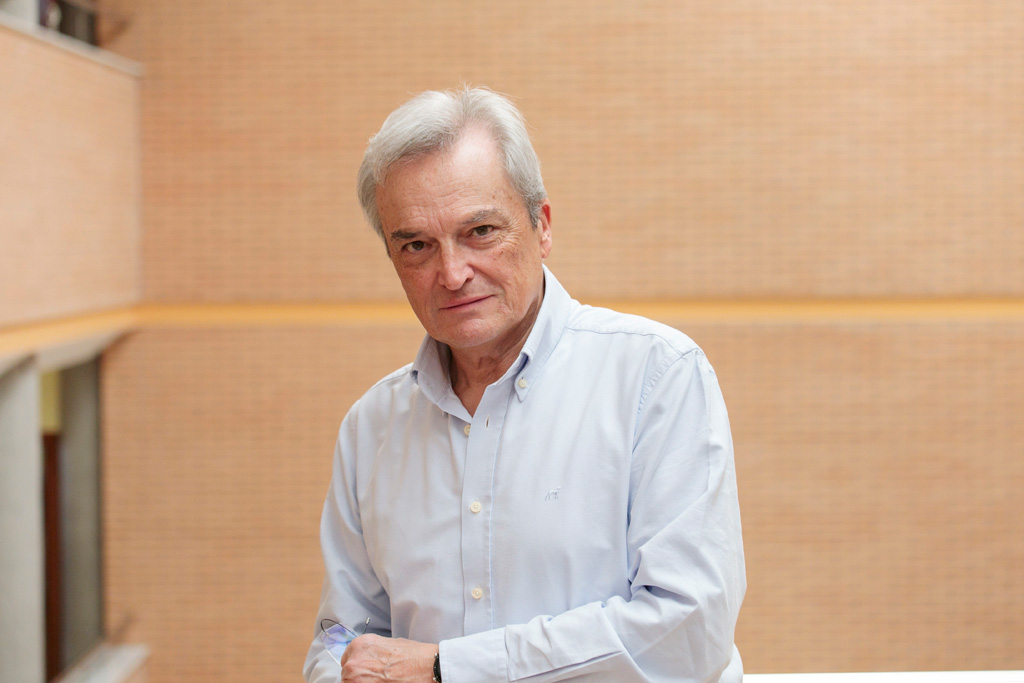
The University of La Laguna recently hosted the meeting of two national networks very relevant in the world of computing: High-Performance Computing on Heterogeneous Parallel Architectures (CAPAP-H) and RISC-V chip architecture. Some eighty researchers from all over Spain related to both subjects attended this forum, which also had the presence of institutional and sectoral representatives such as Pedro Martín Jurado, who is currently the operations director of the State Society of Microelectronics and Semiconductors (SEMyS), with extensive experience in various ministries and EU institutions. This telecommunications specialist granted this Communications Office an interview in which he discussed the main challenges in his professional field.
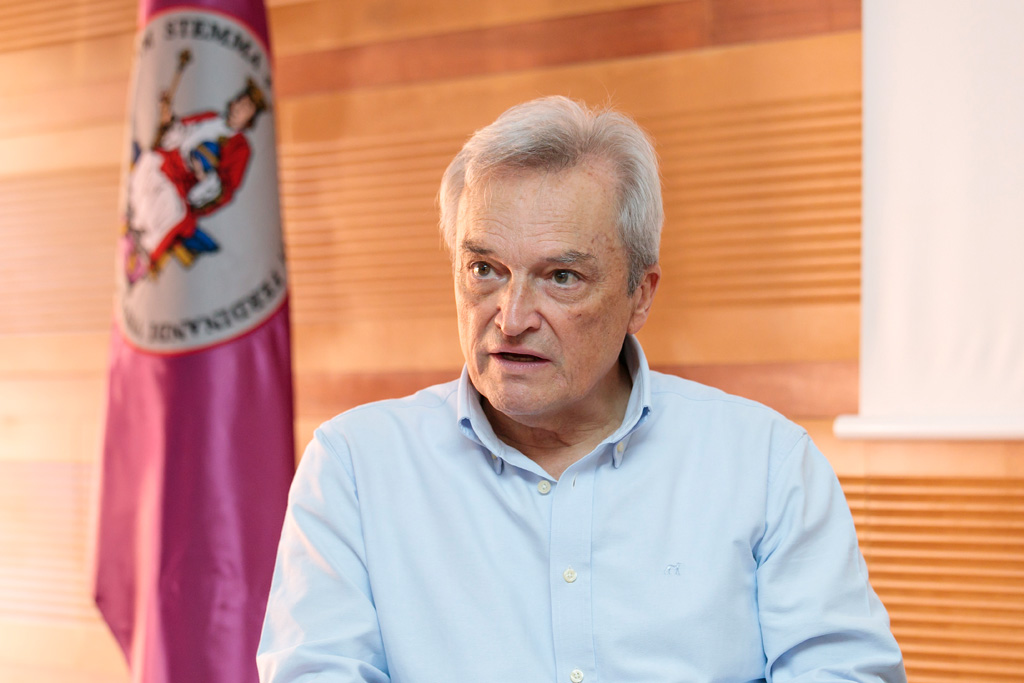 Participate in this seminar by speaking about the present and future of the PERTE Chip Program. Can you first explain what this program is?
He PERTE Chip It is a strategic program defined as a consequence of the Recovery, Transformation and Resilience Plan. When this plan, approved by the European Union for Spain, was implemented in a Royal Decree-Law published in December 2020, the PERTES (Strategic Programs for Technological Innovation) were created, and several more have been subsequently established, one of which is this one on microelectronics and semiconductors.
Significantly, this PERTE program has a budget of €12.25 billion and is the only one with a state-owned company managing it. That, in essence, is the PERTE Chip program: to boost the design and industry of microelectronics, semiconductors, and related fields.
You work at SEMyS as director of operations. What are the objectives of this state-owned company?
It is a state-owned commercial company, attached to the group SEPIDES. Its bylaws are posted on its website; there is complete transparency. It has a single administrator, and we are a group of people who provide our services in various capacities.
This company will operate to manage the funds with a unique scheme within the PERTE: the main focus is to participate in the shareholding of the companies we are going to help, grant loans, also participating loans or a combination of the three previous formulas.
We are a cross-cutting PERTE (Regional Program for Technological Innovation) involving several ministries, such as Industry, Science and Innovation, and our own ministry, Digital Transformation and Public Administration. Through these ministries, grants can be awarded, and we also support the... major European projects of common interest (IPCEI). Specifically, we use SEMyS capital to support Spanish participation in these types of projects.
 That budget of 12.25 billion, for what period of time?
It's a five-year period, from 2022 to 2027. But this will generate recurring funding because we'll recover the loan we grant to a project in four or five years, so that money will generate other loans. In other words, it really has a very long time horizon; it's not like it's going to end in 2027.
Given this context, and returning to its presentation, what, then, would be the present and future of the PERTE Chip?
So far, we've done a lot of fieldwork: for me, coming to this meeting is part of that fieldwork, to find out what's out there. Developing a strategy is like making a basket; I have to know what materials I have to know what kind of basket I can make. During this time, we've been learning about what's happening all over the country, and I think we already know a lot; we've visited many centers. For example, yesterday I visited [the spin-off company from the University of La Laguna]. Wooptix Because it's very important to see and touch. Today we're making contact with this RISC-V academic community. So, we probably don't know everything that's out there, but we do know a high percentage of who's who.
Now we can establish strategic axes or lines of action on which to focus. Starting this year, we have identified the RISC-V chip architecture, which is generating a lot of discussion nationally, and we have significant capabilities for undertaking high-level projects. Photonics is another of these axes where we can undoubtedly work. Let's not forget the sector of large users and major consumers of chips in this country: we are the second largest car manufacturer in the European Union, a sector that will demand a huge number of chips. We have these axes clearly identified.
Separately, I would like to comment on what I call unique projects. On Monday [January 29], the Minister of Digital Transformation, José Luis Escrivá, announced the agreement reached with the Interuniversity Center for Microelectronics (IMEC, IMEC (the world's leading research institute for the semiconductor and microelectronics industry) is opening its second headquarters in Malaga. This is news you've likely seen in the newspapers, and it's a very significant development. IMEC already had a center in Leuven, and this second one, opening globally, will be in Malaga.
This center, which I believe will have a very reasonable execution schedule, can be a showcase for machines like those made by Wooptix, for example, so that the rest of the community, not only in Europe, but also in Japan or the United States, can see the latest semiconductor technologies.
This is a unique and important project; another is that of Broadcom, The semiconductor company announced a few months ago that it will establish a chip substrate plant in Spain, although the exact location has not yet been specified. This will generate many jobs and significant investment. And there are more large-scale projects of this type, also generating substantial employment and acting as a driving force for the entire semiconductor ecosystem in Spain.
And now that I've mentioned the word "ecosystem," Spain probably has a major strength, which is what we sell to many of the multinationals that come here: the high-speed rail network (AVE). Perhaps in the Canary Islands it's a bit more complicated for this to reach, but on the Iberian Peninsula we have the most extensive and best-developed high-speed rail network in all of Europe, and that means that in our ecosystem distances practically don't exist: Madrid-Seville, Madrid-Malaga… these are all journeys that can be made in a short time, and when we tell them this, it really impresses them. Creating ecosystems is very important for developing interconnected projects.
The Canary Islands are inherently attractive, and when a multinational company arrives, it knows perfectly well that the Canaries exist. I don't know if it's because of the climate or the universities, but there you are.
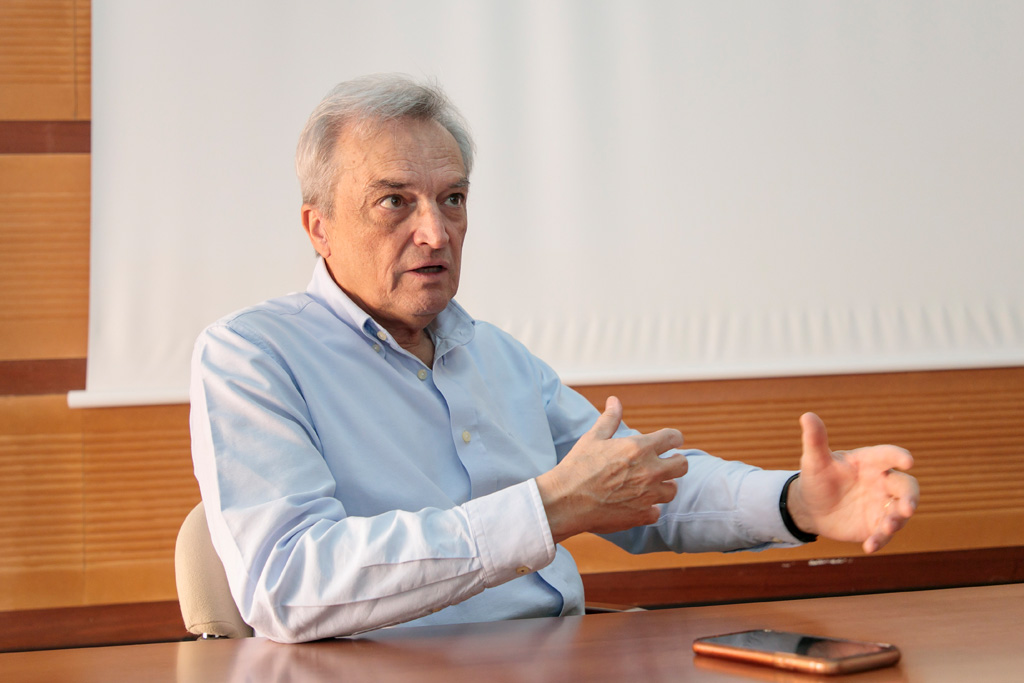 Since you've mentioned it a couple of times, I wanted to ask you about Wootpix, the spin-off company from the University of La Laguna. Jaime Martorell described it as "strategic" when he had the opportunity to visit it.
Undoubtedly. The special commissioner for the PERTE of Microelectronics and Semiconductors Jaime Martorell I had heard about the project, and I had been meaning to come and see it, and of course, it has far exceeded my expectations. I had studied the project and what it does, and it truly is amazing. I wish there were more companies like this, not only here in La Laguna, but throughout Spain. Wooptix could be a driving force for other types of industries and attract other companies. I found it truly unique and definitely worth investing in.
The global semiconductor landscape appears to be dominated by Asia and the United States, although Europe seems to be reacting and approved in September 2023 a specific law on semiconductors. How does Europe fit into this context?
I believe Europe can play its cards right. And very powerful cards at that. We have traditionally very powerful countries like Germany, France, Spain, and Italy, with knowledge and talent. Chips Act The European Union is putting a significant amount of money on the table, and undoubtedly, money greatly helps everything else. Within the EU context, there exists... Chips Joint Undertaking (JU Chips), which is where a whole series of initiatives and projects are being developed. There is also the executive committee of the semiconductor industry, of which Jaime Martorell is a full member, so we are informed firsthand about everything that is happening and the strategies to be established by the European Union.
And even though sometimes between the US and China it seems there's no room for Europe, I think we have great ecosystems like the one in Germany, which is where all the important companies are located. We have research institutes like the Fraunhofer German or the LETI French. And now Spain, with the installation of IMEC in Malaga, is also at the forefront, without a doubt.
For the moment, Brussels is putting together some projects that it calls the Pilot Lines, And we are very determined to participate there, and we expect that this year we will even lead one of these lines of research in photonics. I don't know if it's too presumptuous to announce this, but we are fighting for it.
In this technological race that seems to be dominated by large technology firms, what role can universities and public research institutions play?
Well, it plays a decisive role; let's not forget that talent is first developed at university. Then graduates emerge, and some opt for a master's degree and a doctorate at the same university. There's a key figure, the industrial doctorate, which we discussed today at the conference, and it was very interesting. It involves completing the doctorate within a company, and the professional qualification is awarded by a university, so it's an important partnership between both worlds. The case of La Laguna is clear: the CEO of Wooptix, José Manuel Rodríguez, He currently has a doctoral program underway at the University of La Laguna. I believe that's an ideal model, and that the university's role is fundamental.
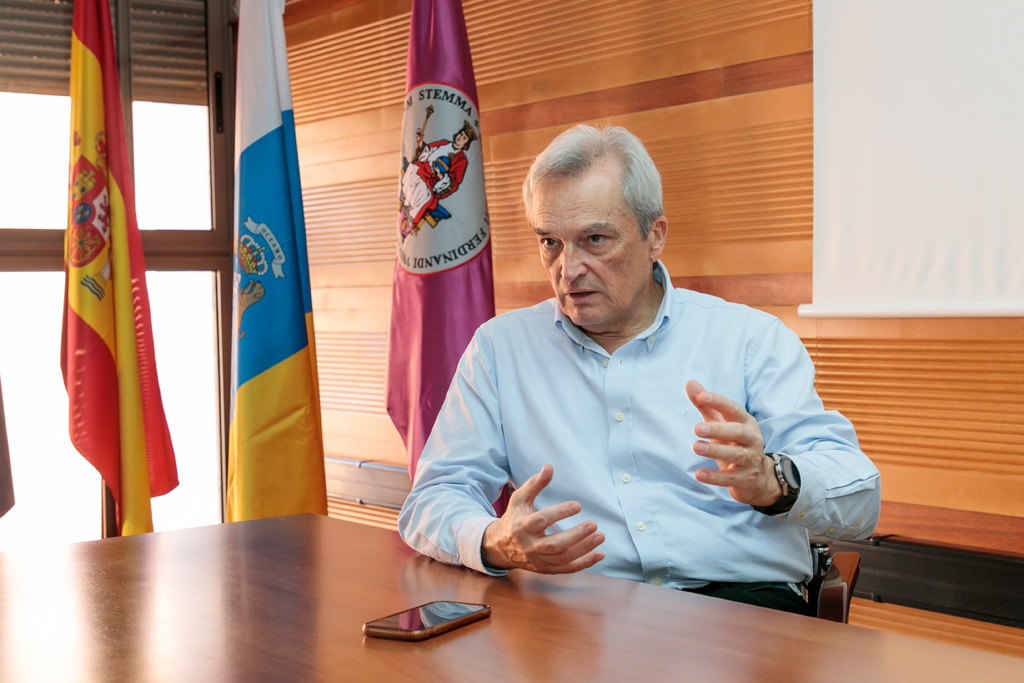 Throughout his extensive career, he has worked for several ministries, the European Commission itself, and technology companies, focusing on diverse areas ranging from blockchain to cloud edge computing and telecommunications systems in general. With all that experience, does he believe Spain is managing its digital transition effectively?
I believe we are quite well positioned. First, because we have a significant network of universities, and I would venture to say that they all offer highly specific training in degrees related to digital transformation: degrees in Engineering, Automation, Industrial Engineering, Electronics, Telecommunications… in addition to the more traditional ones in Mathematics, Physics, and Computer Science. We have a very important and quite cohesive educational infrastructure.
The PERTE Chip, with the role that the €12.25 billion will play, is important because money really energizes things. We will all manage it together, and we at the SEMyS office are making an effort to understand who's who in this scenario.
Then we identified a key factor related to Spain: there are Spanish engineers working abroad who want to return. We must be doing something right when someone who has been working in the Netherlands or California for ten or fifteen years wants to come back. This other aspect of Spain as a country with a high quality of life is also important. Therefore, there are several factors that give us considerable optimism for the future.
And then there's Latin American ingenuity, with companies like Wooptix, which we've already mentioned several times. Why is this happening at the University of La Laguna? Because there's this dedicated role of someone who drives a project forward. Yesterday, José Manuel Rodríguez told me his personal story and his commitment to this project, and you realize that this type of person is crucial to having in projects. The more people with this profile, the better.
Communications Office

 Spanish
 English
 French