The Tenerife Island Council, through its Department of Natural Environment, Sustainability, and Safety and Emergencies, has approved a study on the capacity of plastic or microplastic waste to adsorb contaminants from leachate, a fluid derived from the filtration and decomposition of organic matter. The project, titled "Elimination of Contaminants in Leachate through the Use of Microplastics and/or Urban Plastic Waste," is led by the University of La Laguna and aims to explore the potential use of the resulting leachate, among other applications, in agriculture. The project's total budget is €939,689 and includes funding for two doctoral theses: one focused on leachate and the other on leachate in compost.
The Councillor for the Environment, Sustainability, and Safety and Emergencies, Blanca Pérez, points out that “this initiative stems from the Island Council's commitment to promoting research and innovation in Tenerife regarding waste management, its reuse, and the development of a circular economy.” Thus, in January, the steering committee was formed, comprised of the Nivaria joint venture, the company awarded the island's waste management contract, and the Tenerife Island Council. As a result of this meeting, work is already underway on 9 of the 20 proposed projects, which have received total funding of 9 million euros and involve the University of La Laguna (ULL), the European University, and the Tenerife Institute of Technology (ITER).
The island's Director of Waste Management, Alejandro Molowny, explains that “the research and development projects in waste management on the island mark the beginning of a new era. The Island Council and the Nivaria joint venture, formed by Urbaser and FCC, together with research centers, are carrying out research, development, and innovation projects that promise to have a positive impact on waste management on the island.”.
“The Cabildo is allocating two million euros annually for the 15 years of the contract to these lines of work in the area of sustainability, which demonstrates a strong commitment to continuous improvement in waste management,” Molowny said.
For his part, Javier Hernández Borges, Professor of Analytical Chemistry at the University of La Laguna, who leads the research project 'Elimination of contaminants in leachate through the use of microplastics and/or urban plastic waste', highlights that the research has four objectives, "all of them important" because of the results that may be obtained and that "could open new lines of research on the treatment of leachate and its applications".
Hernández emphasizes that the primary goal is to use microplastics, or small plastic fragments, to improve leachate by leveraging their adsorption capabilities. "With this project," he explains, "we aim to utilize microplastics and plastics in general to clean the leachate so it can be properly disposed of or used for other applications, as plastics have the ability to retain certain contaminants on their surface.".
The second objective is "to determine the presence of microplastics in the compost, vermicompost and biostabilized materials" resulting from the selective collection of all organic waste used as fertilizer for plants, "in order to know the degree of microplastic contamination they have and whether these microplastics, when applied to the soil, pass into it and remain there," the expert emphasizes.
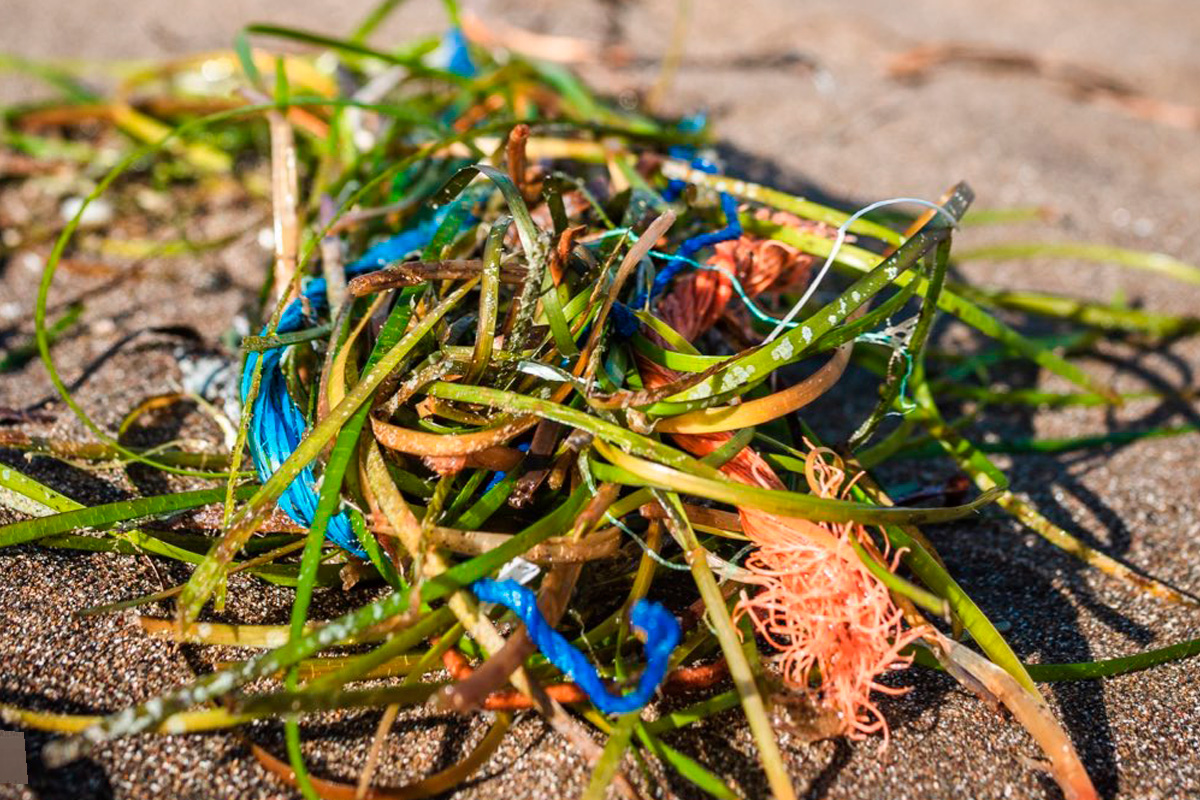
The third premise contemplated in the project is the study on “the presence of microplastics on four beaches in Tenerife for at least six months with the aim of continuously monitoring the presence of microplastics on these beaches. We know that the Canary Islands, of the entire Macaronesia area, have the highest quantity of microplastics.”.
The final objective focuses on raising awareness about the problem of microplastics and includes the publication of several articles, as well as the presentation of results at national and international research conferences. In addition, data on pollution in the Canary Islands and worldwide will be disseminated in educational centers through talks, lectures, and forums.
Press release and image provided.

 Spanish
 English
 French