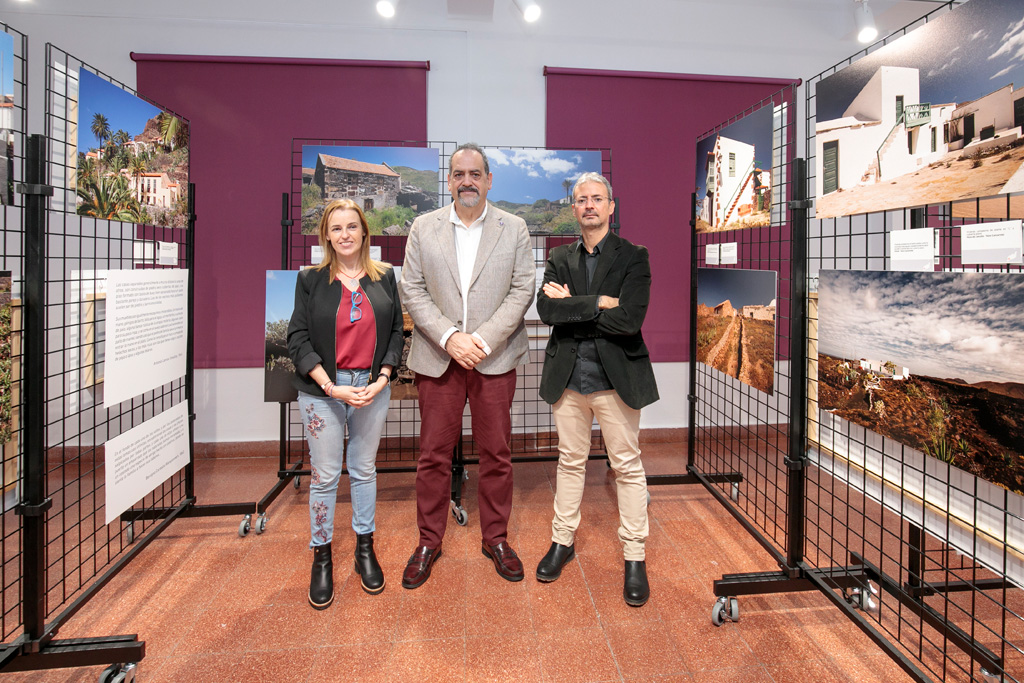
The CajaCanarias Foundation inaugurated the exhibition “ on Tuesday, February 20th“inhabited memory”The exhibition, which showcases traditional Canarian architecture in rural areas, is on display in the exhibition hall of the Faculty of Education at the University of La Laguna and will remain open to the public until April 19. Admission is free, and the exhibition is open Monday through Friday from 10:00 a.m. to 1:00 p.m. and from 5:00 p.m. to 7:30 p.m. Further information is available at [website address missing]. www.cajacanarias.com.
The inauguration was attended by José Manuel García Fraga, Vice-Rector of Teaching at the University of La Laguna; Esperanza Ceballos and José Farrujia, Dean and Vice-Dean of the Faculty of Education, respectively; and Manuel Hernández, from the Culture Area of the CajaCanarias Foundation.
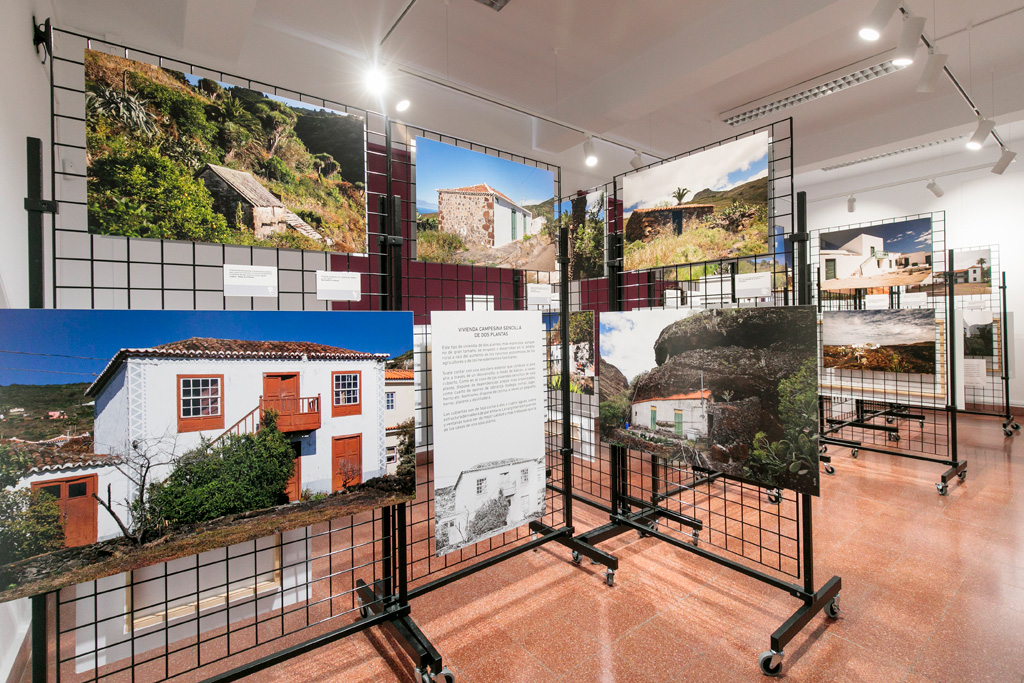 “Inhabited memory” It comprises approximately forty photographs, explanatory panels, an audiovisual presentation, and two large-scale models, all aimed at recovering one of the most important elements of the Canary Islands' cultural heritage and landscape: the traditional architecture of the rural environment, defined by its variety and adaptation to the island's geographical setting. This architecture also embodies a whole range of knowledge, practices, and socioeconomic realities closely linked to agriculture and livestock farming.
The exhibition was put together thanks to the detailed photographic and illustrative work of David Olivera and Santiago Alemán, respectively, as well as the technical advice of Walkirio González, who was a tenured professor of Technical Architecture at the University of La Laguna.
The exhibition materials explain and illustrate the different types of traditional rural architecture, defined by its functionality, simplicity, and authenticity: cave houses, thatched houses, simple single-story or two-story dwellings, and farmhouses. These buildings are generally located in privileged settings from a scenic and environmental perspective, in rural landscapes historically linked to primary sector activities. However, since the mid-20th century, and as a consequence of the changing economic model, the development of infrastructure, and new social norms, substantial changes have occurred in architectural styles.
This exhibition, in this sense, aims to bring the general public closer to vernacular architecture, as well as to raise awareness in society about the need to conserve these heritage assets.

 Spanish
 English
 French