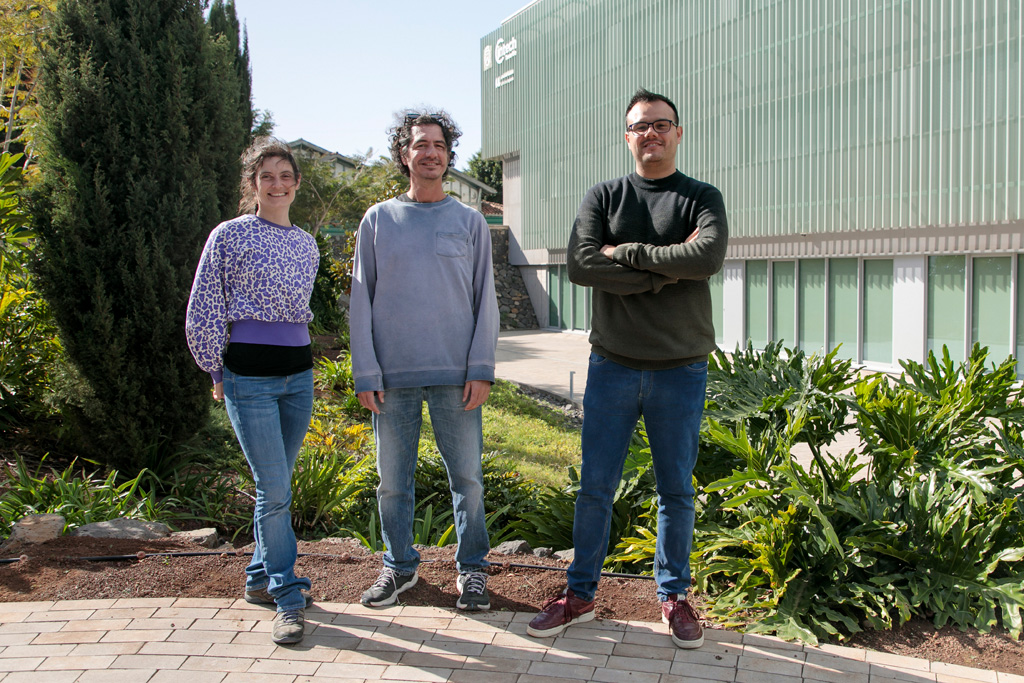
The University of La Laguna celebrates a significant milestone with the creation of a spin-off company associated with a promising invention developed at its facilities. The new company, called Materials Invisible to Oxygen SL (MITO), focuses on developing innovative technologies to suppress corrosion. This achievement has been made possible thanks to the leadership of a professor and researcher in the Department of Chemistry. Gonzalo García Silvestro, who has led this project since its inception.
MITO will focus on protecting metal surfaces from harsh environments such as seawater, snow, humidity, rain, salt, temperature, pressure, acidity, and alkalinity, among others. The use of inhibitors or physical barriers are the most common and widespread methods to prevent or reduce the reaction between the metal surface and the oxygen in the surrounding environment. The company, recently created by the University of La Laguna, will achieve these objectives through an innovative strategy never before considered: the development of materials that are 'invisible' to oxygen.
The initiative has the crucial backing of BeAble Capital through its BeAble Innvierte Science Equity Fund FCRE, solidifying its position as a strategic opportunity to enhance the technology's value, its commercialization, and the company's professionalization. In addition to Dr. García and BeAble Capital, Professor and Researcher Ilaria Gamba (coordinator and head of the research group) Bioinorganic and Spectroelectrochemistry, BIOS) and the university itself will participate in the share capital of MITO.
This step not only has direct economic implications, but will also contribute to the creation of quality jobs and the development of industry in the Canary Islands. In this regard, this initiative focuses on attracting talent, and for this reason, Nicolás Sacco, a renowned researcher and recipient of the "Dr. Enrique Herrero Ducloux" award for the best doctoral thesis in Argentina, will be responsible for organizing, implementing, and overseeing MITO's technological projects.
In this innovative path, the collaboration of the patent division of the Office for the Transfer of Research Results (OTRI) has been essential. Linked to the OTRI, the body responsible for managing the university's Industrial and Intellectual Property, the researcher emphasizes that technician Vanesa Luis has played a crucial role in facilitating and promoting this initiative.
The creation of MITO marks a milestone in the transition from university research to practical and commercial applications. The spin-off will be based at the NANOTEC Technology Center, located within the Las Mantecas urban science and technology park, to which the University of La Laguna is affiliated. With the support of Beable Capital, MITO aims to become a leader in the development of corrosion-resistant materials, promoting innovation and the practical application of university research.
The creation of MITO adds to the growing trend of academic institutions that, in collaboration with specialized investment funds, are committed to the creation of technology-based companies to promote the transfer of knowledge and technology from university laboratories to the market.
This strategic step demonstrates the University of La Laguna's commitment to innovation and its active role in boosting the regional economy, giving researchers the opportunity to take their discoveries beyond theory and contribute directly to industrial and economic development.
Active ULL Spin Off
In fact, four other technology-based companies are currently operating in the market, all of them with participation from the University of La Laguna and the result of knowledge developed in its laboratories. These are: Wooptix, dedicated to the development of innovations in light technologies; Energy RIS, focused on complex energy challenges; Formaché, creator of useful pastes from macroparticle waste; and Kaizten Anatitics, which uses data to improve decision-making and productivity for its clients.

 Spanish
 English
 French