The University of La Laguna, through its DISA Foundation Chair for Young Entrepreneurs, held today, March 18, the closing ceremony of the 'Solutions for the Primary Sector' event, in
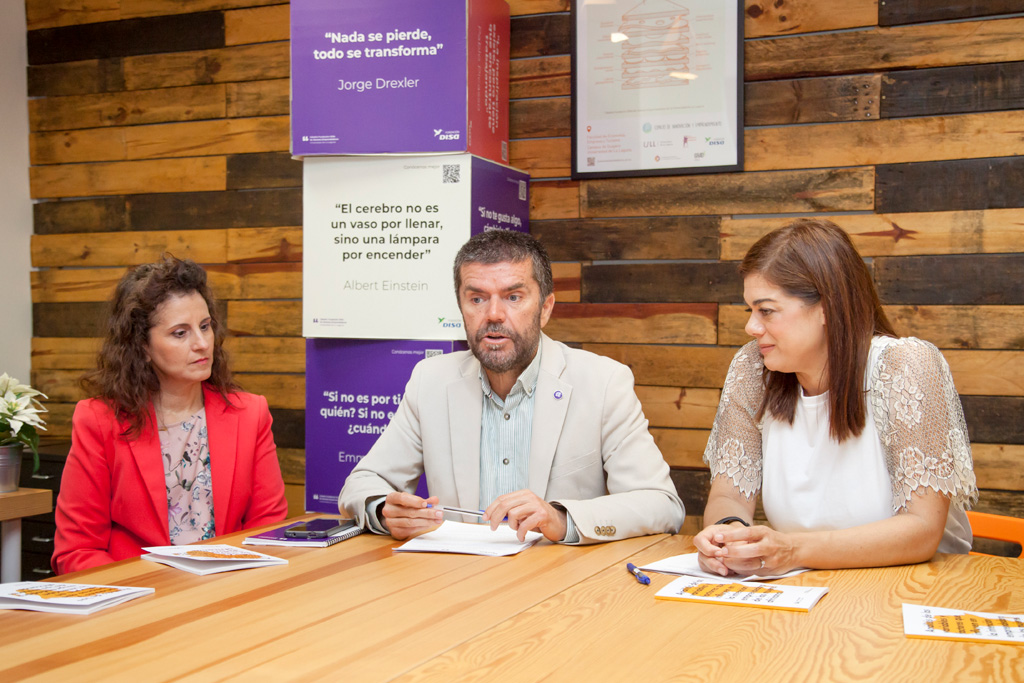
Vice-Rector of Culture and University Extension, Rector and Director of the DISA Foundation, at the prior event for the renewal of the agreement.
The event showcased a set of successful projects focused on revitalizing the economic activity of this sector, combining innovation, sustainability and commitment to the local community.
The event was preceded by the renewal of the collaboration agreement between the aforementioned foundation, headed by its director, Sara Mateos, and the academic institution, with its rector Francisco García, to renew for another year the development of the chair, which is very active and one of the oldest at the university, since it was created in 2013.
Throughout this time, the chair, led by Inés Ruiz de la Rosa, has focused on the entrepreneurial training of students, empowering them to plan their own future, explore opportunities in new market niches, present projects both individually and in groups, and connect them with the region's economic reality through numerous fairs, exhibitions, lectures, and events. "We have to expose our students to real-world experiences, because teaching needs to be increasingly practical," says Ruiz de la Rosa.
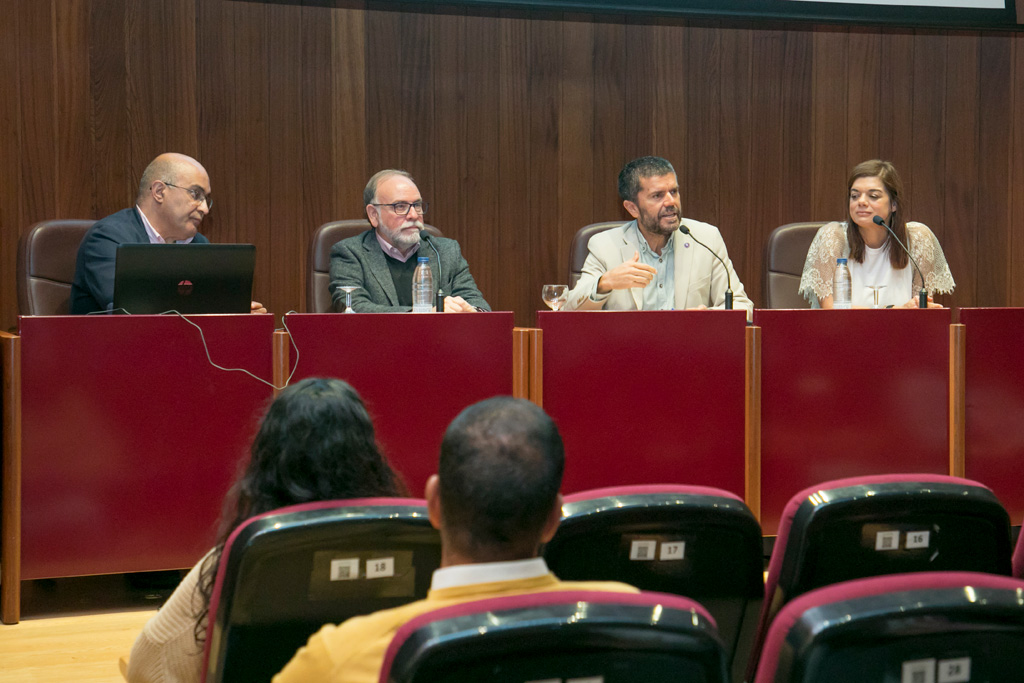
From left to right, Director General of Agriculture, host dean, rector and director of the DISA Foundation.
For the rector, this professorship is a clear example of the positive impact of working alongside the productive sector, and of the significant collaboration that public universities can offer, he said, and of their potential for knowledge transfer. The university professorship was already involved in a first round of initiatives for La Palma, with the aim of revitalizing the island after the volcanic crisis with new business ideas. Now, it is addressing the situation of the primary sector, which is mired in a major crisis that has led its members to demonstrate in various parts of the country and Europe.
In fact, food sovereignty was one of the elements put on the table by the Director General of Agriculture of the Government of the Canary Islands, Javier Gutiérrez, who pointed out at the presentation of the proposals that "we must be able to have the key to our pantries", while also noting that the sector must achieve profitability and increase agricultural production.
The director of the DISA Foundation argued that this is a very relevant and powerful initiative, because the primary sector needs more innovation and entrepreneurial proposals, in which the university can play a very prominent role, an argument that was echoed by the dean of the Faculty of Economics, Business and Tourism, host of the event, who also defended the great activity of the chairs linked to his center.
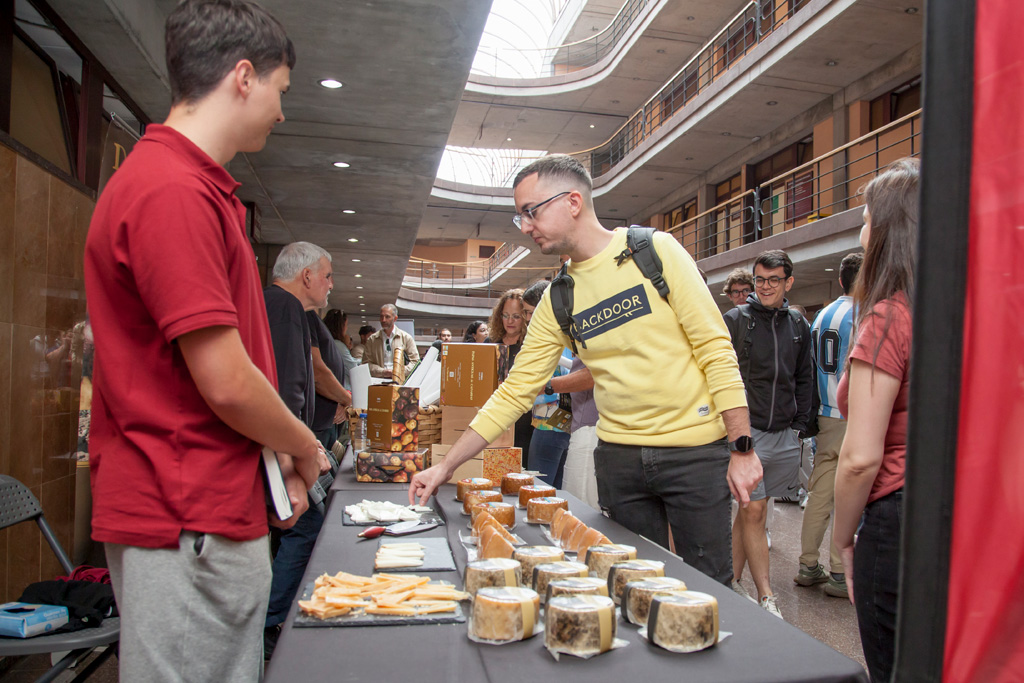
The rector also noted the importance of introducing the primary sector to younger generations, so they can understand its challenges and be encouraged to become entrepreneurs. In fact, the session included an exhibition by local producers who interacted with students and faculty, offering high-quality, locally sourced products to the university community.
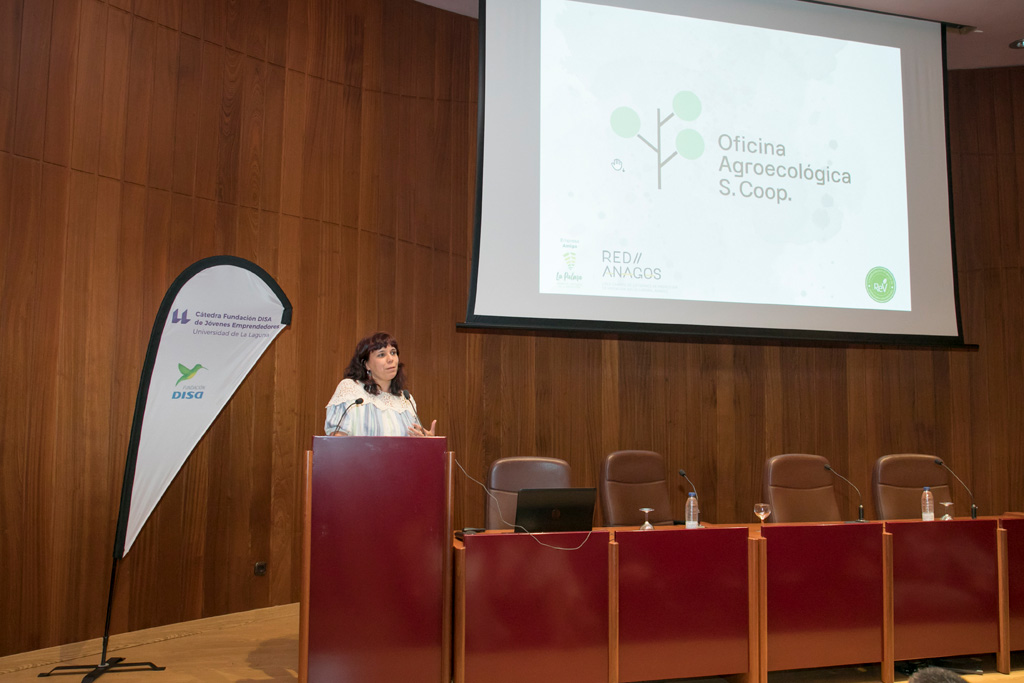
Nayra Lorenzo, from the Agroeconomic Office.
Nayra Lorenzo was in charge of presenting the Agroeconomic Office of La Palma, a primary sector consultancy created as a cooperative between three university students who returned to their home island midway through their professional careers to revitalize the primary sector, propose new ideas, and offer their consultancy as an exercise in social economy, trying to develop the rural environment, but being responsible in social, economic and environmental matters.
This morning's session also revealed the case of Adasat Peña, an agricultural technical engineer responsible for the brand with the designation of origin.
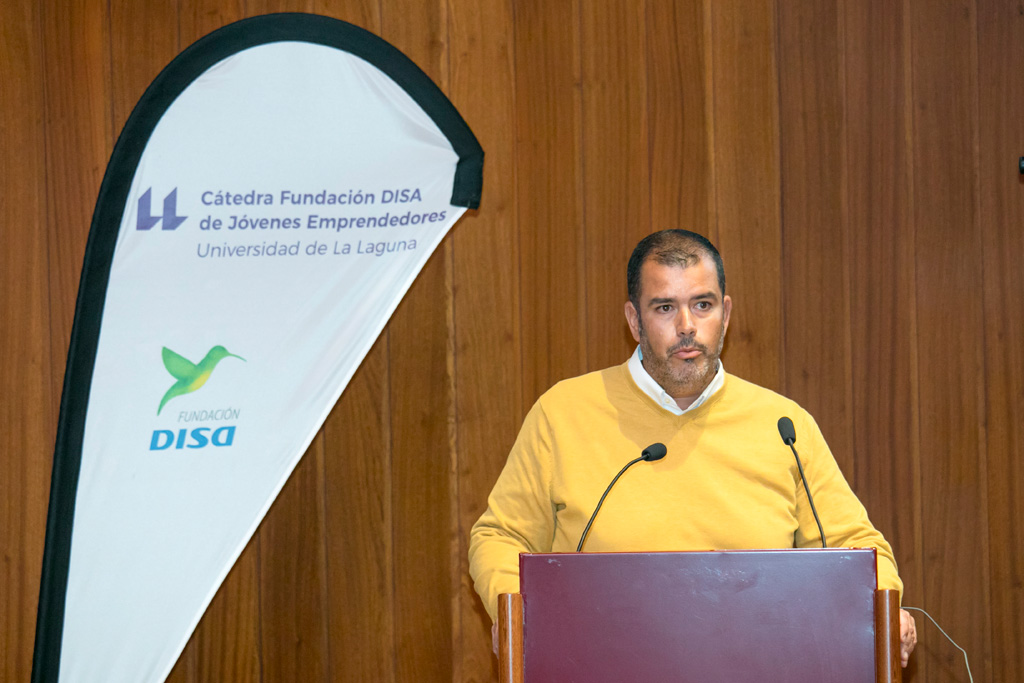
Adasat Peña, from Mieles de Abona
Mieles de Abona, a company founded by someone who has always been interested in beekeeping since their youth, has promoted the creation of a quality product, attempting to rescue this cultural heritage from an aging sector dominated by bulk honey, much of it fraudulent. They saw a business opportunity and seized it, developing a successful business plan that has resulted in 200 fully operational hives. They also offer apitourism on their farm in the highlands of Fasnia, adding value to their main activity. Finally, Sergio Rodríguez Gutiérrez, promoter of Frutas y Verduras Nito (Nito Fruits and Vegetables), who has a large social media following, spoke, defending the sector's value and promoting its future.

 Spanish
 English
 French