Much has changed since the 16th century when the British first praised the virtues of Canary Island wine. The aroma, texture, and body of Canary Wine, which captivated even William Shakespeare, were eclipsed a century later by port and Madeira wine. These, along with customs duties, were responsible for relegating the renowned wines of the Canary archipelago to a secondary position. And yet, despite the diseases that followed and the fact that wine production in the islands subsequently had to settle for surviving in the local market, its prestige has remained undiminished throughout the years.
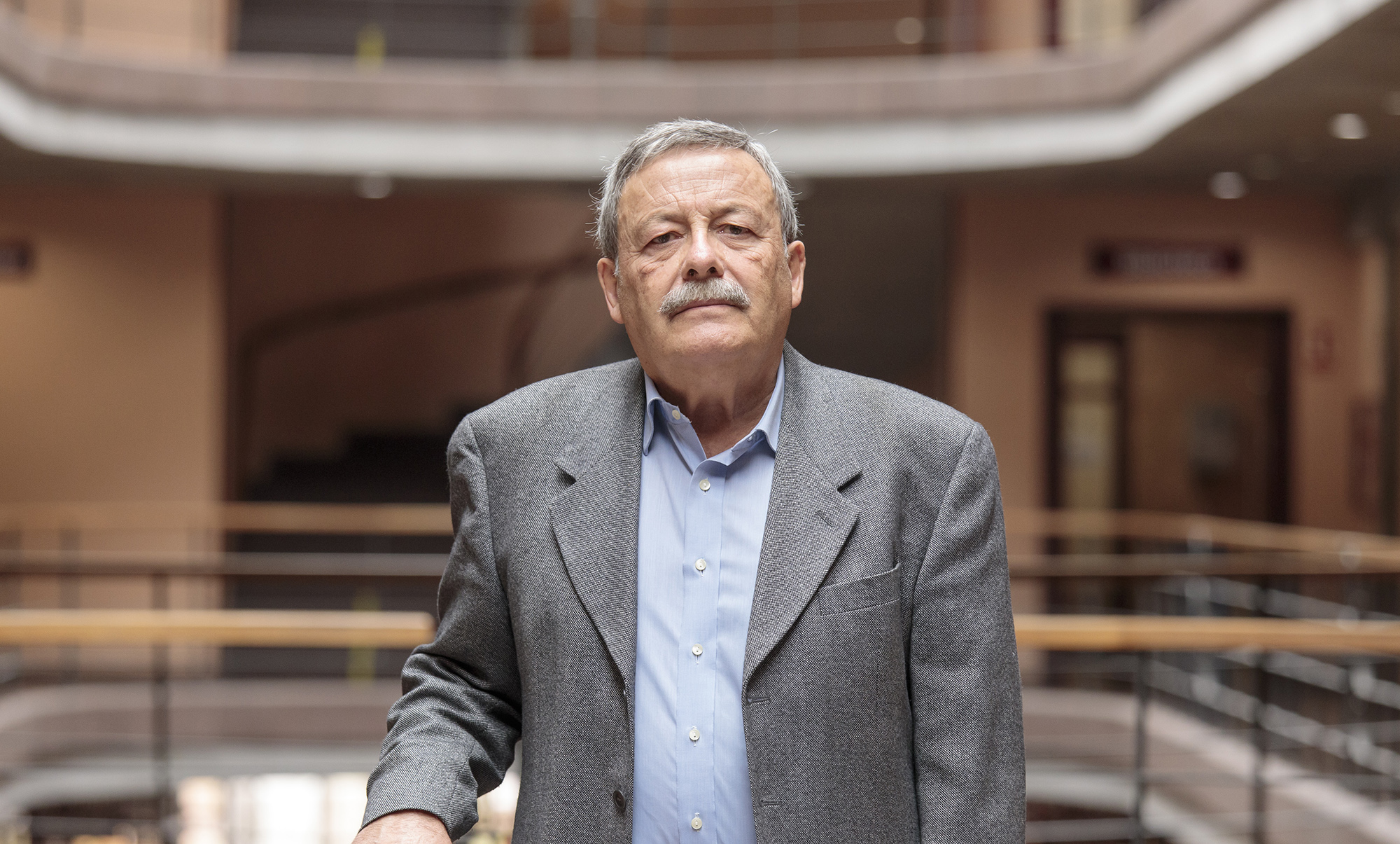
The acclaimed quality of Canary Island wines was no accident. Their good name was forged through the hard work of the island's winegrowers, who were able to adapt different grape varieties from Europe to the archipelago's stony soils—no easy task. "The quality of the wine at that time depended on the soil, the climate, and the grape variety. It was the Canary Island winegrowers who, for years, put into practice a process of trial and error until they obtained the perfect wine," he says. Antonio Macías Hernández, Professor of Economic History and Institutions at the University of La Laguna, now retired, and one of the greatest and most prestigious experts in the economic history of the Canary Islands.
“Even back in the 17th century, the winemaking processes in the Canary Islands were incredibly modern. The winegrowers of that time made the best wines in the world, according to the English themselves,” a fact that leads him to affirm that the island's winegrower was “a great, truly great entrepreneur. Today you can improve the quality of wines through chemistry, but back then, what the vine produced was what determined its quality, and it was the traditional system that yielded that great wine.”.
The training system used was fundamental. From the traditional low-trellis system, which covers everything and creates a microclimate where the grapes ripen slowly, like a good stew, to the high-trellis system—typical of warmer coastal areas, with a different pruning method and greater need for irrigation—from which the best Malvasia wines were produced. “That is the great legacy of our vineyards,” says Macías, while emphasizing that the situation facing the Canary Islands' primary sector, which he knows very well, is far from its best.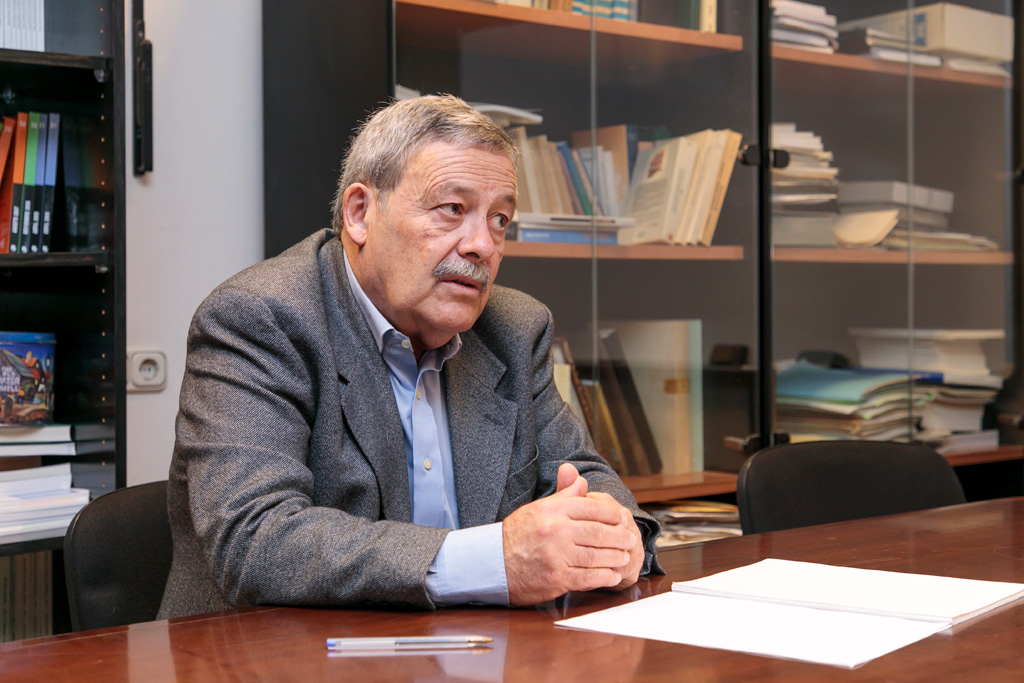
The current situation is anything but encouraging. Except for Gran Canaria and Fuerteventura, where land dedicated to cultivation has increased significantly, the islands' cultivated area has lost more than 2,000 hectares in a decade. Thus, in 2021, and according to the latest data from Canary Islands Institute of Statistics (Istac), The archipelago's agricultural area totaled 39,356 hectares, 56 less than in 2020. Considering that there are 130,000 hectares of usable land for cultivation in the archipelago, one has to wonder how this situation came about.
A situation in which the agricultural sector is dying, and not only in the Canary Islands, as numerous representatives of the sector on the islands have denounced. Despite the latest positive data collected in the 2020 Agricultural Census of the National Institute of Statistics (INE), While the figures point to a 0.7% increase in Cultivated Agricultural Area (UAA) in Spain compared to 2010, the truth is that farmers have to face extremely high production costs, an aging wage pool (most are over 65 years old) and fierce competition.
This somewhat agonizing situation has led many European and Spanish farmers to raise their voices in a cascade of protests that has given no respite to any EU government. The uprising reached the heart of Europe in the form of tractor demonstrations demanding, among other things, solutions to the deep crisis facing the agricultural sector, a halt to excessive bureaucracy, and stricter conditions for food imports from non-EU countries.
“The issue, in my view, is that European aid should be directed to the real farmers, the small and medium-sized ones. If Europe wants agriculture to be sustainable, then farmers should be paid for sustainability, but what cannot be allowed is for them to be forced to farm as required, without being protected from foreign competition. And this is not protectionism,” says Antonio Macías, aware that he has “no magic wand” to solve a problem that arises when Europe begins to use “that terrible word called sustainability.”.
The Edges of Sustainability
For this expert on the Canary Islands' agricultural and wine sector, sustainability is a double-edged sword. While he believes it is essential that European agriculture strive to improve and modernize, "this is something only large farms can achieve, as the costs are completely unaffordable for small and medium-sized farmers, leading them to abandon farming.".
To this aspect we must add another, no less important: the unfair competition from third countries, capable of producing at prices far below those of Europeans. “With no social security costs, this difference materializes in labor and input costs. What is clear is that European farmers are right and have endured this situation for a long time. And then, we must consider the existing divide between northern and southern Europe. They don't realize that Italian, Greek, or Spanish farmers produce out of season.”.
Understanding the significance of this rebellion in the European countryside, which has mobilized farmers without exception and put the European Union (EU) leaders in check, forcing them to confront a furious standoff after which they have been compelled to make certain concessions—such as withdrawing the regulation that reduces the use of pesticides—requires looking back to understand what happened to international trade at the end of the 19th and beginning of the 20th centuries.
“The transport revolution, especially the steamship, was fundamental because it allowed grain and meat products from the newly independent countries to reach Europe, generating strong competition for European producers,” the expert explains. While countries like England opted for free trade, as access to these products was advantageous for them, allowing them to lower labor costs and increase competitiveness, others like Spain, Italy, and Portugal embraced protectionism until the establishment of the European Economic Community (EEC) and its new Common Agricultural Policy, which supplied the internal market with products from third countries.
“In the interest of sustainability and consumer protection, Europe is implementing a policy of pesticide control and product transit, and to address this, they are suppressing the consumption of certain pesticides and chemicals, removing them from the market and replacing them with more expensive alternatives,” something he has witnessed not only as an expert but also as a farmer: “It is not the same to spray with a sustainable product, whose effectiveness is zero, zero in many cases, as with a much cheaper and more effective product, but one that is prohibited.”.
And to this must be added the fact that third countries do not require them to use these certifications, a circumstance that Macías harshly criticizes when referring to the lack of customs controls. “Simply by showing the certificate of compliance, they are given permission to continue because it is assumed that there is a control at the point of origin, which, however, is not verified at the destination.” This lack of oversight of agricultural products imported by Europe is further aggravated when one considers that “there are European companies with enormous tomato plantations, owned by Spanish businessmen, that produce at Moroccan prices and sell at European prices.”.
The question at this point is whether it's possible to resolve this complicated situation, which farmers have been dealing with for quite some time. There's a month left, until parliament is dissolved for the European elections in June, to see if the protests have led to any response or solution to their needs.
For now, the one who has stepped forward is the Ministry of Agriculture, Fisheries and Food Spanish, who just transferred (yesterday, Monday, April 1) to the agricultural associations a package of 43 measures These measures address the demands that have mobilized the sector. Among them are the granting of financial loans, greater flexibility in agricultural policy, and border controls on imported products.
Accepting these measures would open a new horizon for a sector that, despite representing only 1.71% of European GDP—a significantly higher figure in Spain, reaching 2.31%—is of vital importance to the economy. “Europe has to rethink its agricultural policy, and it is obliged to do so, not because it likes it, since it is beholden to large corporations, but because the threat of the far right finds fertile ground in this conflict,” argues the professor from the academic center.
In the Canary Islands countryside
While the European and Spanish agricultural sectors have issued a desperate cry for help, the Canary Islands' agricultural sector has set a five-year deadline for its activity if the situation doesn't change, as acknowledged by Asaga Canarias when they joined the mass protests. "You only have to go out into the fields to see the number of brambles that have invaded the islands' terraces. The only things that have survived are the vineyards, for local wine production, and the potatoes, for family consumption.".
In fact, he points out that abandoned land in the Canary Islands is around 701,000 tons compared to the 1950s. “What remains on the islands are no longer the large landowners, but the small ones, who sell at municipal markets, in local shops, and a few who maintain links with large retailers. And for this professor of Economic History of the Canary Islands, The domestic market agriculture in the islands suffers from a serious competitiveness problem, "even more so when products continue to arrive from outside, and there are plans to reopen a direct shipping line from Fuerteventura to Morocco.".
As he explains to his first-year undergraduate students, whom he continues to teach as an honorary professor despite his retirement, understanding the problems of the Canary Islands requires reflecting on what the archipelago is: “It is nothing other than an income-exporting economy. The main sector of our economy, tourism, possesses the same resources as agriculture: the sky, the land, and the water, with the major difference that the agricultural sector does not destroy soil.”.
And in this thorough analysis, he doesn't overlook the industrial sector, which has been gradually "undermined." "The Canary Islands brewery is struggling to stay afloat, the Arinaga cement factory's days are numbered, and Cepsa, Spain's leading refinery, which offered fuel at the same price to all the islands, withdrew from the archipelago, to the detriment of those who now complain that they pay more for it on the non-capital islands than on the capital ones.".
“Those who protested the establishment of the refinery played into the hands of the importers because the main enemy in the Canary Islands is the importer. The majority of the population lives off the service sector, and part of our salary is spent on buying imported products, while part of our salary flows out and supports foreign economies.”.
This status of the Canary Islands as an “exporter of income” clashes head-on with an archipelago that was once the leading exporter of tomatoes in Europe because it had the capacity to produce out of season. “There was no competition and we were able to sell the product, until cold storage arrived,” Macías admits, explaining that the archipelago's main export, along with bananas, has dwindled to the point of representing only a tenth of what it did two decades ago.
“That is the tragedy of the Canary Islands, which was further highlighted during the COVID-19 pandemic, when it became necessary to supply the domestic market, and also when the Gulf War broke out, at which point gofio disappeared from supermarket shelves. That is the major challenge we face: resolving the domestic supply issue, and the main enemy of domestic supply is none other than the importer.”.
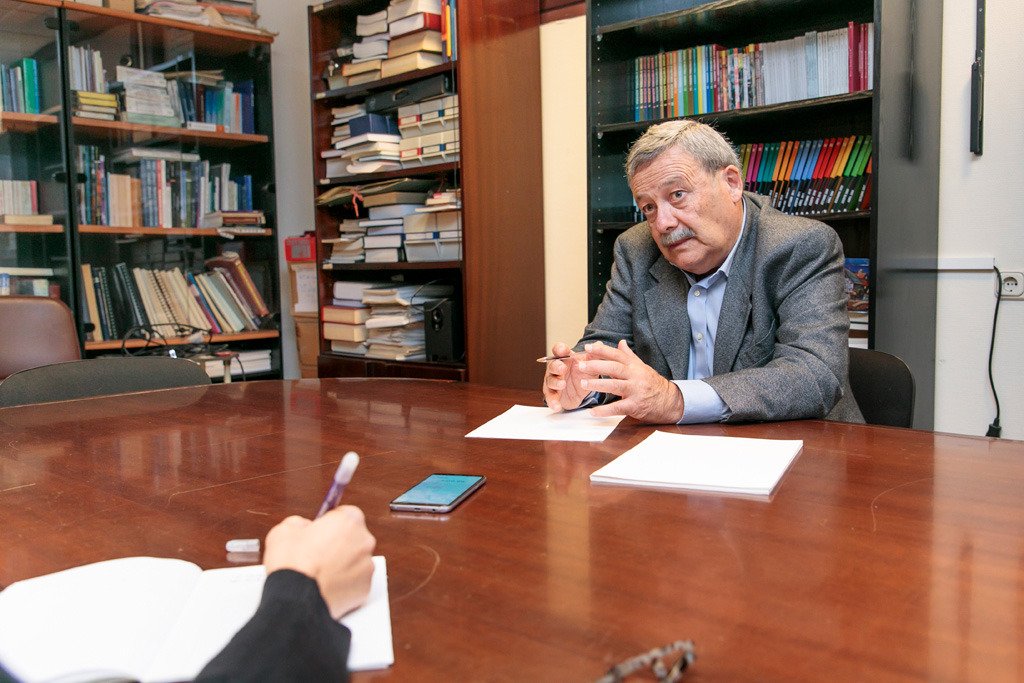 Faced with this import dilemma, he admits that the islands' domestic agriculture did find a way out when urban demand for fruit and vegetables increased in areas of Gran Canaria and Tenerife, where it managed to survive for a while until all agricultural capital was concentrated on export agriculture: "Potatoes disappeared because they were out of season for England, tomatoes, although still grown in small areas, have been declining since the 1970s, and bananas survive thanks to subsidies.".
Gourmet Agriculture
One approach to ensuring the survival of these crops, given their high production costs, could be to focus on off-season gourmet cultivation. As Macías points out, this would be capable of supplying both the domestic market and the most exclusive markets. A prime example is the Fuerteventura tomato, which has established itself as one of the most sought-after varieties in Europe. Cultivation using desalinated water gives it a texture and flavor that makes it highly prized by discerning palates.
The concern for the survival of the tomato sector has already been made palpable by Government of the Canary Islands on more than one occasion. The last time was last January, when he announced the preparation of a new study on the future of this crop, its possible alternatives and the search for conversion formulas for tomato farms located in the islands.
Another topic that's not new to Macías is seawater desalination. He's often asked to speak about it in talks where he contributes not only his perspective as an expert on the subject, but also as a descendant of a farming family who knows that water resources are fundamental to the survival of the Canary Islands' countryside. “In the Canary Islands, there's more than enough water, all we need, if it's treated. In Japan, they sell bottled treated water, and in the Canary Islands, we dump it into the sea. Both local councils and the Canary Islands Government are paying fines because Europe requires the installation of state-of-the-art treatment plants, but that means facing opposition, since it would mean tearing up the sewers, rethinking all urban planning, or eliminating illegal outfalls, and that doesn't win votes, it's not in anyone's interest, and therefore, nobody proposes it.”.
The water scarcity that has always plagued the Canary Islands is another aspect addressed in the Economic History of the Canary Islands courses that he continues to teach at the University of La Laguna, and which “now seem to be of less interest” since it is an elective subject. “I like to teach by linking the present with the past to motivate students and help them realize that historical processes are not over, that they are still unfolding, and that they are fundamental to understanding our archipelago.”.
“In the Canary Islands, population trends have been largely unknown, except since the 19th century, and population size is a crucial macroeconomic indicator, as is production, not only of wine, but also of grains like wheat and barley. And what about prices, or wages…?” These are all aspects he has worked on, analyzed, and written about over the years, and which he now wants to compile, along with his research on the peasant revolts of the 17th and 18th centuries in the Canary Islands. He will undertake this task in conjunction with writing a narrative about the aboriginal inhabitants of the Canary Islands.
This new work he has in hand is nothing more than “the reflection of a historian, an approach to the aboriginal world from the point of view of a researcher who has had to answer the constant questions of his students. What my book does is outline a story of what that culture was like, because they tell us about the discoveries, the sites found, but not the history, the narrative, which, ultimately, is what matters.”.
With no other aim than to weave together the “coherent narrative” of a historian reflecting on the origin and death of an aboriginal culture, its demography, economy, culture and customs, and aware that it may be liked or not – something that does not concern him at all – Antonio Macías continues to investigate with the same intensity as he did in 1976, when he arrived from Gran Canaria to Tenerife to work as a teacher, and began to take an interest in rural narrative, in the history of the land, in the evolution of the countryside and its people.
The book he is currently laying out is also a true reflection of the anecdotes from a lifetime of university teaching, which he embarked on thanks to the 'push' of his history teacher, and which he shared with Antonio Miguel Bernal, "a teacher, a great friend," and the man, whom he met walking along Trinidad Avenue when he was still juggling his teaching classes with his beginnings at the University of La Laguna.
Communications Office

 Spanish
 English
 French