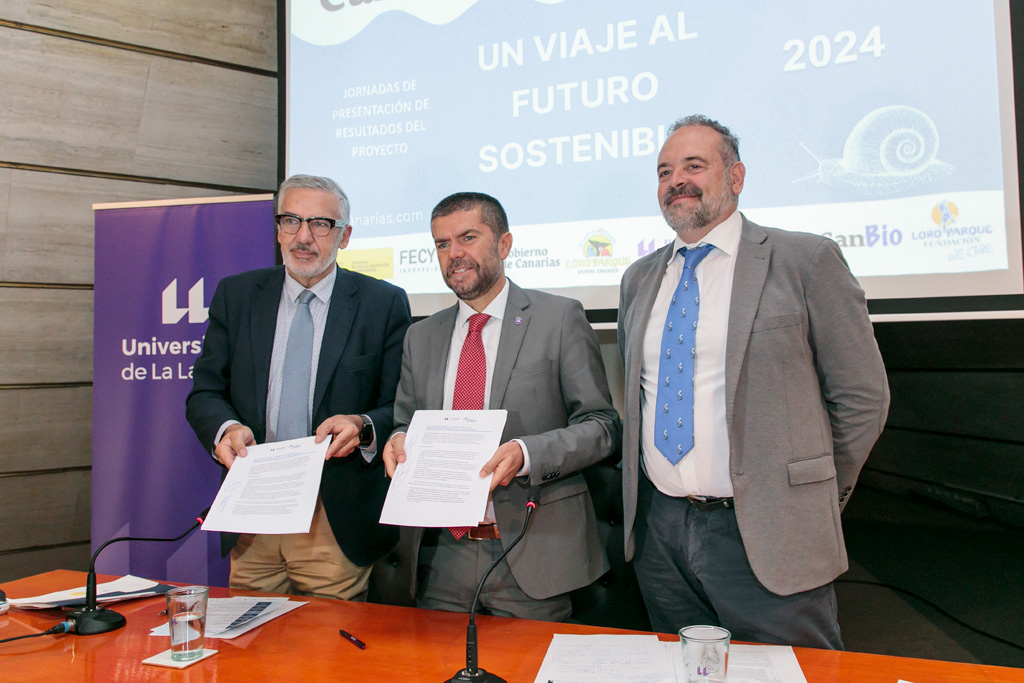
The project CanBio, The project, focused on different indicators of climate change in the Canary Islands ecosystems and funded equally by the Government of the Canary Islands and the Loro Parque Foundation, held a conference today, Thursday, April 4th, to present the results obtained so far by the various research teams associated with the project. During the opening, the rectors of the two public universities in the Canary Islands signed the “Manifesto for the protection of marine biodiversity in Macaronesia”, so that the University of La Laguna and the University of Las Palmas de Gran Canaria have been the first to sign this agreement, which will be joined by more centers in the geographical area concerned by the text.
During the opening ceremony of the conference, held at the Faculty of Social Sciences and Communication, the rector of the University of La Laguna, Francisco García, highlighted that CanBio is an exemplary project for many reasons, including the fact that it is a public-private collaboration formula beneficial for science and for obtaining tangible results on the processes derived from climate change and human influence, such as acidification and noise pollution in the oceans.
García criticized the denialist tendencies surrounding this serious environmental problem and pointed out that, in the face of such positions, public universities must work to disseminate evidence that it is a real problem threatening our shared future. He described the project as a prime example of transferring scientific results to society and, therefore, considered it “fantastic news” that this project has a prospect of continuation, as it reflects that public higher education institutions are working together for the well-being of society.
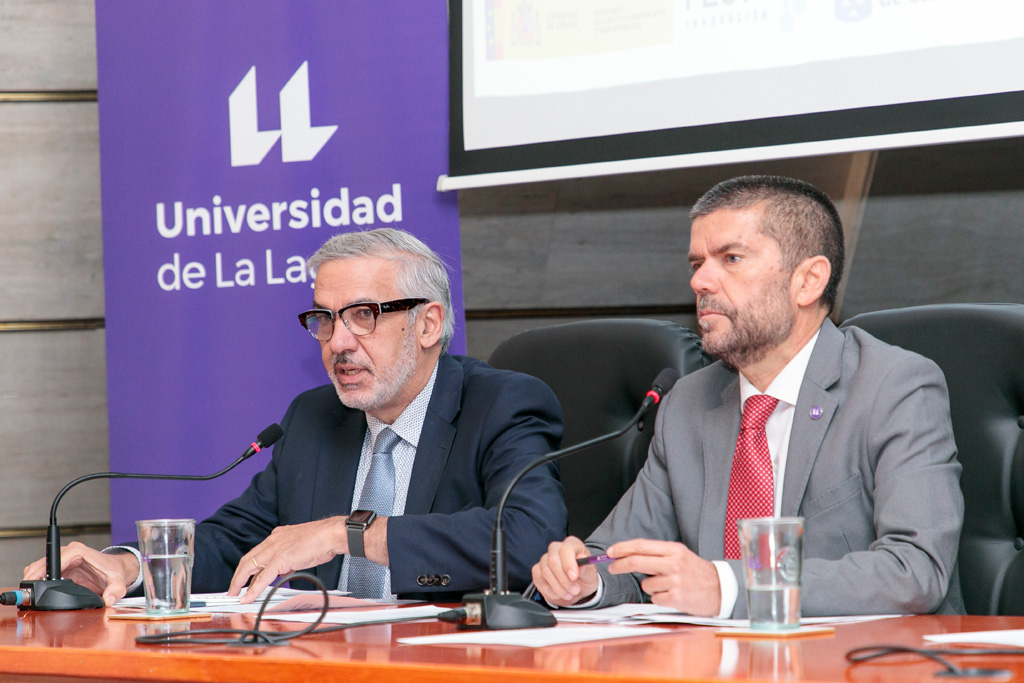
The rector of the University of Las Palmas de Gran Canaria, Lluís Serra, thanked the research staff linked to the project present at the event for their constant effort to launch projects related to regional biodiversity and the aspects of climate change that affect it.
Serra noted that when the Canary Islands' public universities work together, as in this case, they are stronger and achieve more. She praised this collaboration and the synergies it has created, and how activities like today's help to disseminate the impact of academic work to the public. She also expressed her gratitude to the Loro Parque Foundation and her hope that more projects of this kind will emerge in the coming years to continue the fight for nature preservation and sustainable use.
The event was opened by Javier Almunia, coordinator of CanBio and director of Loro Parque Foundation, who also highlighted the project's working model as a good example of collaboration between the public and private sectors, unprecedented in other autonomous communities, which, after six years of operation, has dedicated three million euros to top-level research.
He explained that the initiative has grown and evolved over this period, as it was initially focused exclusively on the marine environment but, since its fourth year, has also expanded to include terrestrial environments. Almunia emphasized that the work carried out by public universities is relevant for generating knowledge that will help administrations and political bodies make decisions based on scientific evidence.
Manifesto and presentations
The manifesto was read by science journalist Sofía Ramos, and it calls on the signatory universities to promote interdisciplinary scientific research on marine ecosystems; to integrate biodiversity conservation into their curricula; to foster collaboration between academic institutions and other public and private organizations to develop joint projects; to raise awareness among the university community and society in general about the importance of protecting marine biodiversity; and to support the creation of Marine Protected Areas in Macaronesia.
The rest of the day unfolded with twenty-minute presentations in which those responsible for the different projects explained their results. Thus, the morning session addressed the initiatives “Ocean Acidification in the Canary Islands: The Importance of Time Series,” “Passive Acoustic Monitoring, Noise and Underwater Landscapes”; “Accessible Science, a Gateway to Freedom”; “Ocean Warming and its Effects on Coastal Biodiversity”; “CanBio Web 3.0: Transmedia Narratives for Science Communication”; “Biological and Paleontological Characterization of Critically Endangered Terrestrial Gastropod Species in the Canary Islands”; and “Acoustic Surveys with Gliders in 2023 BioACU.”.
The afternoon session will focus on the projects “Terrestrial arthropods of the Canary Islands: the great forgotten ones of conservation”; “Citizen networks for conservation in the face of climate change, the example of Fuerteventura”; “Study of elasmobranchs in the Canary Islands (Angelfish, Mantellines and Topefish)”; “Preliminary results of the underwater sound environments of the Canary Islands”; and will conclude with a round table on communication and science.
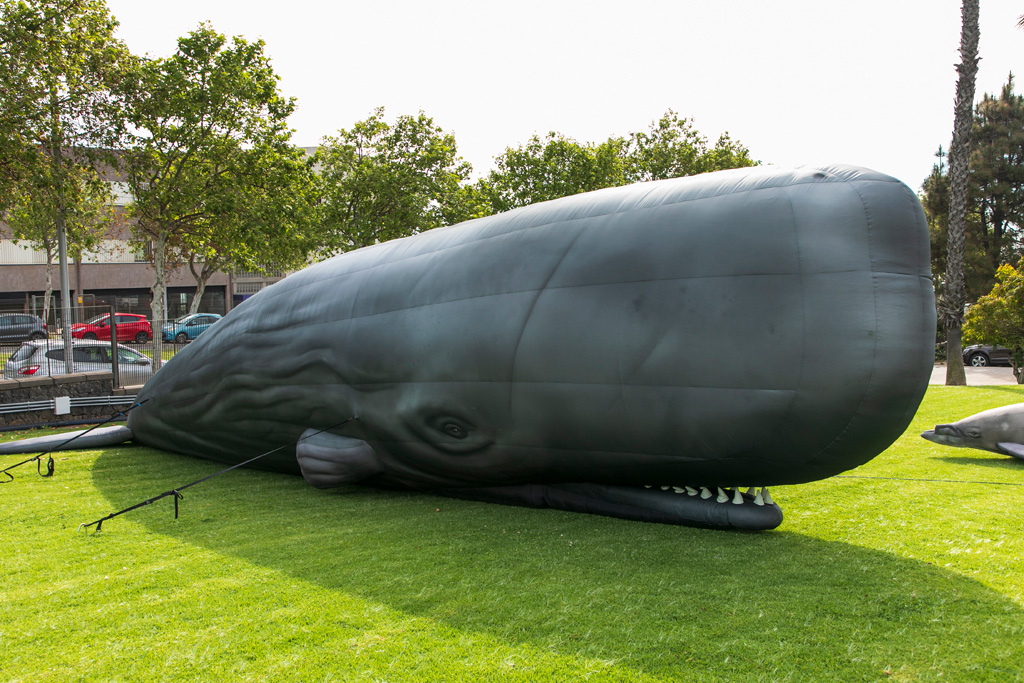
In addition, as part of today's event, three exhibitions have been opened focusing on different aspects of the project: one on cartoons alluding to issues related to sustainability and another on hoaxes about climate change, both installed at the entrance of the host faculty's library; and a third exhibition with inflatable cetacean models that has been placed in the gardens of the Guajara Campus adjacent to the General and Humanities Library, and which has been visited by school groups.

 Spanish
 English
 French