
The book Harmonizing Intellectual Property Law for a Trans-Atlantic Knowledge Economy In the words of its editors, this book represents a first attempt at a comprehensive legal history of the uneven transatlantic harmonization of intellectual property law. The authors explore harmonization as both a legal mandate and a progressive ideal, and envision areas where coherent regulatory networks could build a more vibrant transatlantic knowledge economy.
In recent decades, the harmonization of copyright has been a hot topic, especially within the context of European Union legislation. However, EU law has primarily adopted directives that lack a systematic approach and regulate only certain aspects of copyright. This has led to uneven harmonization, which is unable to respond to the rise of new digital communication technologies or the demands of the globalized economy.
At the same time, non-European national courts are increasingly referencing the case law of the Court of Justice of the European Union in their decisions, while European national courts frequently refer to US copyright cases. However, European work on copyright law has focused primarily on harmonization at the EU level, with limited interest in dialogue with other legal systems.
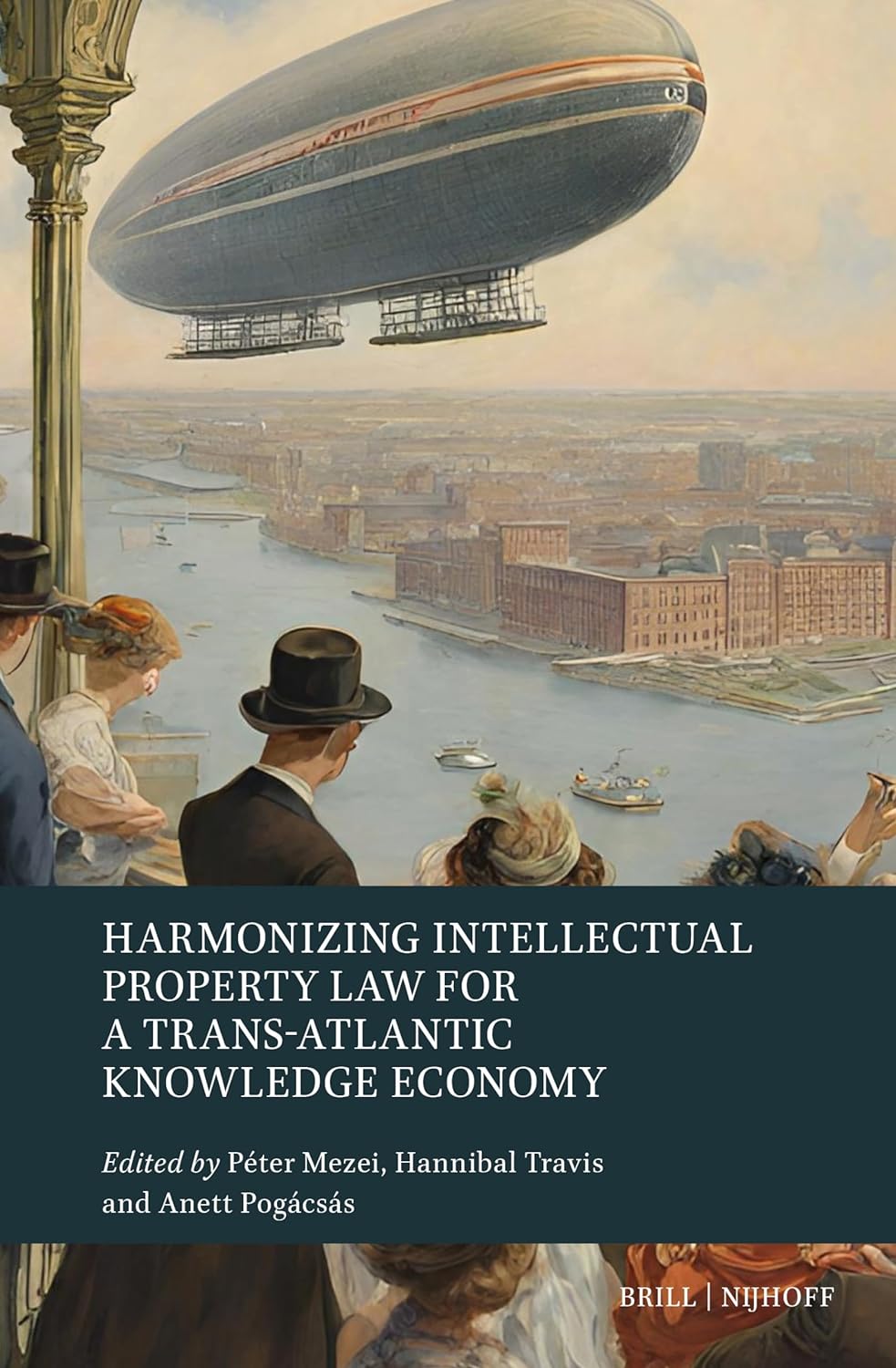 For over a century, the international community has shared the goal of harmonizing intellectual property laws among nations. Unfortunately, these nations have been aiming at a moving target. Due to changes in the underlying technologies -internet, streaming – content and social media, to name just a few obvious examples – the relevant considerations for harmonization continue to change.
Different legal systems have adopted distinct approaches to these new considerations. The result has been not only incomplete harmonization, but also a lack of uniformity in how it is implemented. In other words, even when nations have the same end result, they can achieve it by following very different paths.
The work, edited by Péter Mezei (University of Szeged), Hannibal Travis (Florida International University) and Anett Pogácsás (Péter Pázmány Catholic University) will be published by Brill and aims to provide solutions to achieve the goal of a harmonized global regulation of intellectual property.
The book has seventeen authors, including Luis Javier Capote Pérez, Professor of Civil Law at the University of La Laguna, who has focused his contribution on the variable regulation of photographs, from the point of view of the protection of their copyright.

 Spanish
 English
 French