In the world of research, it is common to frame the dichotomy between basic science and applied science as two sides of the same coin. The former focuses on developing the foundations of a discipline to their fullest extent, without regard for a specific purpose or application, while the latter directs its efforts toward solving a specific need and is highly oriented toward knowledge transfer to society. Both are essential aspects of scientific development and mutually reinforce each other.
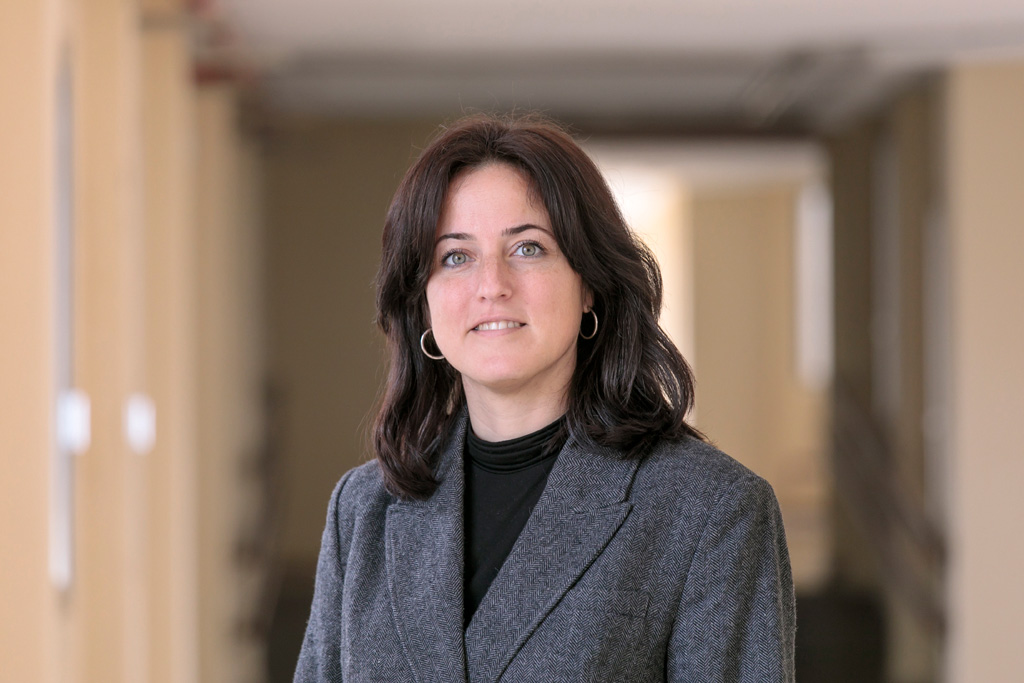
While it is common for research to be classified under one or the other approach, it is increasingly common for projects to blur the lines between them, or even to be classified under both. Such is the case of “EPIAQUA: Unraveling the epigenetic mechanisms underlying nutritional programming for sustainable aquaculture”(Unraveling the epigenetic mechanisms underlying nutritional programming for sustainable aquaculture), whose lead author is Deiene Rodríguez Barreto, attached to Department of Animal Biology, Soil Science and Geology from the University of La Laguna, through a Viera y Clavijo postdoctoral contract.
The EPIAQUA project aims, first and foremost, to implement a nutritional programming strategy using the chosen experimental species (Nile tilapia) as a model to reduce the use of animal products in its feed and replace them with more sustainable ingredients, with a view to increasing production efficiency, improving fish health, and reducing environmental impact. However, its objectives extend far beyond its mere application to a commercial practice like aquaculture, and in fact, that is precisely why it received European funding.
As Deiene Rodríguez herself defines it, this is “a basic science project on epigenetic mechanisms with a context and application in aquaculture, since both the species under study and the experiments to be carried out represent a strategy that will allow for improved production in the future. But the heart of the project is understanding epigenetic mechanisms,” that is, how environmental factors, in this case early nutrition, can induce the activation or deactivation of certain genes in the long term, without this implying a change in the DNA sequence. So, indeed, the project exemplifies the blurring of boundaries between basic and applied science mentioned earlier.
 ERC Project
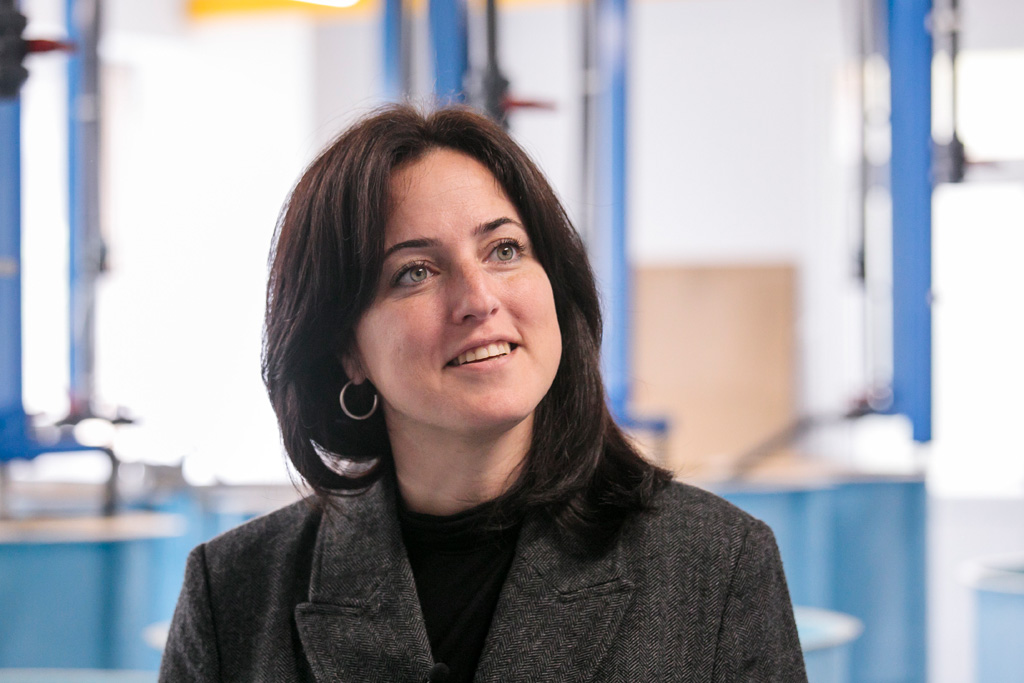
The innovative possibilities of this project are so promising that at the end of 2023 it secured €1.5 million in funding for five years through grants from the European Research Council (known as ERC Grants (by its English acronym) dedicated to emerging researchers, as is the case of Rodríguez, who read his thesis in 2014 and, a decade later, has achieved one of the most competitive and prestigious grants in the international scientific scene: very few grants of this type are awarded each year in relation to the number of applications, and just writing the application is a task of months, as it is necessary to present a very detailed report of the project that you want to carry out that makes clear its excellence and innovation.
Until now, only two people linked to the University of La Laguna had obtained ERC grants, both in 2014: Carolina Mallol Duque, to launch the PALEOCHAR project, which applied microscopic and molecular analysis techniques to burnt organic matter to obtain information about Neanderthal populations; and Teresa Giráldez Fernández, to develop the Nanopodics project on the biophysics of the BK potassium channel and its involvement in subcellular calcium nanodomains and synaptic transmission.
One characteristic of ERC funding is that it is directly allocated to the applicant, regardless of their current institution. This means that someone who begins their project at one institution could move to another to complete it. In this case, Rodríguez Barreto has chosen the University of La Laguna after having worked in the preceding months at the Spanish Institute of Oceanography (IEO).
Nutrition in aquaculture had already been a focus of interest for Rodríguez Barreto since his doctoral thesis, developed under the supervision of Professor Antonio Lorenzo Hernández, from the University of La Laguna, and Salvador José Jerez Herrera, from the IEO, which dealt with the feeding and reproduction of amberjacks. During his doctoral studies, he carried out two research stays at the Aberystwyth University (Wales) and, between 2015 and 2020, was employed at another Welsh center, the Swansea University, where he worked on several projects on the epigenetics and microbiome of salmon before returning to Spain.
 Epigenetics
To fully understand the project's objective, it is essential to know what epigenetics is, which in turn requires understanding the genetic structure of organisms. All cells in the human body have exactly the same genetic information, the same sequence of nucleotides (DNA) that codes for the proteins that make them up.
However, not all cells in our body are the same; some will express certain traits while others will never be expressed. This different expression is what gives rise to cell specialization, causing one cell to be a liver cell, another a skin cell, another a retinal cell, and so on. “What determines cell differentiation and which traits are expressed in different cell types are epigenetic mechanisms. This differentiation is only possible because there are structural or biochemical modifications that, without affecting the DNA sequence, affect the ability of genes to be expressed (transcribed). Epigenetics is essential additional information. To use an analogy, it's as if genetics were the cake and the frosting, ”Epigenetics,“ explains the researcher, who provides a second comparison to explain the phenomenon: ”If the basic information, the hardware, is the nucleotide sequence, the software that will allow the use of that hardware are the epigenetic mechanisms.”.
Of these mechanisms, one of the fundamental ones is DNA methylation, which consists of the addition of a methyl group (a “chemical marker”) to the molecule to modulate gene expression. There are also modifications to histones, which are proteins around which DNA is wrapped to form chromatin (the “packaged” form in which DNA is found inside the nucleus). This chromatin can be “tightly packed,” which would prevent DNA expression (the transcription machinery cannot access the genes), or “loosely packed,” in which case it is possible to access and translate the genes. These modifications make the chromatin more compact or looser and, therefore, determine which genes or groups of genes are expressed or not expressed in a given cell. Another epigenetic mechanism involves non-coding RNAs (RNAs that neither code for nor are translated into proteins), which perform diverse regulatory functions.
Once these foundations explaining epigenetics as a mechanism to modulate gene expression patterns stably during cell differentiation are established, it is important to say that epigenetics also refers to those unprogrammed changes (epigenetic modifications) that can be induced by the environment and that affect certain genes, causing them to be expressed or not, and potentially having consequences for the health of the organism itself.
“For example, if you have twins who have had very different lives throughout their lives, they end up being completely different people despite having the same basic genetic information, because the environment, in combination with the genome, is what determines the phenotype, and epigenetic mechanisms are what mediate between the two,” Rodríguez summarizes. “What we are doing is seeing how early nutrition modulates some mechanisms and how it specifically affects production and physiological parameters such as metabolism or the immune response.”.
 Empirical demonstration
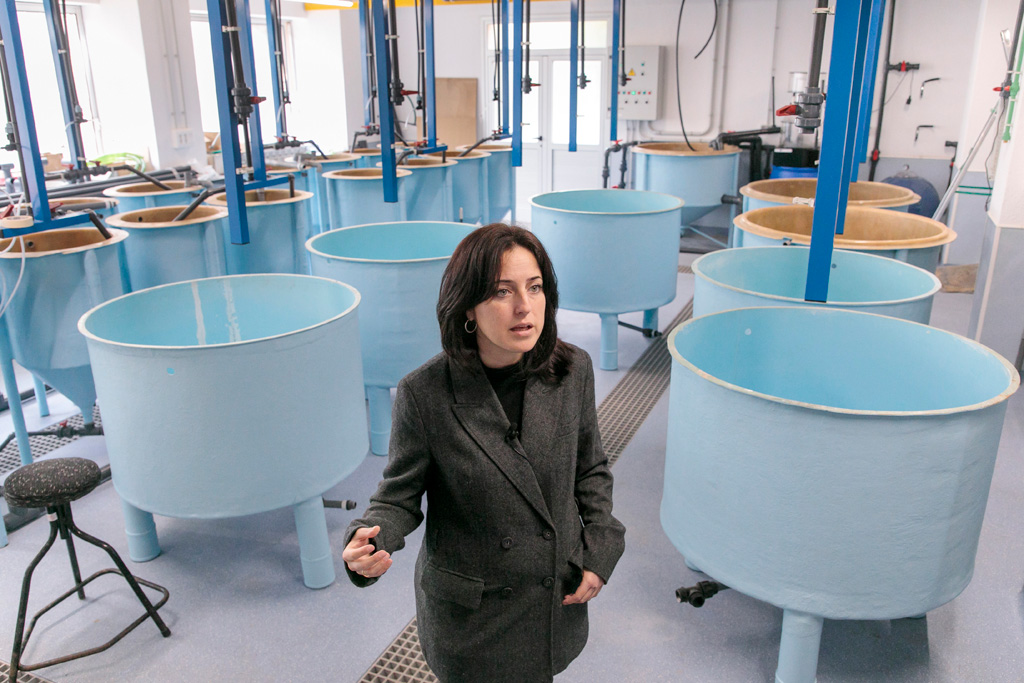
The development of EPIAQUA involves introducing nutritional patterns based on non-animal products from Nile tilapia. To this end, the project includes the construction of an aquaculture production facility near the Biology Section of the Faculty of Sciences, which should be completed before the end of 2024. This will yield immediate results with direct application to the feeding of farmed fish species.
“Many of the results we obtain or the checks we make can be applied across different fields, especially in terms of the knowledge we generate. How early intervention [on fish] affects certain histone marks, DNA methylation, or the expression of certain non-coding RNAs, and how these changes affect gene expression—that is, which genes (for example, metabolic pathways) are affected and how.”.
Diet or any environmental change, such as variations in temperature or water salinity, modulates gene expression in tissues, as well as the expression of non-coding RNA. Both messenger RNA that codes for proteins and non-messenger RNA can enter the bloodstream via vesicles, and this information can be captured by germ cells.
“We are not modifying the DNA sequence, but we are passing information to the oocytes or sperm, which can be interpreted by the embryo early on, once fertilization occurs. This is where the key role of RNA in the intergenerational inheritance of epigenetic marks lies. There is a huge gap in our knowledge about this. Empirically demonstrating, through various experiments and validations, that so-called long non-coding RNAs play a key role in intergenerational inheritance could open a new field of research.”.
Improvement in nutrition in aquaculture
While the project's underlying aim is to unravel the complexity of certain environmentally induced genetic mechanisms, it also has a much more practical aspect that could lead to more ecologically and economically sustainable aquaculture production. "Essentially, to improve the sustainability of aquaculture, it is essential to reduce the demand for marine-derived oils and meals used in feed production, especially for carnivorous species, and replace them with other sources.".
Changing the source of the fish's diet could be detrimental to its healthy development, so it's necessary to implement a nutritional programming strategy through early intervention. Feeding the animal a diet with specific characteristics at an early stage of development for a short period of time pre-adapts its organism for when it is exposed to that diet again in the future.
In the case of fish, this intervention must take place in the larval stage and be of short duration, since in the early stages of growth a series of nutritional requirements must be met, such as a high level of the omega 3 fatty acid DHA, necessary for the development of the retina or the brain.
In the experiment, some fish will be offered a control diet similar to that already used commercially, while others will be given a diet with an increased carbohydrate content or a diet without marine oils. The aim is to reduce feed production costs and increase the sustainability of feed composition.
Currently, Deiene Rodríguez and her team are working on formulating these new diets, which will likely be based on rice, although other sources of sufficient quality and stable market value can also be considered. “A whole range of factors must be taken into account when formulating animal feed because it can be of perfect quality, but if it can fluctuate due to inflation or market prices, it's not practical for production.”.
What the research team hopes to find is that the fish that have received the intervention exhibit a better capacity for bioconversion of food than those that haven't received the new diet. “By bioconversion, I mean things like glucose utilization, for example. Fish aren't very efficient at using carbohydrates, and this early intervention has been shown to improve their ability to do so. It improves intermediary metabolism, the capacity to metabolize glucose. Another possibility is that if we use vegetable oils rich in linolenic acid, this early intervention could improve the conversion of these short-chain fatty acids into long-chain omega-3s, such as DHA and DPA, which are of interest to consumers.”.
Deiene Rodríguez explains that this improvement in glucose metabolic capacity after early intervention had already been published in a 2020 article, but the reasons and mechanisms behind it are unknown. Therefore, the project will investigate whether dietary intervention in Nile tilapia improves metabolic processes observed in other species. “The initial hypothesis is that bioconversion capacity will be improved, but this needs to be experimentally verified.”.
 Nile tilapia
 was chosen as the experimental species for this project because it is the second most produced aquaculture species worldwide. Furthermore, it's worth noting that the study will also focus on the mechanisms of intergenerational inheritance through long non-coding RNAs. (o long non-coding RNA) to verify the hypothesis that they play a key role in nutritionally mediated phenotypes and their intergenerational inheritance. Therefore, it is extremely useful to work with a species whose genome is already available, as is the case with tilapia.
Another reason for choosing this specific fish is that the project approved by European institutions has a five-year duration, and since the aim is to conduct an intergenerational study, it was necessary to have a species with a short reproductive cycle to allow for several generations during the five-year research period. In fact, the principal investigator believes it will be possible to have three or even four generations during the research period.
It is also a species I have worked with previously; it is easy to reproduce, easy to cultivate, and, in the case of carbohydrates, it has been proven that it is possible to undertake nutritional intervention and programming.
“All of this makes it the best available model for studying the underlying mechanisms. Nutritional programming is of particular interest for carnivorous species. However, the species we produce here, such as gilthead seabream or European seabass, don't allow me to conduct an intergenerational study over a five-year period. It was a matter of project viability. I would have chosen European seabass because of its importance in the Canary Islands and because its levels of fishmeal and fish oil are much higher than in tilapia, since tilapia is an omnivorous species.”.
In any case, if working with tilapia allows us to verify the hypothesis about intergenerational inheritance and it is possible to check how the dialogue and interaction between the different layers of epigenetic information is, then the information obtained can provide insights to begin investigating other species that may be of interest, such as sea bass or gilthead seabream.
 Project launch
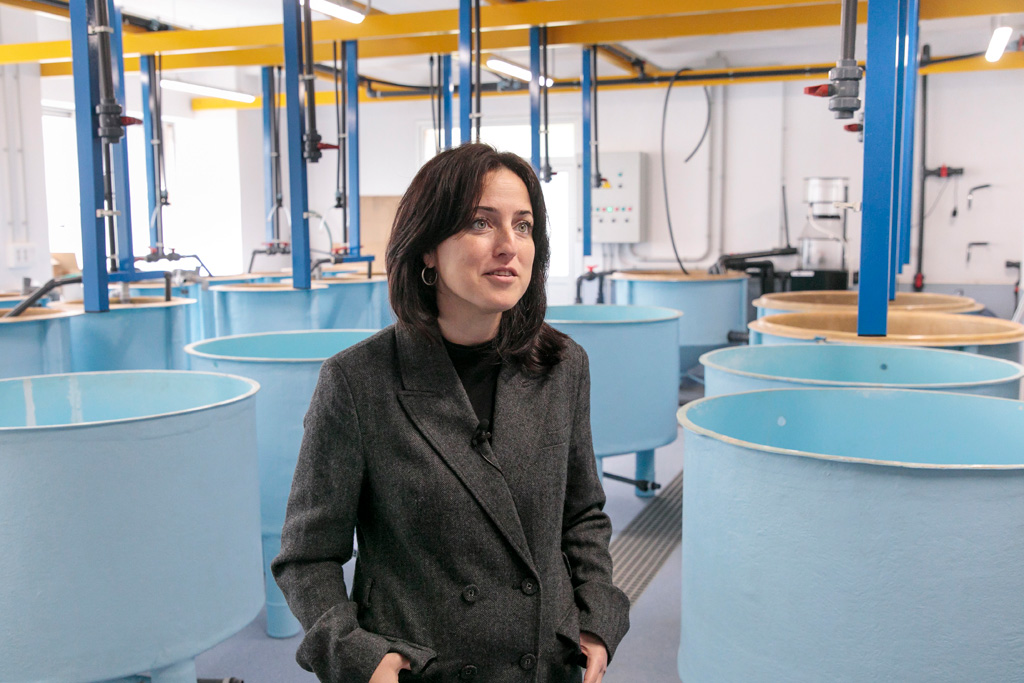
Following its approval at the end of 2023, the project is in its initial phases. As previously mentioned, part of the funding will be invested in the construction of a recirculating aquaculture system that will allow for a closed-cycle tilapia production throughout the five-year project and the maintenance of several generations under strict control. This facility is expected to be completed by the end of 2024, enabling live animal trials to begin in January 2025.
At the time of the interview for this report (March 2024), work was focused on preparing the laboratories and finalizing the protocols that would be implemented once the experimental phase was underway. The more bureaucratic aspects of the project were also being completed: the bidding process for the construction of the facilities and the hiring of the team, which would consist of two postdoctoral researchers; a predoctoral researcher who would complete their thesis under Rodríguez's supervision; an aquaculture technician to manage the fish and facilities; and a bioinformatician. The aim was for them to begin work in January.
The project will also have the support of research staff from the University of La Laguna with established teams, such as the professor of Zoology. Covadonga Rodríguez González, coordinator of the Nutharlipids Group in which Deiene has joined with his Viera y Clavijo contract, and who will be in charge of the part of the project on the metabolism of radioactively framed fatty acids.
For his part, the professor of Genetics Mariano Hernández Ferrer has provided advice during the project presentation phase and will guarantee access to part of its facilities in the genetics area of the Department of Biochemistry, Microbiology, Cell Biology and Genetics and the Institute of Tropical Diseases and Public Health of the Canary Islands when necessary to carry out certain parts of the project. Furthermore, Belinda Rivero Pérez, a researcher in the area of Pathological Anatomy, will be in charge of carrying out the gene editing, as the project will use the CRISPR/Cas9 gene editing technology to block genes (knockouts) of long non-coding RNAs.
Thus, a project that Deiene Rodríguez has been working on for a long time is now underway. “It’s an idea I’ve had since 2016, and it was just sitting on the shelf. At that time, I didn’t have the necessary resume, and I felt I wasn’t competitive enough to pass the quality screening based on my professional experience, so I decided to wait until the upcoming publications were released before submitting my application.”.
Thus, in 2021 she applied for ERC funding for the first time and, although she didn't receive it initially, she advanced to the second phase with a very positive evaluation. A year later, she applied again and was initially placed on the reserve list, but finally, in 2023, she was informed that her project had been awarded funding. In any case, she considers herself very fortunate to have received this grant because she decided to submit her first application in December 2020, and the application period closed in April 2021, giving her only four months to prepare her proposal.
Communications Office

 Spanish
 English
 French