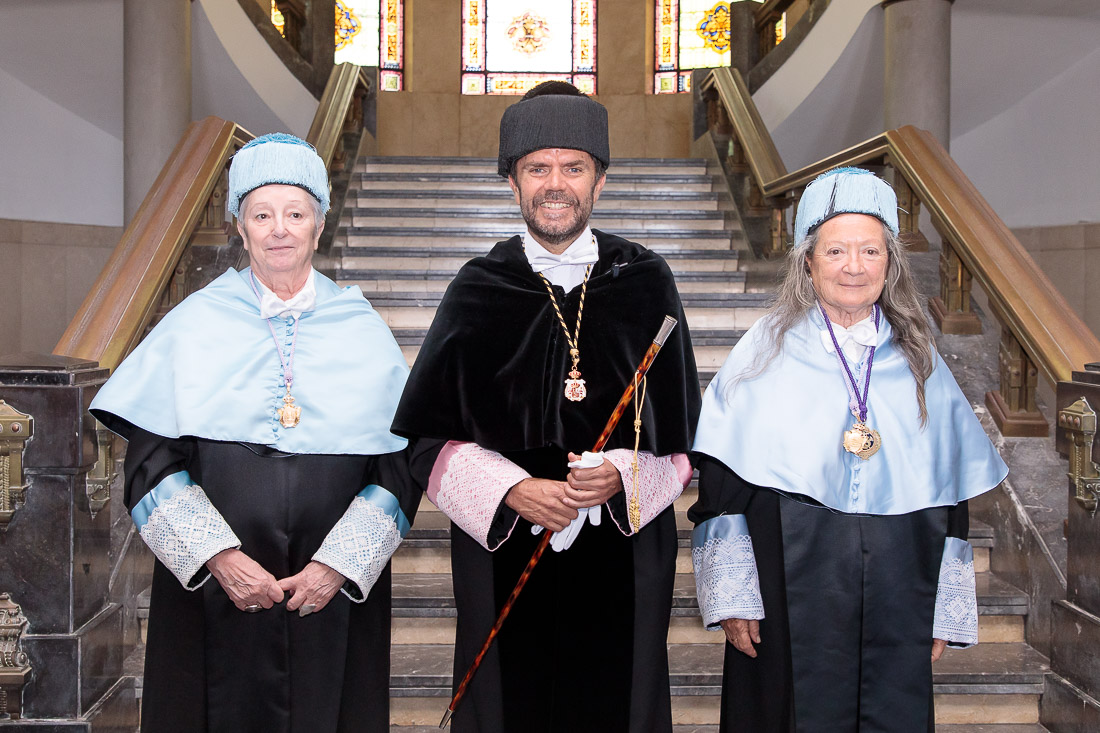
The University of La Laguna held today, April 24th, in the Paraninfo, the investiture session as Doctors Honoris Causa of the philosopher of science Eulalia Pérez Sedeño and of the writer Elsa López Rodríguez, a solemn act that served for the rector of the academic institution, Francisco García, to vindicate the transformative role of feminism and knowledge itself as drivers of change.
“We are awarding this important honorary distinction to two women who act as beacons in the face of so much darkness, guiding us through the fog of unreason, violence, and opportunism. Women with different backgrounds, who have made themselves in a society rife with discrimination stemming from their gender,” the rector stated at the beginning of his address.
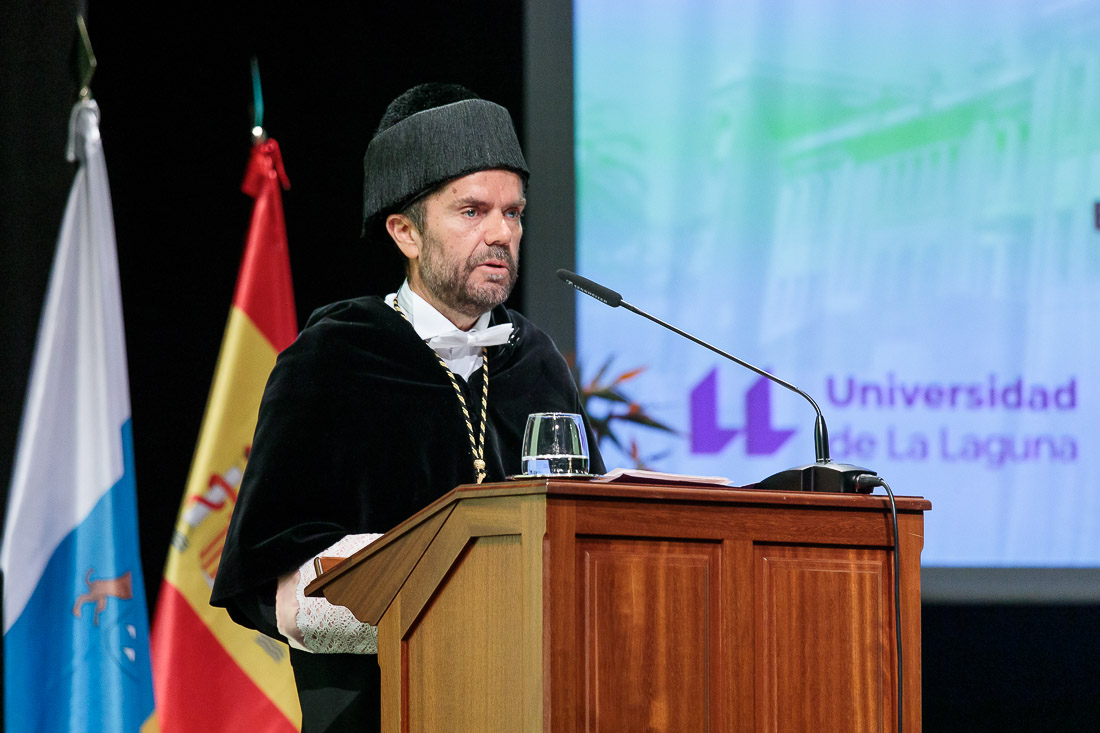
Rector Francisco García.
Francisco García maintained that logic and a passion for knowledge have guided Eulalia López Sedeño's life, resulting in a significant academic output and high-level responsibilities within the Spanish science and technology system, as well as internationally. Her promotion of feminist and gender studies was another element highlighted by the rector.
The value of traditional culture from an Atlantic perspective, but connected to the world, is palpable in the poetic and narrative work of Elsa López, said Francisco García, who said of her that she was a champion of popular poetry and of the new generations of writers.
From different fields of action, the rector found some similarities between them: “They share passions and values that in a public university we must take care of, one of the most relevant is their work in the better understanding and denunciation of the different forms of inequality between men and women. López, “through literary and poetic creation, has denounced everyday inequalities and discrimination,” while Pérez Sedeño has highlighted the academic and professional inequality in science and research, to which a growing number of female researchers have been linked, creating a school of thought.”.
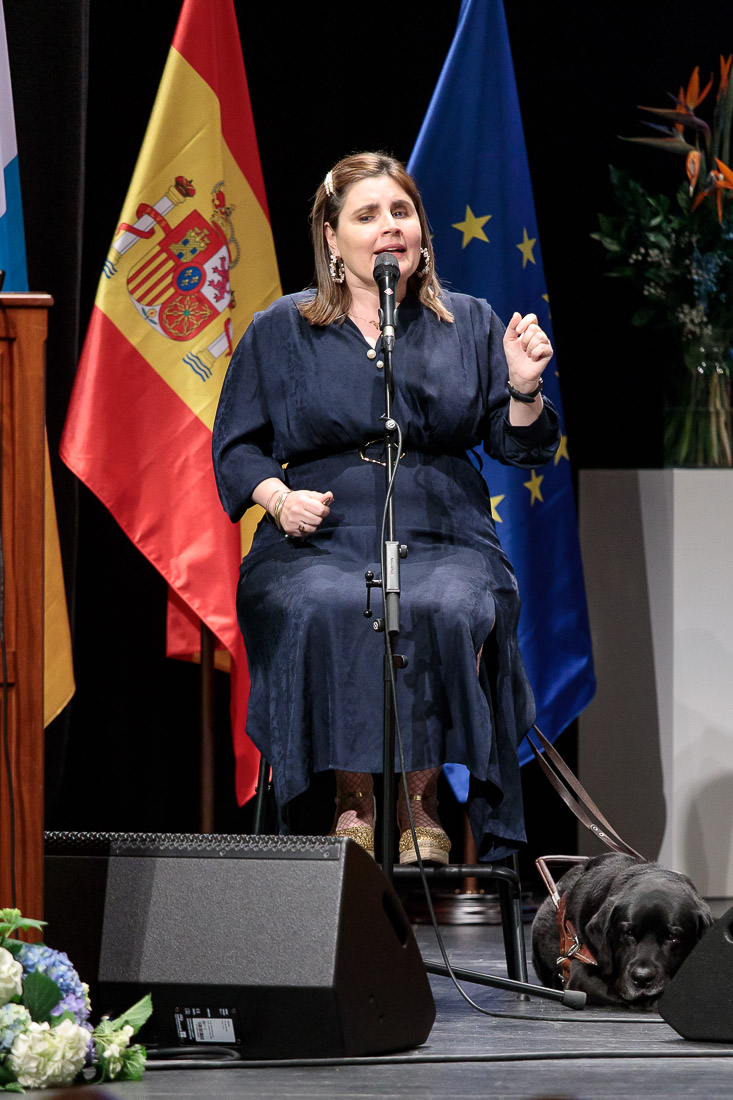
Fabiola Socas.
Elsa López and Eulalia Pérez Sedeño have dedicated their lives to their passion for two disciplines "that distinguish us as a public university and that are especially necessary in these times: literature and philosophy," he added.
The rector's speech was preceded by a performance by the singer Fabiola Socas, accompanied by José Antonio Afonso Romero on guitar.
Science and feminism
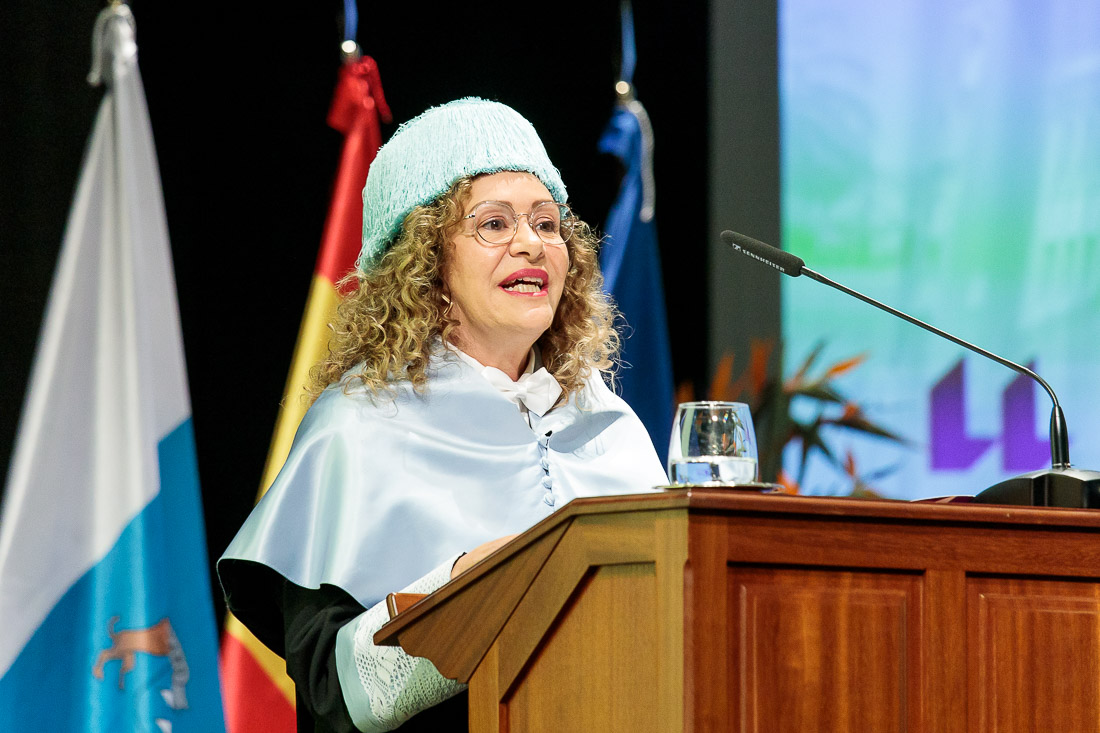
Inmaculada Perdomo.
Professor Inmaculada Perdomo, from the Department of History and Philosophy of Science, Education and Language, discussed the figure of Pérez Sedeño, while Nieves Concepción, a professor in the Department of Spanish Philology, did the same with the laudatio by Elsa López.
Thus, the first speaker noted that Pérez Sedeño was the first female professor of Philosophy of Science in Spain. Recently retired, this professor has six six-year research periods and one six-year transfer period, and has also served as president of the Spanish Society of Logic, Philosophy, and Methodology of Science. Inmaculada Perdomo highlighted her remarkable ability to create international scientific networks and to conduct sociological and epistemological analyses of biotechnology. The new Doctor Honoris Causa has supervised some twenty doctoral theses and has been the principal investigator of 25 national research projects.
In her presentation, Pérez Sedeño pointed out that the scientific method has traditionally been considered to eliminate any subjective influence from science. Therefore, she questioned whether science is truly neutral and objective, and, if so, what can be done about feminism, which seeks to introduce its values into science. However, she argued, there are many instances where feminist values have served to improve science. One example of this, in the late 19th and early 20th centuries, was the suffragettes who fought to refute supposedly scientific theories that attempted to justify the intellectual inferiority of women.
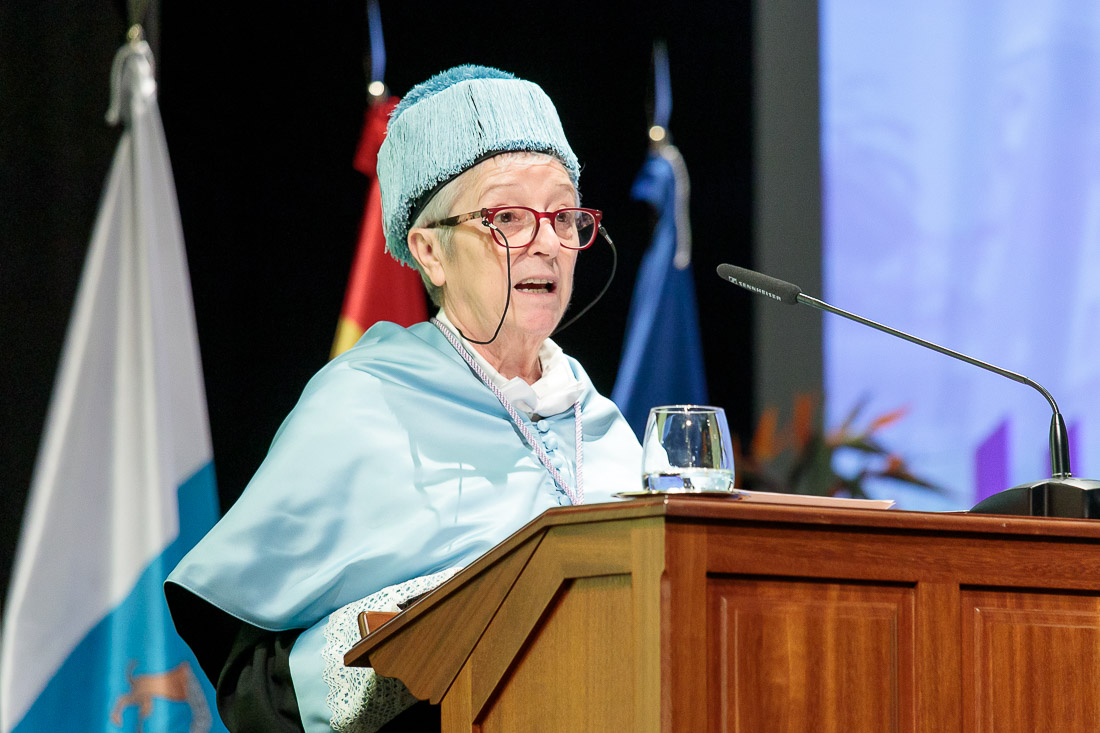
Eulalia Pérez Sedeño.
The former director of FECYT concluded that science, like any other activity undertaken by human beings, cannot be understood outside of its sociocultural context. Furthermore, she added, "the social interactions of the community are capable of readjusting hypotheses until they generate a product that is ultimately presented as scientific knowledge.".
The CSIC researcher thus affirmed that “a theory that is the product of a more inclusive scientific community will be better,” more in line with the cognitive needs of an “intrinsically more democratic community.” Consequently, she added, “developing a new feminist science is linked to creating a new social and political reality.” In her opinion, adopting a feminist approach is of utmost importance because it helps to highlight gender biases and correct inequalities within the scientific field itself. Her full presentation can be followed here. link.
The journey continues
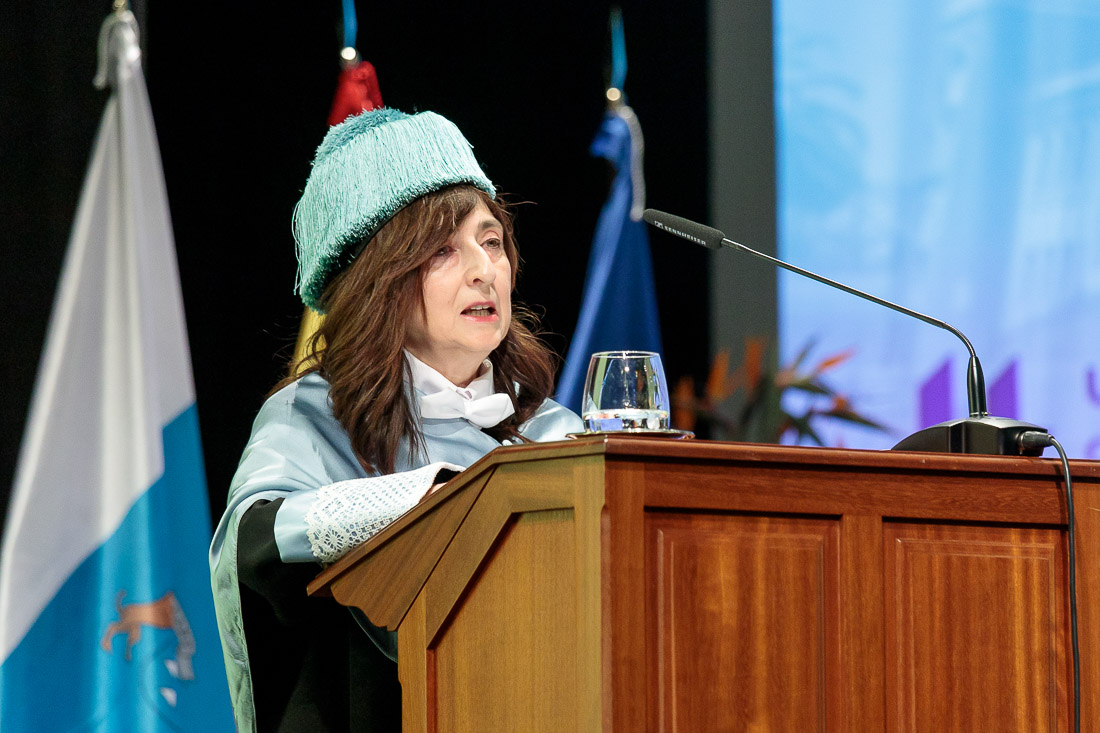
Nieves Concepción.
For her part, Nieves Concepción praised Elsa López, describing her as a writer, professor, researcher, and cultural manager. After 50 years of activity, she hailed her as a leading figure for the Canary Islands and its literature. The strength and originality of her literary work earned her the Canary Islands Literature Prize in 2022. Travel, loss, the sea, journeys, and the wind are fundamental elements of her writing and her poetic voice, her mentor explained.
Elsa López, visibly moved by this academic distinction, began her acceptance speech by quoting the Count of Monte Cristo, Dumas's immortal character: “One only knows the outcome of a life when it has already ended, never before.” The phrase prompted her to reflect that, upon receiving the news of her honorary appointment, she realized her life was not yet over. In 2006, she wrote “Travesía” (Journey), a literary testament intended to make things easier for her and her loved ones when the time came, but upon receiving the distinction, she understood that that moment had not yet arrived. “Now I know that the end had not yet been revealed to me, and I still had surprises and gifts to receive, such as this honor you bestow upon me today.”.
The writer recalled her academic journey as a PhD in Philosophy, with years of study and work including “many seminars with Julio Caro Baroja, José Pérez Vidal, and Carmelo Lisón Tolosana at the Spanish National Research Council (CSIC); travel, research, and fieldwork” with her professors and with Ubaldo Martínez Veiga, her thesis advisor. This phase led to her vocation: “That was the goal I set for myself: to study and learn in order to later educate; to dedicate myself to the task of trying to reveal to young people what the world they had been born into was like; how to navigate it, acquiring the necessary tools to develop their own critical thinking, allowing them to evolve without fear and without needing to humiliate those who are not, do not think, or do not feel the same way as them.”.
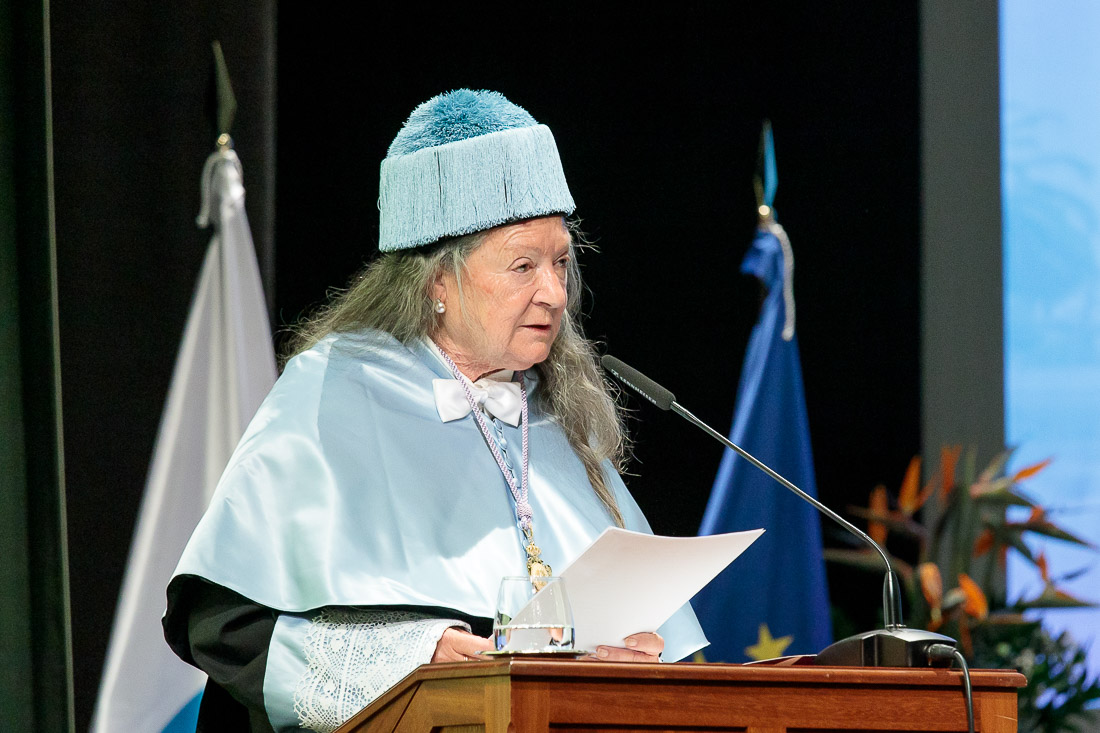
Elsa López.
She reflected on what it means to receive an honorary doctorate, an award that differs from one received for a specific work. “You are awarded because an institution that represents common sense and progress believes you have lived by giving value to the causes you fought for and considers you worthy of what they are bestowing upon you; an institution that has valued your will and your resilience as much as your clarity, your dedication, and your unwavering faith in understanding.”.
The speaker considered the University of La Laguna “a model throughout history for many generations,” one that has been linked to influential figures in her life, such as her own mother, who began her higher education at the Tenerife institution before graduating with a degree in Semitic Studies from the University of Granada; and also Emilio Lledó and Javier Muguerza. “In my mind, the University of La Laguna remains that romantic place where one begins the pursuit of knowledge, and where certain individuals who already know the path, or at least some parts of it, are concerned that others can travel it in the best possible way.” Her full presentation can be found here. link.

 Spanish
 English
 French