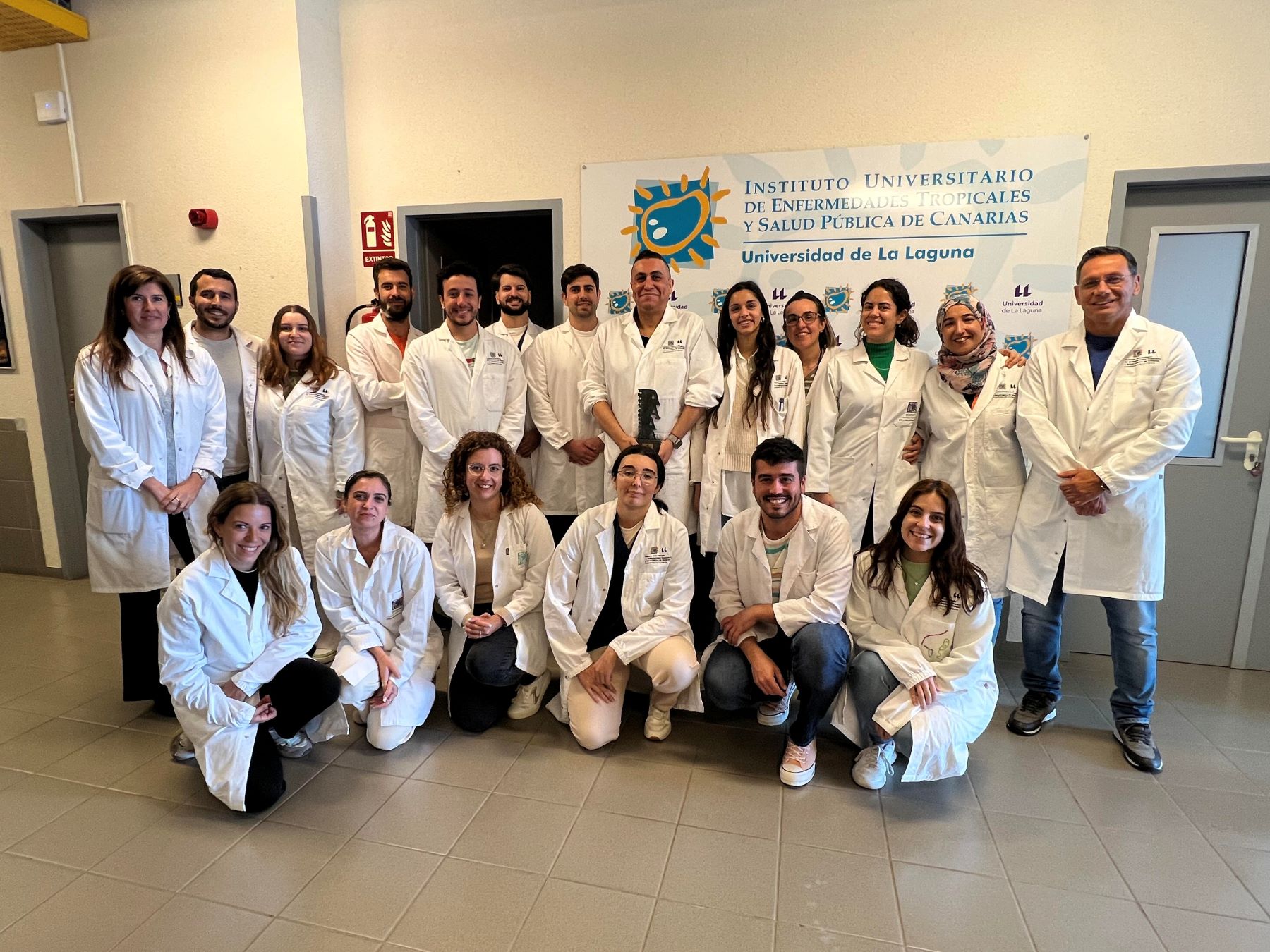
He University Institute of Tropical Diseases and Public Health of the Canary Islands, affiliated with the University of La Laguna, has participated in a study focused on understanding the ability of a new virus specific to protozoa (the simplest animals that exist in nature) to infect the genus of free-living amoebas, Naegleria.
Giant viruses (Nucleocytoviricota) are important lethal agents of various eukaryotic hosts. Although metagenomics indicates their ubiquitous distribution, the reported isolated giant viruses are restricted to a very small number of protists and some algae as hosts.
An international research consortium formed by the University of Vienna (Austria), the University of Poitiers (France), the Lawrence Berkeley National Laboratory (USA) and the research institute of the University of La Laguna has recently published in the journal Nature Communications the findings made in this study.
This publication reports on the first viral isolate that replicates in the amoeboflagellate Naegleria. This genus includes the famous 'brain-eating amoeba'. Naegleria fowleri It is the causative agent of the rare but fatal primary amebic meningoencephalitis. The structure and infection cycle of this novel giant virus have been elucidated., Catovirus naegleriensis (also known as Naegleriavirus, NiV), and show their unique adaptations to their host Naegleria using in situ fluorescence hybridization, electron microscopy, genomics and proteomics.
Naegleriavirus is only the fourth isolate from the highly diverse Klosneuvirinae subfamily, and like its relatives, the NiV genome contains a large number of genes but lacks transfer RNA (tRNA). NiV has acquired genes from its host. Naegleria, which encode heat shock proteins and apoptosis inhibitory factors, presumably for interactions with the host.
In particular, NiV infection was lethal to all species of Naegleria analyzed, including N. fowleri. This study expands our experimental framework for investigating giant viruses and may help us better understand the basic biology of the human pathogen. N. fowleri.
The University Institute of Tropical Diseases and Public Health of the Canary Islands conducted the NiV infection trials in N. fowleri in the level 3 biosafety laboratory available at the center and thanks to the financial support of the Island Council of Tenerife, Ministry of Health and the CIBER of Infectious Diseases (CIBERINFEC).
Nature Communications has an impact factor of 16.6, belongs to the Nature publishing group, and annually only 81% of the manuscripts received are published in this journal.

 Spanish
 English
 French