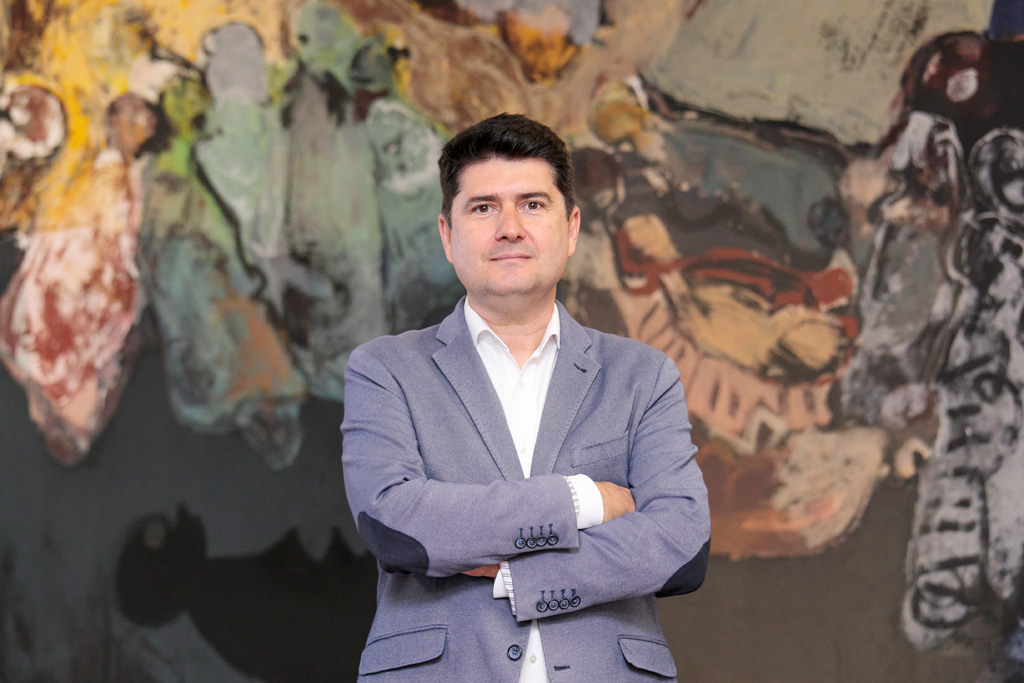
The exact moment when Javier García Martínez (Logroño, 1973) knew what his contribution as a chemist to society would be when a colleague from Massachusetts Institute of Technology (MIT) The person standing next to him told him he could use the lab cabinet now because he was taking all the samples with him to a hospital where he was developing a project focused on researching slow-release insulin polymers that could improve the lives of people with diabetes. And so it was. Some time later, he patented his discovery and founded a successful and thriving company.
And Javier García, scientist, businessman, professor of Inorganic Chemistry at the University of [unclear - possibly "the University of [unclear]"], did the same. University of Alicante y National Research Award Juan de la Cierva in the area of technology transfer, among many other positions that compete for his generous time. His particular eureka moment came while he was researching the development of catalysts that not only help combat climate change (significantly reducing CO2 emissions), but also contribute to saving considerable money for the refineries that use them, of which there are many worldwide.
“I have no problem being identified as an entrepreneur. I created a company, I sold it, and I made money from it,” says this accredited scientist, winner of the Jaume I Prize, and president of the [unclear], referring to his time at MIT. Young Academy of Spain and star guest of the XIX Edition of the Student Congress of the Chemistry Section, dedicated on this occasion to the "Chemistry of the Universe", which was held a few days ago in the Chemistry Section (Faculty of Sciences) of the University of La Laguna.
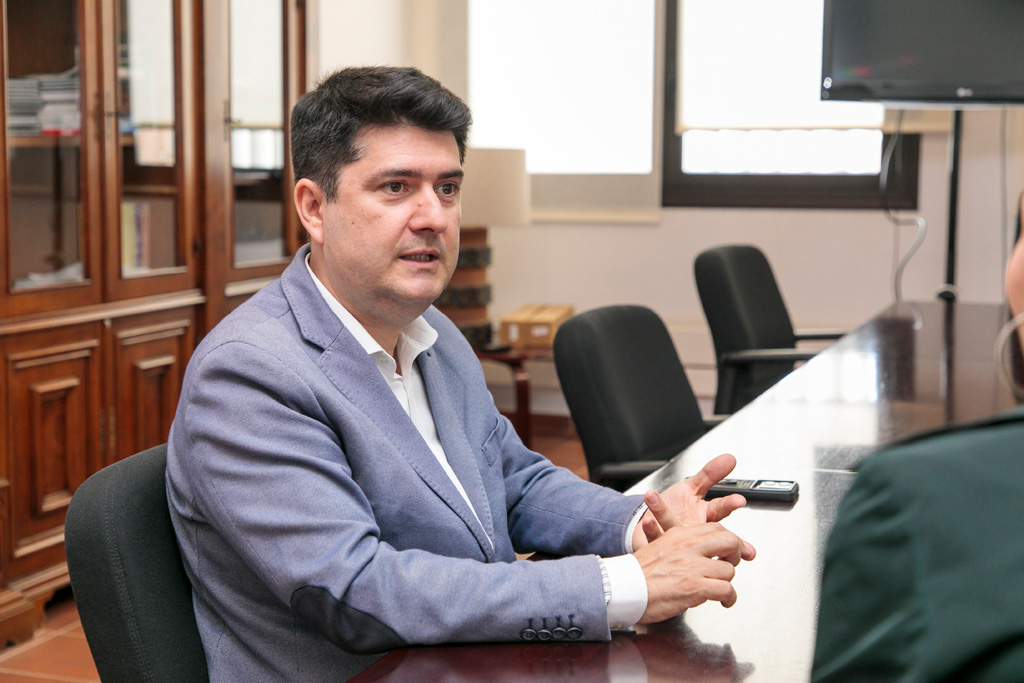 “At MIT, they help you work on your idea, develop it, and launch it. They know how to guide you. You walk in one day and the next you leave with your own company, and then it's time to get to work. They've done it many times and they continue to do it because they do it very well.” And while acknowledging that the US has its good points, but also its bad points, it's a country that knows how to support emerging talent and, therefore, research and innovation.
At that time, he didn't know anyone, his English left much to be desired, and he hadn't had time to build a reputation, but despite all that, they took him into account. The land of opportunity, where all dreams are possible (or so they say), and to which he is very grateful, was the one that gave him the chance to show society the progress he had painstakingly made in the laboratory.
With a company under his arm
This is how he created Rive Technology, a company as innovative as it is profitable, which the global chemical giant Grace acquired in 2019, placing it in all international distribution channels—a triumph that, upon returning to Spain, he knows was met with considerable reservation. Arriving in our country with a company under your belt wasn't well-received, especially if you're a civil servant or public servant, as he prefers to call his role as a researcher and university professor.
The scientist-businessman pairing, or academic-entrepreneur pairing if you prefer, is more in line with the North American mindset than the European one. It's a kind of entrenched and stereotypical burden that, in the Old Continent, remains an ongoing challenge to overcome. "When I came to Spain, people viewed someone who had started a company with a lot of skepticism, especially if you were dedicated to science and research, as is my case.".
“I believe that an entrepreneurial side completes a scientist's vocation; from communicating to putting solutions on the table and licensing patents. There are many ways to transfer technology, and it doesn't have to be limited to starting a company. Only the countries where scientists take the plunge and create will lead the economy of the 21st century. If you think about the great companies of our time like Moderna, OpenAI, or Tesla, they are Deep Science Technology companies, based on laboratory science. Many Nobel laureates are now entrepreneurs.”.
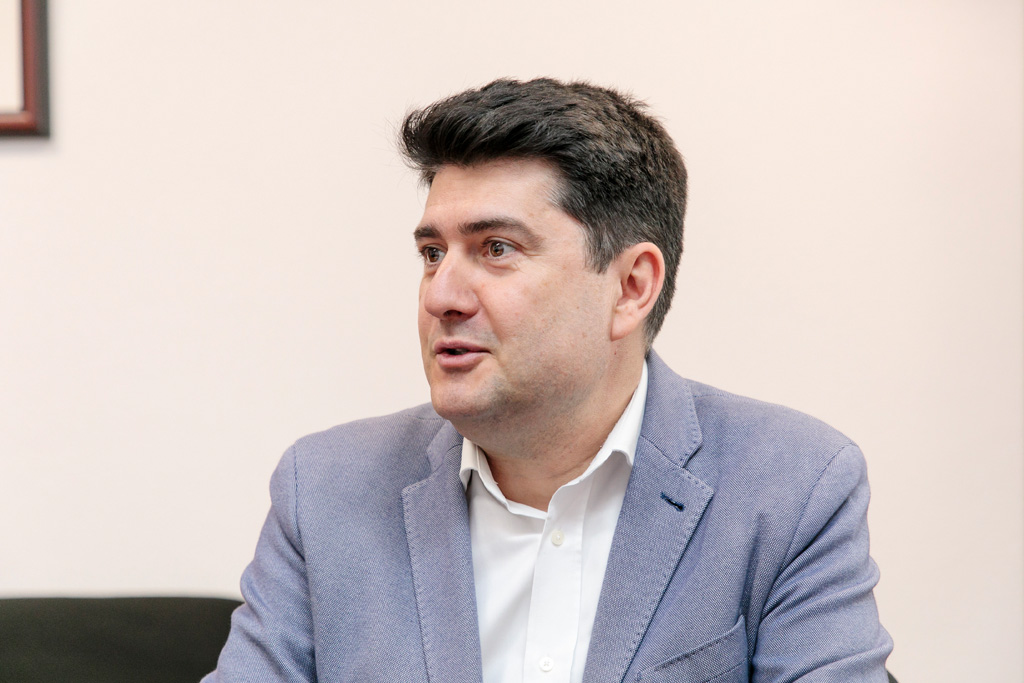 While acknowledging the “extraordinary” nature of eureka moments—which in his case have yielded numerous results and materialized in at least twenty patents—what gives him “true and great satisfaction” is seeing that the results and achievements of his research, when they reach the market, can benefit society and improve people's lives. “For the future of countries, that is the key.”.
And in his country, Spain, innovation is still not one of the nation's strengths. Despite the fact that our country ranks eleventh in global scientific output and accounts for 3.31% of the world's scientific publications, progress in innovation has been slow, and we don't rise above 30th place. "We are very good at generating knowledge, but what we don't know how to do well is transfer that knowledge to the market, because we don't come from that tradition, like the Anglo-Saxons.".
Towards a more technological Spain
Although Javier García admits that the change in Spain since the first science law was passed in 1986 has been “spectacular,” with two years to go before the fortieth anniversary of this initial regulation, there is still a long way to go. And to make this more effective and to be able to speak with authority, one of his many tasks is the one he carries out in the Rafael del Pino Foundation (where he directs the Science and Society Chair), and which allows him to put into a book the 10 technologies in which scientists, technologists and leading businessmen in the country believe that investment is necessary.
This technological list, as well as the conclusions and reflections derived from an annual invitation to these renowned experts, are compiled in a book (the latest, presented a few days ago, Innovation with a future). “The interesting thing about this initiative is understanding how we can help Spain take the step towards a knowledge economy. We're talking about nanotechnology, artificial intelligence, genetic measurement, precision medicine and agriculture, firefighting technologies… The goal is for our country to be able to respond more resiliently to difficult situations, something we already saw in the 2008 crisis and the pandemic.”.
Knowing which technologies can best help the Spanish economy and how they are integrated into our country is essential for envisioning Spain's future. “Sometimes we are victims of our own success because there are things we do very well, but we can't put all our eggs in one basket. This has already happened to us twice, and we haven't learned much. We need to analyze where we need to go, and here in Spain, we are distracted.”.
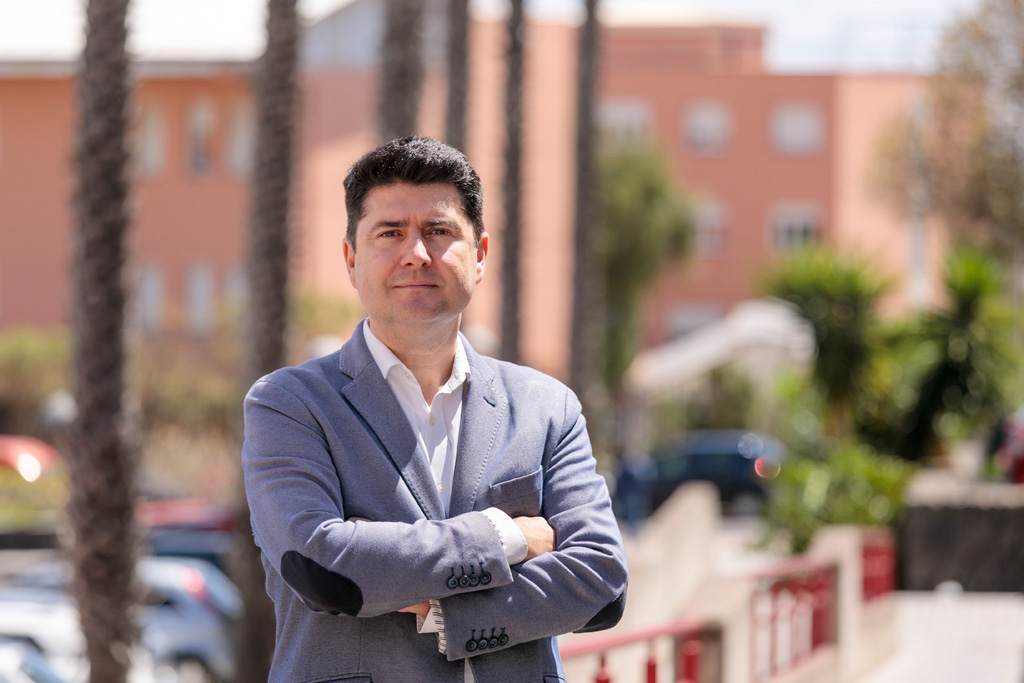 When he speaks of distraction, he is clearly alluding to the direction and trajectory of Spanish politics, which seems uninterested in the kind of technology that could strengthen the country. “I believe this is the time for long-term vision. We live in a time, in Spain and in Europe, of such darkness, uncertainty, and worry that we don't have the opportunity to have debates, conversations, and reports with a forward-looking perspective,” he says, while emphasizing the importance of achieving more direct interaction and what it means, as a scientist, to “get involved” in weighty issues.
He does so (getting involved) when asked about the very worrying moment the planet is going through, with two separate wars, those in Ukraine and Gaza, which demonstrate that despite being in an era of progress, the world is becoming increasingly violent. “As a scientist, I see that, on the one hand, science and technology have given us extraordinary tools that allow us to do incredible things, but, on the other hand, we are still the same animal, the same species on the savanna that wants to survive, to pass on its genes.”
This is because society's technological capacity has outpaced its moral compass. "We keep making the same mistakes and resorting to war to resolve our conflicts, and we've already seen that war is not an option. Everything has been created to prevent it from happening again, and this is a great failure. That's why I think our leaders are failing us; it's a moment of leadership failure.".
Threats that worry science
In fact, he doesn't hesitate to assert that leaders, regardless of their origin or ideology, are failing to address the threats that scientists continually highlight. These range from climate change and antibiotic resistance to resource scarcity like water and the energy transition. "Not only are they not solving these problems, but they're creating new ones, driven by personal agendas, nationalism, and tribalism.".
These are the same reasons that prevailed on the savanna, reiterates this nanotechnology expert, who has repeatedly and emphatically argued that the more technologically advanced a society is, the more humanistic the education provided in classrooms must be. Because despite the incredible opportunities that technology constantly offers us, if the values upon which a society is built are not firmly established, the risks we face multiply exponentially.
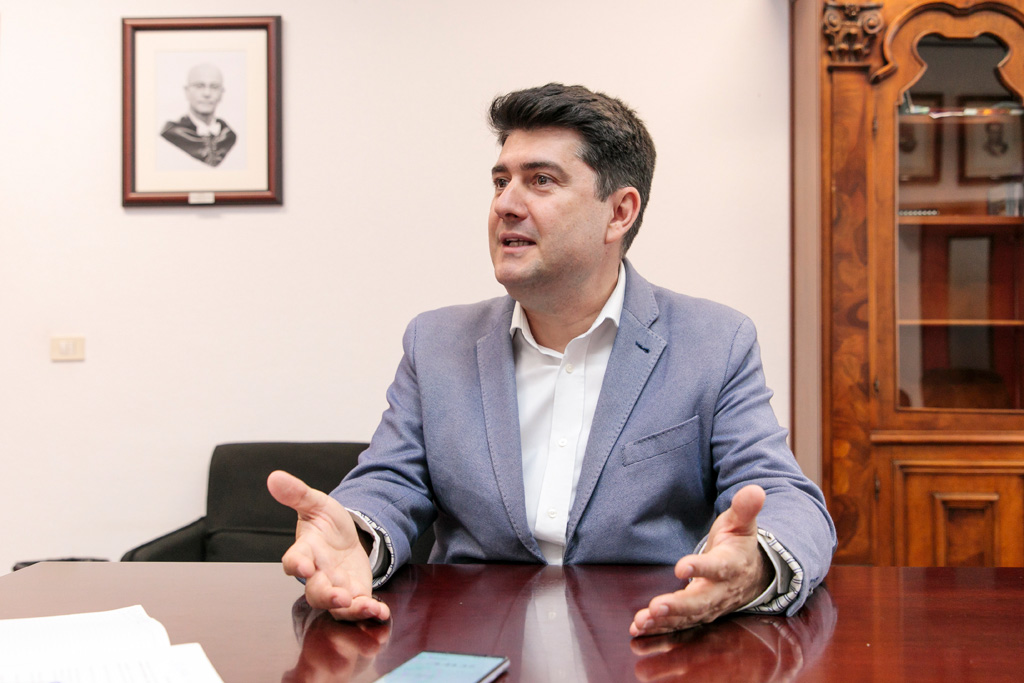 “The questions are there, in the great books: Marcus Aurelius, Plutarch, Shakespeare. An education that hasn't asked these questions risks polarization, war. And this moment of war or pre-war in which we live occurs two years after a pandemic in which we have been able to see how fragile we are.” Despite the weight that the scientific community had during the COVID-19 pandemic, García Martínez continues to maintain, as he did in 2019, that Science is not convincing.
To assert this is to highlight the scientists' limited persuasive power. "We say we need to drive less, protect ourselves from the sun, get vaccinated, or fight climate change, and yet we fail to spur action." Therefore, he believes that rather than questioning why their message isn't convincing, we should ask ourselves if we are truly doing everything possible to solve these ongoing problems.
There's no doubt that denialism exists, but it's equally true that science continues to communicate in the same way it did years ago, despite the new forms and channels of communication available to us in the 21st century. "We continue to communicate with scientific articles, from the podium, disseminating knowledge, highlighting the 'I know and you don't know,' and from a position of authority, using simple language so that the general public can understand. And nobody is convinced if they're treated like an idiot.".
That's why, in his agenda as a chemist, researcher, and scientist, the first thing on his agenda is to get science to listen, to really listen, so that he can enter into a true dialogue. “There is no communication without dialogue, and when we enter into an effective dialogue, it is necessary to listen, it is necessary to have empathy and to talk about topics that are of interest, always putting the evidence on the table.”.
Scientists are not the new inquisitors
When he says this, he does so cautiously, fearing that science could become what he calls the new Inquisition. “In societies where religions have less influence in dictating moral behavior, new moral codes are now sought in science. Science tells you that you should eat more vegetables, that eating a lot of red meat is bad, or that traveling by car is also bad.”.
She warns against the constant, systematic prohibition and this "narrative of imposition." The fact that people spend all day hearing that doing one thing or another, or not doing it at all, is wrong, implies wanting to impose a code of conduct, but it also means having to make changes. "Besides convincing them of certain things, we ask people to change their way of life, and I worry that we're being perceived as an inquisition.".
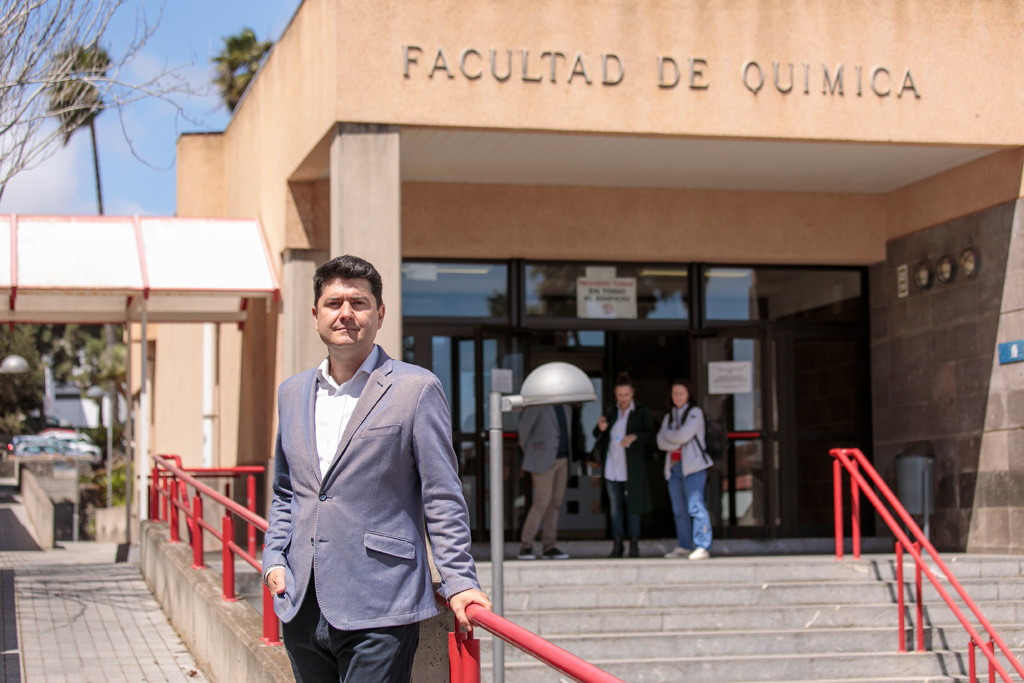
That's why listening and dialogue are so necessary, as is ceasing to communicate from a position of privilege and using a narrow, exclusive language, but always maintaining a staunch defense of evidence and facts. "Although scientists need to take a stand and communicate better, we must be careful that science doesn't become just another player in a debate. Some topics are open to opinion, but the existence of climate change and the harmful effects of smoking on health are proven, and where there is evidence, there should be no debate, nor room for opinion."“
This is said by an atypical scientist, with a “very humanistic agenda” and aware that “chemistry is probably the science with the worst image,” which is why, throughout these years, he has strived, from his various positions and responsibilities, to have the closest possible dialogue with society, something he has done from two fronts: International Union of
Pure Applied Chemistry (IUPAC), of which he was president (the first Spaniard to hold this position) until recently, and the Young Academy of Spain, whose presidency he is leaving in less than two months, and where he has been conscientiously busy organizing activities to promote scientific vocation.
“Our mission at the academy is to identify leading young Spaniards at the forefront of knowledge and show them that it is possible to do cutting-edge science in Spain, by Spaniards.” And they do, but only for five years, the maximum membership period. After that, they welcome new talent: humanists, linguists, scientists, entrepreneurs, and mathematicians make up this academy, founded in 2019, which covers all areas of knowledge.
It was precisely this institution that brought him to Tenerife. Wherever he can chat with young people, he goes, because in addition to doing so with the students of Bachelor's Degree in Chemistry From the University of La Laguna, organizer of the last student congress, his stay on the island yielded more: a talk, side by side, with the high school students of IES Canarias Cabrera Pinto, which he requested himself. An unusual request, quite different from that of a chemist who prefers to talk only with colleagues.
This is nothing like the story of this renowned scientist, who has a different story to tell and who, to draw a parallel, could be compared to one of our most internationally acclaimed chefs. Javier García is to Chemistry what José Andrés is to Gastronomy. He does everything (in his field) and he does it all successfully. If the Asturian chef based in the US is capable of running thirty restaurants, catering to presidents, directing an NGO, and maintaining a blog all at the same time, our homegrown chemist is capable of many other things.
The accelerator of people
Among them, directing the Molecular Nanotechnology Laboratory at the University of Alicante, assuming the presidency of the IUPAC, including organizing a global breakfast with women in more than 400 cities worldwide to promote diversity in science, presiding over several organizations simultaneously, and accumulating research awards that range from in crescendo in prestige, and being a businessman and professor. But what he is most proud of, without a doubt, is Celera.
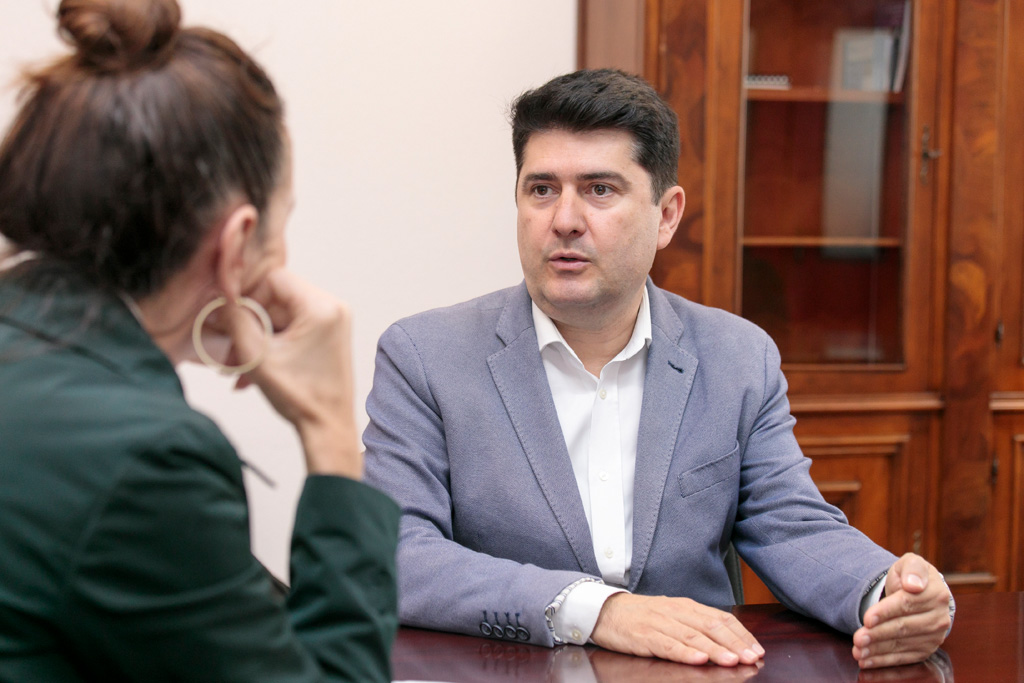 Celera It's not just another activity to which he dedicates all his time and care. Celera is his foundation, created to provide the same support he received at MIT in the US, a "people and talent accelerator" that welcomes 10 young people under 35 each year, "ten diamonds in the rough with potential whom they advise, motivate, and support," most of whom don't come from top universities or have the best academic records. "We value potential.".
“When I arrived from the US, I had won a research award and wanted to do something special, something different, with the money. I wanted to foster motivation and community in Spain, spaces where conversations could be meaningful. We've brought together extraordinary people, and extraordinary things have happened.” And profitable ones too. After 10 years in operation, Celera has spawned a number of companies valued at €600 million.
The profiles and research projects are diverse: there are scientists conducting research on Alzheimer's, a journalist currently working on television programs, entrepreneurs… The third and final year of the fellowship focuses on purpose, because they have to decide what they want to dedicate themselves to, and what we teach them is that if you know where you want to go, it's easier to get there. We design the path for them and give them time.”.
Javier García already took that “permission to reflect on their lives and discover what makes them authentic” in his time. Now, with a bit more free time—once his term at the Young Academy of Spain ends, culminating in the organization of a science congress for schoolchildren in Granada—he is considering (besides running for other positions) many other things. Among them, how to make universities more interesting for professors who have been teaching for years and are somewhat disillusioned. And also, why not, the possibility of establishing future collaborations with the University of La Laguna, to which he has an emotional connection, and where he has had very special friends, such as the brilliant scientist Catalina Ruiz.
Communications Office

 Spanish
 English
 French