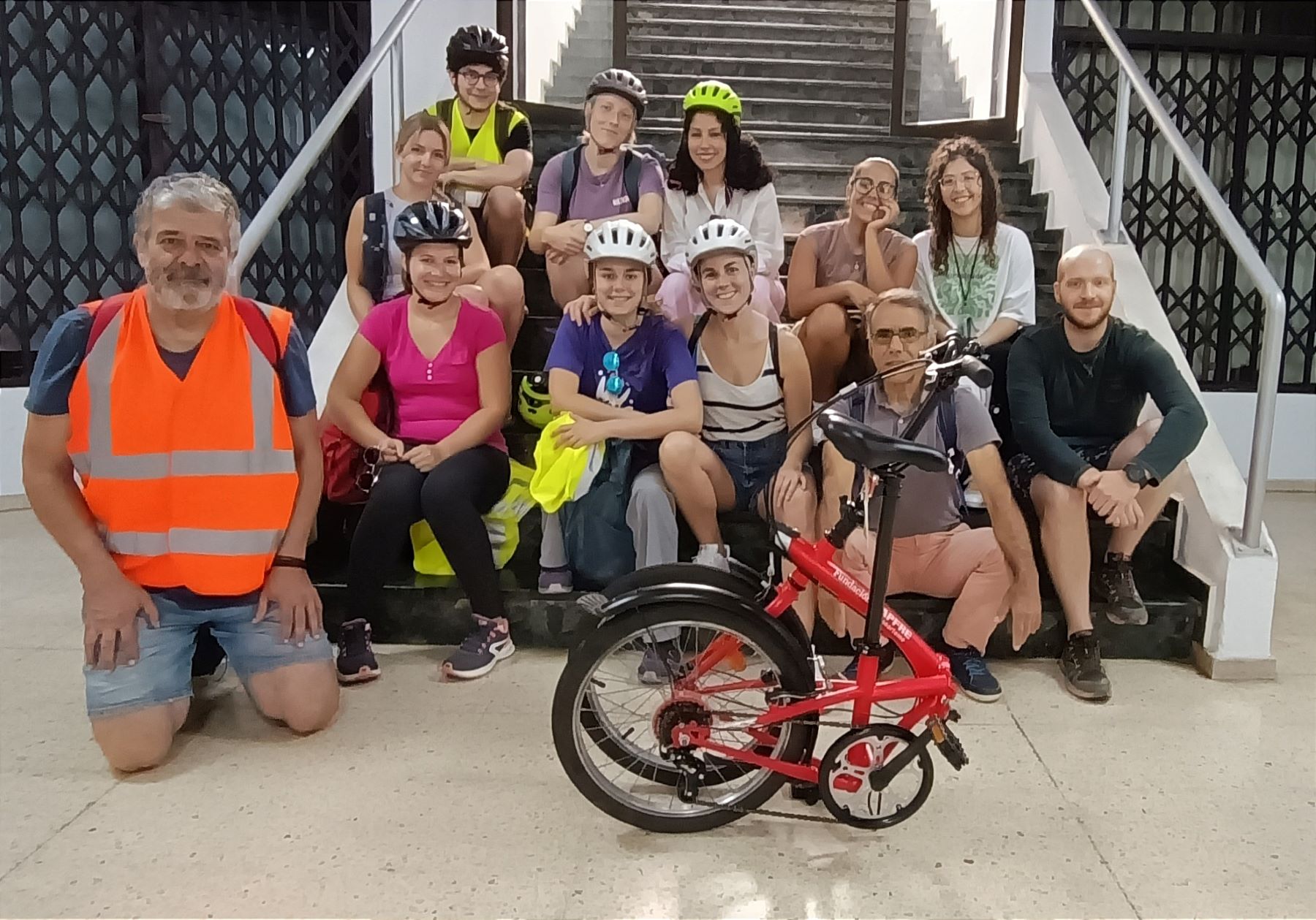
This weekend, a group of Erasmus students from the University of La Laguna had the opportunity to take a bicycle tour through the historic center of the university city, as well as through the more rural areas of the municipality, thanks to an initiative of the Vice-Rectorate for Sustainability and Infrastructure and the entity Tenerife by Bike. The aim has been to combine ethnographic knowledge, sustainable mobility and student participation along a 15-kilometer route.
After the students were received at the headquarters of the cycling organization, and given bikes and helmets provided by them, as well as explanatory graphic elements of the guided route, the group set off towards the old convent of Santo Domingo, where Professor Ulises Martín transported the students with his explanations to the Renaissance city of Torriani's 1588 model, which was displayed in front of them.
Arwen, from France; Carolina and Gracian, from Poland; Sara, of Spanish-Austrian descent; Danai, from Greece; Mariana, from Mexico; Francesca, Marta, and Cesidio, from Italy; and Sarah, from Germany, enjoyed a gentle bike ride to Jardina, with a steeper final stretch. It was well worth it because there they had the opportunity to visit Candelaria's cave house and meet a local family.
Previously they stopped at the Plaza del Cristo and the chapel of the Cruz de Los Álamos, places where the professor detailed the particulars of the provisional location of the market and the traditional aspects of the chapel located at the crossroads of Las Mercedes and Jardina.
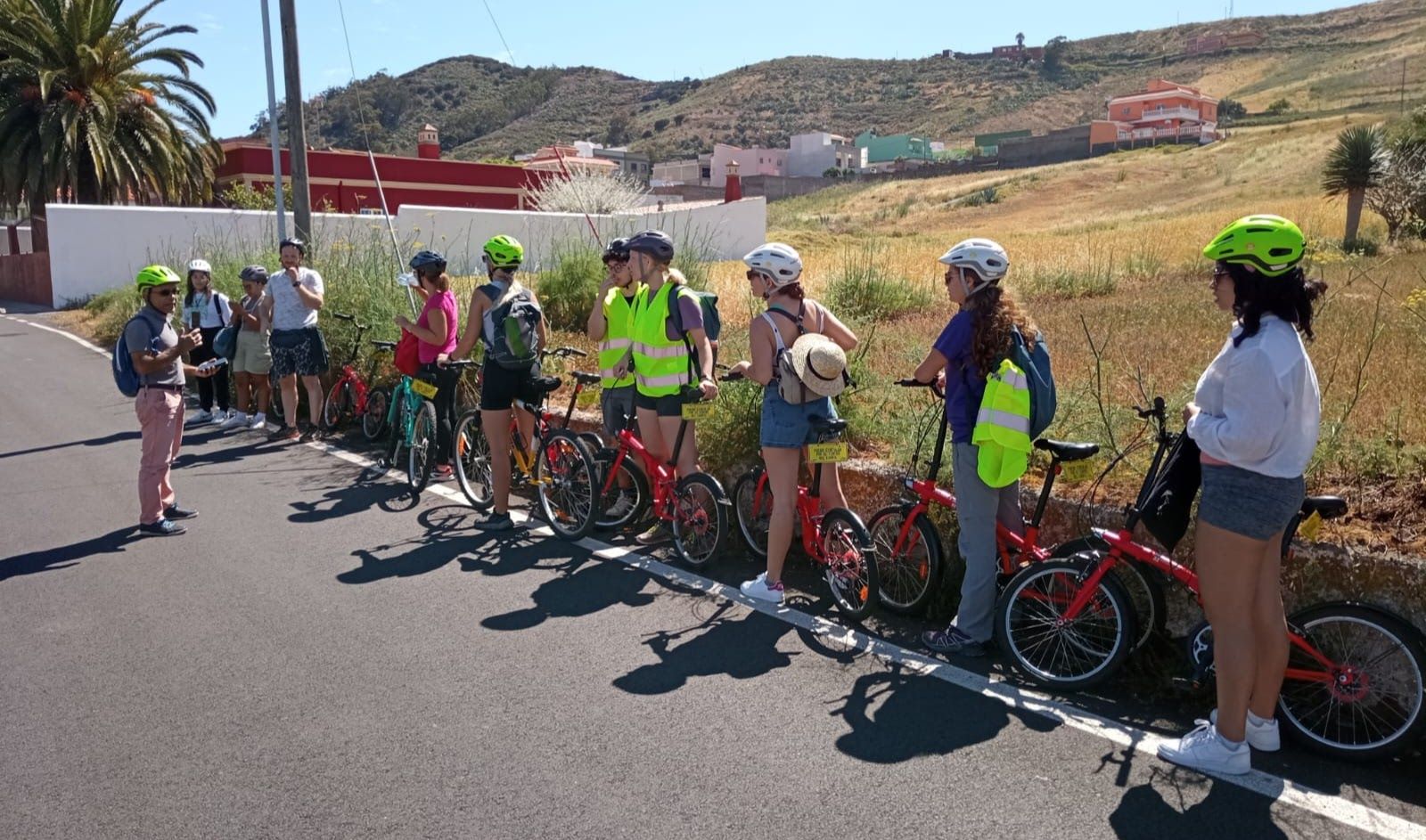 They crossed the Vega Lagunera along the Camino del Rayo and, in front of the Temporary Reception Center for Emigrants (CATE) of Las Canteras, the Erasmus students wanted to know more about the reality of these young people who arrive on our shores in search of a better future.
They continued along the Camino del Pino (Pine Path), where they learned the location of the old pine tree—now felled—that gave the path its name. They then proceeded to the hermitage of San Diego, where they admired two decorated crosses. Ulises Martín recreated the famous tradition of the Day of the Escape, focusing on the detail of touching the buttons of the founder of the convent—not the saint—Juan de Ayala y Zúñiga. It was said that if they guessed the correct number, they would pass their exams. This tradition was originally carried out on the eve of the saint's day, November 12th.
Along the way, they observed farmers busy with their work. In El Rincón, below Mesa Mota, local wild cattle grazed. Later, they began their return to the city's historic center, retracing their steps along the emblematic Camino Largo promenade, flanked by 200 centuries-old palm trees typical of the Canary Islands.
Two hours later, the route concluded on the well-known Heraclio Sánchez street, a favorite among students, where they shared their wonderful impressions of the journey. The immersion in Spanish among students of seven different nationalities was particularly interesting. The experience proved so stimulating that representatives from Tenerife por la Bici (Tenerife by Bike) confirmed they will repeat it next semester.
This initiative has also been supported by AGEE, the European student association, which is dedicated to promoting the participation of students in this exchange program in different cultural, linguistic and educational activities so that they participate in all aspects of academic life.

 Spanish
 English
 French