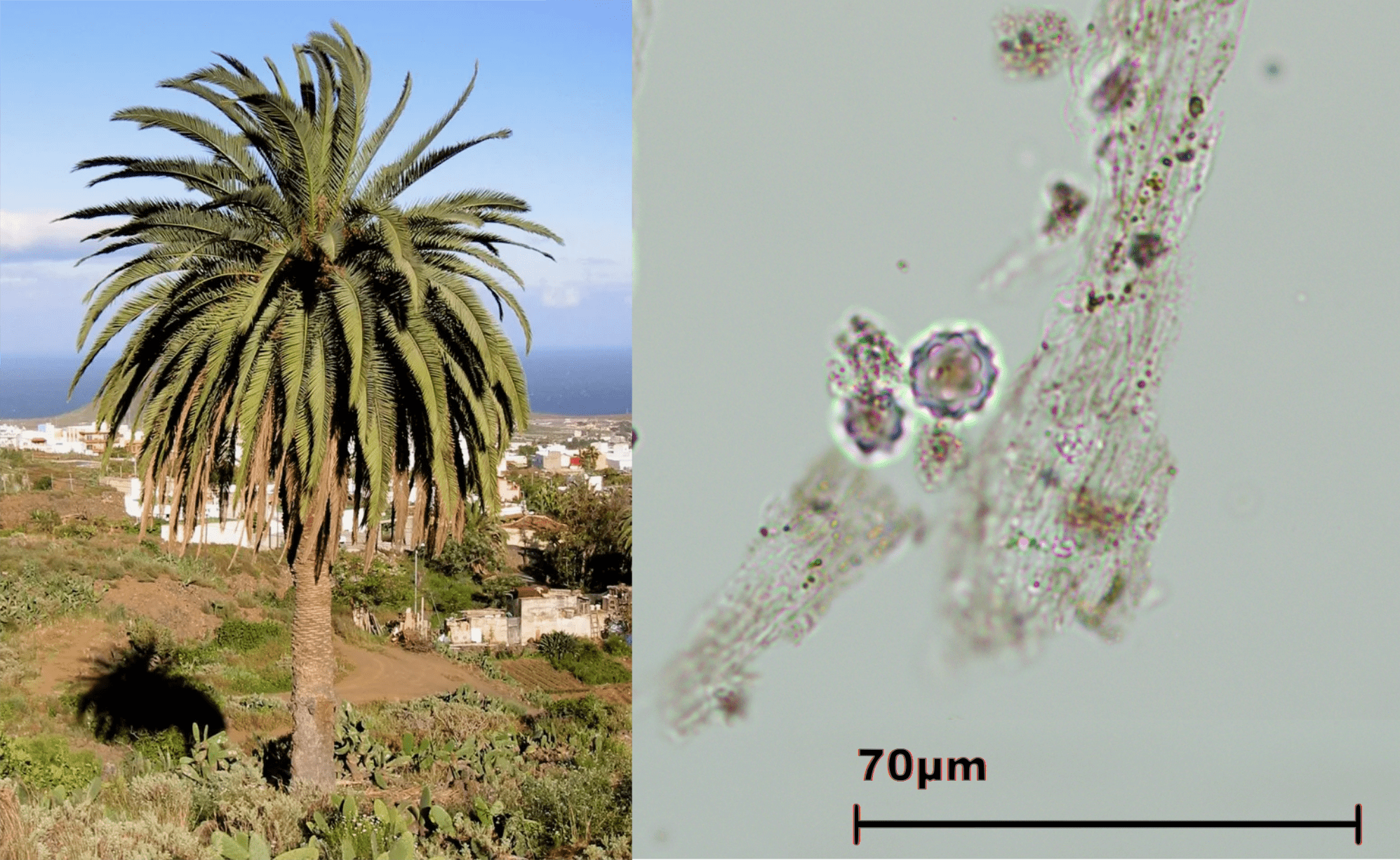
Following the objection raised by José Á. Afonso Vargas and M. del Carmen del Arco Aguilar to the news item recently published on this website: 'Researchers from the ULL create the first collection of siliceous microfossils in vegetation of the Canary Islands', the authors of the work wish to correct errors in the previous press release text:
First, the reference collection of phytoliths from modern plants in the Canary Islands is not the first of its kind in the archipelago. It builds upon the foundations laid by the pioneering work of Dr. José Á. Afonso Vargas, who studied phytoliths in the Canary Islands, and his published scientific work is cited accordingly. This new collection expands upon that work in terms of the number of species included. The project also draws on the Master's thesis completed by Oriol Andreu Díez in 2017, entitled 'Phytoliths as fossil indicators for the reconstruction of plant communities in the Canary Islands'.
Second: the correct term to define siliceous microfossils is 'phytoliths', as they are a collection of extant plants and were not recovered and studied in non-extant contexts. The term siliceous microfossils was used incorrectly for informational purposes.
Thus, the reference to the doctoral thesis of Dr. José Á. Afonso Vargas, published in 2014 at the ULL, is provided for consultation.
Afonso Vargas, J. Á. (2014). Application of phytolith and other microfossil analysis to the study of deposits, archaeological and soil materials of the Canary Islands: the examples of Las Cañadas del Teide (Tenerife), La Cerera (Arucas, Gran Canaria) and other areas of experimental application (Doctoral dissertation, University of La Laguna). https://riull.ull.es/xmlui/handle/915/118
The original text read as follows:
The study of phytoliths, which are siliceous plant microfossils formed inside plants, can offer information about what island landscapes were like in the past. A research team from the University of La Laguna embarked on creating the first reference collection of phytoliths focused on selected plants relevant to the study of past socio-ecological interactions in the Canary Islands, since these microfossils have excellent preservation potential in sedimentary deposits.
The work has recently been published in the journal Vegetation History and Archaeobotany. "We are pleased with this contribution to the knowledge of phytoliths in Canary Island plants. This work is the basis on which future studies will document the importance of certain plants in the ecological history of the archipelago, which rarely leave macroscopic traces," he says. Álvaro Castilla Beltrán, one of the lead researchers.
As the first inhabited archipelago in Macaronesia, the Canary Islands have attracted considerable scientific interest due to the interactions between the indigenous inhabitants and the native flora. The study of floristic changes is crucial for understanding past ways of life and changes in vegetation over time.
The results indicate that, among the selected taxa, the species within the families Arecaceae, Boraginaceae, Cyperaceae, Poaceae y Urticaceae They are the main native producers of phytoliths in the archipelago, and these microscopic elements can be preserved in archaeological contexts or in natural basins.
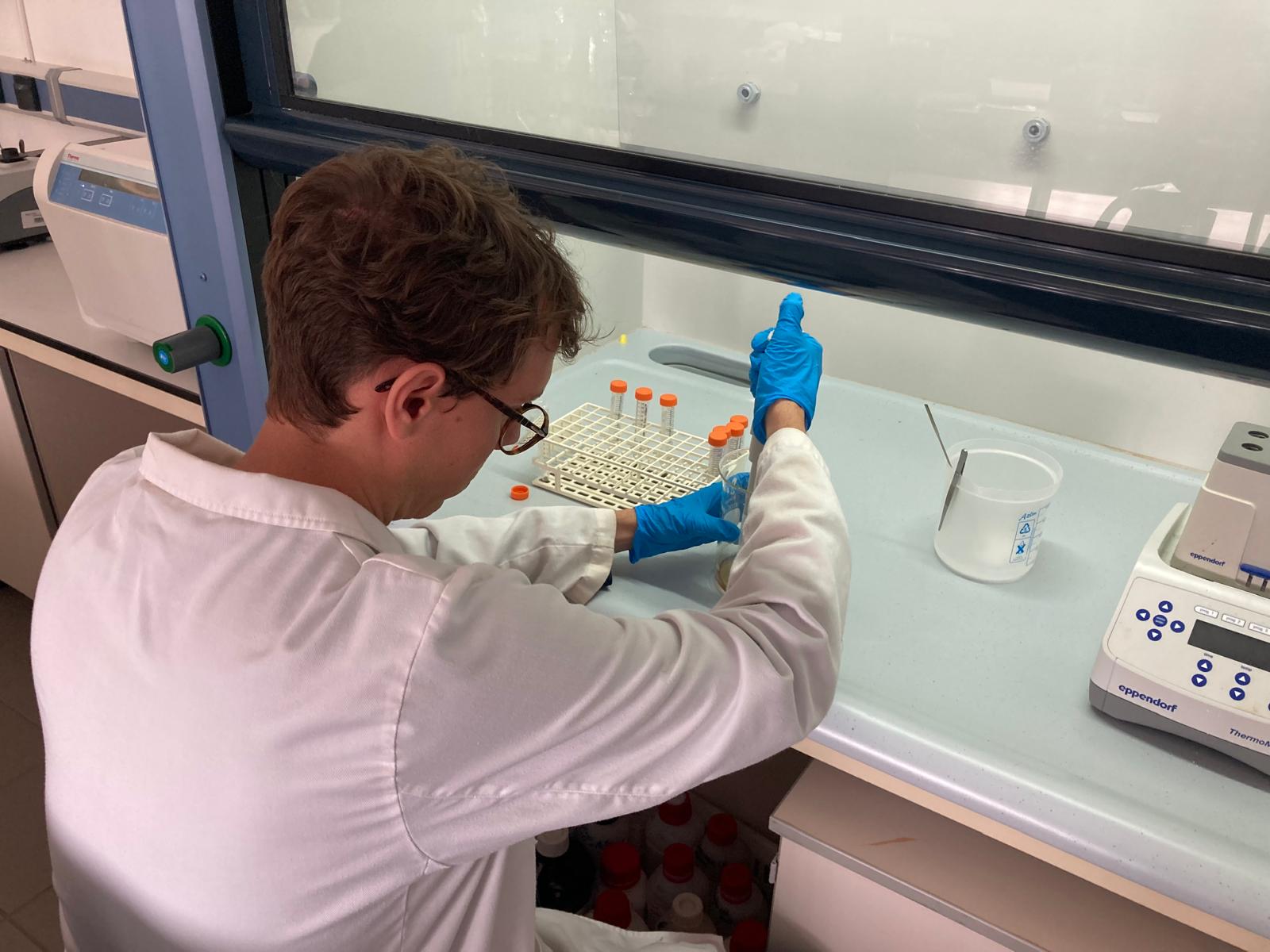
Enrique Fernández-Palacios, in the laboratory.
«We hope this reference collection will serve as a tool for future research in archaeology and ecology in the Canary Islands. We believe our findings will have a significant impact on our understanding of the environmental and cultural history of this unique archipelago,» he says. Enrique Fernández-Palacios, a doctoral candidate in Archaeology and one of the main researchers.
This growing reference collection marks a significant step towards applying phytolith analysis to unravel the long-term climatic and human transformation of this biodiversity hotspot, as well as to understand the cultural use of plant resources.

 Spanish
 English
 French