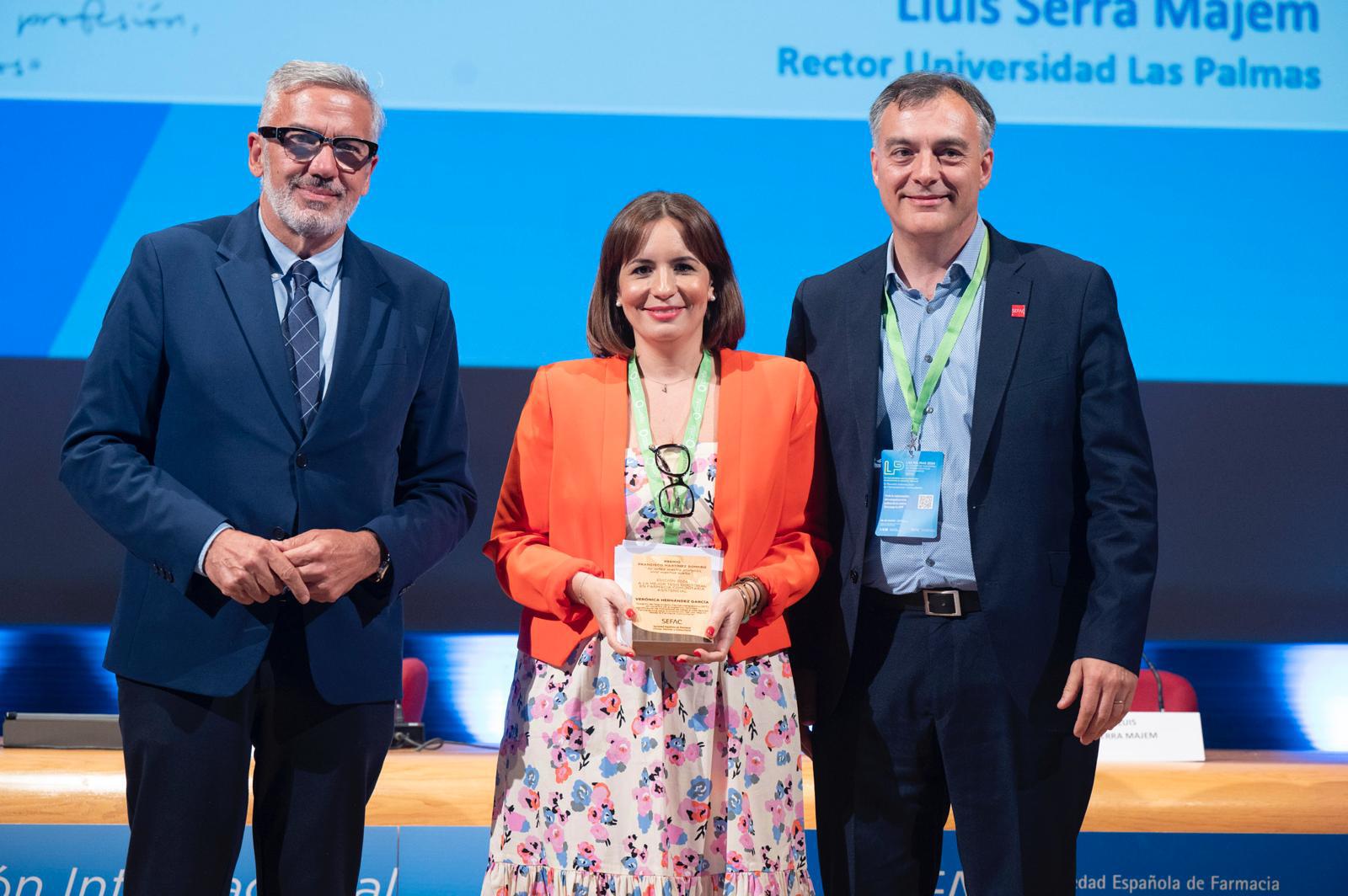
A doctoral thesis on the impact of pharmacotherapeutic monitoring in users of opioid analgesics, defended by Verónica Hernández García at the University of La Laguna, has recently been awarded the prize sponsored by the Spanish Society of Clinical, Family and Community Pharmacy (SEFAC).Presented in 2022 with outstanding cum laude distinction under the direction of Professor Carmen Rubio, the work was developed within the research group Environmental Toxicology and Food and Drug Safety.
This descriptive, cross-sectional observational study was conducted in a pharmacy in Tenerife and was classified by the Spanish Agency for Medicines and Health Products (AEMPS). A total of 63 patients were interviewed using an innovative data collection questionnaire designed for the three phases of this doctoral thesis. Each patient underwent three interviews, separated by six to eight weeks, allowing for the collection of variables related to sociodemographic aspects, the patient's health status and pharmacotherapy, opioid treatment and their knowledge of it, quality of life, and pain level.
The study also examined medication-related problems (MRPs) and adverse drug events (ADEs), the risk of opioid abuse, pharmaceutical intervention, and patient satisfaction with pharmaceutical care provided by community pharmacies, among other topics. Furthermore, the thesis included a specific study on the health status and knowledge of caregivers of patients using opioid analgesics.
Of the five opioid analgesics studied (Fentanyl, Tapentadol, Morphine, Oxycodone, and Oxycodone-Naloxone), Tapentadol is the most frequently prescribed and dispensed, the study reveals. Chronic non-cancer pain of musculoskeletal origin is the condition that motivates the prescription of these active ingredients in three out of four patients.
Furthermore, the results show not only that polypharmacy is present in the 81% of patients using opioid analgesics, with a higher prevalence in women and peaking in those over 65, but also the chronic nature of opioid analgesic use. Thus, while the average duration of treatment is two years (0.08-11), in one out of every two patients the treatment duration exceeds twelve months, a phenomenon that occurs primarily among those over 65.
The study of the risk of opioid analgesic abuse using the POMI (Prescription Opioid Misuse Index) test shows that 7.9% of users present a high risk of abuse at the start of the pharmacotherapeutic follow-up program (SFT), especially among men, under 65 years of age and polymedicated with more than 5 medications.
The doctoral thesis reveals that the profile of caregivers of patients using opioid analgesics is predominantly female (61,1%) and that this figure influences the efficacy and safety of opioid treatment.
The thesis concludes that pharmacotherapeutic follow-up (PTFS) as a professional care service offered by the Pharmacy Office impacts the reduction of the prevalence of drug-related problems (DRPs) and adverse drug reactions (ADRs) in the patient and, therefore, optimizes the therapeutic results of these drugs and improves safety during their use.
The award ceremony took place in Gran Canaria, where the annual congress was held.

 Spanish
 English
 French