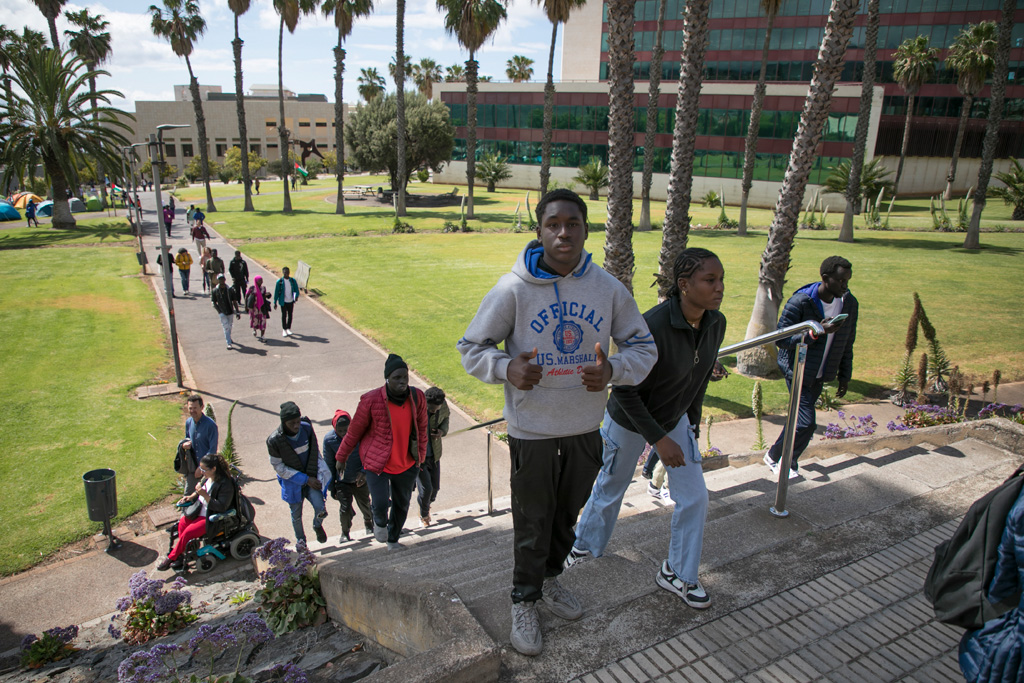
The University of La Laguna held the first of two days of events today, Thursday, May 23, to commemorate Africa Day, whose official date is May 25. One of the sessions served to present some of the initiatives that the university community has either launched or collaborated on to support migrants arriving in the Canary Islands, and it had a special audience: young people from this group staying at the Las Raíces camp.
The day began by emphasizing that there are many more initiatives than those present at the event, in addition to the anonymous collaboration of many members of the University of La Laguna community. The five projects selected as examples were: La Escuelita de las Raíces (The Little School of Roots), which offers training on Spanish languages and culture every Sunday at the aforementioned camp; the project for teaching Spanish language and culture at the university; the Informa project, which provides administrative and legal assistance to people at risk of exclusion, such as migrants; Campus Sansofé, focused on sport as a means of integration; and a proposal from Design students for the reinterpretation of the site where the ashes of the vandalized migrant boat are located on the Guajara Campus.
Yomboui and Natcha, volunteers with La Escuelita de Las Raíces, presented this initiative, founded in 2012. It originated from a committee of the Assembly for the Support of Migrant People, which later separated to become a volunteer organization. They offer Spanish classes at the entrance to the camp on Sunday afternoons, although classes may be held on other days depending on the number of people available on the team.
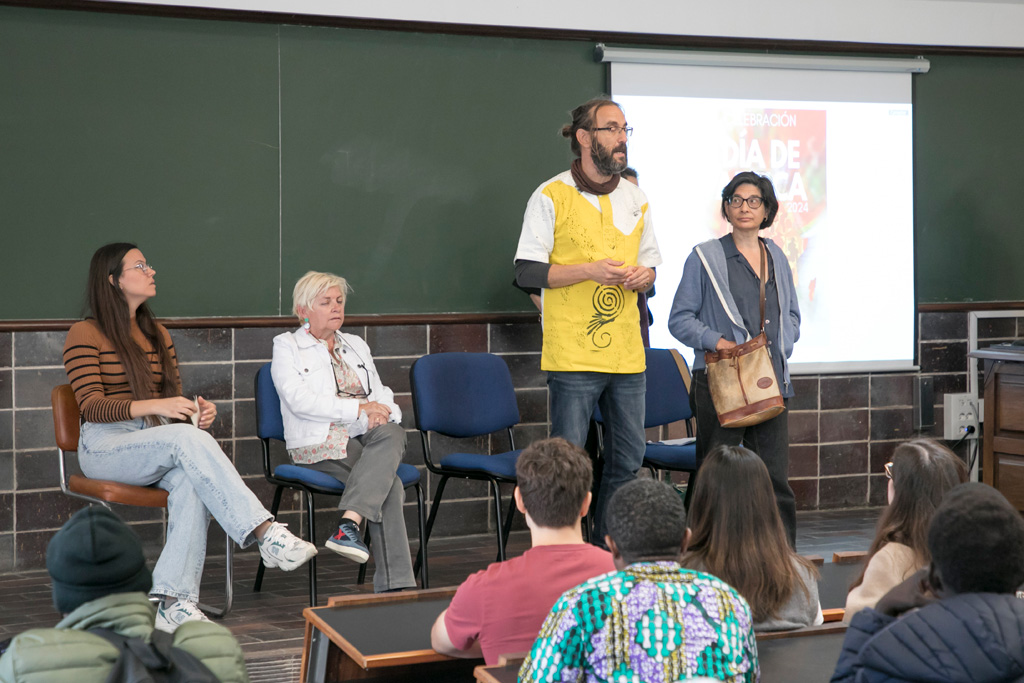 But the project is more than just training; it has also become a way to support people who have come a long way in recent years, a pleasant space for relaxation and tranquility, emotional support, and cultural exchange that is as enriching as it is necessary. In addition to Spanish, they offer theater and yoga classes, as well as activities like excursions and hikes. It has also served to create a network of contacts between neighbors and institutions.
The second initiative presented is the Spanish language program for migrants, which arose from the initiative of professors Francisco Ledesma and Patricia Pareja through the Center for African Studies, with support from Vice-Rectorate for Culture and University Extension. The team is made up of retired secondary and university teachers, student interns, and some active faculty members. It was located in the classrooms of the Faculty of Education until the end of last year and, starting in 2024, it will be taught in the facilities of the Physics and Mathematics departments.
Initially, it was planned as a normal course, with a standard program that included objectives and content, but the reality of a student body often with little or no prior schooling has forced a change in strategy. With a highly practical approach, emphasizing oral communication and repetition, the students have an advantage in that they typically know several languages, both from their countries of origin and European languages, which facilitates learning. Furthermore, they are highly motivated to learn. There is also a strong emotional component, as this is a group that has experienced a very dehumanizing process that needs to be addressed in some way.
Law students Celia and Lucía discussed their experience with the Informa project, a legal advice service where lawyers specializing in immigration and other areas allow them to delve deeper into topics not covered in the curriculum, while also assisting vulnerable groups. It is a multidisciplinary team that also includes psychologists, social workers, and philologists who help with translation and interpretation.
They explained that each day is dedicated to a particular type of case: Mondays focus on criminal cases and those involving minors; Wednesdays on immigration cases; and Fridays are usually the most varied, addressing different types of residency permits and some cases of migrant children. It is a project that has established good synergies with others such as La Escuelita.
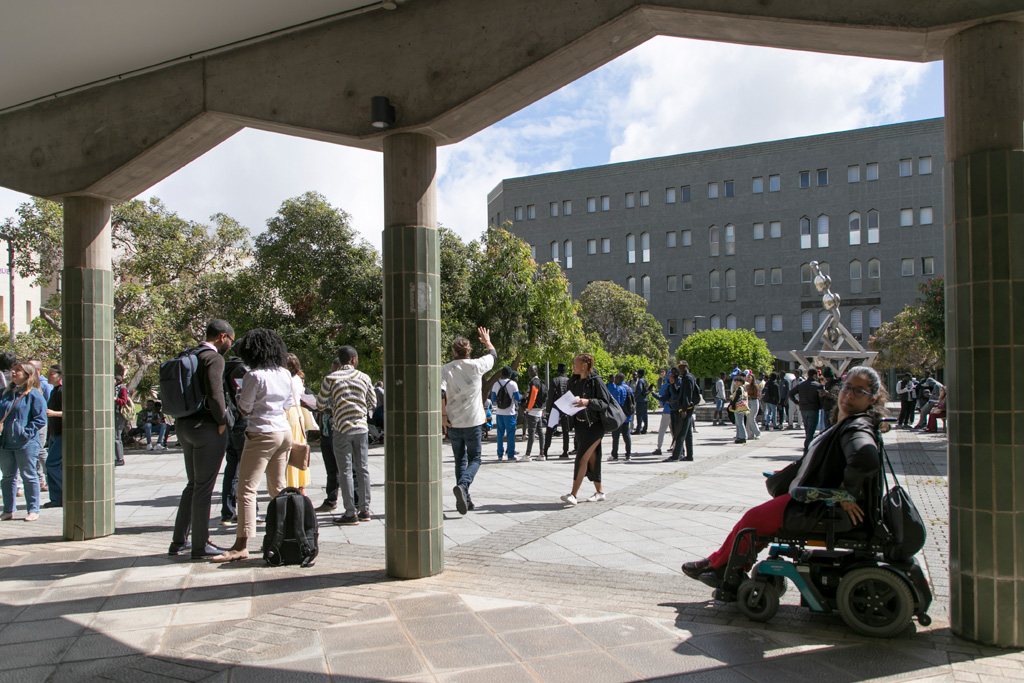 Miguel Llorca, retired professor of Education at the University of La Laguna He explained the inclusion project Campus Sansofé arose when, upon starting Spanish classes for young migrants and asking them what interested them, the majority responded "football." It was thought that this sport could be a valuable tool for social inclusion, and thanks to the collaboration of entities such as the Tenerife Sports Club Foundation and the university's Sports Service, which provide their facilities on certain days of the week, this project was launched. It not only involves training sessions but also competitive matches and even the integration of some of these young people into local federated teams.
The presentation included Younusse Diop, currently the coach of Campus Sansofé, who arrived in the Canary Islands by boat and successfully integrated into Canarian society, eventually becoming a professional footballer. He addressed the audience in Wolof and Spanish, explaining the importance of learning the language and striving to achieve their goals while prioritizing their education—something he has experienced firsthand.
Finally, David Domínguez, a professor in the Anthropology department who teaches in the Design degree program, presented a project developed in his course. Students proposed ways to reinterpret the space occupied by the migrant boat on the Guajara Campus that was burned months ago. Students Daniela Pimentel, Miriam Martín, and Patricia Valentina Pavón proposed creating a vertical wooden structure in the shape of the boat, carved in the center, around which Canary Island and African flowers would bloom, symbolizing life rising from the ashes.

 Spanish
 English
 French