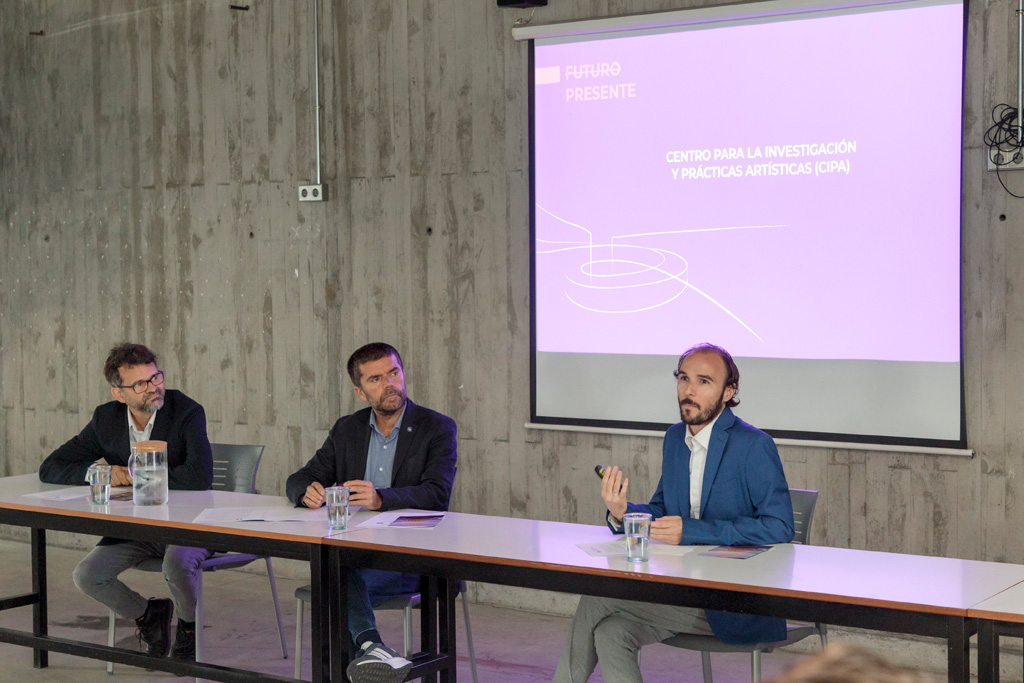
The Faculty of Fine Arts inaugurated today, Friday, May 24, the Center for Research and Artistic Practices (CIPA), a set of spaces and activities framed within its building that seeks to contribute to the revitalization of the artistic and cultural ecosystem of the island, facilitate the transition of graduating students to the world of professional creation, and open the faculty to society through these transfer actions.
The rector of the University of La Laguna, Francisco García, participated in this inaugural event, which was presented by the dean of the Faculty of Fine Arts, Bernardo Candela Sanjuán, and the vice-dean of Culture and Extension, Javier Sicilia.
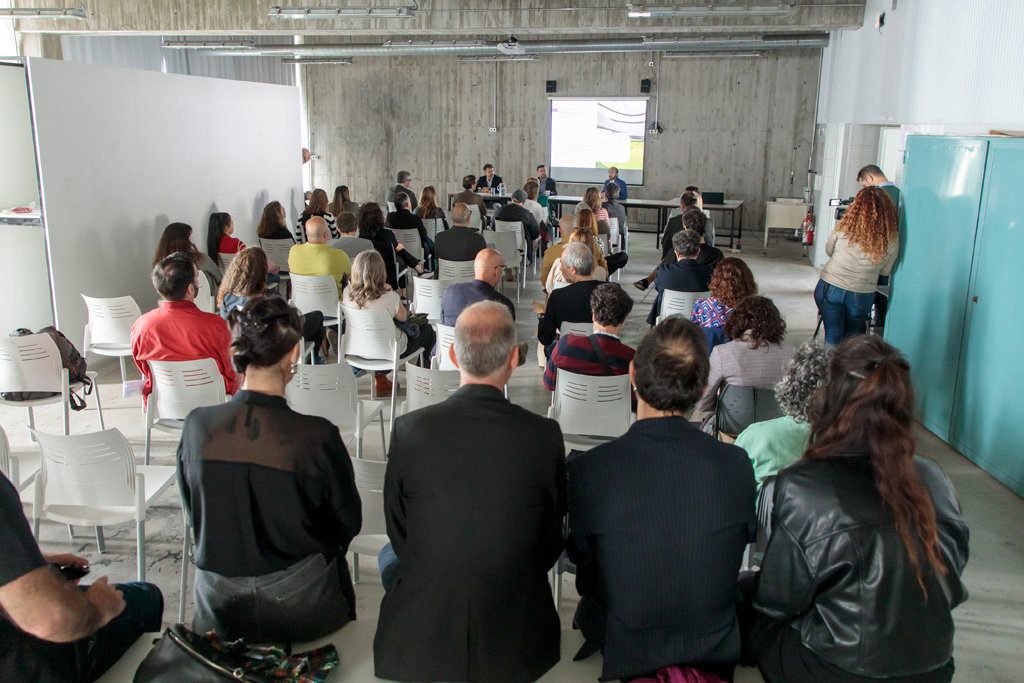 It is noteworthy that the event was attended by the Island Councillor for Culture, Museums and Sports, José Carlos Acha; the Director General of Cultural Innovation and Creative Industries, Cristóbal de la Rosa; and the manager of the Santa Cruz de Tenerife City Council's Autonomous Agency, Carlota Cobo; as well as managers of various museums and exhibition spaces, gallery owners, cultural technicians, and other professionals linked to the arts sector. The presence of these individuals is not coincidental, as the dean explained, because to achieve its objectives, the CIPA (Center for Artistic and Cultural Research) seeks to establish collaborations with entities in the arts and culture sector.
The rector emphasized the importance of the Faculty of Fine Arts' ambition to become a "regional hub," a meeting place for diverse stakeholders in the arts. In this regard, he praised the impetus the new dean's team is giving the center, with initiatives such as the creation of the CIPA (Center for Innovation and Promotion of Artistic Arts), which will allow for greater visibility for the "goldmine of young talent" that graduates each year from its classrooms and workshops, enriching the creative landscape not only in the Canary Islands but also internationally.
The dean pointed out that this action marks another step forward in the development of a faculty with a 45-year history, which for the past decade has boasted a building brimming with potential that, with the addition of the CIPA (Center for Research and Advanced Studies), will be fully utilized. He explained that it is a highly dynamic center with a large pool of qualified personnel, enabling it not only to develop its teaching activities across three undergraduate and several postgraduate programs, but also to create synergies with projects such as the Digital Design and Fabrication Laboratory (FabLab) and the Art Analysis and Documentation Service.
For his part, the Vice Dean of Culture and Outreach was responsible for explaining in detail the nine spaces that make up the CIPA, and for leading a subsequent tour of each one. As he explained, the purpose of this infrastructure is, on the one hand, to be a kind of “airbag” for students who encounter the sometimes harsh reality of the art world after graduation, and also to foster the exchange of talent through artist residency programs and outreach initiatives.
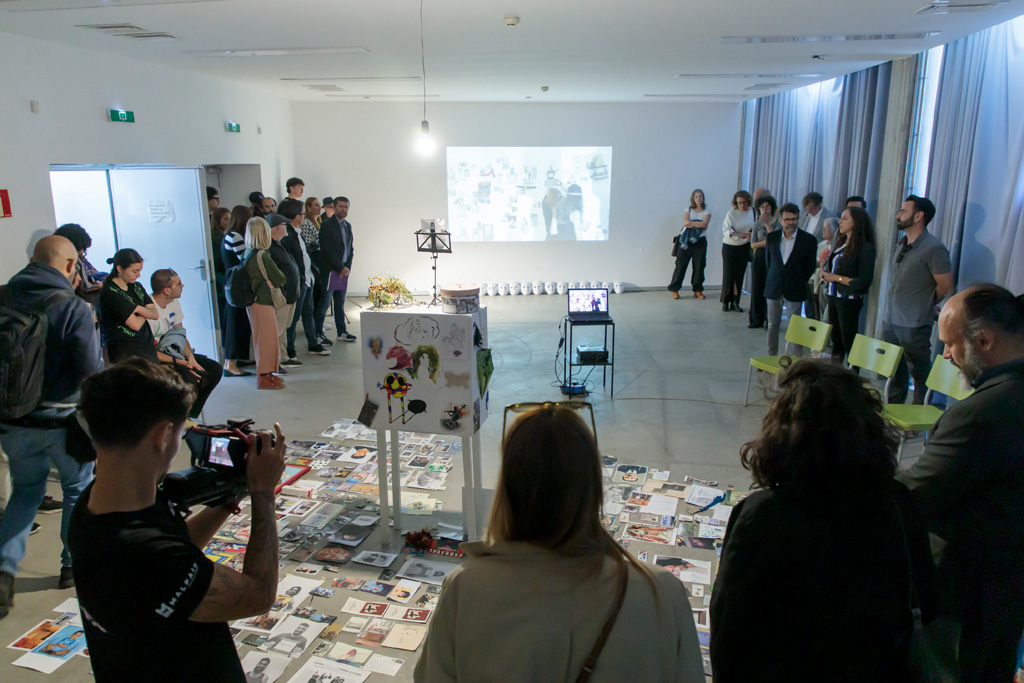
The 13 Encounters space
The first space presented was La Salita, a small exhibition hall located just inside the building's entrance. It serves as a showcase for the faculty's creativity and will host eight annual exhibitions by students from various disciplines. The 13 Encuentros space is designed for artistic and cultural outreach, for example, by coordinating school visits to the faculty. Estudio 07 is the project focused on artistic residencies, and it is already underway with its first call for projects recently published.
The fourth space at CIPA is 15 Sillas, a mini-auditorium for sound art. The faculty cafeteria is also part of this project, offering exhibition proposals that emerge from students in a more organic and flexible way. The Sculpture Gardens, currently two in number, will repurpose the faculty's open spaces for displaying three-dimensional works.
The Film Forum has finalized its first program, which will allow students to explore the possibilities of audiovisual art. Finally, two of the largest spaces with the greatest social impact are: the Auditorium, an ideal venue for collaborating with external initiatives such as festivals; and the Exhibition Hall, which will host works created within the faculty as well as those by external artists.
Sicilia also mentioned the Satellite Exhibitions initiative, which will allow students and faculty to display their work in spaces provided by other public institutions. She also emphasized that all of these CIPA activities will enrich the students' practical training, as they will be involved in the design, management, assembly, and implementation of these initiatives.

 Spanish
 English
 French