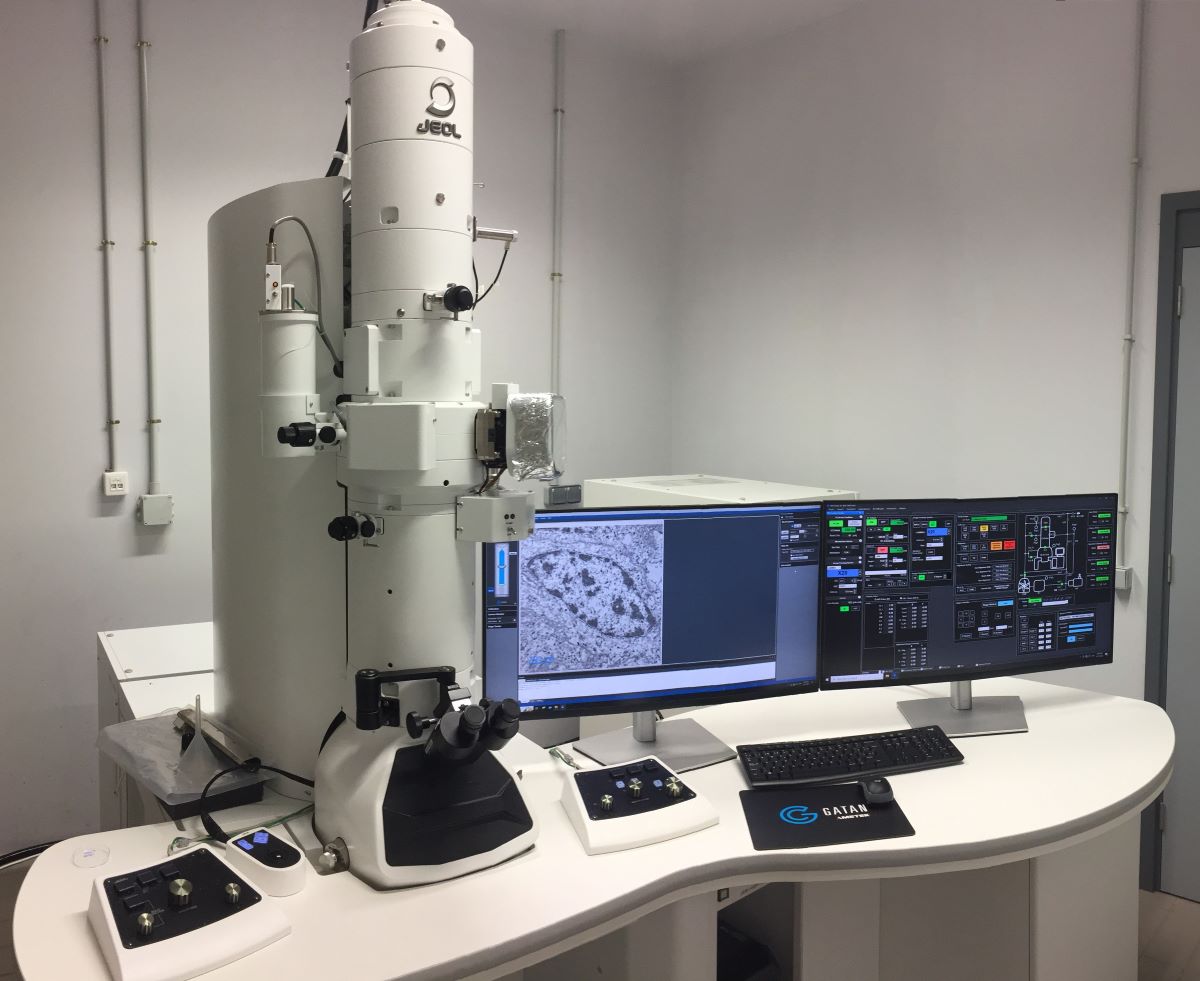
The General Research Support Service (SEGAIThe Faculty of Chemistry at the University of La Laguna presented its new scientific and technological equipment to researchers at the Chemistry Department's Lecture Hall last week. The equipment, a JEM 1400 FLASH high-contrast transmission electron microscope, uses a high-energy electron beam (120 kV) to determine the internal structure of biological samples. This equipment was acquired thanks to grant EQC2021-007713-P, funded by the Spanish Ministry of Science and Innovation and the European Union's NextGenerationEU/PRTR program.
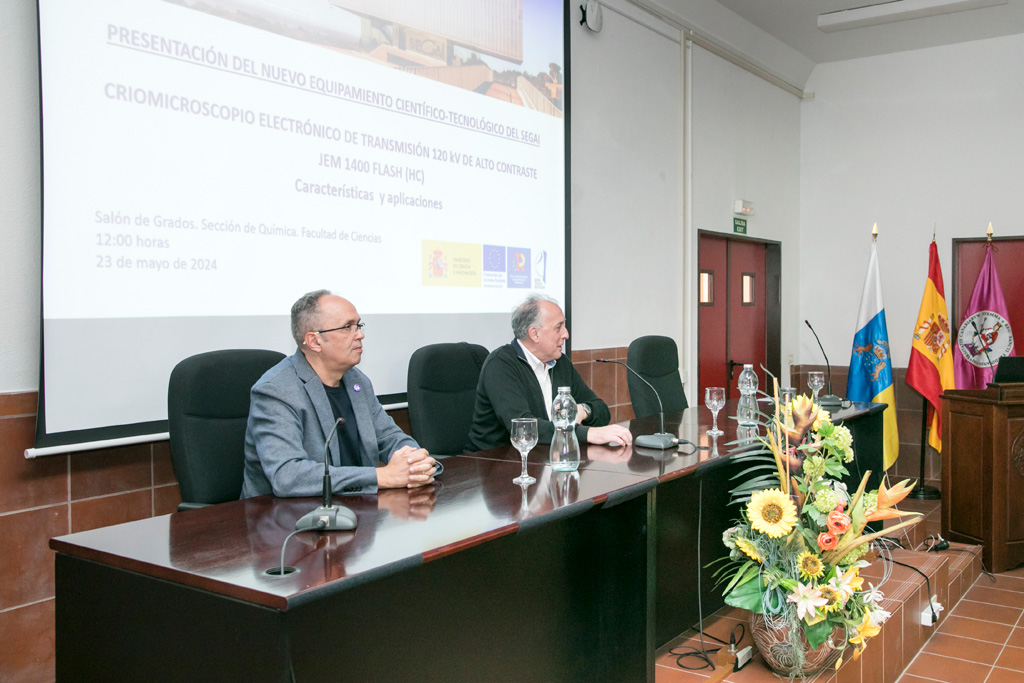
The event was opened by the Vice-Rector for Research and Transfer, Antonio Aparicio, and subsequently José Luis Rodríguez Marrero, director of SEGAI, showed the audience the technological offer that he manages, with special emphasis on the Electron Microscopy Service.
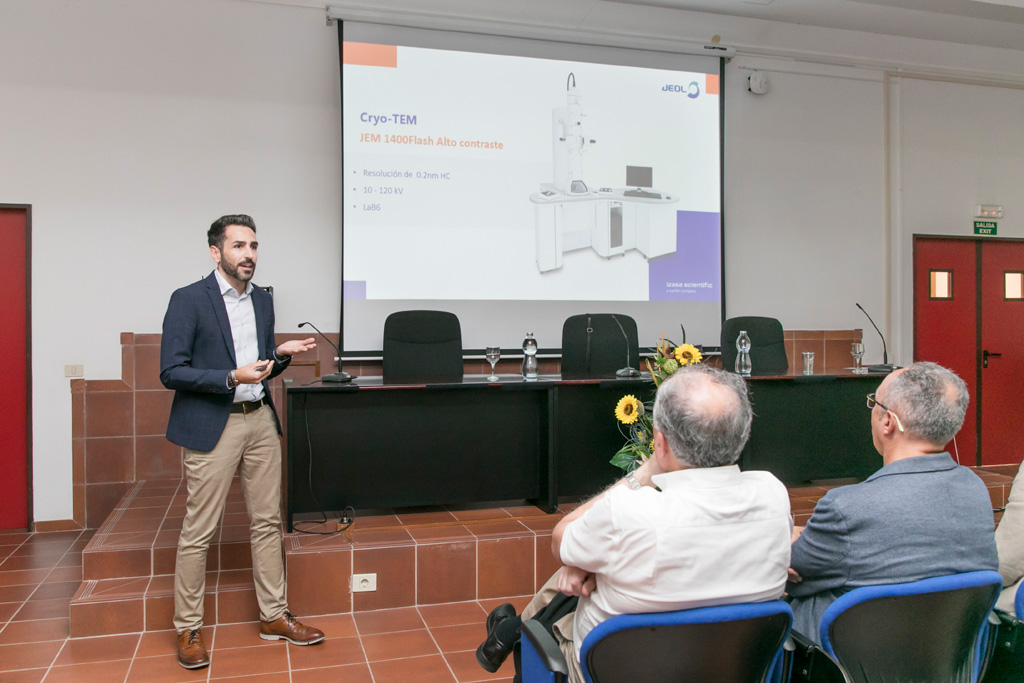
The specific features and applications of the new JEM 1400 FLASH microscope were presented by Juan Gabriel Rodríguez, an electron microscopy specialist from Izasa Scientific, the company that won the public tender for its supply. Following this, the company's CEO, José Luis Latorre, offered some reflections on the qualities that will make people successful in the 21st century.
Next, José Manuel Rodríguez Ramos, CEO of the spin-off company Wooptix, She spoke about the future of R&D&I at the University of La Laguna, emphasizing the great potential of SEGAI for the transfer of technology and knowledge to public bodies and companies in the surrounding area. The event concluded with a visit to the Electron Microscopy Service facilities in the SEGAI Building, where attendees were able to see its scientific infrastructure firsthand.
New electron microscope
The main feature of the new equipment is that it is a microscope specifically designed for observing previously frozen biological samples. It includes all the necessary accessories for freezing, transferring, and handling the samples. The ultra-rapid freezing method used creates a very thin layer of amorphous ice that protects the biological material from direct damage caused by electron beam irradiation. Its primary application is research in the fields of biotechnology and biomedicine.
The study of cells and tissues using transmission electron microscopy, in conventional or cryogenic mode, will allow the research staff of the University of La Laguna to design technological strategies for the diagnosis and treatment of diseases that require the microscopic study of the mechanisms of action of pathogens, as well as to monitor the activity of new drugs.
This technology is a fundamental tool for gaining in-depth knowledge of the molecular organization of cells and the mechanisms underlying basic cellular processes, as well as for characterizing microorganisms with pathogenic activity. Furthermore, the recently installed equipment allows for the characterization of soft materials and functional polymeric materials with technological applications that are sensitive to electron beams.

 Spanish
 English
 French