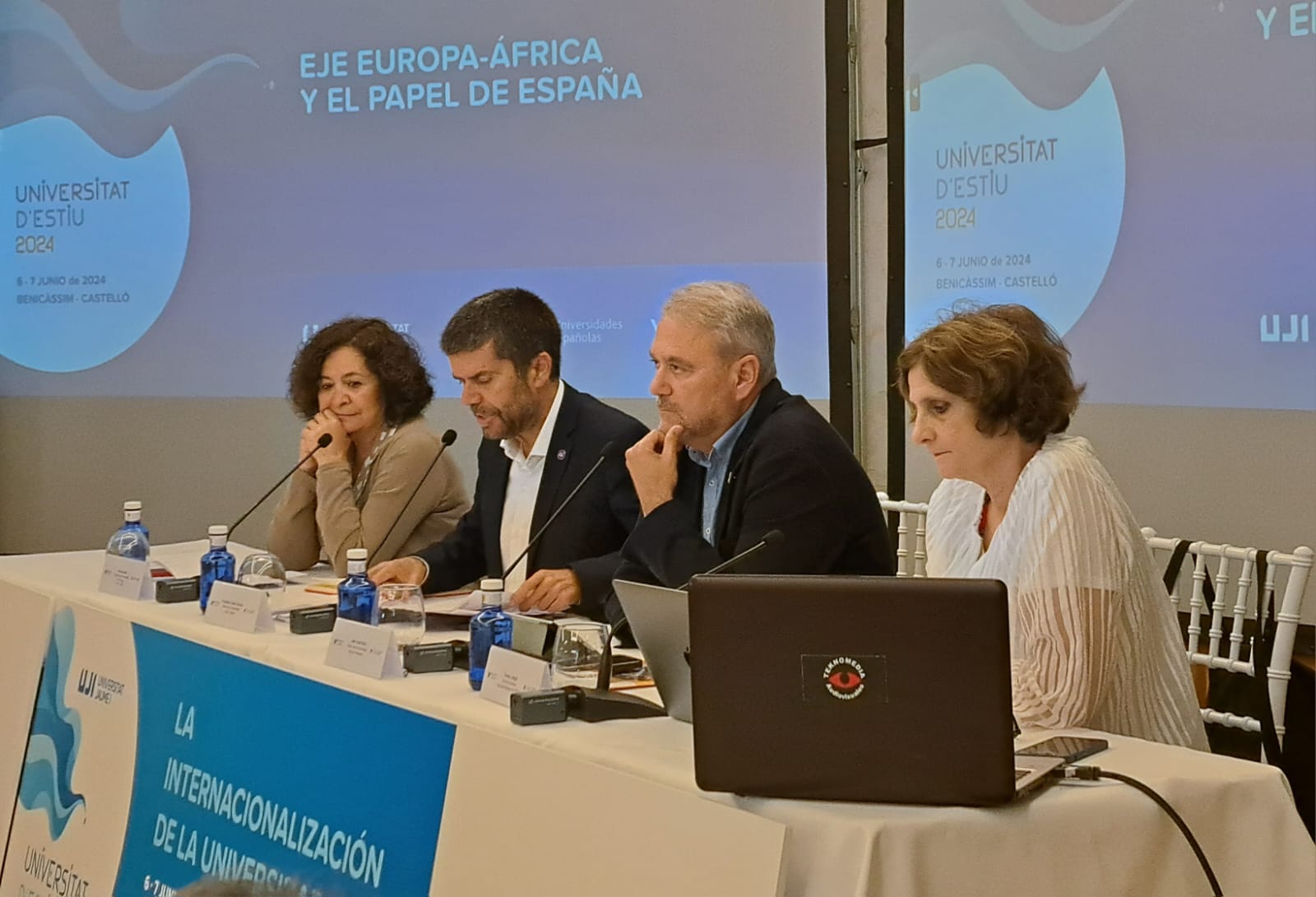
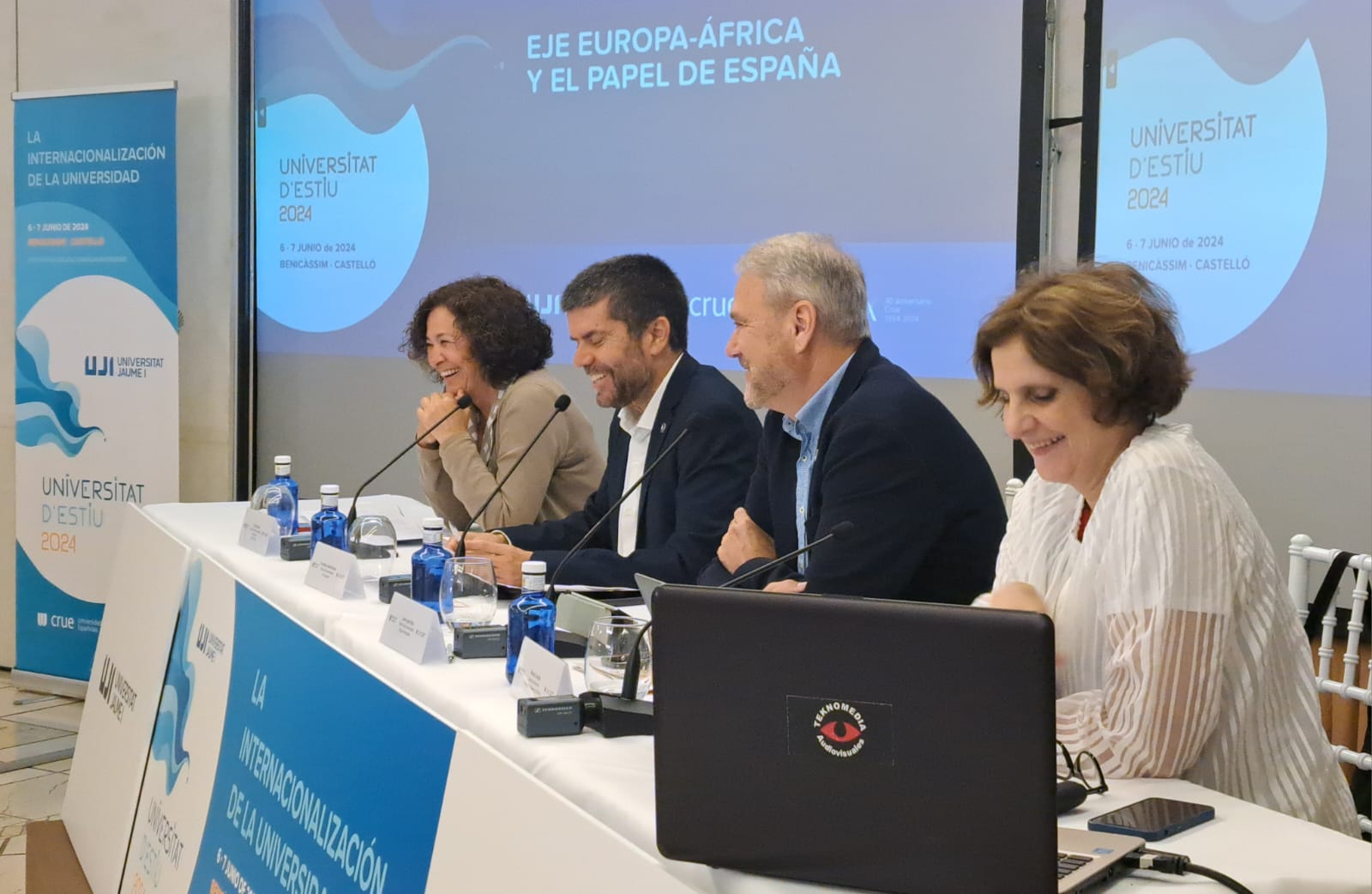
The Conference of Rectors of Spanish Universities (CRUE), in conjunction with Jaume I University of Castellón, organized a conference this week on the internationalization of higher education institutions in Spain. The vast majority of the top officials from these institutions attended. Francisco García, Rector of the University of La Laguna, moderated the first panel discussion on June 7th, which focused on the Europe-Africa axis and Spain's role. Participants concluded that scalable and sustainable projects are essential, as many projects fail to achieve their goals without proper planning and sometimes due to a lack of qualified personnel. They also emphasized the importance of consolidating programs and the need for bilateralism.
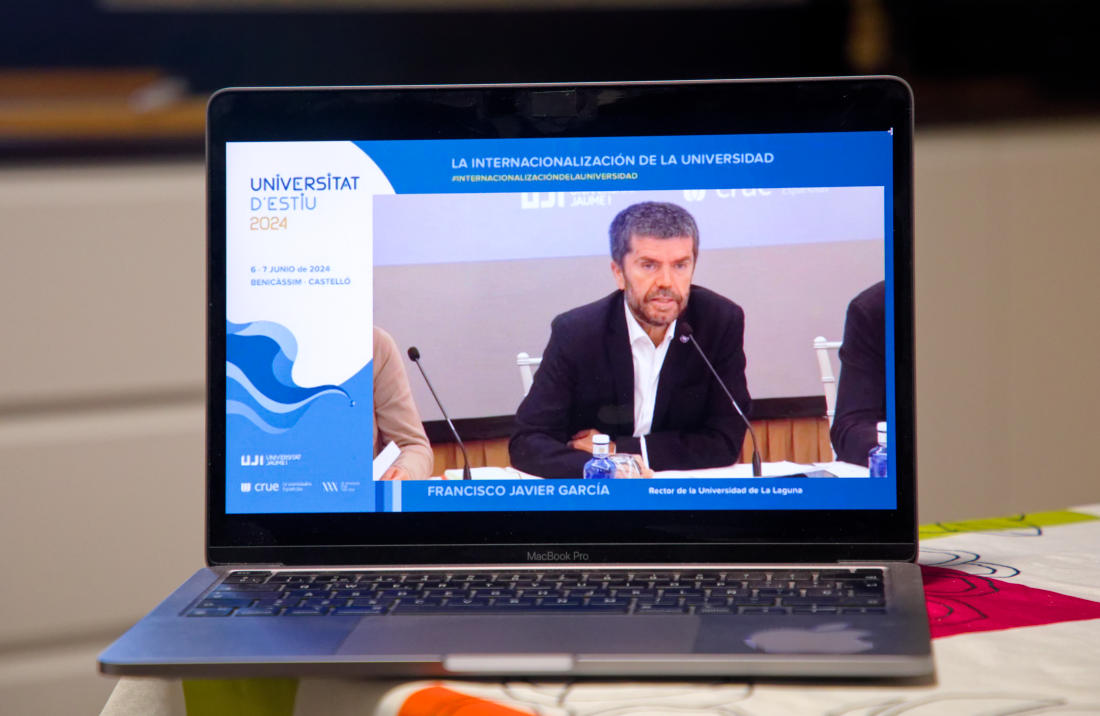
The session could also be followed virtually.
Francisco García stated that Africa is a reality comprised of more than fifty countries with abundant natural resources, which leads to situations of conflict, inequality, and corruption. While global growth prospects are favorable for countries like Niger, Senegal, and Rwanda, almost 50% of employment is concentrated in the primary sector, something inconceivable in a developed economy like Europe's, he pointed out. The rector of the University of La Laguna affirmed that this territory, neglected by Europe, is not overlooked by other global actors such as China and Russia, whose geostrategies include this continent. He also indicated that universities and governments should address the underlying causes of underdevelopment to try to reverse the unjust structures of these societies. Spanish universities maintain more than 700 agreements with their African counterparts.
The panel discussion included Juan José Ruiz, Rector of Miguel Hernández University; Teresa Langle, Director General of the Women for Africa Association; and Pilar Aranda, former Rector of the University of Granada. Ruiz pointed out that academic mobility with the African continent has improved through the Erasmus+ program, although it remains completely insufficient. “More funding from Spain is needed for these types of collaborations,” the Rector stated, explaining that the main areas of collaboration are projects related to sustainable agriculture, food security, the environment, and infrastructure development.
The rector of Miguel Hernández University also pointed to the need for a joint initiative between African and European partners and the opportunity to create centers of excellence in African universities, with the challenge of ensuring their continuity using their own technological and human resources. “Many successful projects are not scaled up adequately, and that is why their sustainability is complicated.”.
Ruiz added that it is necessary to increase the capacity of students and teachers in the field, especially in secondary schools, and particularly for women, who have a high dropout rate. She also indicated that it is essential to be vigilant about the brain drain, ensuring that those who are trained in Europe return to their countries of origin and contribute their knowledge there, while continuing to work on the mutual recognition of qualifications.
For her part, Teresa, the director general of the Women for Africa Association, acknowledged that we know very little about that continent. The organization she leads focuses on women's education, and she affirmed that online learning is fundamental, especially through short training courses that help bridge the enormous gap between rural and urban areas. "Women carry the continent on their shoulders, and they face the greatest difficulties in traveling because they have family responsibilities from a very young age," she said, adding that this type of course is crucial.
Langle stated that greater collaboration is needed between universities, businesses, and governments, seeking triangulation mechanisms that contribute to expanding their work. In her remarks, she mentioned several challenges, such as the dissemination of African scientific output, which remains largely unknown due to knowledge hierarchies—a situation exacerbated for women—and the need to create channels for horizontal growth.
A total of 32 African women have received grants to undertake research stays at leading Spanish research centers, while the association is working to further diversify the origins of its candidates. “The women always return, becoming mentors for other women, so the impact is profound and the investment is very rewarding.”.
For her part, the former rector of the University of Granada pointed out that internationalization is a tool for leveling the playing field for citizens. “With Morocco, we have worked from the perspective of bilateralism, but the truth is that our focus on Africa is recent, stemming from migration. It is then that we became aware of this reality.” Aranda explained that other European countries have a more advanced position in their universities' relations with the African continent, focusing on very specific aspects.
He also stated that research projects should be long-term and collaborative. “Their level of knowledge transfer must be verified, and they must also be evaluated,” which takes time, he said. Aranda believes the Ministry of Foreign Affairs should be more aware of the role of universities in this area and strengthen the visibility of Spanish universities abroad.
For his part, the rector of the University of La Laguna closed the debate by pointing out that this academic center will host a new edition of Campus Africa in July, an academic and scientific event that each year brings together some 75 African scholarship students, many of them doctoral students, to train them in different subjects related to health and emerging diseases.

 Spanish
 English
 French