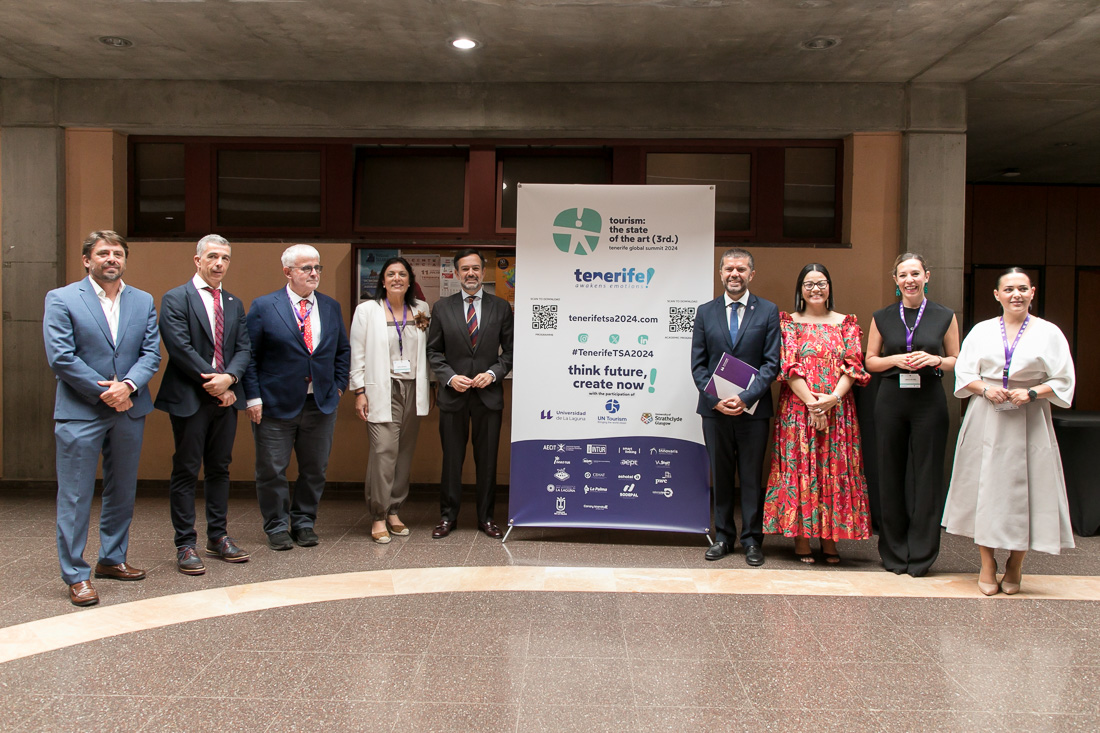
Natalia Bayona, executive director of UN Tourism, She was the first speaker at the international forum on tourism knowledge. Tenerife Global Summit 2024, The conference, which is being held at the Faculty of Economics, Business and Tourism of the University of La Laguna from today, Wednesday, June 19, until Friday, June 21, highlighted Spain's role as one of the leading countries in the sector and, regarding its future, outlined three determining factors: education, to ensure better-trained professionals who aspire to develop a long-term career; social innovation, to involve local communities in tourism; and data collection and management, to improve decision-making.
Previously, the opening session was attended by, in addition to Bayona herself, the rector of the University of La Laguna, Francisco García Rodríguez; the Minister of Tourism and Employment of the Government of the Canary Islands, Jéssica de León Verdugo; the vice president and Minister of Tourism of the Tenerife Island Council, Lope Afonso Hernández; the councilor for Tourism and Commerce of the San Cristóbal de La Laguna City Council, Estefanía Díaz Arias; the president of the Spanish Confederation of Hotels and Tourist Accommodation (CEHAT) and of ASHOTEL, Jorge Marichal González; and two members of the organizing committee, Professor Tom Baum from the University of Strathclyde (Scotland), and his counterpart from the University of La Laguna, Eduardo Parra López.
The rector reflected that tourism is part of the Canary Islands' past but, above all, will be part of its future, and acknowledged that debates have arisen around issues such as gentrification and rising rental prices. "In this context," he said, "denying the importance of tourism in our society would be as blind as denying that debates about the production model exist and are crucial." Therefore, he championed the role of academia in addressing these analyses and providing expert knowledge to contribute to solutions.
García highlighted some of the services that the University of La Laguna is providing to the tourism sector, many of them in collaboration with other institutions, such as the activities of the Institute for Social Research and Tourism; the chair on the sector that it maintains with ASHOTEL; another chair recently created with the Government of the Canary Islands and the University of Las Palmas de Gran Canaria on data applied to tourism; the collaboration with the municipality of La Laguna in the development of its Strategic Tourism Plan; and the participation of many of its researchers in the Canary Islands Tourism Observatory.
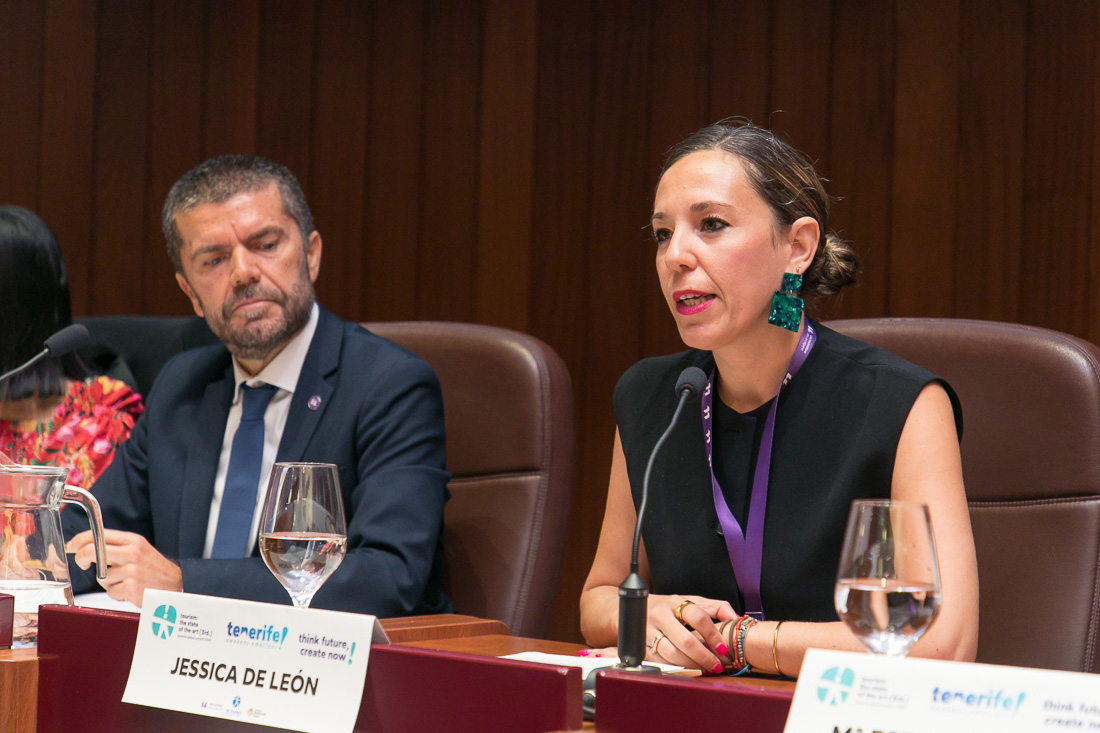
The rector and the tourism advisor.
The Minister of Tourism and Employment for the Canary Islands Government, Jéssica de León, stated that it is necessary to move beyond short-term thinking in the sector to focus on improving its quality and sustainability. She also referred to the recently established professorship created by her department in conjunction with the two public universities in the Canary Islands as an opportunity to enhance research, knowledge, and decision-making—a path already initiated with the creation of the Canary Islands Tourism Observatory, which is part of the international network of tourism observatories, INSTO. Furthermore, she emphasized that "tourism is not an end in itself, but rather a tool to improve the lives of the people of the Canary Islands." According to the regional official, "the conservation of the land is the only guarantee for preserving not only the tourism industry, but also the community. Tourism is an industry that will never be the problem, but rather the solution.".
The Vice President and Tourism Councillor of the Tenerife Island Council reflected that, since the last scientific meeting held twenty years ago, many changes have taken place in the tourism sector, an explosion of the industry that has allowed Tenerife to consolidate its status as a competitive destination, which entails commitments and challenges. In his opinion, the conclusions of this forum can serve to improve the way in which the sector grows, to manage the arrival of visitors, and to ensure that the entire community shares in the benefits generated by this activity, which can also be used to guarantee the sustainability of the region.
The president of ASHOTEL and CEHAT emphasized the idea that “tourism must be sustainable or it will cease to exist,” and for this reason, his organization already has a sustainability plan that accommodation establishments are implementing. Marichal explained how sustainability has focused on a specific aspect over time: in the 1970s, the focus was on the economy, and once a period of prosperity was achieved, the emphasis shifted to the environment, with social development now taking center stage. Regarding the debate surrounding the production model, he assessed it as a problem of “managing success,” since negative situations have arisen from “doing things well.” Therefore, he appealed to universities to collaborate with the sector and help to elevate its standing.
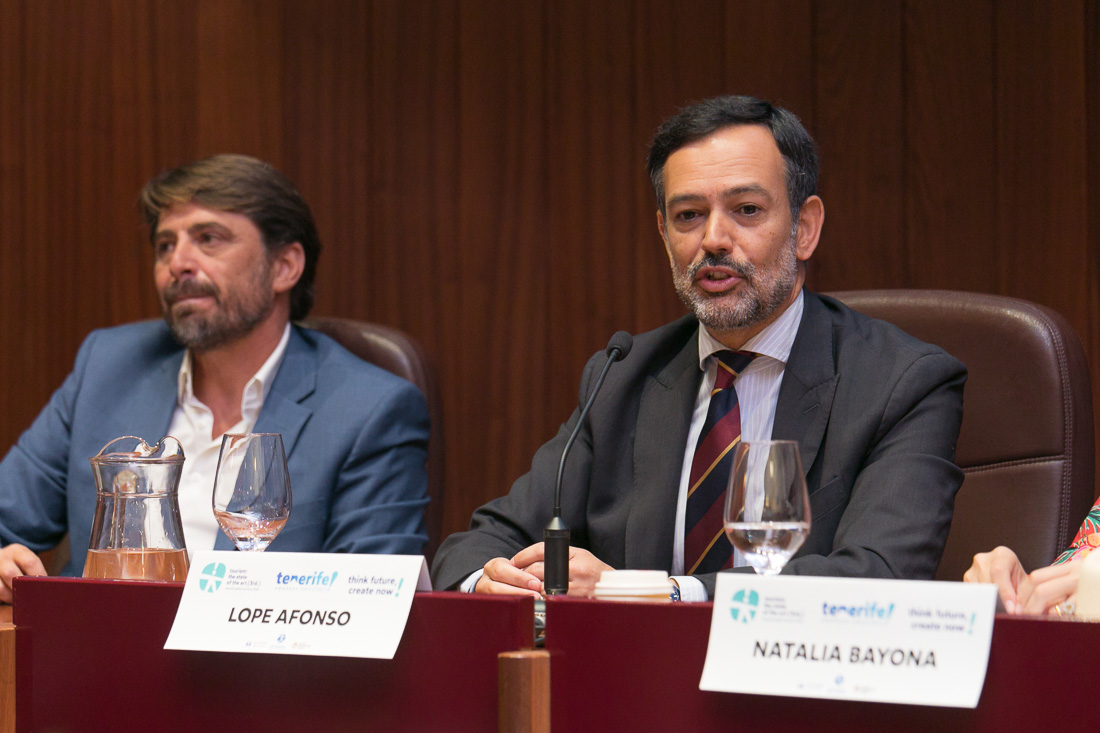
The president of ASHOTEL and the vice president of the Tenerife Island Council.
For her part, the councilor of the La Laguna City Council welcomed all attendees to the municipality and wished the sessions an organizational success, while the two representatives of the organizing committee, Eduardo Parra and Tom Baum, recalled the history of this scientific event that emerged in 1994 as a forum for reflection on the situation of the sector at a given time, which, on this occasion, focuses on issues such as governance, sustainable and inclusive growth, the labor market, the ecological transition, smart tourism, digitalization and, even, the development of La Palma after the volcano.
Natalia Bayona
During her opening remarks at the panel discussion, the Executive Director of UN Tourism explained that debates surrounding certain issues related to tourism development are not limited to Spain but are global in scope. She also addressed the negative impact of conflicts in Ukraine and the Middle East, which may seem distant, but “are not so far removed and affect trust and security, without which a stable sector is impossible.” She also expressed support for the implementation of tourist taxes.
Later, during his presentation, Bayona broke down data to characterize the sector globally. Europe was the most visited region in the world in 2023, with 551 million tourist arrivals, followed by Asia and the Pacific (181 million), the Americas (151 million), the Middle East (71 million), and Africa (51 million). As for Spain, it received 82.2 million visitors, 14 million of them in the Canary Islands, indicating a full recovery of tourism, as these figures are 21 million higher than before the pandemic.
The speaker emphasized the importance of investment, noting that Spain is a leading country in this regard, with €18 billion invested between 2018 and 2023, not only in Spain but worldwide. She explained that investment can be seen as a form of international cooperation and that many Spanish hotel companies are diversifying their offerings in emerging destinations like Albania and Tanzania, thus contributing to their development.
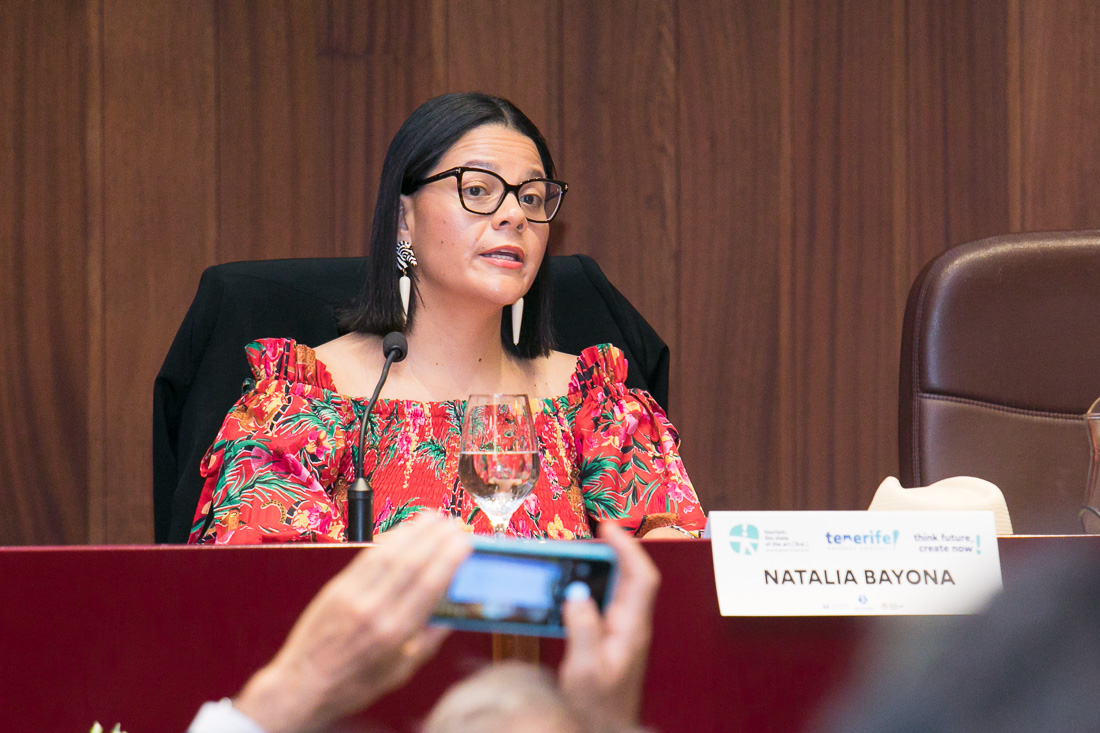
Natalia Bayona.
The challenges facing the sector are common worldwide, and he cited some of them as the saturation of certain destinations, the lack of involvement of local communities, and sustainability. Regarding short-term rentals, he noted that they have increased globally by 25.71%, and therefore, in his opinion, countries need to regulate them properly and also tax them. He gave the most radical example of New York, whose legislation has completely banned them, but in any case, it is a decision that each destination must make.
The Global Summit Tenerife 2024 is co-organized by the University of La Laguna, the Island Council through Turismo de Tenerife, the University of Strathclyde in Glasgow (Scotland), and with the support of the World Tourism Organization. More than twenty universities from around the world will participate, presenting research, papers, and other projects. The summit will bring together experts from various fields related to the tourism sector to discuss the current state of the industry and the challenges it faces.

 Spanish
 English
 French