
The economic management of healthcare systems is a challenge that contemporary institutions face by trying to balance, on the one hand, the sustainability of a system with finite resources and, on the other, guaranteeing equitable access to services for the entire population, regardless of their socioeconomic background. These are the premises from which the Health Economics Conference which were inaugurated today, Wednesday, June 26, and have been organized for the first time in their forty-three editions by the University of La Laguna.
The opening ceremony, held at the Faculty of Economics, Business and Tourism, was attended by the Rector of the University of La Laguna, Francisco García; the Minister of Health of the Government of the Canary Islands, Esther Monzón; the CEO of Education for Prevention of the Island Council of Tenerife, Juan Manuel Acosta; the President of the Health Economics Association, Anna García-Altés; the President of the Scientific Committee of the event, Professor Miguel Ángel Negrín of the University of Las Palmas de Gran Canaria; and the President of the Organizing Committee, Professor Ignacio Abásolo of the University of La Laguna.
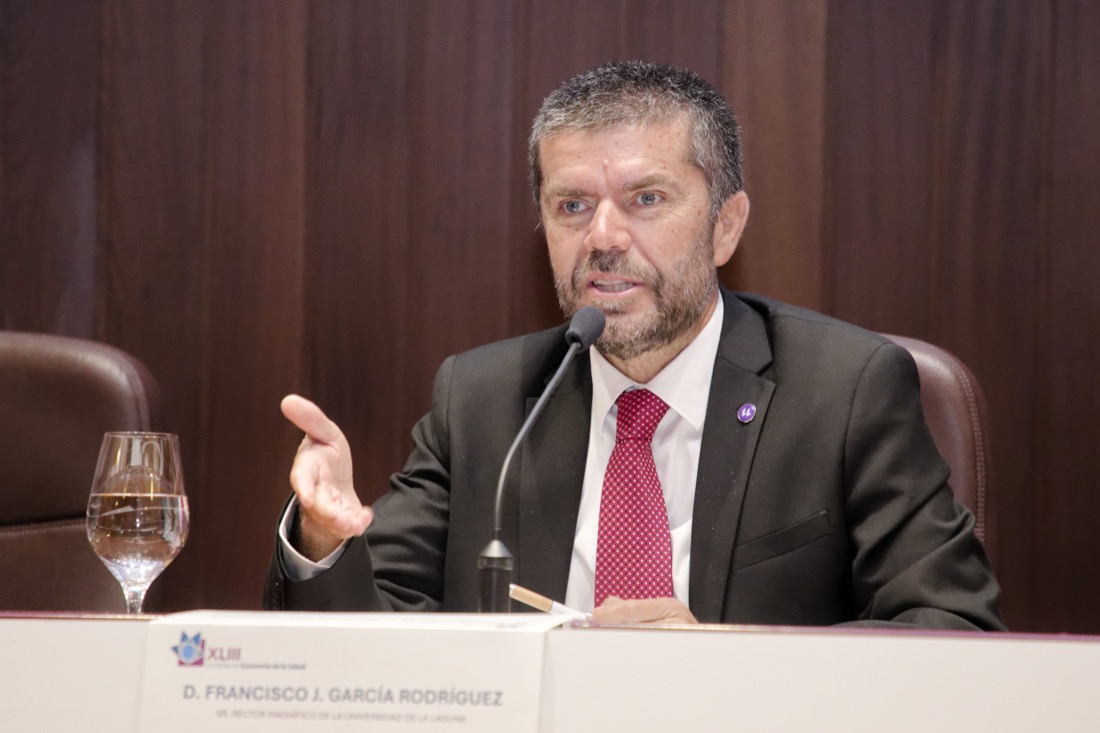
The rector of the ULL, Francisco García.
After welcoming the attendees to the conference, the rector emphasized the contribution to society that the institution makes by organizing and hosting these types of scientific meetings. To illustrate this, he referred to to the report Regarding the socio-economic impact of the institution, prepared by Professor Juan José Díaz, according to which, for every euro invested in it, the Tenerife center returns four to the regional GDP between direct and indirect effects, and that includes the return generated by meetings such as those inaugurated today.
Focusing on the healthcare sector, García noted that, as in education, it is essential to manage resources efficiently and carefully to ensure equitable access to services for the entire population. “There is also this dichotomy between public and private healthcare, which are compatible, but we need to bring the debate to the table, frame it, and define the rules of engagement.” He emphasized the importance of human resources and, in that regard, explained that the university and the health authorities are working together on a joint commission focused on the training of healthcare professionals.
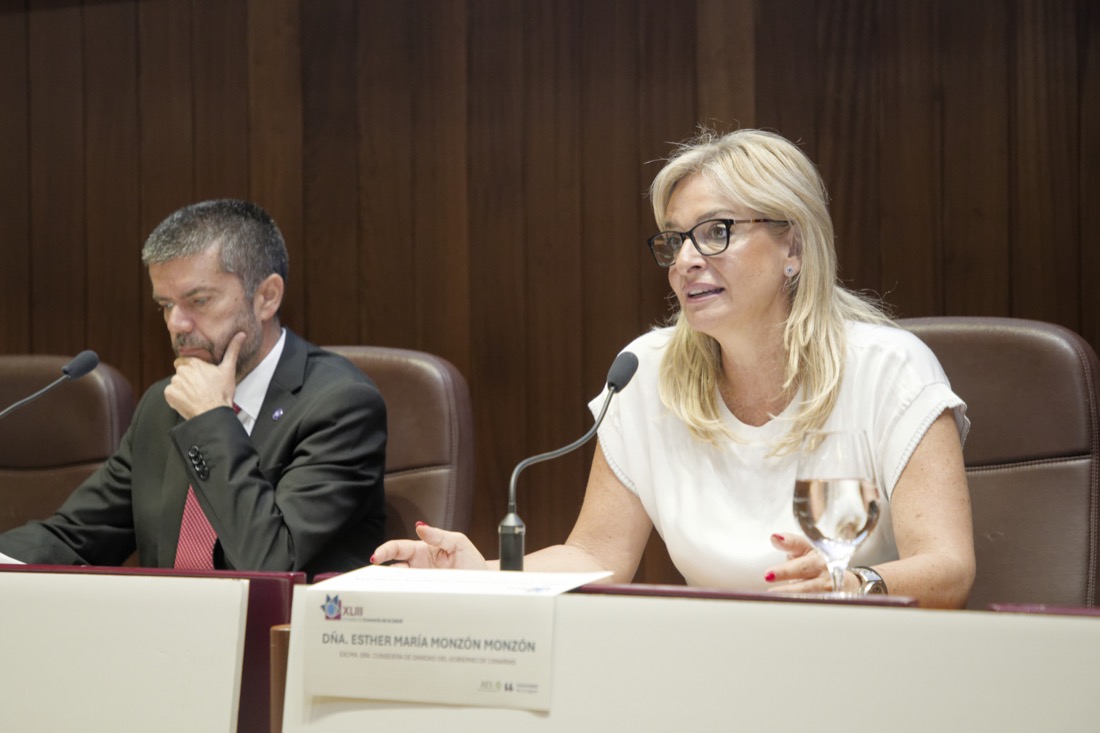
The Minister of Health of the Government of the Canary Islands, Esther Monzón.
The Minister of Health of the Canary Islands Government explained that the healthcare system faces challenges associated with the aging and increasing longevity of the population, such as the chronicity of illnesses and dependency. In this context, health economics is an essential tool for analyzing resource use with a view to equity and sustainability. Therefore, the following has been launched: Humanization Strategy, In collaboration with the Department of Social Welfare, the aim is to change the patient care model by promoting deinstitutionalization and home-based care. This requires professional training tailored to these goals and improvements in technology. “We must take on the challenge of finding innovative and cost-effective solutions so that people receive the care they need.”.
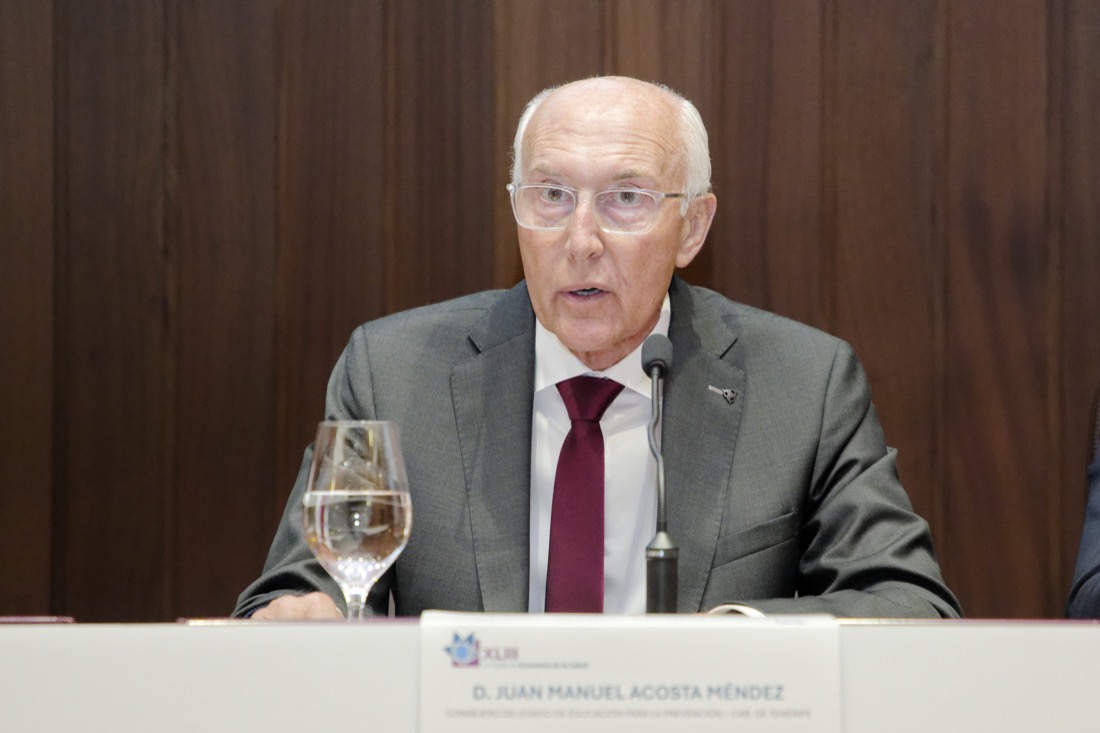
The CEO of Education for Prevention of the Cabildo, Juan Manuel Acosta.
The CEO of Education for Prevention at the Tenerife Island Council also emphasized the importance of health economics for the proper management of available resources, and highlighted the crucial role of public health policies during crises such as the Covid-19 pandemic. He explained that his department is innovative in its focus on prevention, which can be considered a healthcare cost-saving measure by promoting habits that reduce illness and, consequently, the cost of treatment. They also address issues such as mental health, addictions, and sexually transmitted infections, always maintaining this practical approach to health.
For their part, the interventions of the president of the Health Economics Association and the presidents of the scientific and organizing committees focused on aspects more related to the logistics of the meeting, the content of the program and the thanks to the sponsoring companies and institutions that have made the conference possible.
The first presentation of the conference was given by Cristina Herrero, president of the Independent Authority for Fiscal Responsibility (AIReFThe presentation focused on the relevance of evaluation in financial spending and public finances. Much of the talk centered on introducing this body, which has existed in Spain since 2013, promoted by the European Union in all member states as a consequence of the 2008 financial crisis, and whose objective is to ensure compliance with the established debt and deficit limits of all states sharing a common currency.
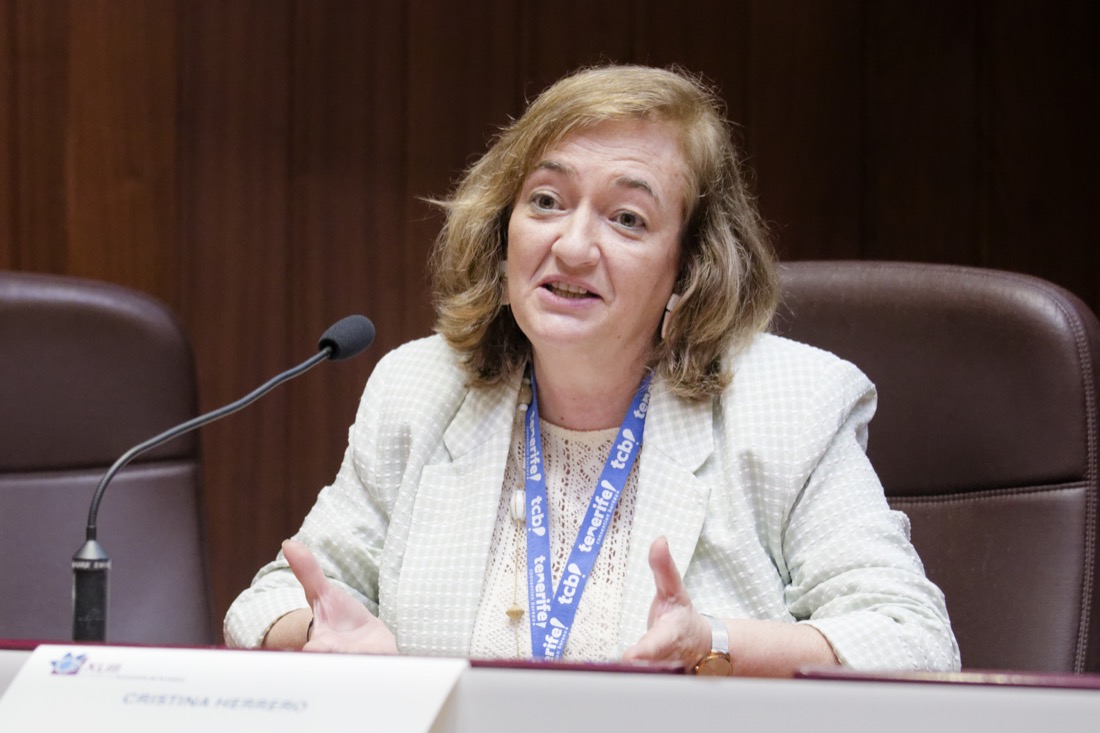
Cristina Herrero, president of AIReF.
To guarantee its independence, it is financed separately from the General State Budget through a levy paid by all Spanish public administrations, with the exception of very small municipalities. Furthermore, it is governed by an organic law, which grants it the power to act upon all administrations and thus dispels any doubts that sometimes arise regarding its legitimacy.
It is, therefore, an entity born with a vocation for fiscal supervision that oversees macroeconomic policies to ensure that there are no risks to public finances and that, obviously, has also carried out evaluations on issues related to the health field at the request of state and also regional bodies, in matters such as human resources, public procurement, hospital pharmacy and prescription drugs.

 Spanish
 English
 French