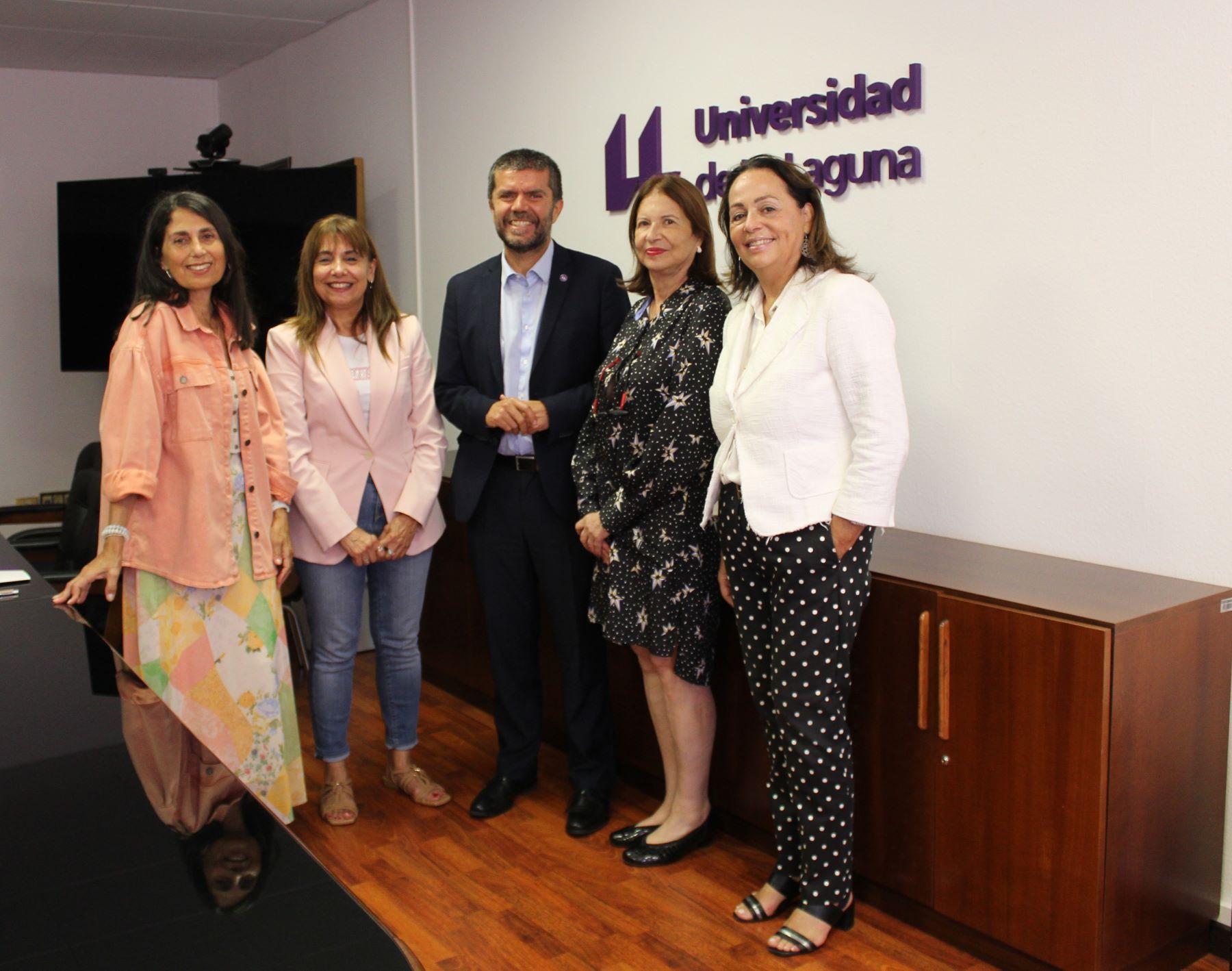
The rector of the University of La Laguna, Francisco García, and the dean of Official College of Architects of Tenerife, La Gomera and El Hierro, Nieves Febles, have signed an agreement today, June 28, by which the Library of the academic center will digitize and disseminate the 32 issues of the iconic magazine Base, published by the collegiate entity between 1982 and 2008 and consisting of 32 issues.
The magazine reflects the innovative activity of the Tenerife, La Gomera, and El Hierro branch of the Canary Islands Architects' Association (COAC) since the early 1970s, as demonstrated by its organization of the International Exhibition of Sculpture in the Street (1973-74). The publication was, in fact, a prominent voice in the social and cultural debates of those years, debates that remain highly relevant today, such as concerns about the environment and the islands' tourism model.
From its inception, this publication championed the need to promote the value of both historical and contemporary Canarian architecture, aimed to disseminate news from abroad, and, above all, affirmed the COAC's commitment to the island community. Thus, Base It combined the critical analysis of the unique circumstances of the territory, the recovery of architectural references from the past, and the recently built work.
In this context, the University of La Laguna is interested in continuing the digitization of its newspaper and periodical collections, given the importance of the project for the preservation, dissemination, and public access to these documents for research. This agreement will generate a digital resource from the scanning and bibliographic processing of the collection, making it openly accessible through the platform. Maresía: digitized press and documentary heritage of the academic center, while ensuring its preservation.
This publication contains theoretical analyses of urban planning, architecture, construction, and the relationship between urban and rural areas in the Canary Islands. It includes purely professional perspectives, as well as ethnographic, anthropological, and historical ones, and addresses current debates such as the problem of land and housing, the need for territorial planning, the landscape as a resource, and the phenomenon of tourism, without neglecting the need for environmental protection. For all these reasons, the rector himself considered it a publication that could serve as a subject of scientific study for future generations.

 Spanish
 English
 French