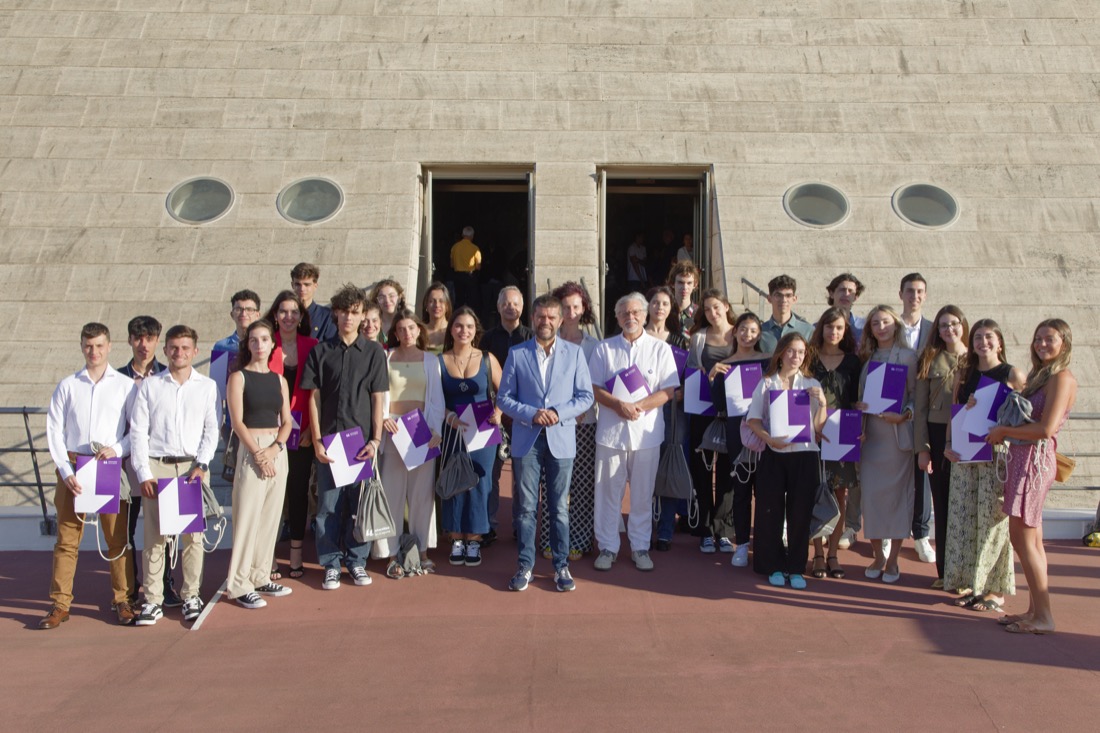
Every year, the University of La Laguna holds a ceremony honoring the 30 students with the best academic records for university entrance, as a way of recognizing the excellence and effort shown by a large group of young people in both the EBAU exams and their Baccalaureate studies.
The Journalism auditorium was the venue chosen by the Rectorate to hold the ceremony, recently celebrated, with the presence of the parents, teachers, friends and other relatives of those honored, and in which the rector, Francisco García, the vice-rector of Students, Rosario Hernández, and the person in charge of the access tests, Antonio Adelfo Núñez, intervened.
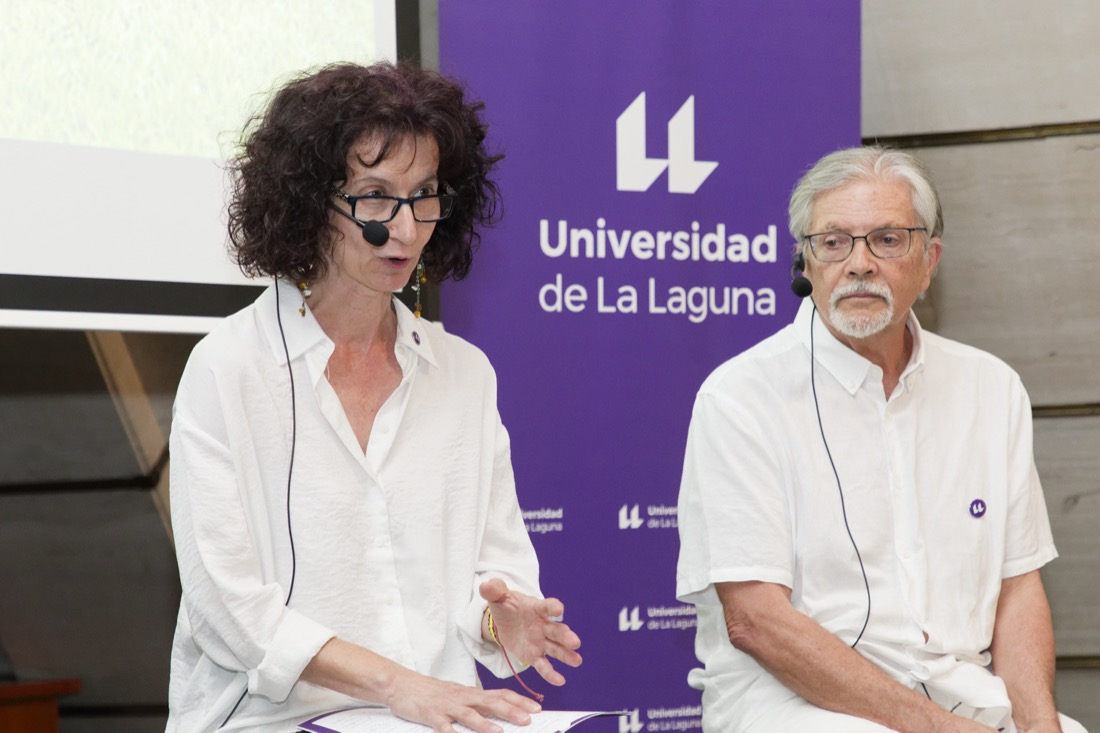
Rosario Hernández and Antonio Delgado.
The latter specifically highlighted the enormous logistical and coordination effort involved in setting up the examination boards, tests, marking, grading, and the entire administrative and academic framework that these exams entail. He also indicated, along with the other participants, that the excellent results obtained were not due to luck or a single good day, but rather to hard work throughout the year.
The Vice-Rector for Students also congratulated the students, highlighting their perseverance, resilience, and determination. “They have been taught to do things well, and they will apply that to all aspects of their lives,” she affirmed. She also emphasized the values of La Laguna as a public university, an institution that offers 46 undergraduate degrees, 36 master's degrees, 21 doctoral programs, and 17 university-specific qualifications. Rosario Hernández indicated that university represents a new stage in life, and therefore outlined the services the institution offers students to receive a well-rounded education, including cultural, sporting, and leisure activities. She reminded everyone that “the good stuff starts on September 16th,” the date marking the beginning of the academic year.
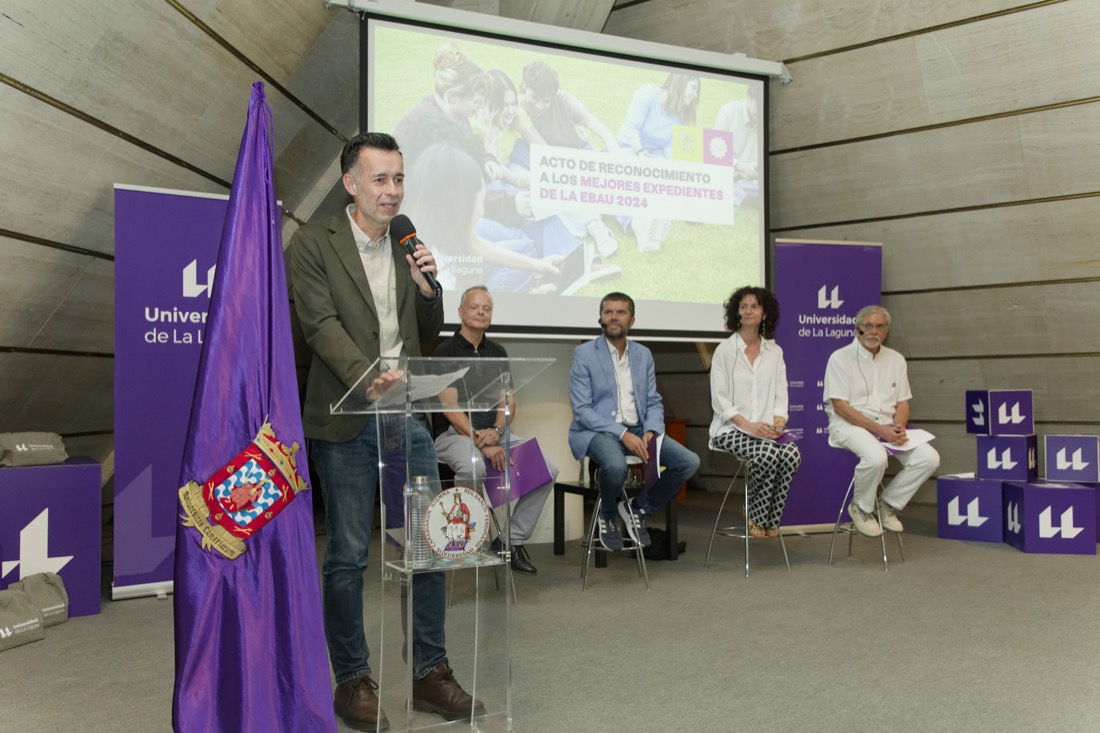
Albano Alonso.
Also participating was Albano Alonso, the principal of IES San Benito, representing the schools. He praised the collective success of these students, attributing it to their individual effort and the support they received from families, schools, and friends. He commended the perseverance, desire to learn, and determination of these young people, noting that these results give great meaning to the work of educators.
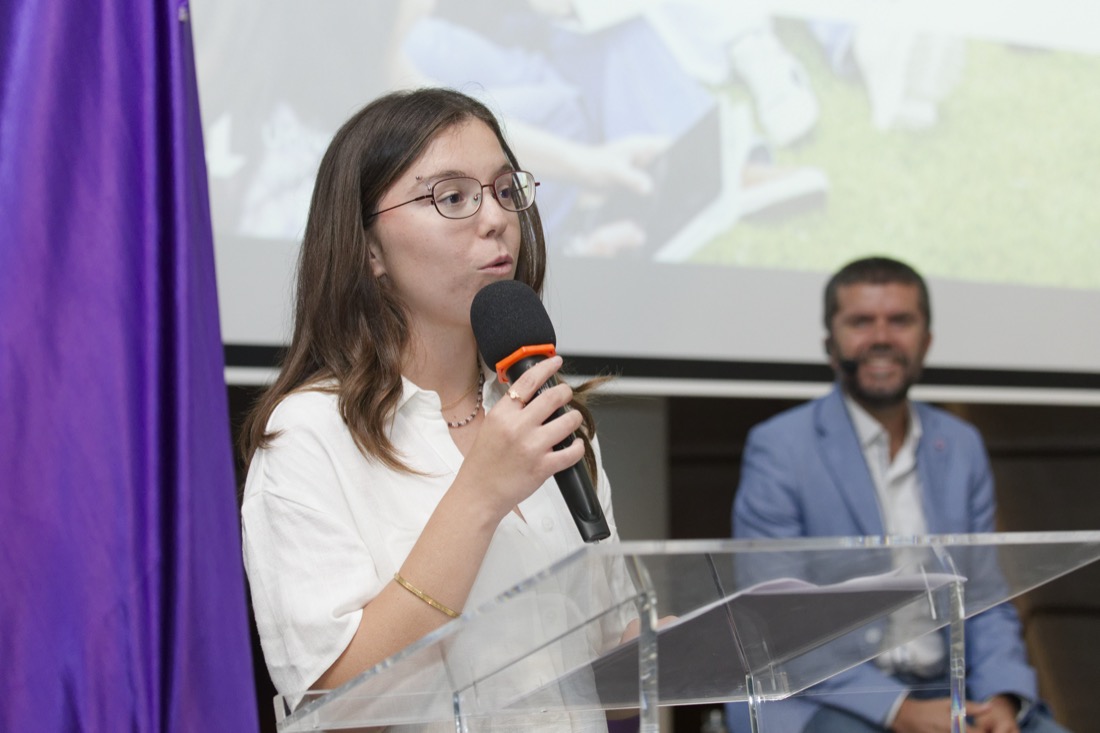
Anisia Giamei.
There was also time for the award-winning students to speak, specifically Anisia Giamei from IES Los Cristianos, who spoke on behalf of the group. She noted that, at least on an individual level, high school had been the most difficult time of her academic life. She expressed her deep gratitude for the work of the school's management teams and the teachers, and also spoke highly of the importance of having a vocation. "Because I had such good grades, I chose science, and I was good at it, but I discovered that I wasn't happy because what I was truly passionate about was history, specifically archaeology. Never stop doing what you love and trying new things," she told the other students.
For his part, the rector of the University of La Laguna congratulated them on the “magnificent decision” they had made: to embark on higher education. He indicated, paraphrasing Benedetti, that at university they would cultivate most of the nostalgia they would later relive, before going on to praise the objective virtues of the university system, such as the fact that it provides the best and most skilled jobs across all segments of the population.
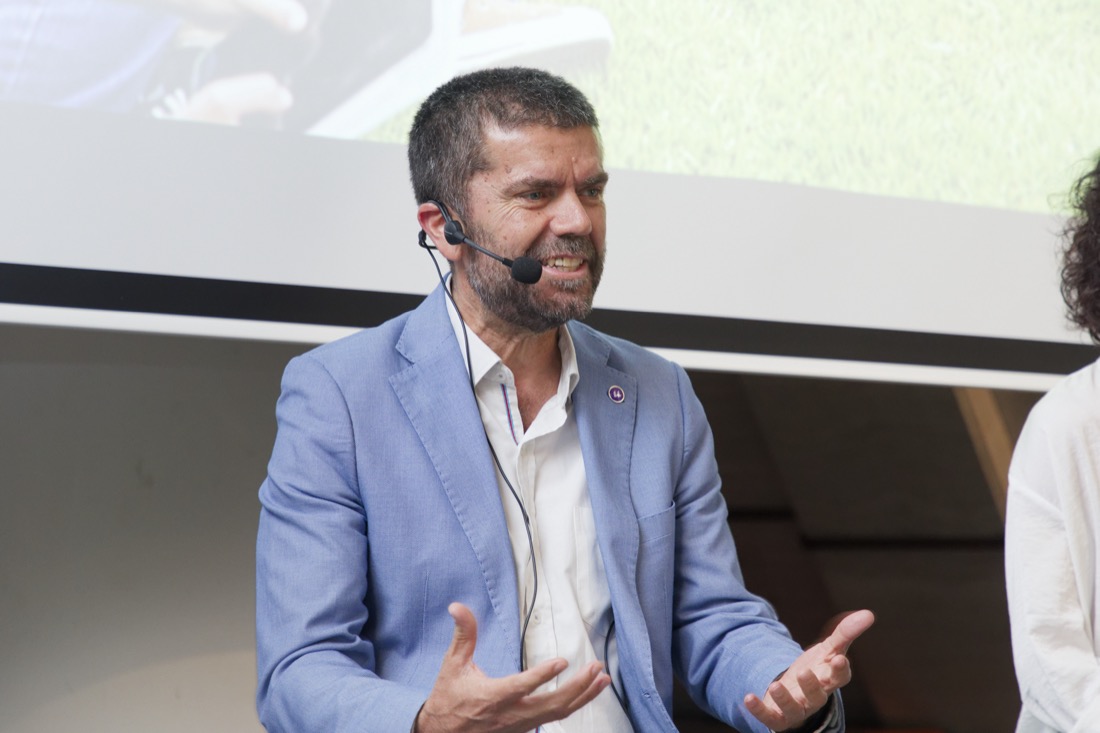
Francisco García.
“From a societal perspective, the fact that people like you are gaining access to university is undoubtedly good news,” the rector noted, pointing out that the university is both science and conscience, as Ferrater Mora said. “We live in a world of enormous scientific challenges, and knowledge and skill are needed to address them, but also profound moral debates for which the best preparation is essential,” he stated. Francisco García also maintained that public higher education is the best vehicle for social mobility; it is the system that generates the most equity, leading to healthier and more prosperous societies.
“We need greater levels of social debate to combat populism and simplistic thinking,” the rector stated, so that decisions are based on rigor and knowledge. He also pointed out that, contrary to popular belief, the Canary Islands lack university graduates, with an average of 201% of the population holding three degrees, compared to the national average of 331%. “More educated societies,” he concluded, “are fairer and more livable.”.

 Spanish
 English
 French