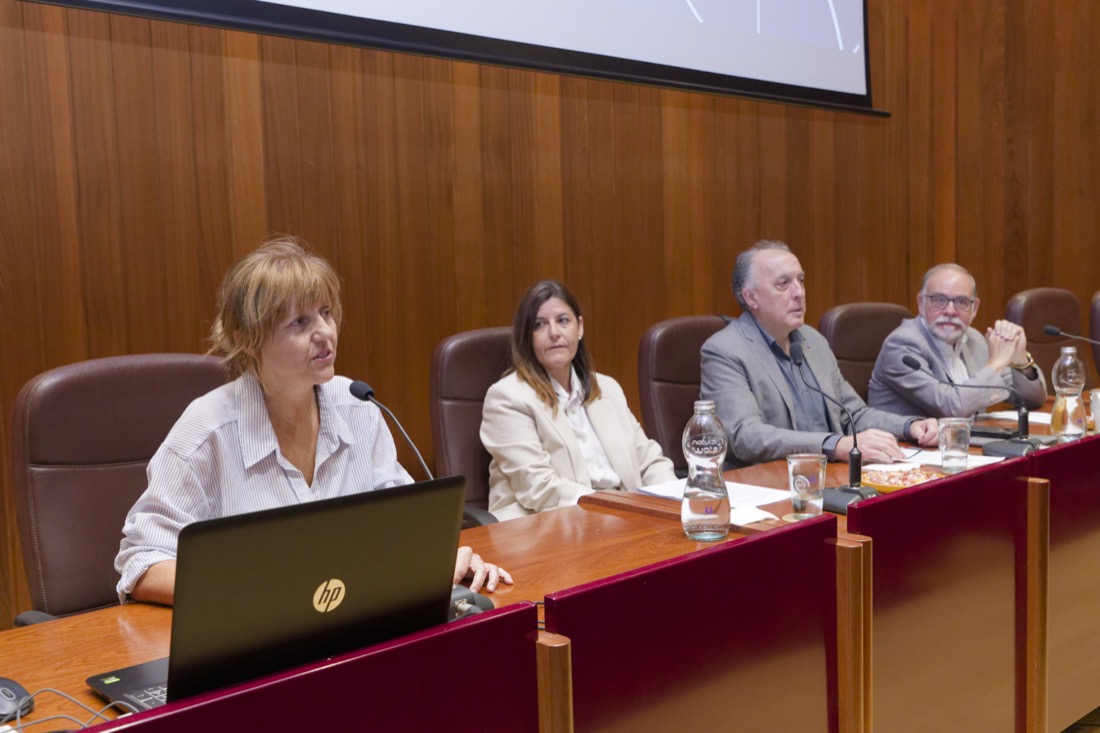
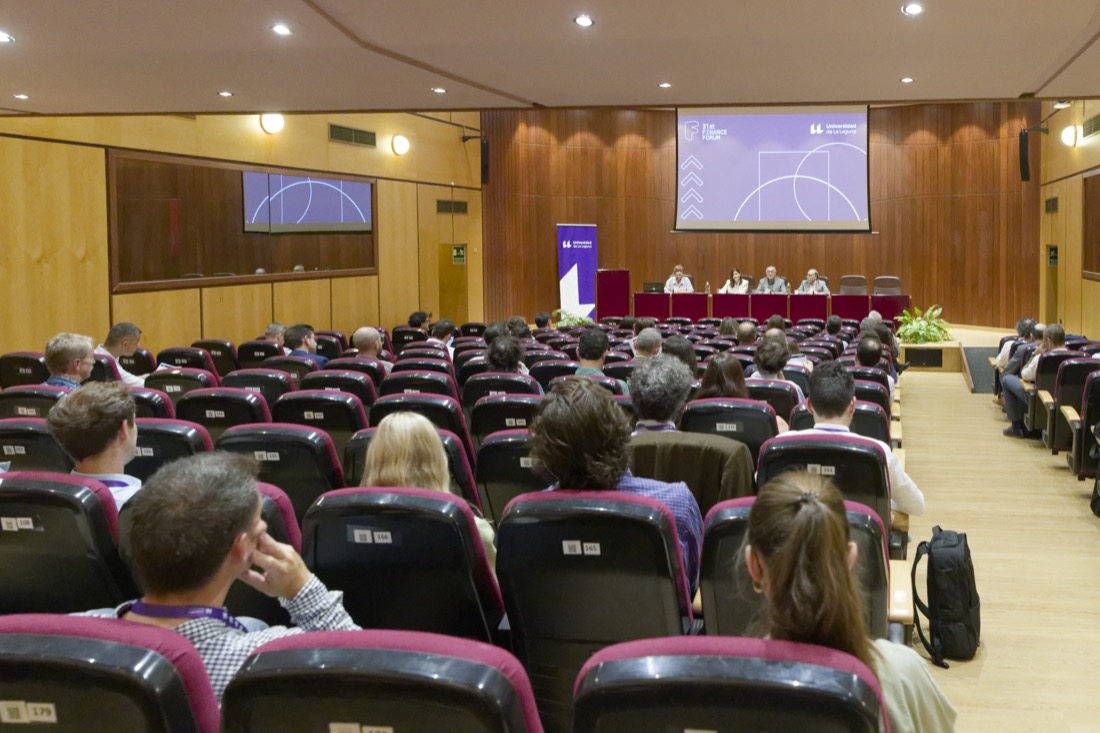
The Faculty of Economics, Business and Tourism of the University of La Laguna is the headquarters that the Spanish Finance Association The 31st edition of its annual conference, which opened today, Thursday, July 4, and will run until tomorrow, July 5, at the Tenerife center, will be held here. The 140 attendees will have the opportunity to learn firsthand about the latest advances in financial research through the 26 parallel thematic sessions scheduled over these two days.
The forum was inaugurated by the Vice-Rector for Research and Transfer of the University of La Laguna, Antonio Aparicio Juan, who welcomed attendees on behalf of the Rector; the Dean of the Faculty of Economics, Business and Tourism, José Adrián García Rojas, who wished the attendees a pleasant visit on a personal level and a productive one academically; and the president of the organizing committee for this event, Professor Inés Ruiz de la Rosa of the host faculty, who thanked all those involved in launching this meeting after a year of work undertaken with enthusiasm and responsibility.
Also speaking at the opening was the president of the Spanish Finance Association, Professor Belén Nieto Doménech of the University of Alicante, who highlighted one of the activities preceding the meeting, also held yesterday at the University of La Laguna: the Mentoring Day. During this event, 18 doctoral students, selected from 44 applicants, participated in a working session with mentors specializing in finance and established contacts for future projects. She described this meeting as a great opportunity for young researchers, who will also be able to participate in the other sessions of the forum.
 Competitiveness
The first plenary lecture was given by Arturo Bris, director of the IMD World Competitiveness Center, and revolved around the concept of competitiveness, understood as "the ability of a nation to generate prosperity for its population through an economic system that promotes productivity, equity and efficiency.".
During her presentation, she shared data from the IMD World Competitiveness Index, which is published annually and whose 2023 edition compared 64 economies. Generally speaking, the top five were Denmark, Ireland, Switzerland, Singapore, and the Netherlands, while Spain ranked 36th. This index measures four factors: economic performance, government efficiency, business efficiency, and infrastructure. Regarding Spain, she highlighted some challenges it must address to improve its competitiveness, such as boosting productivity, streamlining the public sector, increasing the size of companies, investing in talent and education, and achieving policy stability.
He noted that the prosperous countries of the future will be characterized by good governance, low debt, access to both public and private capital, a young population, and the promotion of prosperity, equity, and inclusion. To achieve this, he emphasized the need to create real social impact, generate higher-paying jobs, meet tax obligations, and develop talent.

 Spanish
 English
 French