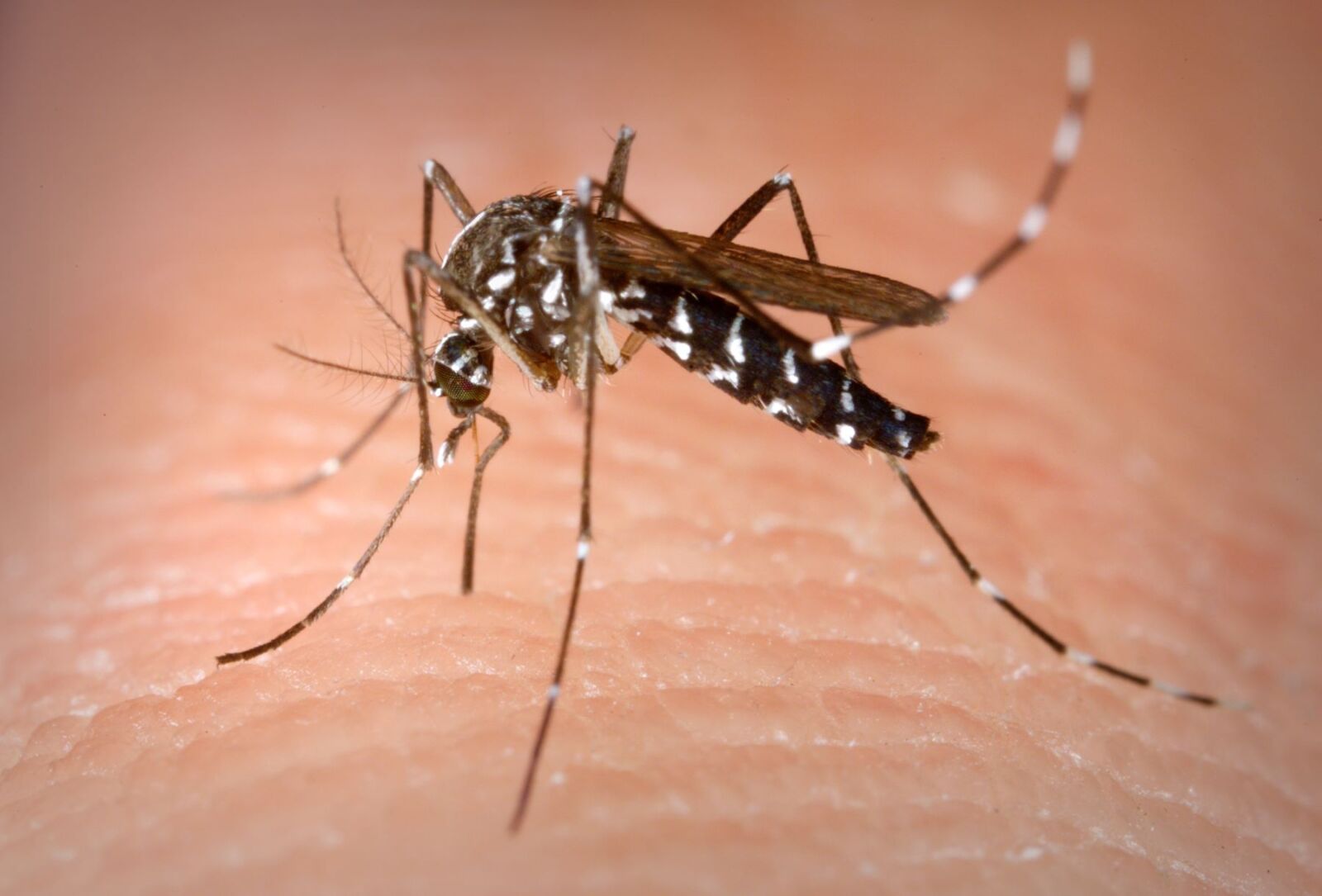
Aedes Albopictus mosquito. Source: Wikipedia.
The Canary Islands Government's Ministry of Health, through the General Directorate of Public Health, reports that the Canary Islands Entomological Surveillance System has detected the introduction of mosquito specimens. Aedes albopictus Tiger mosquitoes in various stages of growth were found in two containers from Castellón at the Port of Santa Cruz de Tenerife. Both the General Directorate of Public Health and the University Institute of Tropical Diseases and Public Health of the Canary Islands at the University of La Laguna, which collaborates in surveillance efforts, have had traps installed at the Port Inspection Center (CIP) and surrounding businesses since 2013.
On July 4, 2024, staff from the Medical Entomology Laboratory of the university institute received a direct call from the CIP management informing them that an inspection by the Plant Health technical staff detected the presence of mosquitoes flying in two containers with large olive trees being transported by a cargo ship from Castellón, as well as the presence of water pooling inside the hollows of the trunks of the aforementioned trees.
The institute's staff deployed to the CIP confirmed the presence in the cavities of a high density of immature stages of mosquitoes (larvae and pupae) in different stages of development, which were identified in the Medical Entomology Laboratory as Aedes albopictus. As a preventative measure, chemical control (fumigation) of the containers and their contents was ordered.
Activation of the protocol
Following the detection, the vector surveillance system protocol has been activated, which includes the installation of traps to capture specimens in the Port of Santa Cruz de Tenerife and surrounding areas, among other actions. Furthermore, the General Directorate of Public Health has informed the port authorities and the Santa Cruz de Tenerife City Council of these findings, in order to implement the actions outlined in the protocol.
The Surveillance and Public Health System team, coordinated by the General Directorate of Public Health in collaboration with the University Institute of Tropical Diseases and Public Health of the Canary Islands at the University of La Laguna, is already planning its first preventative action, increasing the number of traps placed at different locations beyond those established in the standard protocol. The traps are being installed in high-risk areas, such as locations where the mosquitoes have been detected and nearby zones.
The presence of the mosquito does not imply the transmission of diseases such as dengue, Zika, yellow fever, or chikungunya, as these are not present in the Canary Islands, except for sporadic imported cases. It is also reminded that, as part of the protocol, if the public detects the presence of these mosquitoes or their bites, they can report it to the following email address: vectores.scs@gobiernodecanarias.org.

 Spanish
 English
 French