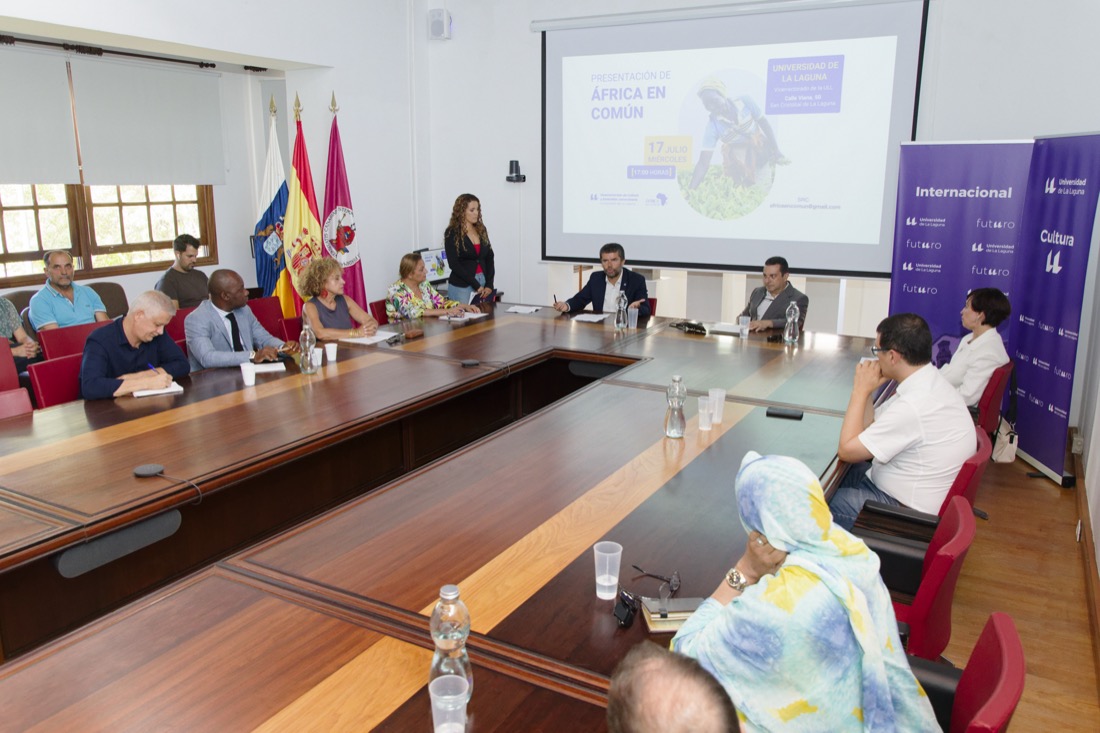
Africa in Common is a new association focused on promoting development cooperation projects in Africa based on the Economy for the Common Good (ECG). Although registered since October 2023, it was recently launched at the University of La Laguna after several months of preparation.
The presentation was presided over by the rector of the academic institution, Francisco García, and the president of África en Común, the social innovation consultant José Carlos Hernández, and was also attended by several representatives of academic, political and social entities related to Africa and cooperation activities, who during the event made a first contact and brainstormed on how to get involved and collaborate with this new solidarity project.
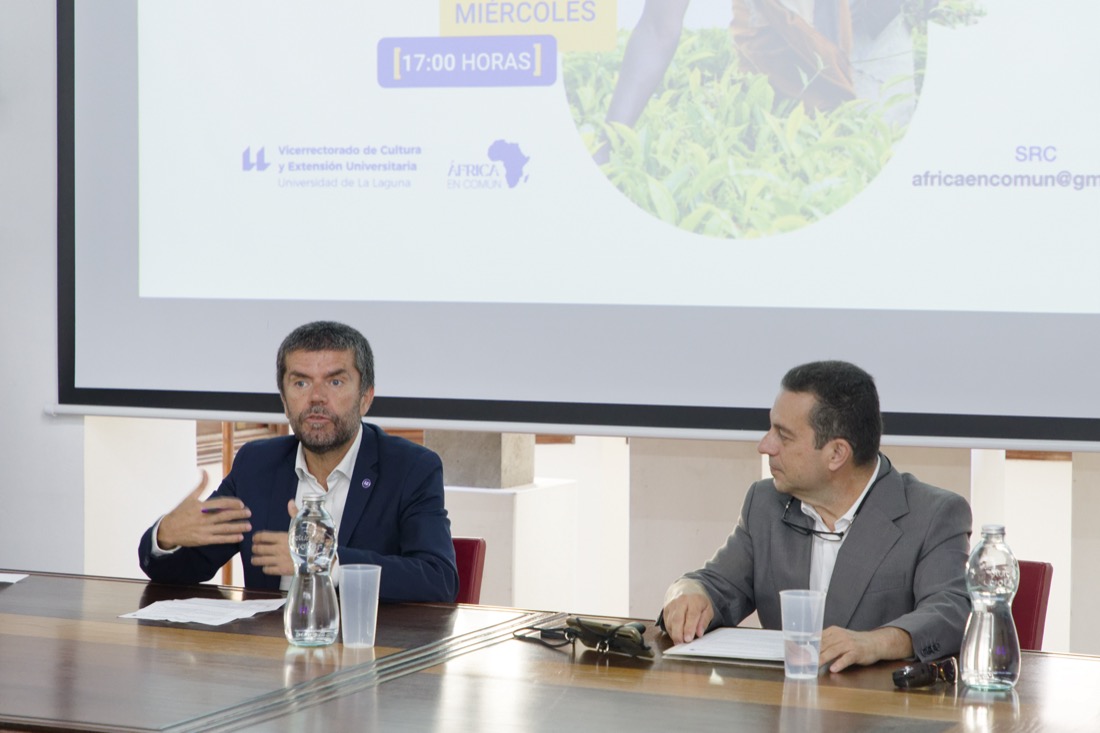
The rector, Francisco García, and the president of África en Común, José Carlos Hernández.
Among the other participants were the Vice-Rector for Internationalization and Cooperation of the University of La Laguna, Inmaculada González; the Director General of Foreign Relations of the Government of the Canary Islands, Miossoty de la Caridad Paradelo; the Deputy of the Assembly of Guinea Conakry, Zoupé Zogbelemou; Mario Regidor, from the Canary Association for the Promotion of the Economy for the Common Good; and the Vice-President of Africa in Common, Sergio Pérez Cruz.
During his welcoming address, the rector praised the association's focus on the economy of the common good because, in his opinion, "the way of doing economics based on individualism and competition increasingly generates contradictions and injustices worldwide," which is why this other approach, which takes values into account, is positive.
He also wanted to properly contextualize Africa, a territory so vast that, comparatively, Europe, the United States, China, and India could fit within its area, with many countries suffering from what economists call the "resource curse," referring to the situations of foreign exploitation that often affect many states characterized by their wealth in raw materials. Given that, according to available demographic projections, by 2050 one in four people on the planet will live on the African continent, the importance of this region and the relevance of collaborating with it through development cooperation are evident.
José Carlos Hernández expressed his gratitude to the University of La Laguna for hosting the presentation of the association he leads and predicted a smooth collaboration between the two entities. To provide context for the association's activities, he showed a video summarizing the principles of the EBC, which advocates for an alternative economic system founded on principles such as human dignity, solidarity, cooperation, and ecological responsibility, among others.
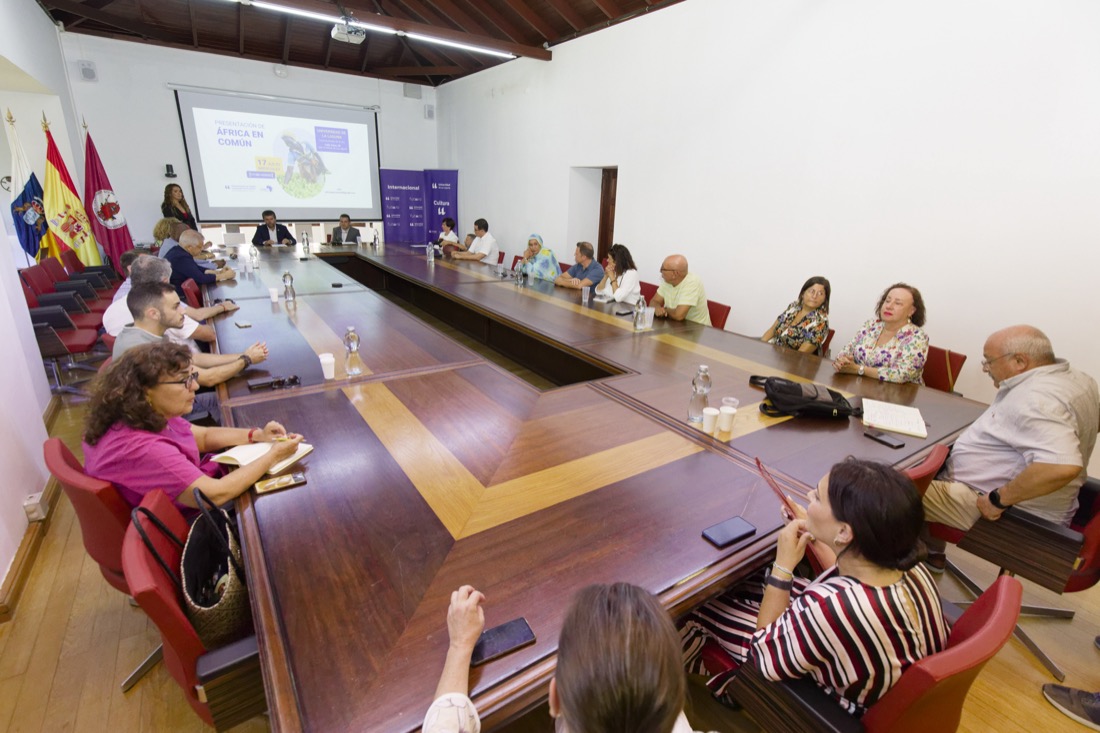
The event was attended by numerous representatives from different entities.
He also presented the principles that will govern Africa in Common, which, in addition to those of the EBC (Economic Community of the Basque Country), also consider local impact, community development, and the ethical allocation of land in accordance with the association's social objectives. The association already has two projects underway that are in their preliminary stages of seeking partners and funding.
The first of these projects seeks to implement the municipal climate and energy pacts in all 79 municipalities of Guinea. It will begin with a pilot program in the municipality of Nzérekoré and, from there, will be extended throughout the country's forest region. Regarding this initiative, the Vice-Rector for Internationalization at the University of La Laguna commented that the institution is collaborating with the consortium. Leader Africa, whose objectives align perfectly with this initiative. The second project is an intervention model to create agricultural training schools that will begin in a region of Gambia and will focus on alfalfa production, a model that, if successful, could be transferred to other countries in the area such as Senegal or Guinea.

 Spanish
 English
 French