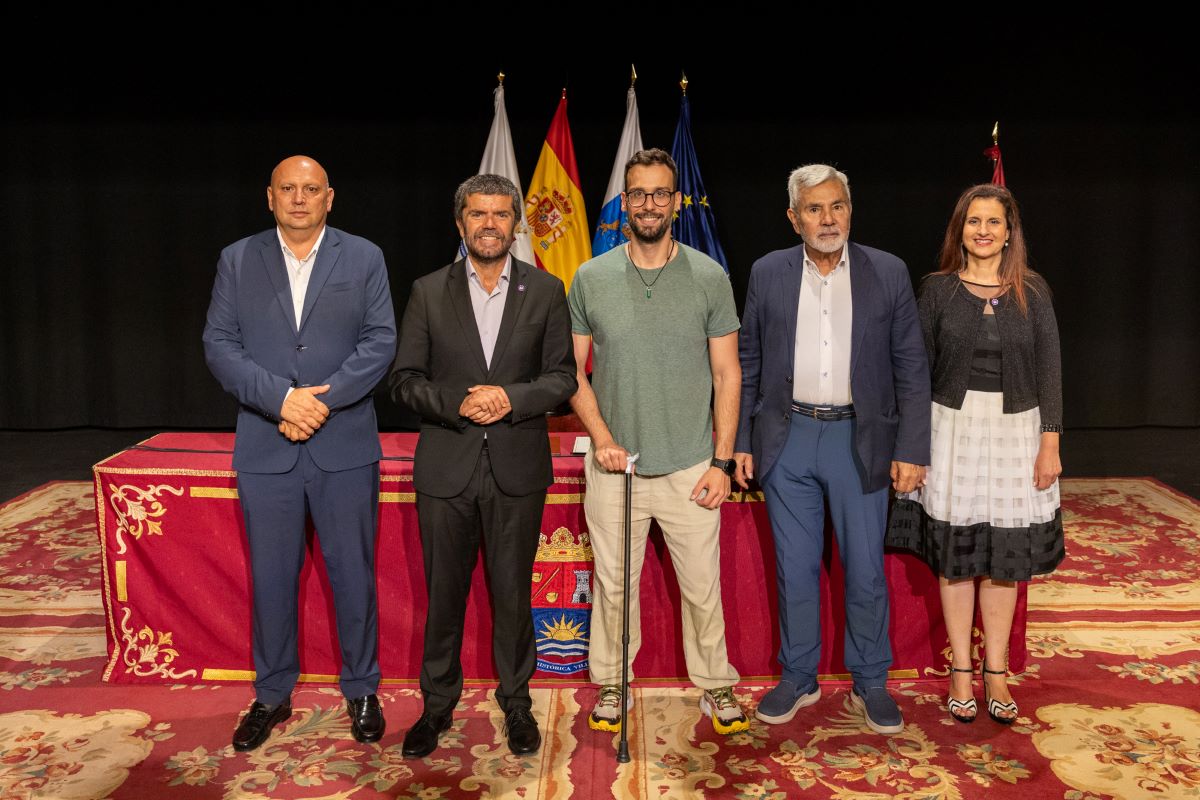
Primary care physician, Paralympic swimmer, and founder of the NGO "Athletes Without Borders," Faustino Afonso, was the opening speaker today, Friday, July 19, at the 31st edition of the Adeje Summer University, which will be held from July 22 to 26. In his presentation, he pointed out that in a world that only wants to see the positive and tries to hide the negative, having obstacles in life like those he himself has faced should be seen as an incentive to achieve self-improvement and a more fulfilling life—a message that aligns with the theme of these summer courses in 2024: the culture of effort and inclusion.
At the opening ceremony, the Rector of the University of La Laguna, Francisco García, recalled that he himself attended the first edition of the Adeje Summer University in 1992 as a final-year Economics student, and thirty-one years later he was returning as Rector. He thus referred to the enduring relevance of this educational and cultural program, the longest-running of its kind in the Canary Islands, which he attributed to its adaptability. The program has evolved to meet the needs of its audience without losing its core purpose: providing rigorous academic training on socially relevant topics in an accessible and engaging style.
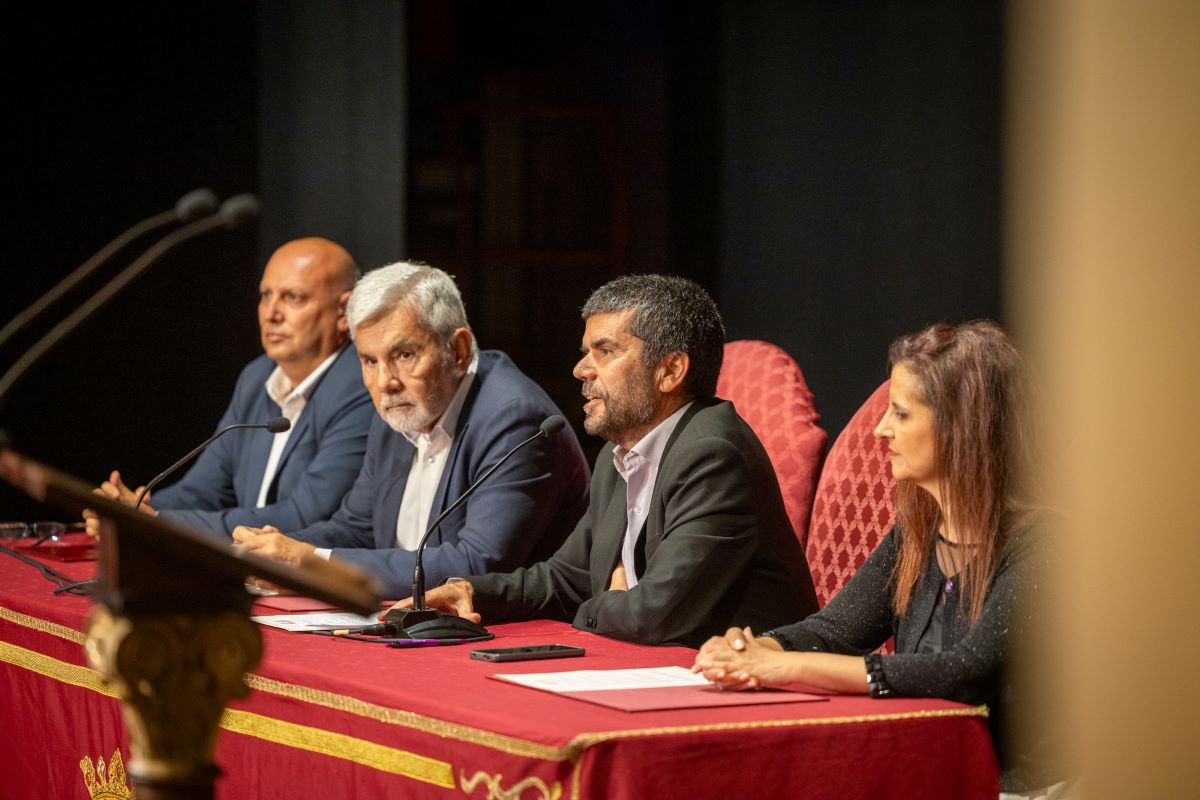
Inaugural session.
García briefly reviewed the diverse topics covered in this edition, including courses and workshops on nutrition, mental health, sustainability, tourism, literature, and communication, among others. She emphasized that this initiative is a prime example of collaboration not only between institutions but also between the public and private sectors, thanks to the support of numerous companies. And, noting that yesterday, July 18th, was Mandela Day, she concluded her remarks with a quote from the former South African president: “Education is the most powerful lever which you can use to change the world.”
Continuing in this vein of expressing gratitude for the support that makes these summer courses possible, the Mayor of Adeje, José Miguel Rodríguez Fraga, highlighted the support provided, for the first time, by the Tenerife Island Council. He thanked the Island Councillor for Employment, Education, and Youth, Efraín Medina, who was present at the event. The mayor described the Summer University as a "bridge" offering between two key aspects that have shaped the municipality: tourism development, which has become the main source of wealth for the region and whose potential should be discussed; and the need to incorporate knowledge and talent into the value chain of this resource.
Recalling this year's theme, the mayor cited the Adeje Summer University itself as an example of resilience and hard work. Over thirty years, it has overcome initial skepticism, becoming the well-established program it is today. He also noted that the creation of these summer courses significantly increased university enrollment among young people from Adeje, at a time when the abundance of jobs in the tourism sector made university education less appealing. "It's important that we continue along this path," he said, "because we have prospects for growth.".
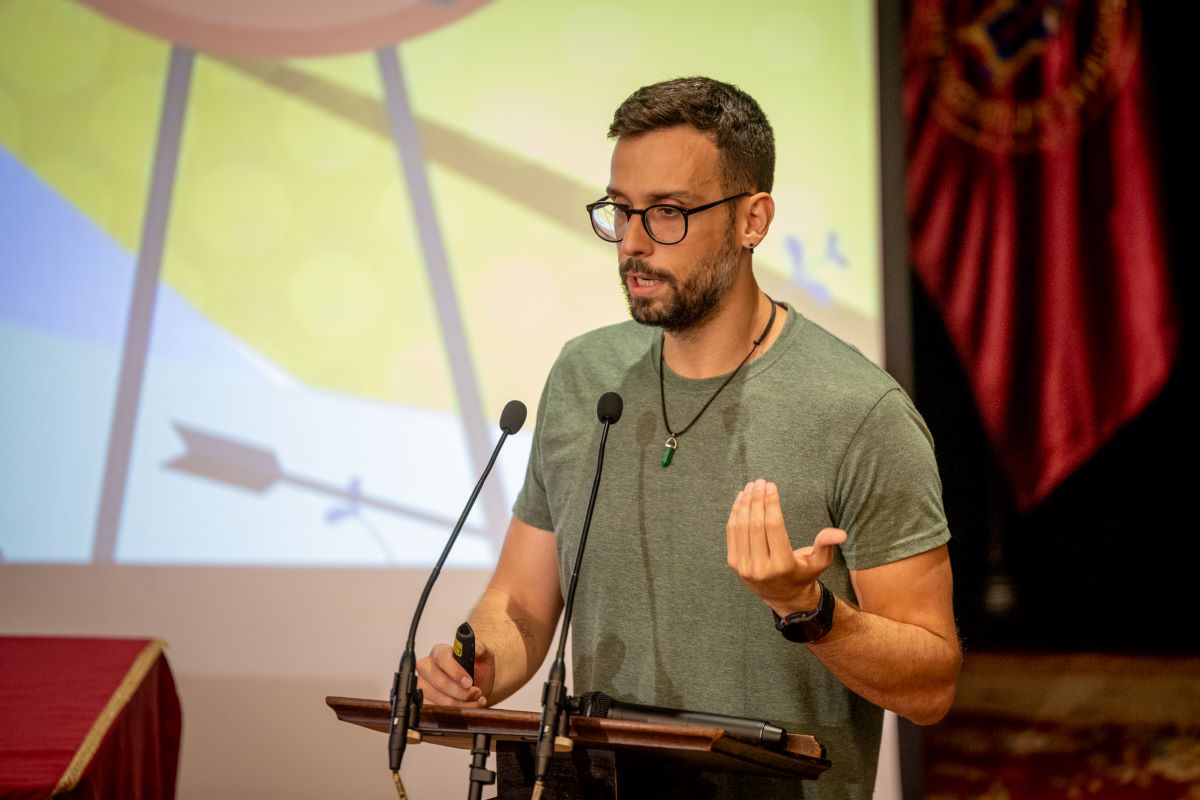
Faustino Afonso.
Culture of self-improvement
Faustino Afonso began his presentation by stating that contemporary society has little tolerance for failure. The suicide rate in developed countries has increased, and in general, there is little tolerance for adversity such as a breakup, job loss, an accident, or the death of a loved one. In his opinion, the cause could lie in the culture of immediacy fostered by social media: “We only see the result, but not the process that led to it. Clearly, that needs to change. We find it difficult to speak out when we see something negative because we want everything to be perfect, beautiful, and ideal.”.
As someone with a disability since childhood, he has faced negative prognoses throughout his life, and this has motivated him to work towards overcoming them. Therefore, he wondered if it shouldn't be precisely those with disabilities who are worthy of admiration.
Expanding on this argument, he reflected that pity and admiration are antagonistic terms, but they share a common trait: both generate solidarity. Thus, we tend to help the person we pity and also want to help those we admire so they can continue to succeed, something we see in our attitudes toward athletes. However, the public wants to emulate those they admire, but not those they pity. “We help people with disabilities, but we don’t want to be like them. What if the key in this world that can’t tolerate frustration is that we should want to be like them?”.
At that point, he introduced several members of Athletes Without Borders, people who have had to overcome great difficulties stemming from their disabilities, ultimately achieving their goals through much effort. “Should we feel pity or admiration for these people?” Afonso asked. “Really, this is about saving you,” he addressed the audience, “because they are already saved. They are people who have overcome their disabilities and are proof that all of you can live a full life. Because a full life is one that presents us with obstacles, and we can overcome them.”.
Therefore, in order for the world to change, the speaker advocated for holding up people with disabilities as examples in a world that has lost its willpower, because this is a group that has been forced to live with something that the rest of the world rejects: obstacles. “Thanks to them, we are competent people and we tolerate difficulties.” Thus, in closing, he quoted the Stoic philosopher Epictetus: “A limp is an impediment to the leg, not to the will.” To which Afonso added, “And it is an impetus for life.”.

 Spanish
 English
 French