The King is dead! This is the expression every chess player longs to utter at the start of a game. But let's not look for murderous intentions in these athletes. Checkmate is surely more familiar to them. This announcement of victory comes to us from Persian. shāh māt which has several interpretations. Some authors argue that it refers to a "defenseless or astonished king," while others, the more bellicose, speak of royal assassination. Be that as it may, this is the term that ends a game whose origins are buried in the history of humankind.
Experts say that chess is the product of the evolution of other, even older games. Most agree in identifying the Chaturanga as the embryo of what much later would be known as Chess. This ancient game comes from Persia and originated with a board for four players. In the 6th century, the expansion of Arab territories led to its adoption by the Muslim world. Under this influence, it continued to evolve until its arrival in Europe around the 9th century, where it was very well received. Although not drastically different, the chess we play today dates back to the time of Columbus's arrival in America.
We all know chess. A board of two-colored squares, sixteen pieces for each player, divided into white or black. Six different types of pieces: eight pawns, two rooks, two knights, two bishops, one queen, and one king. But what truly sets this game apart is that each group of pieces has its own unique way of moving on the board.
Around this world, a universe has been created with its tournaments, publications, schools, and even celebrities. Not all games have names that are idols in the collective imagination like Bobby Fischer, Garry Kasparov, or Anatoly Karpov. Names that marked an era and turned these players into true rock stars of the 80s and 90s. Unforgettable are the stories about their rivalries or the famous duel between "man and machine." Who doesn't remember Kasparov facing off against... Deep Blue From IBM? It's so important that it has its own day. Every July 20th, World Chess Day is celebrated, proclaimed on December 12, 2019, by the United Nations General Assembly to commemorate the date of the founding of the International Chess Federation (FIDE) in Paris in 1924.
Chess as an educational tool

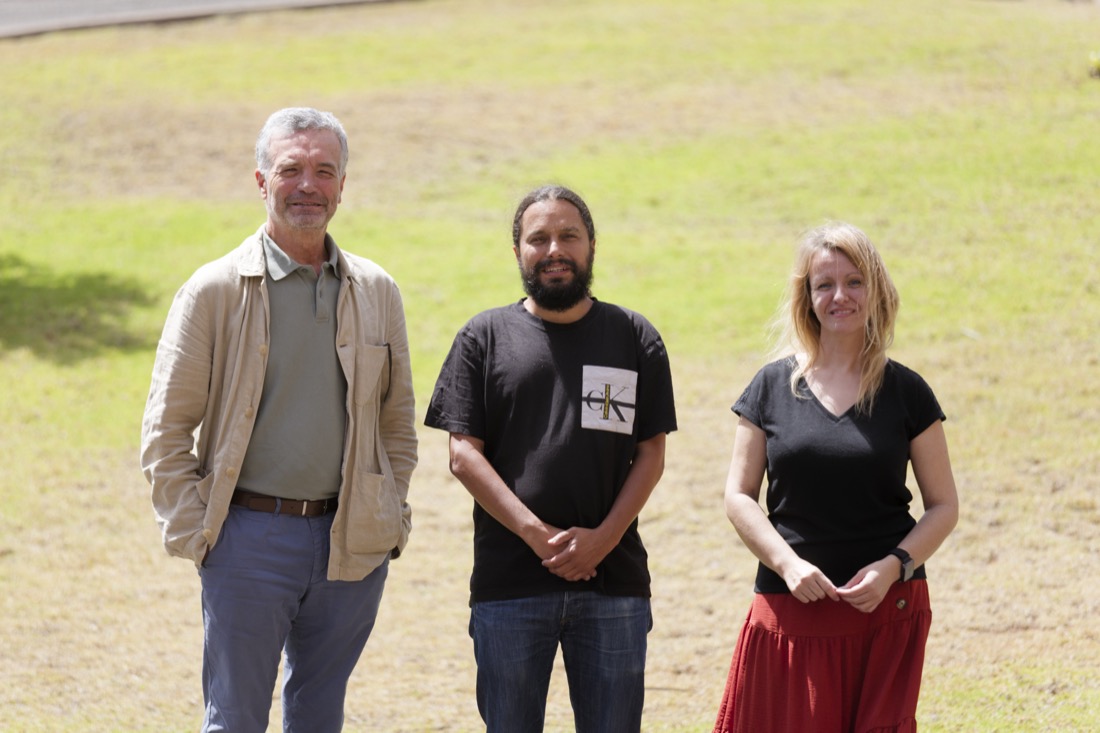
Ramón Aciego, tenured professor in the Department of Developmental and Educational Psychology at ULL.
Chess has long been a part of the classroom, from school clubs to teaching methodologies adapted for the classroom. Its proponents attribute to chess a multitude of skills that are useful in student learning. Researchers at the University of La Laguna wanted to find out. Does playing chess give its players cognitive advantages? That was the challenge that doctoral candidate in Psychology Lorena García posed to her professor in 2015: to discover how playing chess helps students—if at all—and to compare it with other sports such as soccer and basketball. Ramón Aciego, tenured professor in the department of Developmental and Educational Psychology from the University of La Laguna, accepted the challenge and invited Moses Betancort, tenured professor in the department of Clinical Psychology, Psychobiology and Methodology, an expert in experimental design. The three of them set to work to shed scientific light on a dilemma that many defended in unequal ways.
Does playing chess improve students' cognitive skills? How? In what context? More or less than other sports activities? Many questions, and a school year ahead to find out. Eight schools in Tenerife—five primary and three secondary—that offered chess as an extracurricular activity were selected. The students were divided into three groups: the first was led by teachers with training and experience in educational psychology, where chess was used as a springboard to develop teaching skills and improve values. “They used a methodology based on meaningful learning, the active participation of all students, and the development of cognitive and emotional skills.” The second group was led by active chess players and focused on teaching and training chess, as the experts say, “based on the board.” A control group was also established with students who played sports such as soccer and basketball.
Aciego explains that all participating students were given a battery of questions assessing cognitive performance and others about their adjustment to themselves and their environment. “This included both self-perception and their teachers' opinions.” The result was surprising. All the students improved, which is to be expected over the course of a school year, “but when we compared the results of the chess group with those who practiced other sports, we saw that the former were far superior, both in cognitive aspects and in terms of adaptation.”.

Vanesa Muñoz, tenured professor in the Department of Computer and Systems Engineering at ULL.
The results of this study revealed another interesting aspect. “The group where chess was used as a teaching resource – group one – showed better results than the group focused solely on the game itself, on the board – group two. In this sense, the students who used chess in a more integrated way, with more playful and cross-curricular activities, obtained better results in cognitive and emotional skills. “Chess is a good educational tool, especially when it goes beyond mere strategy training and is given a didactic purpose.” The results indicated another unexpected finding. The students in the first group were better at playing chess than those who had only worked on board-based techniques. Moisés Betancort explains it as follows:“Comprehensive and cross-curricular chess is incorporated into school life as an activityThis approach can be integrated into the student curriculum. That is, through various activities that allow students, from the early stages of primary school, even preschool, to develop a series of basic cognitive skills such as visuospatial memory, working memory, decision-making, divergent thinking, and so on. Furthermore, all of this takes place in a peer context, fostering collaborative work that involves empathy and, therefore, socio-emotional development. Chess in the classroom involves learning to win but also to lose; ultimately, it teaches frustration tolerance, perseverance, and tenacity—two variables that correlate with academic success. In short, the use of a predominantly intellectual game like chess activates and trains executive functions at a cognitive level, but undoubtedly also enhances children's socio-emotional and affective functions.
And why chess and not other board games? Aciego explains that chess has a much greater cognitive demand than other board games like Parcheesi or checkers. Above all, this ancient game is fundamental for stimulating what psychologists call cognitive reserve, which is simply our brain's capacity to assimilate changes. The better shape and more exercised it is, the better we will cope with aging, for example. "We can't keep our brains locked away in a box our whole lives to prevent them from deteriorating; on the contrary, the more we use them, the better." And chess has proven to be an ideal exercise tool.
Engineering at the service of chess for the blind
Chess has a long tradition among blind people. Its ease of play and widespread social appeal make it a favorite sport among people with visual impairments. So much so that it is one of the nine disciplines protected by the Spanish Federation of Sports for the Blind.
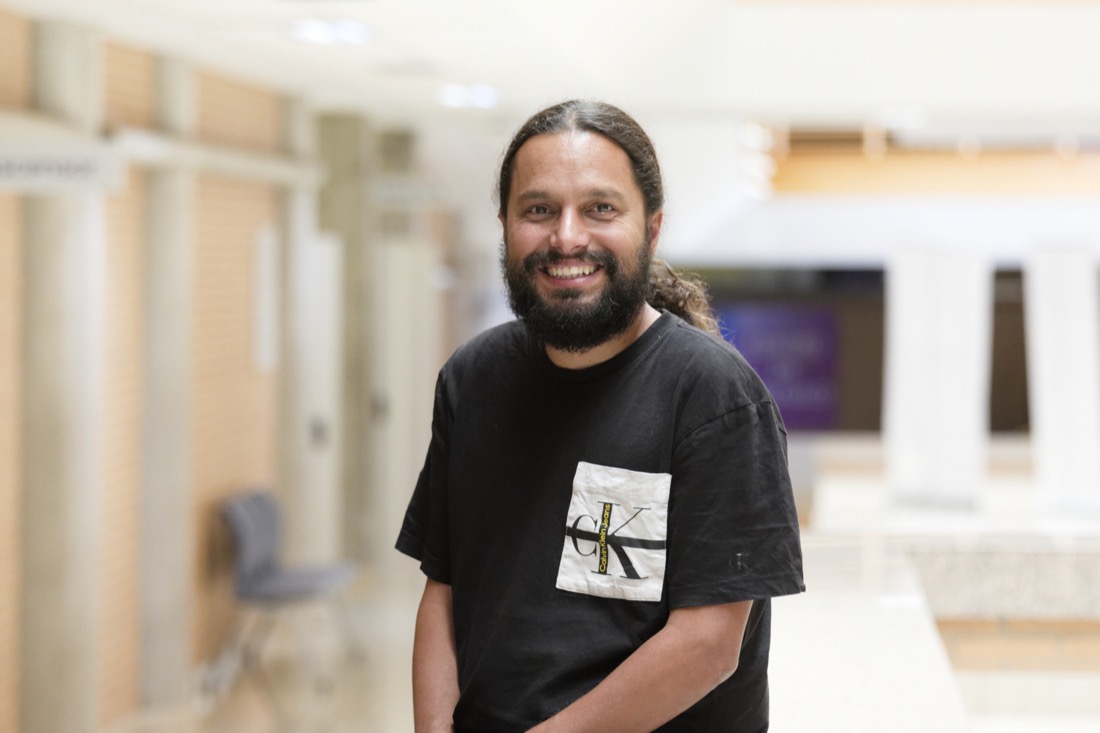
David Abreu, associate professor in the Department of Computer and Systems Engineering at ULL.
The board and pieces require minimal modifications. As the federation explains, “the black squares on the board are slightly raised than the white ones, making them easily distinguishable by touch. The black pieces have a raised bump on their tops to differentiate them from the white pieces. Each square on the board has a hole in the center. The pieces are inserted into these holes and have a small peg on their underside. This system allows the player's hands to touch all the pieces without knocking them over.” The only significant difference is that they play with two different boards; each player moves their pieces to avoid interfering with their opponent.
One of the fundamental elements in professional chess games is the clock. With it, players not only control playing time, but also add a strategic and competitive component to the game. Digitalization doesn't always make life easier; in the case of chess clocks, simply removing the glass from analog clocks allowed players to touch the hands, but new digital displays prevent this. For blind players, there are now digital clocks with a voice mechanism that announces the time when needed. The problem with these devices is that, because they cater to such a niche market, the models available are very expensive, costing ten times more than conventional clocks.
The student of Master's Degree in Industrial Engineering, Daniel Lorenzo, along with Vanesa Muñoz, tenured professor in the Department of Computer and Systems Engineering at the University of La Laguna and David Abreu, A professor and associate professor in the same department set out to design and manufacture a more affordable clock model better suited to players' needs. As the researchers acknowledge, the clock's main premise was low cost. "It had to be easy to program for visually impaired people and inexpensive." Ultimately, an estimate of the project calculated the device's cost at around 100 euros, including the board pieces. Much cheaper than those available on the market. But that wasn't its only competitive advantage.
Furthermore, this watch offered several other advantages. It was designed so that anyone could 3D print it. It could also be used during the Covid era, when social distancing between players was required. As Vanesa and David recall, the watch had a large screen positioned so that players could consult it even when they weren't face-to-face. It was designed to be accessible to both blind and visually impaired people, as the device features both a large screen and a headphone jack for listening to the timings in up to three languages.
This project was born with the idea of spreading across the internet, of being shared worldwide. "It was designed so that anyone, anywhere in the world, could print the parts, buy the components at an electronics store, and assemble it." The device is awaiting testing and evaluation by gamers who have already expressed interest in this watch developed at the University of La Laguna.
NOTE: This report is an initiative framed within the InvestigaULL Commemorations Calendar, a scientific dissemination project promoted by the University of La Laguna.
Scientific Culture and Innovation Unit (Cienci@ULL)

 Spanish
 English
 French