An investigation developed by specialists from University Institute of Neuroscience (IUNE) of the University of La Laguna demonstrates that people who have suffered traumatic experiences throughout their lives pay more attention to resilient words, thus establishing a direct relationship between so-called post-traumatic growth and the capacity for resilience.
According to Hipólito Marrero Hernández, Professor in the Department of Cognitive, Social and Organizational Psychology, member of IUNE and part of the project, along with the professors Rosaura González Méndez, Olga Alegre de la Rosa y Yennifer Ravelo González, People who have experienced Post-Traumatic Stress Disorder (PTSD) can use those negative experiences as tools to help them overcome what happened and contribute to their own personal growth.
“Those people who find a way to give new meaning to their experiences in order to live their lives differently than before the trauma they experienced, develop what we call high post-traumatic growth, a mechanism that will protect them in the future from possible negative consequences, while those who show low post-traumatic growth foster those negative effects,” says the expert from the University of La Laguna.
This study used a sample of 1,188 students from the academic institution, from which 112 individuals were selected who acknowledged having faced various setbacks throughout their lives, after answering a questionnaire about adverse experiences focused on bullying suffered before entering university. Of these 112, approximately 80 underwent a brain stimulation experiment.
Using the non-invasive transcranial direct current stimulation (tDCS) technique applied in the trial, a brain region in the right temporal lobe, involved in processing social intentionality, was selected. It was stimulated with a low-intensity direct electrical current, allowing participants to modulate the responsiveness of that area. In this way, it was possible to verify that the activation of certain brain regions is related to positive achievements.
Marrero clarifies that the study conducted at the University of La Laguna shows that stimulating a specific brain area improved attentional bias toward positive, resilient words in students with poor post-traumatic growth, opening the possibility of intervention using brain stimulation techniques aimed at improving the ability to overcome adversity. This conclusion was drawn after subjecting participants to a test designed to identify persistence biases toward positive words like "strength" or "fortitude," negative words like "abandonment," and neutral words like "beauty.".
Participants had to select the color (green, red, blue, and yellow) in which the words displayed on a screen were written. The time elapsed between the appearance of the word and the selection of the corresponding color key is crucial: the data indicate that longer reading times, in the case of positive words, may be due to a personal interest in maintaining resilience in the face of adversity, thus the emotional response to the words differs depending on whether they are positive, negative, or neutral.
Continuation of the investigation in Italy
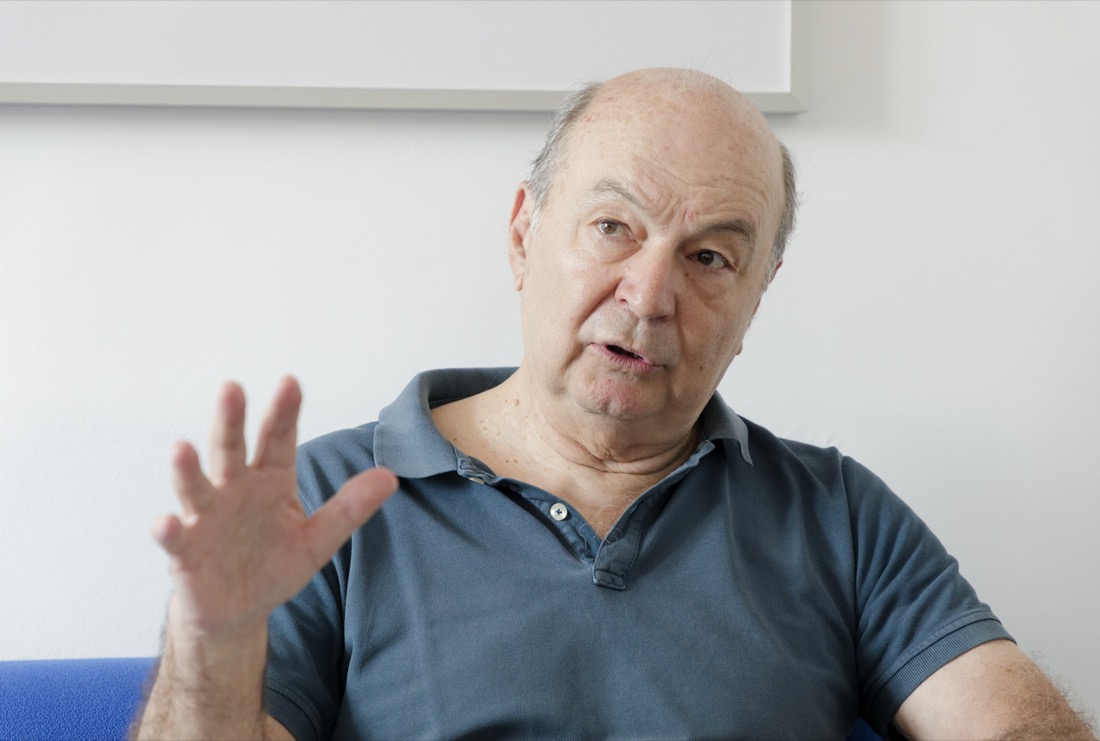
The research carried out at the University of La Laguna—from which one scientific article has already been published and another, currently under review, will be released shortly—is now being replicated in the University of Bologna with the teacher Vincenzo Romei, "What we are doing in Italy is transferring the attentional bias that we have discovered in the Spanish population, in order to verify if this high bias also occurs in the Italian population," emphasizes the professor of Basic Psychology at the University of La Laguna.
For this reason, the Italian specialist participated at the end of June in the colloquia offered by the IUNE during his visit within the framework of the program of grants for visiting professors, aimed at research staff funded by the Vice-Rectorate for Research and Transfer. This allowed him to share data from the joint research carried out between both centers, such as the incorporation of the so-called Predicting Code Comprehension and its possible relationship with Obsessive-Compulsive Disorders (OCD).
In addition to Romei's contributions to the joint study undertaken in Italy, researcher Yennifer Ravelo, from Department of Cognitive, Social and Organizational Psychology From the University of La Laguna, has completed a three-month international stay at the University of Bologna, within her line of research focused on resilience in university students who have suffered situations of school bullying, as well as its improvement through non-invasive stimulation.

 Spanish
 English
 French