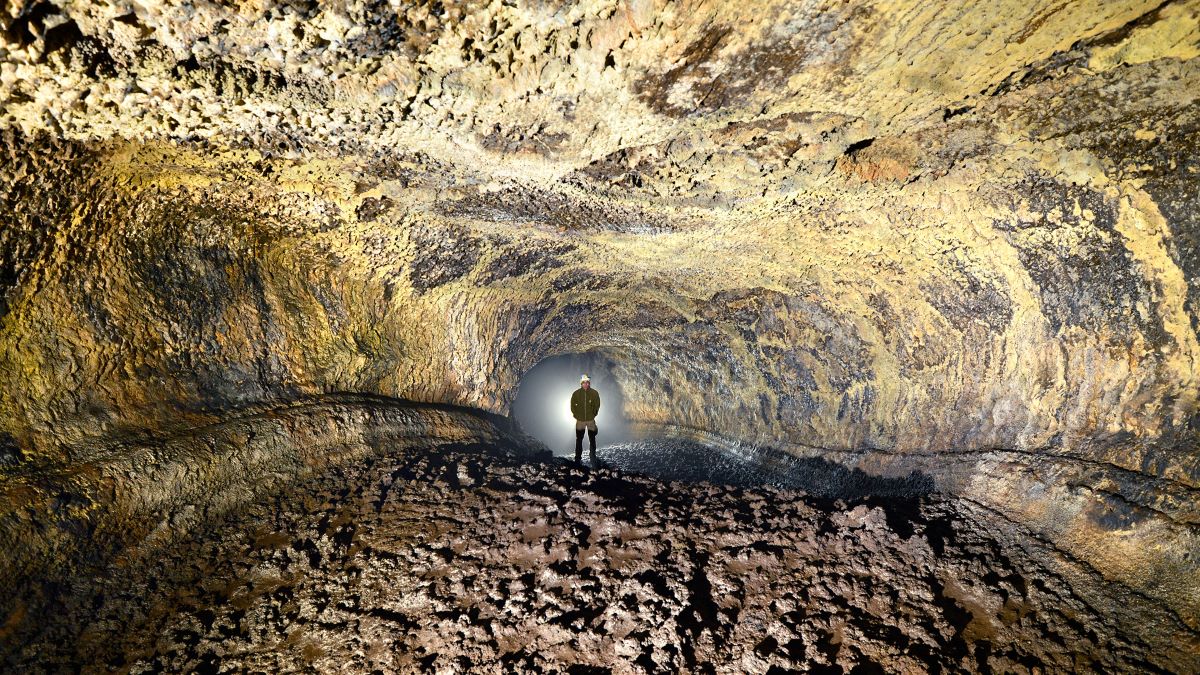
The University of La Laguna and the Island Council of Tenerife renewed yesterday, September 10, the agreement through which technical staff from the academic institution will continue to carry out the dynamic study of radon gas levels in the Cueva del Viento in Icod de los Vinos.
The agreement was signed by the rector of the University of La Laguna, Francisco García, and the president of the Autonomous Body of Museums and Centers of the Island Council of Tenerife, José Carlos Acha, and it specifies that the necessary technical work will be carried out by the staff of the Laboratory of Medical Physics and Environmental Radioactivity (FIMERALL) of the General Research Support Service of the academic center, an entity that has already been carrying out this control since the signing of the original agreement in July 2022.
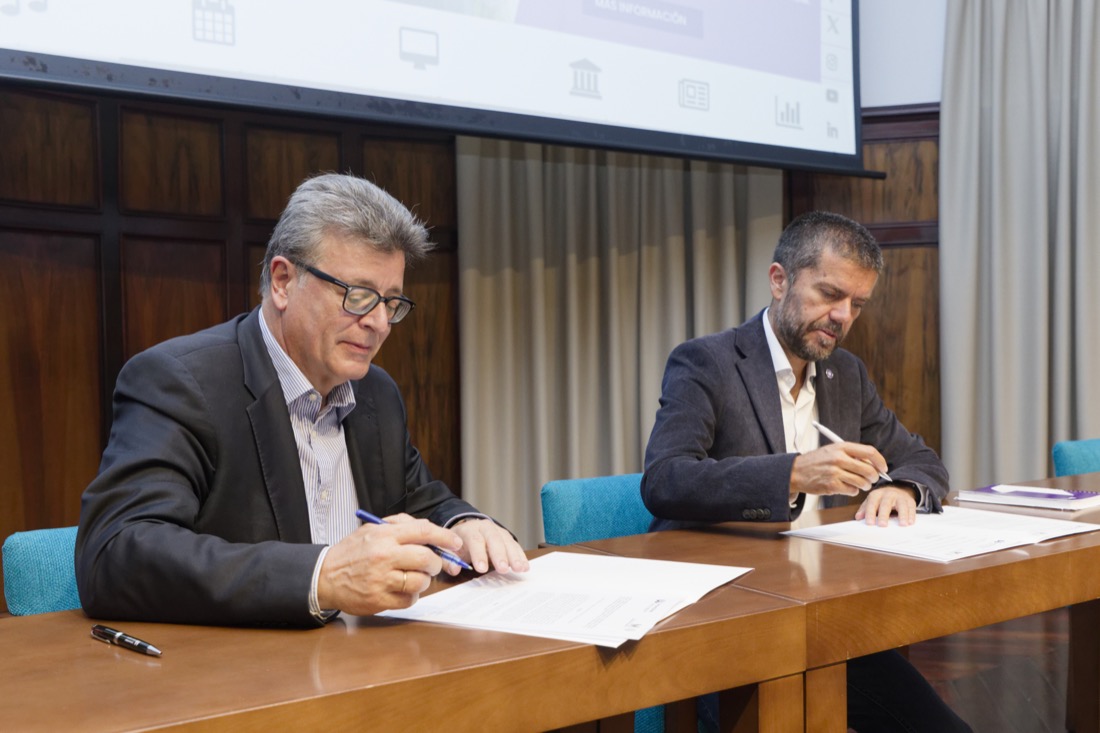 José Carlos Acha and Francisco García, during the signing ceremony held yesterday at the Central Building.
This renewal is again carried out every two years and includes aspects such as the installation of detectors to measure the concentration of radon gas in the cave, studying the variations of said concentration according to the different environmental and meteorological variables; establishing the annual average value of this fluid and the doses received by both the occasional visitors to the cave and the staff who work in it; and, based on all of the above, stipulating considerations in case the exposure levels exceed the recommended values.
Radon gas is naturally generated in rocky environments like the Cueva del Viento (Cave of the Wind). This is a normal process that can intensify at certain times of the year, such as summer, when the soil becomes drier. However, it is necessary to monitor its levels because prolonged exposure has carcinogenic potential. Therefore, measures are in place, such as limiting the section open to tourists to the outermost and, consequently, most ventilated part of the cave, and restricting the number of hours that staff working there are allowed to work.
These ongoing studies are providing a better understanding of the cave's dynamics by analyzing factors such as ventilation, air circulation, and the permeability of the soil and rocks. In addition, dosimetric monitoring is being carried out on personnel working at the site to ensure their gas exposure remains within legally established safe limits.

 Spanish
 English
 French