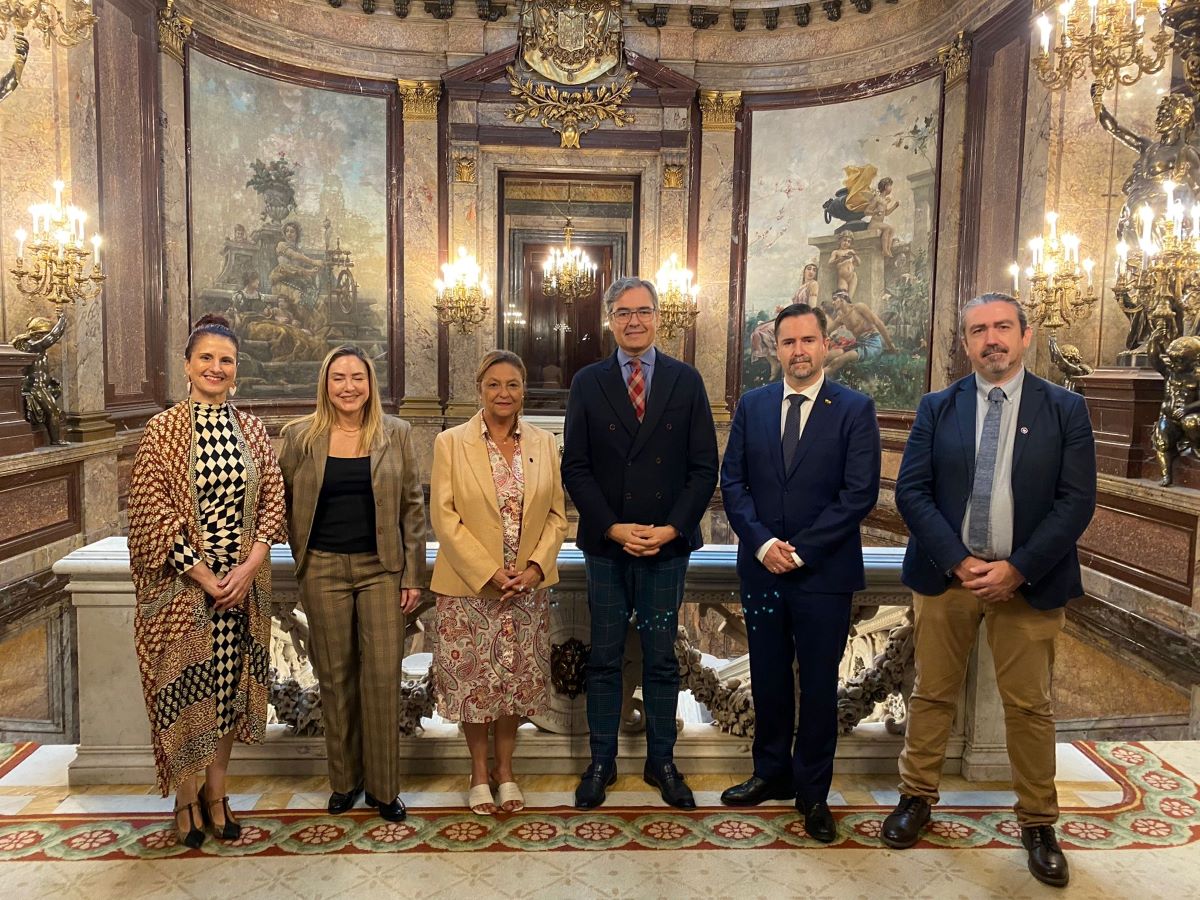
The University of La Laguna will celebrate the fourth edition of Campus America, This international event reflects the connection of this educational institution with the Ibero-American world, through the implementation of 27 academic seminars, a dozen cultural activities, and five institutional panels, with the participation of more than 170 speakers from both sides of the Atlantic. This year, the guest country is Ecuador.
As on previous occasions, Casa de América has been the chosen venue for the presentation of this event, in which 41 universities from 14 countries will take part.
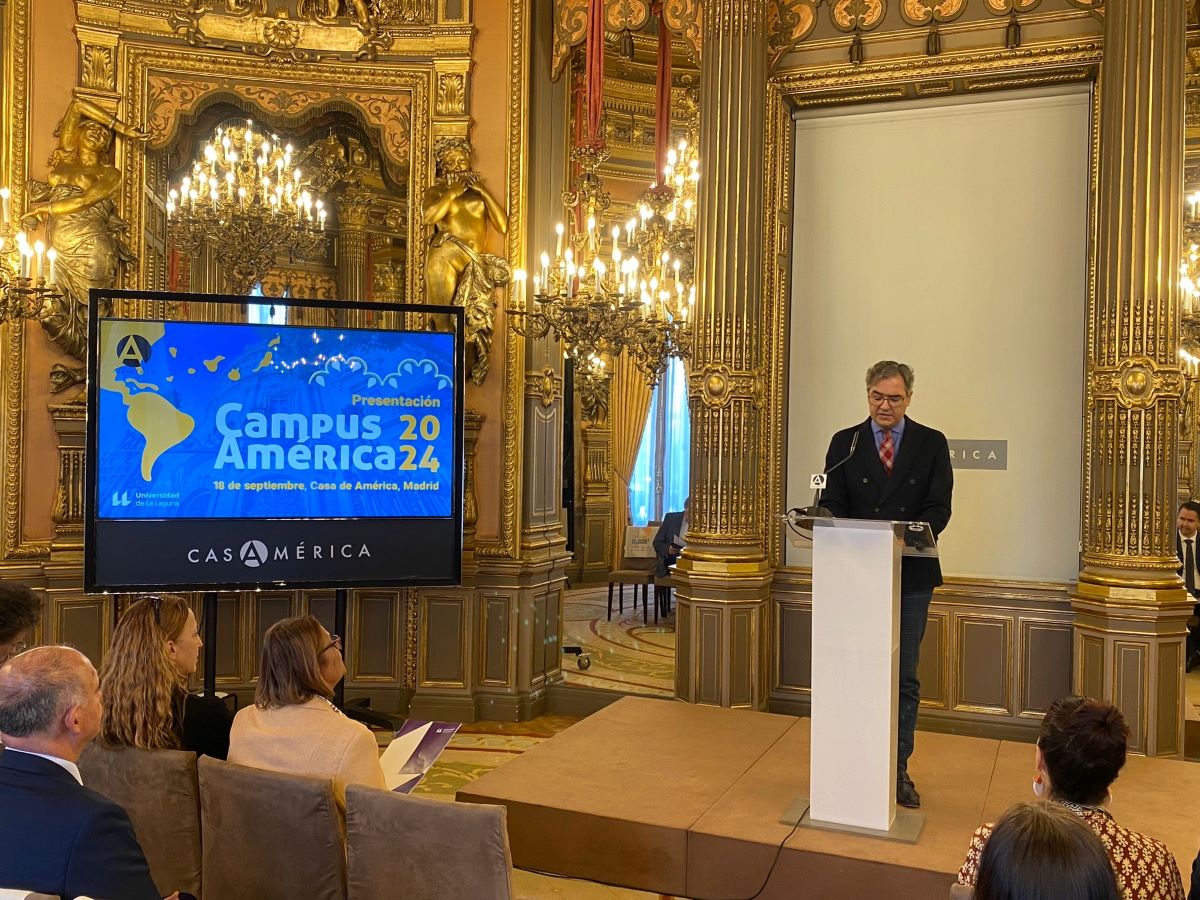
Moisés Morera, programming director of Casa de América.
The program director of this institution, Moisés Morera, welcomed attendees to the event. Representing the University of La Laguna were the Vice-Rector for Internationalization and Cooperation, Inmaculada González, the event's host, and the Vice-Rector for Culture and University Extension, Isabel León, who outlined the cultural aspects of the gathering. Also present was Roberto González, one of the directors of the Vice-Rectorate for Research and Transfer, who presented the university's scientific contributions and collaborations with its Ibero-American counterparts. Pablo Martínez, a diplomat from the Embassy of Ecuador in Spain, closed the session.
Campus America has taken place in 2017, 2019 and 2022. It is a commitment by the University of La Laguna to strengthen its academic cooperation with Ibero-American universities and research centers, while opening new opportunities for cooperation and knowledge exchange.
Thus, multiple actors from the fields of heritage, social justice, history, choral music, vulnerable territories, labor inequality, black feminisms, public health, literature or ecological transition will come together, to name just a few of the topics that this broad and rich event will cover.
This academic initiative has five sponsors: the Government of the Canary Islands, the Tenerife Island Council, the City Councils of San Cristóbal de La Laguna and Santa Cruz de Tenerife, and Cajasiete, in addition to 16 collaborating entities that contribute to supporting this action.
Content
He program It kicks off on October 9, coinciding with Guayaquil's Independence Day in Ecuador, with an event at the Paraninfo of the University of La Laguna, which has been confirmed by the President of the Government of the Canary Islands, Fernando Clavijo, and the President of the Island Council of Tenerife, Rosa Dávila, among other authorities.
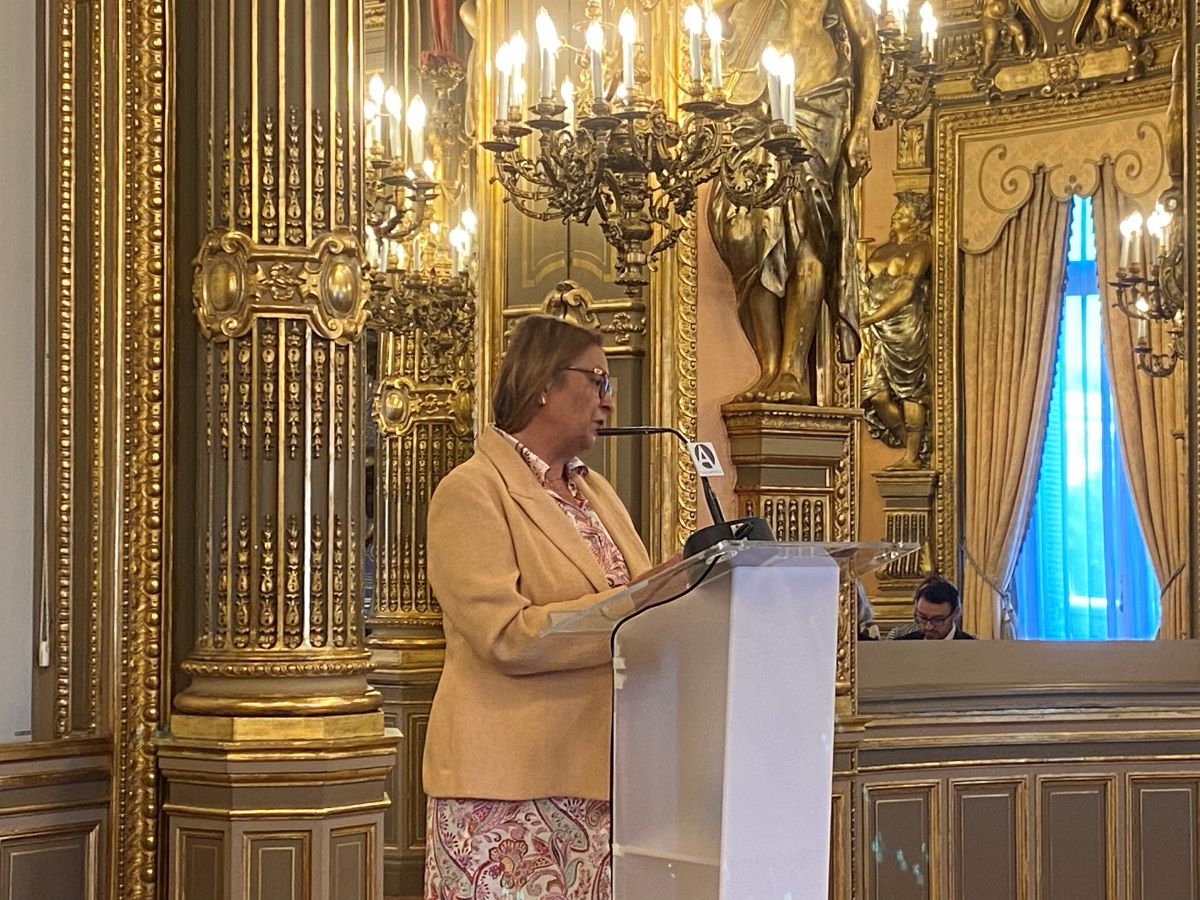
Inmaculada González, Vice-Rector for Internationalization and Cooperation.
From that day until the 18th of the same month, numerous seminars will be held simultaneously across all the university campuses in La Laguna, following a prior call for participation from all university faculty. As in previous years, it is hoped that the development of these courses will... speakers new collaborations emerge on both sides of the Atlantic.
The program also includes the development of five institutional roundtables that will address strategic issues for the University of La Laguna: Internationalization and cooperation in the Ibero-American Space, Youth participation and involvement in promoting democracy, International qualifications: building the European Higher Education Area, University facing the challenge of digital transformation And finally, Culture and heritage: World Heritage cities and Ibero-American universities. The event will conclude on the 18th with a closing conference led by César Raúl Vallejo Corral, Ecuadorian writer and politician, which will be about ‘Ecuador: the homeland divided by an equatorial wound'’.
Interventions
Moisés Morera, programming director of Casa de América, opened the presentation of this international event, praising the role of the University of La Laguna in shaping Canarian society. He also noted that the university is now a cooperating partner of Casa de América. “Education, culture, and institutional collaboration are pillars of any society; an event like this brings all three together in a single program and allows us to understand cross-cutting themes, where we can learn and reflect.” Morera indicated that Casa de América's extensive program of events exemplifies a space for reflection and debate with the American continent, adding that “the Canary Islands are essential in this work of building bridges.”.
The Vice-Rector for Internationalization and Cooperation, Inmaculada González, praised Casa de América's role in presenting this initiative, which stems from an open call to all research groups that regularly work with Latin America, proposing a wide range of research seminars. "This program reflects the potential of our teaching and research staff," she noted. "We are an international university, and this initiative reflects a collaborative effort with Latin American universities.".
“We have tried to focus on the current challenges of the collaborating universities: exchanging teaching experiences, moving towards the design of shared international degrees, generating new research, promoting international mobility; strengthening entities between public and private universities, sharing experiences in digital transformation and disseminating Ibero-American culture.».
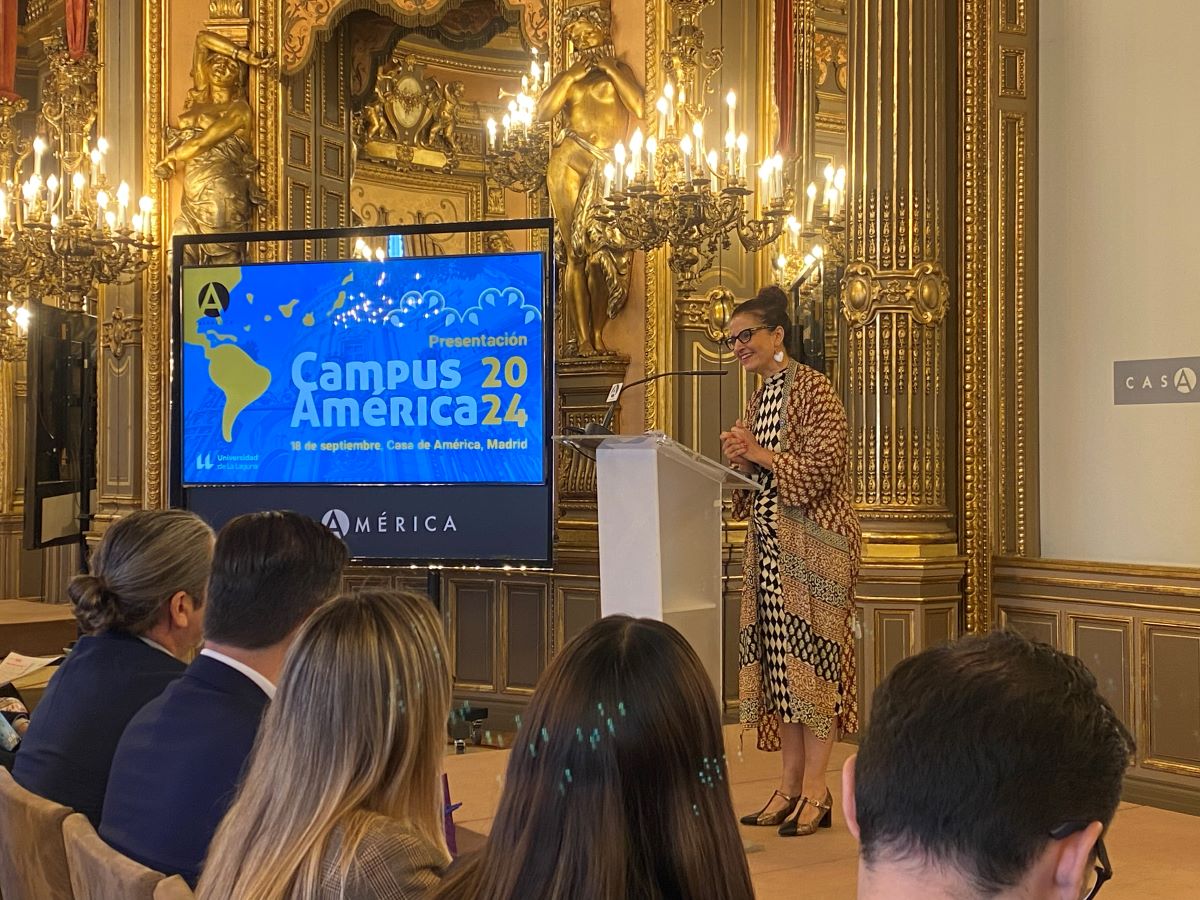
Isabel León, Vice-Rector of Culture and University Extension.
For her part, the Vice-Rector for Culture and University Extension, Isabel León, emphasized the Campus América cultural program, “not as a mere list of parallel activities,” she said, “but perfectly integrated with the scientific events of the entire program.” Painting exhibitions, meetings with writers, film discussions, concerts, heritage events, poetry readings, and culinary tastings complete this section.
For his part, the director of University Institutes at the University of La Laguna, Roberto González Zalacaín, gave an overview of the scientific collaboration of this institution with Latin America, indicating that more than 10,000 publications in recent times have been carried out with universities and research centers in Latin America.
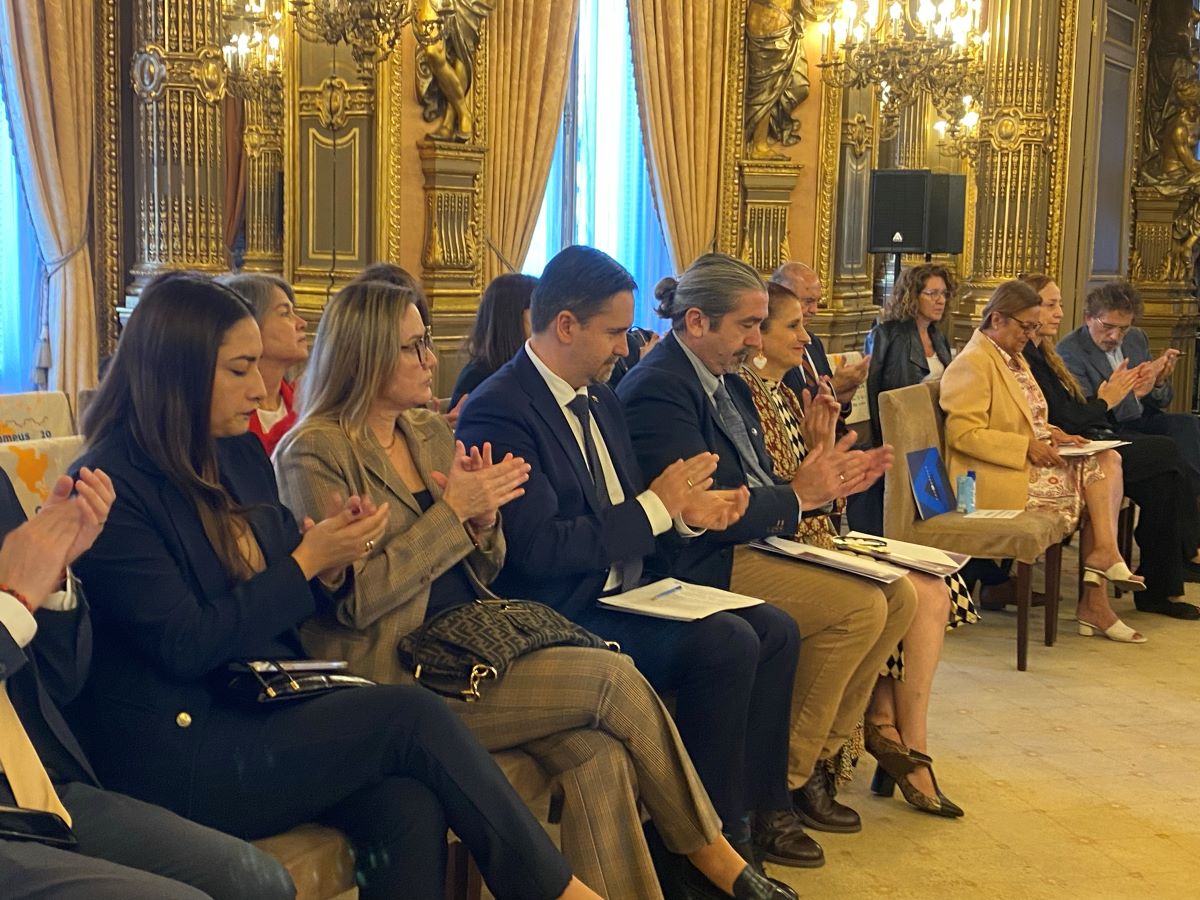
Members of the diplomatic corps from American embassies who attended the event and academic authorities.
Divided by areas of knowledge, and highlighting only the most relevant, in arts and humanities he mentioned lexicographical research on Spanish in the Americas; in the sciences, he mentioned astrophysics research as well as organic chemistry, with very fluid and constant collaborations. In medical sciences, he pointed to the relevance of publications on research into tropical diseases, as well as others on diabetes and cancer. In social sciences and law, he referred to publications on personality and behavior, giftedness, education policy, and neuroscience, which have a significant impact on scientific collaborations with Latin America. Regarding Engineering and Architecture, research focuses on ICT and education, and water treatment in engineering. Furthermore, some forty Latin American doctoral students are currently completing their doctoral theses at the University of La Laguna.
Finally, Pablo Martínez, Minister of the Ecuadorian Embassy in Spain, expressed his gratitude that his country had been honored at this edition of Campus América. He noted that more than 7,000 Ecuadorians reside in the Canary Islands, recalling that the Canary Islands' historical ties with the Americas, and with Ecuador in particular, date back to the 15th century. The diplomat highlighted the natural heritage of these two Atlantic territories, stating that this edition of Campus América will strengthen academic ties, emphasizing the excellent quality and depth of the scheduled events. "We hope that the bonds of friendship among all the countries invited to this international event will be further strengthened and enriched.".

 Spanish
 English
 French