Joy, sadness, disgust, fear, anger, boredom, anxiety, shame, and envy. These are the emotions that inhabit the mind of Riley, the teenage protagonist of Inside Out 2, The highest-grossing animated film of all time. Emotions, an essential part of life, also play an important role in the learning process.
The brain needs emotional engagement to learn. A 2019 study by researchers from two American universities on the impact of passive online classes revealed that students who only watched recorded lectures showed significantly less brain activity, similar to that observed when performing routine tasks such as browsing the internet or watching YouTube videos. In contrast, those who participated in interactive sessions showed a considerable increase in brain activity related to decision-making and deep cognitive processing. Consequently, this demonstrates that emotions are fundamental for activating brain areas related to attention and memory.

Rafael Herrero.
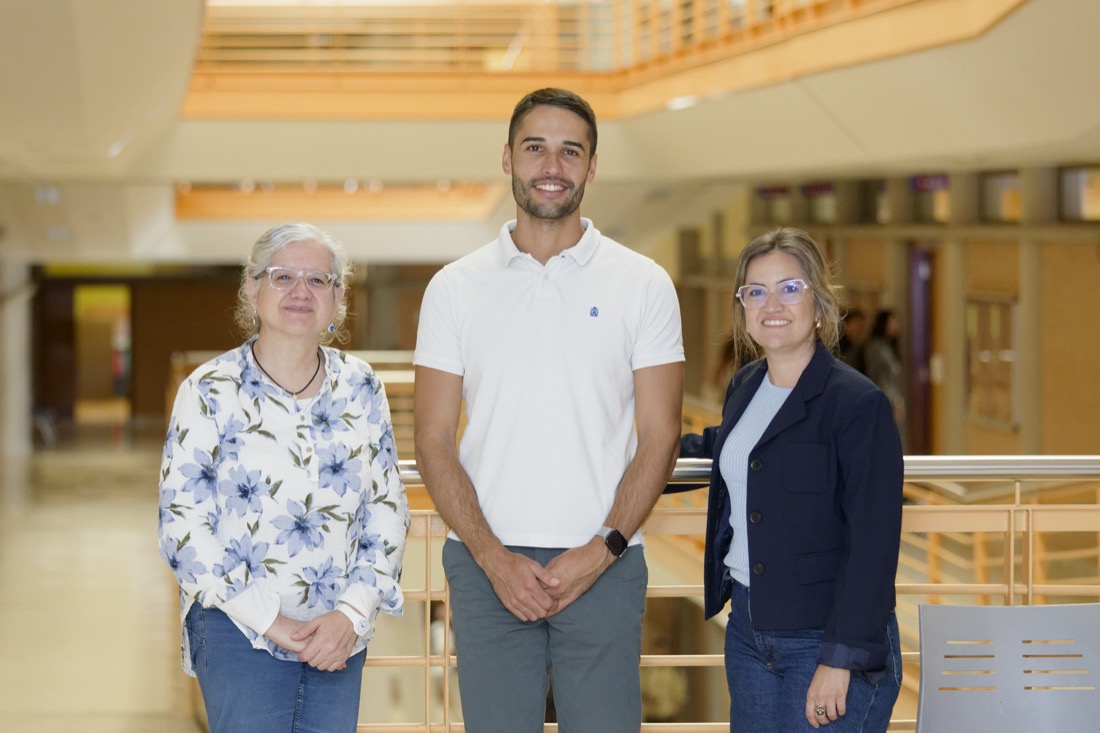
An example of the relationship between emotions and learning can be found in the thesis recently defended by Rafael Herrero, researcher of the group of Algorithms and Parallel Languages of the University of La Laguna. Her work focuses on the design and implementation of an emotion-based adaptive learning support system, through computational thinking activities—the human ability to solve problems using computer science concepts and techniques. Herrero points out that, in the field of computational thinking, there were no previous studies on the emotions students experience when developing these skills.
“We realized there was a line of research where we could design an emotion-based adaptive learning system to support the computational thinking activities carried out by primary and secondary school students,” Herrero explains. In Spain, computational thinking was included in the educational curriculum following the reform implemented with the Organic Law Amending the Organic Law of Education (LOMLOE), which came into effect in the 2021-2022 academic year. This reform introduced computational thinking as a key competence in primary and secondary education.
The educational curriculum
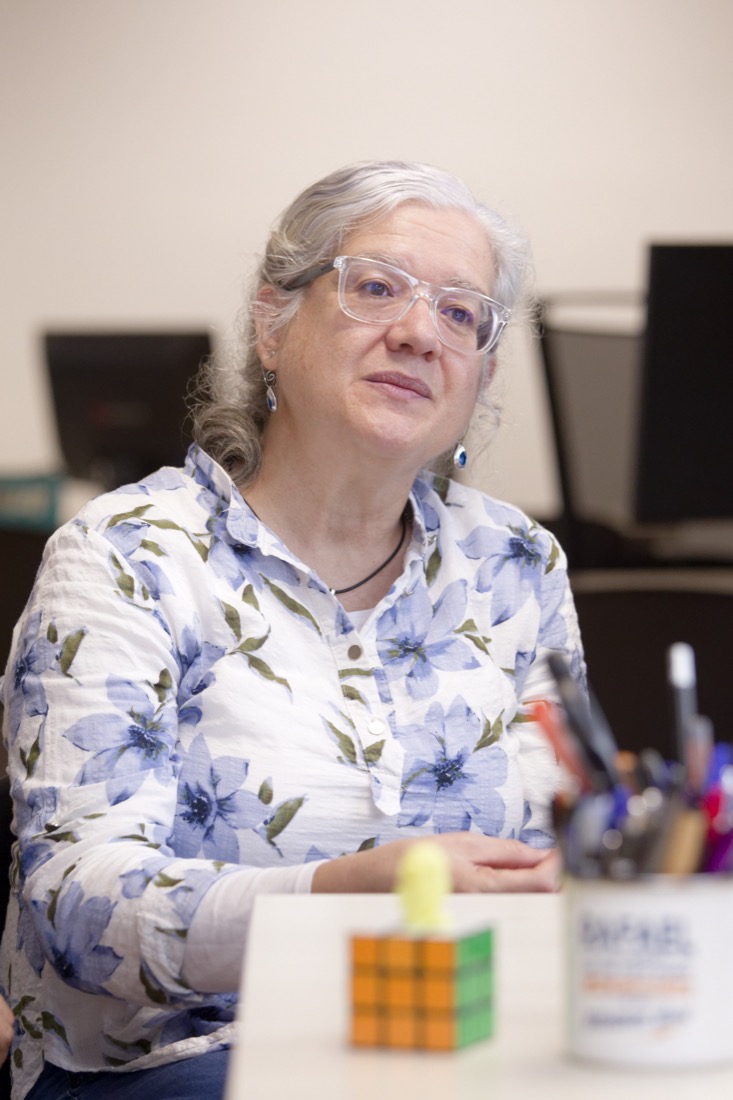
Computational thinking allows us to solve problems from a new perspective: “It has been shown that we can achieve more optimal solutions by applying these techniques,” Herrero points out. For her part, the thesis advisor and researcher in Algorithms and Parallel Languages, Coromoto León, León argues that introducing computational thinking into the educational curriculum is a response to the digital world we live in: “It’s important to know how to use it and understand how it works.” He adds, “I think it’s vital that children start training and learning to solve problems using computer systems from a young age.” In this way, children will cease to be mere users.
Furthermore, the co-director of the thesis and head of the Algorithms and Parallel Languages group, Gara Miranda, He clarifies: “We don’t expect them to be expert programmers, we simply want them to understand the world they live in, since technology is omnipresent.”.
Coromoto León.
Regarding the emotion-based adaptive learning system, Herrero points out: “Normally, the curriculum stipulates that students must complete parts A, B, and C.” However, he poses the question: “What happens if students struggle with part A and need to work on it more?” The problem might lie in a lack of motivation and the emotions students experience during the learning process. “Instead of completing parts A, B, and C sequentially, they might need to complete A, B, and A before moving on to C,” he explains. “The idea was to create a system that adapts to the learning process on an individual basis,” he states.
Herrero also analyzed whether there were differences in how students of different ages and genders express their emotions when performing computational thinking activities. The thesis shows that in primary school, students tend to experience more positive than negative emotions, while in secondary school, during pre-adolescence and adolescence, as the protagonist of [the study/researcher] does, they tend to experience more positive emotions than negative ones. Inside Out 2, According to Riley, negative emotions predominate. Furthermore, Herrero states, "No significant gender differences were observed in primary school." However, a significant difference was evident in secondary school: girls experience more negative emotions than boys when performing computational thinking activities.
Age and gender gap
In this regard, a study conducted in the Canary Islands over the past few academic years, with a sample of 1,500 students, reveals that the interests of boys and girls are very similar. “There are some differences, but they are not significant,” explains Miranda. However, a gap between boys and girls emerges around age 12: “Girls exhibit more negative emotions when faced with concepts related to computer science,” she states. Furthermore, they show less interest in this area, and their self-efficacy—the perception one has of oneself to perform any activity—is very low. “Girls show a higher level of insecurity in this area,” Miranda adds.
The problem may lie in the fact that computational thinking is being implemented in subjects that don't spark the interest of young female students, such as mathematics and technology. Miranda points out that young women would prefer to apply computer science in areas like social sciences, humanities, or art. In this regard, Miranda and León agree that the way computational thinking is being introduced into the Spanish educational curriculum is a key factor. "The law stipulates that computational thinking must be incorporated across all subjects," León explains. However, so far it has only been integrated into mathematics and technology, subjects that tend to generate greater resistance, especially among girls, in pre-university studies. León believes that, while the inclusion of computational thinking in the curriculum is a great achievement, the way it has been implemented has not been appropriate.

Gara Miranda.
Think Computing@ULLmente
Long before computational thinking was introduced into the educational curriculum, the Tenerife Island Council launched the educational project Piensa Computacion@ULLmente in 2017, promoted by the Scientific Culture and Innovation Unit of the University of La Laguna, Cienci@ULL. The project's main objective is to support schoolchildren, families, and teachers in integrating computational thinking, with the aim of educating a generation with a deeper understanding of the digital world. Miranda emphasizes that this work has been significant, as it has allowed them to visit numerous schools to train both teachers and students in computational thinking. In this regard, León states: “When a child wants to study biology at university, they know what to expect, but students who go on to study computer engineering often feel lost because they think the field is only related to video games.”.
Herrero's thesis began, as is often the case, with an ambitious idea that gradually took shape. The initial objective was to develop and implement an adaptive learning system. First, Herrero, León, and Miranda analyzed the state of computer science in primary and secondary education. With the arrival of the COVID-19 pandemic, and given that they were designing a system that would be available to any user, they were able to analyze whether there were differences in the skills acquired when performing computational thinking activities in person versus online.
Indeed, they found differences: students develop computational thinking skills better in a face-to-face setting. Regarding this, Herrero comments: “We realized that it didn't make sense to design an open system for students when they were demanding support in the classroom.” Finally, the thesis concluded with a study on the emotions involved in students when developing computational thinking activities.
Open source
It's worth noting that the emotion-based adaptive learning system is based on open source code. Herrero explains that they initially used an existing program, to which they later added all the work related to computational thinking and emotions. This allows anyone to take the program and adapt it to their needs. Herrero indicates that the code is available in a repository: "All the materials follow the open source philosophy.".
León emphasizes that writing a thesis involves more than just enrolling in a doctoral program and conducting research; it also entails other aspects, such as securing funding. In this regard, Herrero had to secure the necessary funds for the data collection phase. León states, “We have felt very supported by Cienci@ULL, the Tenerife Island Council, and the Government of the Canary Islands.” Furthermore, the thesis director and co-director highlight the importance of dissemination efforts, such as publications and participation in academic conferences: “This has allowed us to self-regulate and establish a network of contacts, such as Drinks —a global initiative for the development of computational thinking in the classroom—”.
Herrero's thesis is novel because, unlike most research in this field, which focuses solely on the frustration an individual may feel when using a computer, his work addresses this issue within the specific context of training computational thinking skills. Furthermore, according to Herrero, few studies focus on the pre-university level.
“This research isn’t limited to being an educational intervention or a technological design,” Miranda states. They have tried to merge both lines of inquiry: one more educational, focused on the experience of the intervention and how emotions influence the learning process, and another related to the design of the technological system that supports that process. “I think that’s the valuable part of our approach,” she believes.
For her part, León emphasizes that her research approach lays the groundwork for future studies. Her thesis focuses on how students learn fundamental concepts of computational thinking and underscores the importance of measuring emotions, as these directly influence learning: “If you're not emotional, you don't learn.” In this regard, León states: “If we know what emotions students experience, we can explore how to increase positive emotions to promote learning.” Thus, teachers can help their students experience more positive emotions, such as joy, when learning computational thinking, while anxiety, as in the Pixar film, will stay on the couch sipping chamomile tea.
(This report is part of the InvestigaULL Commemorations Calendar, a science outreach project promoted by the University of La Laguna).
Scientific Culture and Innovation Unit (Cienci@ULL)

 Spanish
 English
 French