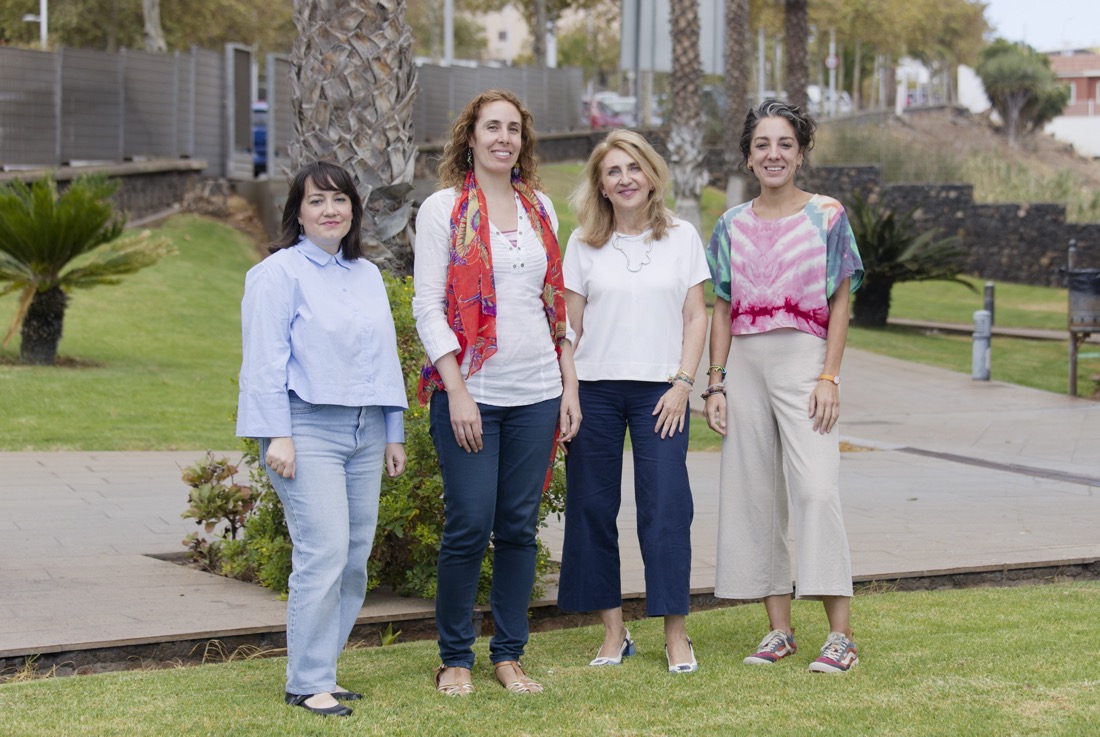
Perhaps if our protagonists had been involved in the construction of the Tower of Babel, this biblical story would have had a much less traumatic ending. In an ideal world, all human beings would speak the same language, but fortunately, the many cultural, geographical, and ethnographic differences have led to linguistic separations, creating a dialectal range that is a treasure but, undoubtedly, can hinder communication.
Humans have developed some 6,000 different languages, an insurmountable jumble were it not for the people dedicated to bridging the gaps and translating languages. They aren't very well known; we might not even be able to name a single one of them, but without their work, culture wouldn't be so universal: we would never have been able to enjoy the works of Shakespeare, Jules Verne, or Haruki Murakami. Neither the Bible, nor the Quran, nor "The Little Prince," nor even the story of the Three Little Pigs would be accessible to everyone, and only those who mastered a second language would be able to enjoy them. Without a doubt, translators are the democratizers of culture.
Their work is so important that they have their own day. Every September 30th, the UN commemorates International Translation Day. “An art worth protecting” is the motto chosen for this year. International Federation of Translators to highlight the work of these people who are behind the historical art of translation.
The University of La Laguna has been a pioneer in Spain in higher education in interpretation since it launched the program in 1988. Master in Conference Interpreting (MIC), The first postgraduate program focused on this specialty, in both consecutive and simultaneous formats. The MIC has the support and collaboration of the European Commission and the European Parliament, and is part of the international consortium EMCI (European Masters in Conference InterpretingTherefore, we have contacted three professors from this degree program, professionals and lovers of translation and interpreting.
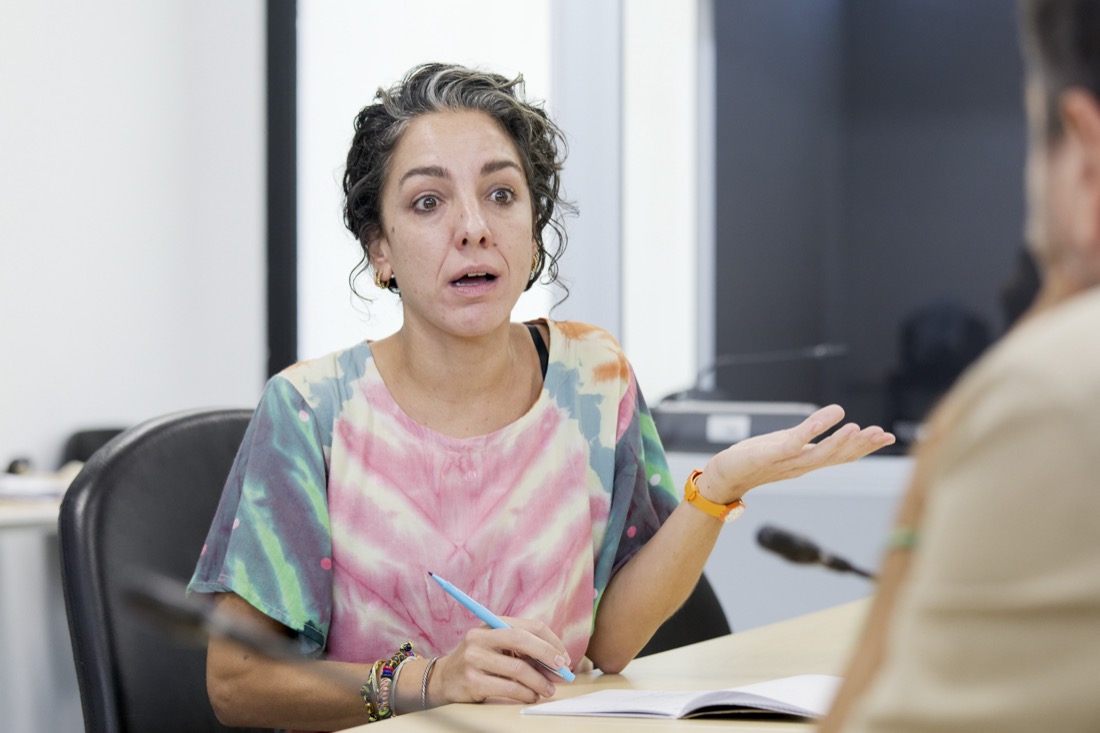
Alba Rodríguez.
Surrounded by interpretation booths, in a space that simulates a conference room or large meetings, the three researchers attend to us in this training field for future professionals of this complex discipline, in which it is necessary to name many more skills than the merely linguistic ones because it is much more than passing a message from one language to another.
It's a little-known role—perhaps due to the professional's discretion? Should a translator's work go unnoticed, or does it need to leave its personal mark? Contrary to what it might seem, this task, like almost all human endeavors, does leave its mark. Alba Rodríguez, Dr. [Name], assistant professor at the University of La Laguna, makes it clear that the translator's work cannot go unnoticed. If we already introduce our own, sometimes unconscious, personal touches when we recount something someone has told us, how can this not happen when we're talking about different languages, different cultures, and different times?
Everything is open to interpretation, from tone of voice to the way the speaker talks. Rodríguez explains that translated texts can have different functions than they did in the original. “I might be translating a novel, and I might be doing so with a different objective,” as can happen in a bilingual edition for a philological study, which will never function as a literary text. “And the same is true in interpreting. The interpreter's visibility will vary depending on the communicative function.” Therefore, one of the first things an interpreter or translator needs to be clear about is who they are translating for, as this will determine the nature of the work and their role in the communication process. “Interpreting at the European Commission is not the same as interpreting in a case of gender-based violence,” she clarifies.
Translation, gender violence and telephone
The first image that comes to mind when thinking of an interpreter is one of a professional in a booth, translating a conference or ceremony. But often their work takes place in far less glamorous locations: police stations, Civil Guard barracks, airport transit lounges, or docks can be the offices of many of these professionals. Carmen Toledano, a tenured professor in the Department of English and German Philology at the University of La Laguna who studies the role of translation and interpretation with victims of gender violence, explains that there is a risk of revictimizing foreign women who have suffered gender violence, since the language barrier increases the suffering of the woman who has to bear the aggression and the inability to ask for help.
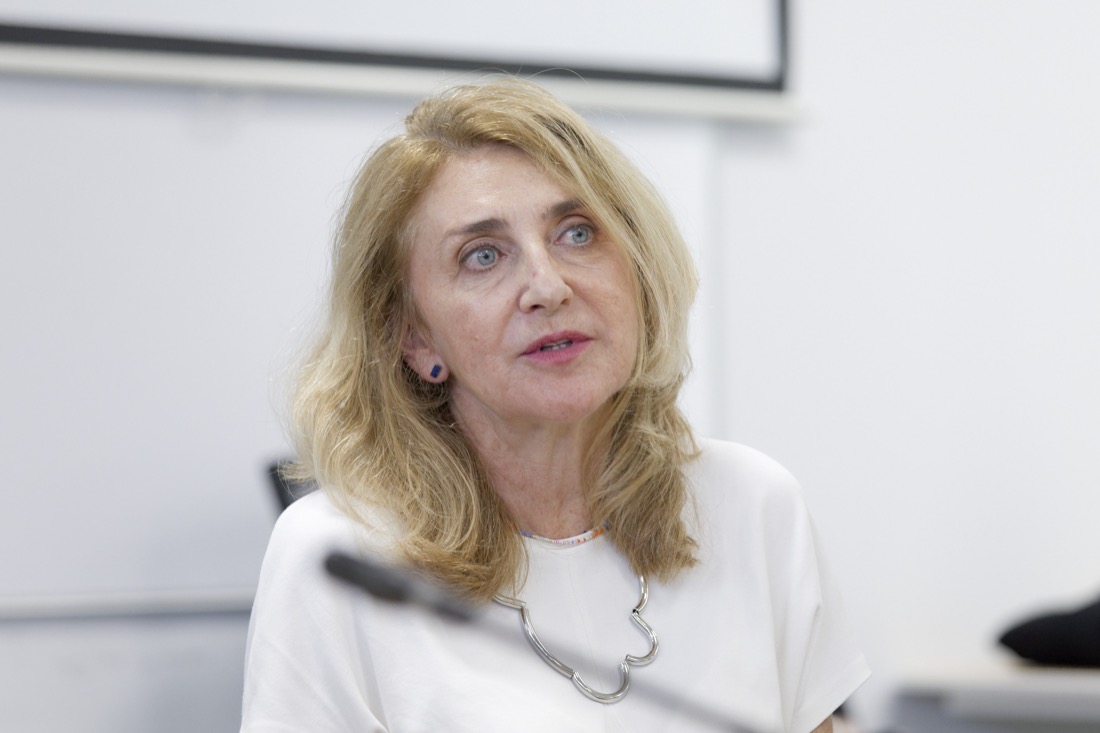
Carmen Toledano.
During a conversation, visual cues provide a wealth of information about the communication taking place: eye contact, facial expressions, and hand movements all act as crutches, supporting the conversation and providing assistance when sound fails. Therefore, translating a telephone conversation, where these supporting stimuli are absent, demands a high level of professional skill.
María Magdalena Fernández She is an associate professor in the Department of English and German Philology. One of her research areas focuses on the teaching of telephone interpreting, a type of linguistic mediation used in public services. Although it is a resource provided by technology, the researcher recommends against using it by default because, being a cost-effective and fast system, it is sometimes used in contexts where it is not the ideal option. “Even so, it is a very interesting interpreting system because it bridges many gaps. In an island territory like ours, it can be very useful, but it requires specific training.”.
This training is essentially based on teaching students techniques and strategies to compensate for the lack of eye contact. It requires greater proactivity, so the ethical paradigm of the interpreter's visibility is left behind. "In these cases, the interpreter has to take the initiative." So, they manage speaking turns and indicate when people should speak. In short, they guide the conversation.
This, he acknowledges, isn't always well-received by those he's speaking with. In his opinion, there's a lack of interpreting culture, which is compensated for by professionalism. When someone is hesitant to speak or struggles to address very personal topics, everything flows much more smoothly when the interpreter presents themselves as a fellow professional. "Just like a doctor or a police officer." In his experience, these issues of vulnerability for people who need an interpreter are overcome in a few minutes when the parties recognize that they are dealing with a highly qualified specialist and not a human version of "Google Translate." But this also brings other kinds of problems, since sometimes the parties try to sway the interpreter to their own agenda. "We're neither the other police officer nor their accomplice." Impartiality and neutrality must always be maintained, and for this, specific training is essential. And that, he laments, is not happening in public services right now.
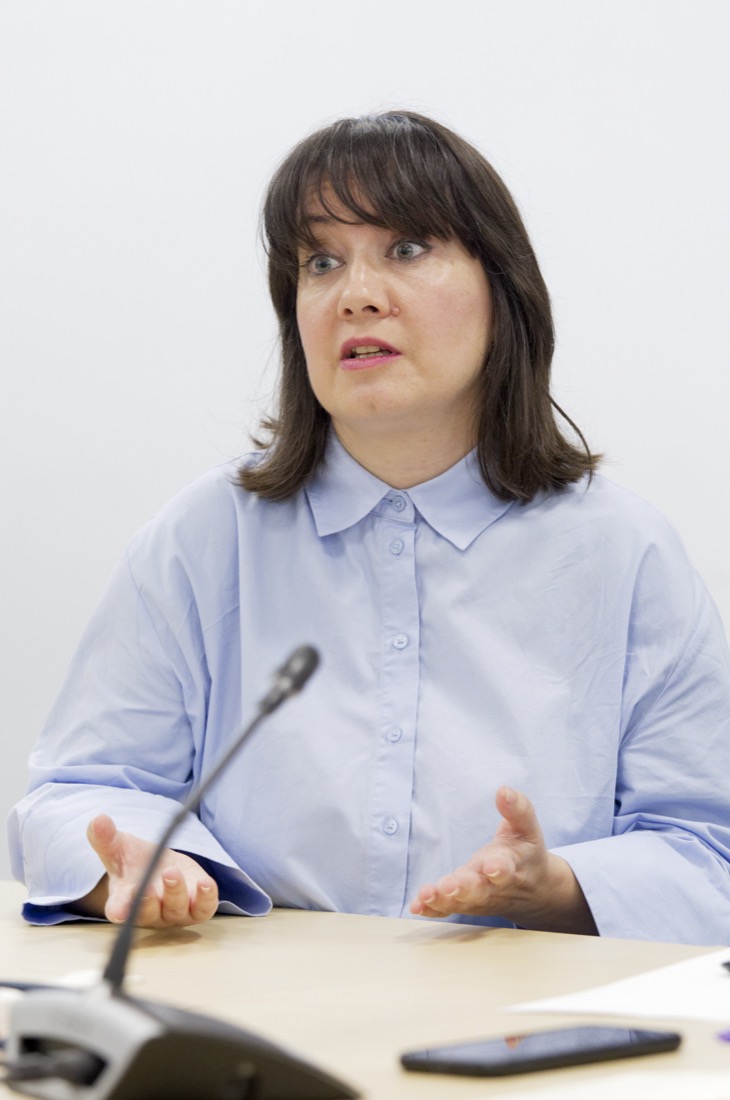
Magdalena Fernández.
Good interpreting is profitable, according to Carmen Toledan. “Generally speaking, the administration gives very little importance to our work, and economically it is much more profitable than they think. It is much more expensive to be idle than to take action. Healthcare spending is much higher when it has to rectify misunderstandings or the exclusion of patients due to a lack of interpreters or poor interpretation, rather than detecting these patients in the early stages of their illnesses. Countries like the United States would not have such well-established interpreting services if it weren't profitable for their healthcare or judicial systems.” When communication is flawed, costs skyrocket.
Interpreting Africa
We live just a few kilometers from a giant continent with millions of French speakers. Neighbors who have far more connections with us than the media-covered migrant flows arriving in precarious boats. Cultural, scientific, and economic ties occur daily, and in these cases, of course, interpretation is fundamental. Irene Hernández Cabrera She is an associate professor in the Department of Classical, French, Arabic, and Romance Philology, specializing in Francophonie, like her colleague Alba. “French is one of the languages of our immediate surroundings. Mauritania, Morocco, and Senegal are Francophone, and it seems that our relationship with these countries is limited to welcoming immigrants arriving in small boats, but our relationship with our neighbors exists year-round and in all kinds of spheres.” All these “other” political, cultural, and economic relationships remain invisible despite being very intense. Examples include the MAC Interreg projects and the literary works that arrive from the African continent and are translated into Spanish and vice versa. It's a whole legacy of African literature, thought, and intellectual life flowing between the two territories.
The future of acting also lies in AI
Many believe that interpreting and translation are doomed thanks to the relentless advance of artificial intelligence. But our protagonists, far from fearing job loss, welcome the arrival of this technology with optimism. Alba Rodríguez doesn't believe AI will eliminate her job: it will make it easier, perhaps more specialized, but it won't end it. She envisions a symbiosis on the horizon where AI will handle basic translations "like the instructions for a washing machine" but will leave interpreting in the hands of humans, because translating, as we knew it, is much more than simply transferring information from one language to another.
“Before, you had to look up vocabulary in dictionaries with very thin pages; it was awful. Now I translate much better, faster, and more, thanks to these tools.” María Magdalena admits that she doesn't see a political translation, for example, done entirely by a machine as viable. And it's not about its effectiveness. “Who guarantees that the software hasn't been manipulated? How do you know that the conversation will be confidential? Who owns this software?” For her part, Alba welcomes the arrival of AI, as she is convinced that any translation that requires “a color or a flavor” will need a human intermediary. “It's impossible for a machine to do that.”.
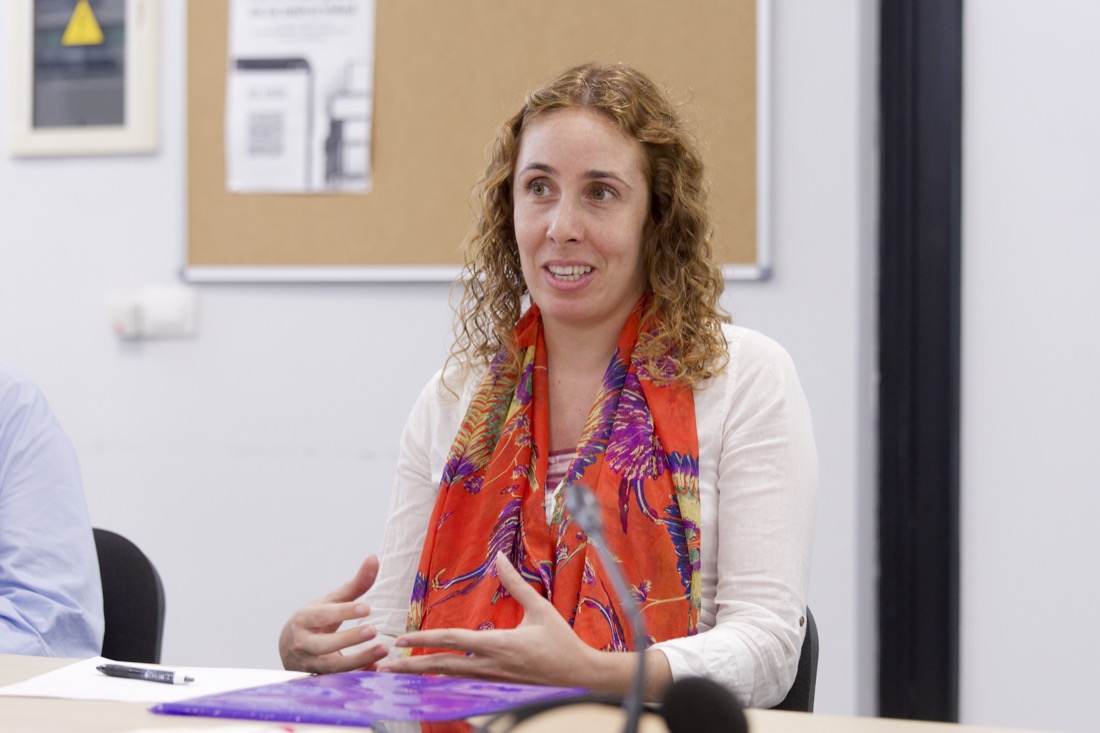
Irene Hernández.
The MIC has been collaborating for some years with a virtual interpretation assistant called Smarterp, The booth partner every interpreter would want on the job. This promising tool, which assists interpreters in real time, is a collaboration with the engineering world, a prime example of partnership between academia and industry.
This partnership allows Smarterp, with its remote interpreting platform, to adapt to the needs of interpreters, offering everything an analog interpreting console would have and much more. Irene explains that “AI has been implemented in modules that provide interpreters with visual aids for potentially difficult elements such as proper names, organizations, figures, etc.” This technology makes their work easier but will never replace them.
This report is an initiative framed within the InvestigaULL Commemorations Calendar, a scientific dissemination project promoted by the University of La Laguna.
Scientific Culture and Innovation Unit (Cienci@ULL)

 Spanish
 English
 French