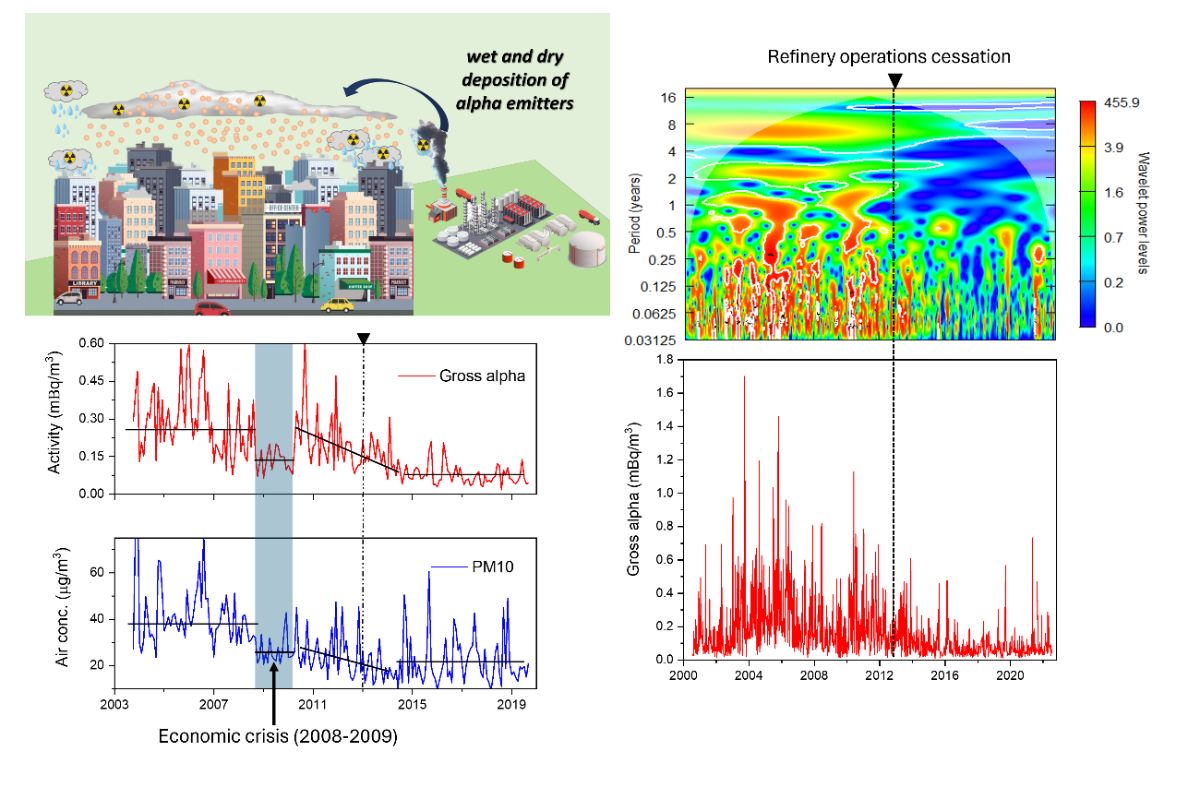
An extensive study conducted by the Laboratory of Medical Physics and Environmental Radioactivity The FIMERALL research group at the University of La Laguna in Santa Cruz de Tenerife has revealed a 76% decrease in total alpha activity levels in aerosols following the closure of the local oil refinery in 2013. This analysis, which covers a period of 22 years (2001-2022), is a clear example of the impact that oil industry activities have on the local environment and the health of its inhabitants.
The results have recently been published in a published article in the magazine Journal of Environmental Management, signed by Pedro Salazar Carballo, Antonio Catalán Acosta, Francisco Hernández and María López Pérez, linked to the laboratory and other entities of the University of La Laguna.
Environmental pollution is one of the greatest challenges of the 21st century, and although greenhouse gases such as carbon dioxide (CO₂), methane (CH₄), and nitrogen oxides (N₂O) are well known, other less recognized pollutants, such as radiation, also pose a threat.
Under normal conditions, public exposure to radiation is minimal and mostly comes from natural sources. However, certain industrial activities, such as oil extraction, can increase levels of naturally occurring radionuclides in the environment, known as Naturally Enhanced Radioactive Material (TENORMs).
The study in Santa Cruz de Tenerife, which included 1,105 surface aerosol measurements, investigated the evolution of total alpha activity and its correlation with other pollutants derived from the petroleum industry, such as carbon monoxide (CO), sulfur dioxide (SO₂), nitrogen monoxide (NO), nitrogen dioxide (NO₂), benzene, toluene, and xylene. These pollutants and radionuclides are related to the extraction, processing, and burning of petroleum products, which affects both air quality and ambient radioactivity levels.
The results showed that major events such as the 2008 global economic crisis, which led to a reduction in refinery operations and its eventual closure in 2013, coincided with a significant drop in the levels of these pollutants. In addition to total alpha activity, other air pollutants such as PM10, SO₂, NO₂, and volatile organic compounds (VOCs) also showed similar decreases.
Using advanced statistical techniques, it was determined that 84% of the variation in total alpha activity levels is explained by factors related to industrial activity. This approach can be applied in other urban environments to assess the effects of industries on air quality and radiation exposure of the population.
Despite the observed fluctuations, none of the total alpha activity levels posed a radiological risk to the city's inhabitants. However, the results underscore the importance of long-term environmental monitoring to understand and mitigate the effects of radioactive and chemical contamination in urban environments affected by industrial activities.
According to those responsible for the study, the closure of the Santa Cruz de Tenerife refinery and the significant decrease in associated pollution levels provide clear evidence of the impact that industrial activities have on public health and the environment.

 Spanish
 English
 French